Xi, Scholz Warn against ‘Irresponsible’ Nuclear Threats over Ukraine

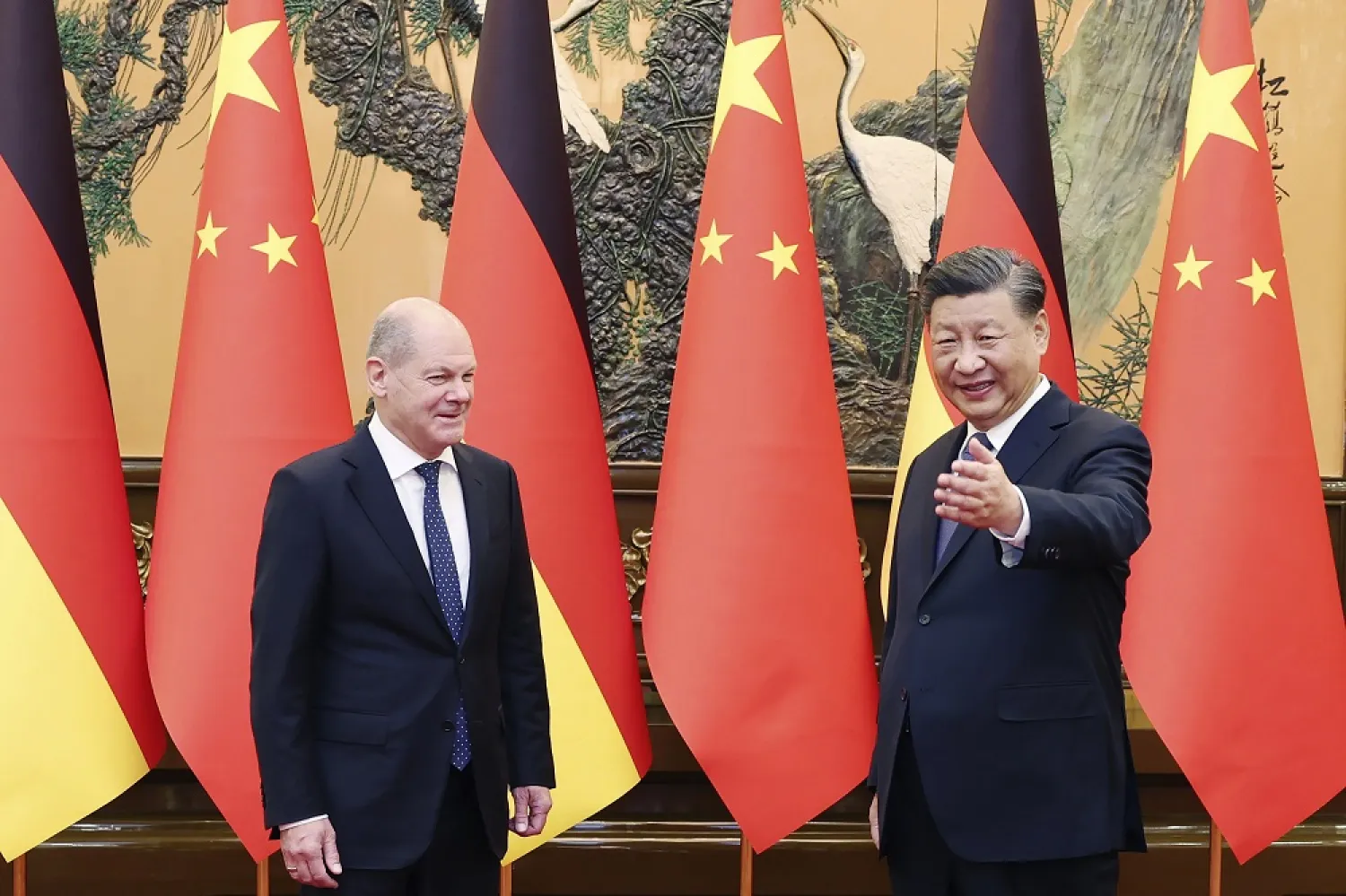
In this photo released by Xinhua News Agency, Chinese President Xi Jinping meets with German Chancellor Olaf Scholz at the Great Hall of the People in Beijing on Friday, Nov. 4, 2022. (Xinhua via AP)
TT

Xi, Scholz Warn against ‘Irresponsible’ Nuclear Threats over Ukraine

In this photo released by Xinhua News Agency, Chinese President Xi Jinping meets with German Chancellor Olaf Scholz at the Great Hall of the People in Beijing on Friday, Nov. 4, 2022. (Xinhua via AP)

Chinese President Xi Jinping and German Chancellor Olaf Scholz on Friday condemned threats to use atomic weapons in Ukraine, with Scholz warning that Russia risked "crossing a line" in the international community by resorting to nuclear force.

In the first visit by a G7 leader to China since the COVID-19 pandemic, Scholz pressed Xi to prevail on Russia to end its invasion of Ukraine, saying Beijing had a responsibility as a major power to do so.

Xi agreed that both leaders "jointly oppose the use or threat of use of nuclear weapons" over Ukraine, according to a readout by the state-run Xinhua news agency, though he refrained from criticizing Russia or calling on Moscow to withdraw its troops.

Scholz arrived in Beijing on a one-day visit that tested the waters between China and the West after years of increasing tensions, with talks touching on reciprocal market access, climate change and COVID-19 vaccines.

Scholz made the trip while facing criticism from within his own coalition about relations with Beijing. He has tried to balance securing a level playing field for European companies with shedding Germany's heavy reliance on the Chinese market.

During lunch with Scholz, Xi stressed that it is easy to destroy political trust but difficult to rebuild it, and both sides need to take care of it, according to Xinhua.

Earlier, while greeting Scholz at the Great Hall of the People in the heart of Beijing, Xi urged the two countries to work more closely on international issues.

"President Xi and I agree: nuclear threats are irresponsible and incendiary," Scholz said after the meeting. "By using nuclear weapons, Russia would be crossing a line that the community of states has drawn together."

Ukraine's Western allies have accused Russia of threatening to use nuclear weapons in Ukraine. Moscow denies doing so and has repeatedly accused Kyiv of planning to use a radioactive "dirty bomb", without offering evidence.

Before their lunch of beef strips, prawn and sweet and sour fish, Scholz told Xi that Russia's invasion of Ukraine was creating problems for the rules-based global order, according to a recording of the remarks provided by the German delegation.

Scholz then met outgoing premier Li Keqiang. He told Li that it was clear China and Germany were no friends of "decoupling", alluding to their respective economies.

During a news conference after his discussion with Li, Scholz said he raised the issue of Taiwan. China claims the island as its own territory and has never renounced the use of force to bring it under its control.

"Like the US and other countries, we are pursuing a one-China policy," Scholz said. "But I have made equally clear that any change in Taiwan's status quo must be peaceful or by mutual consent."

While touching on the human rights of minorities in China's Xinjiang region, Scholz denied Germany was meddling in domestic Chinese affairs.

He also asked Xi, who has supported President Vladimir Putin since Russian forces swept into Ukraine in February, to promote peace. "I have told President Xi that it is important, that China uses its influence on Russia," he said.

Scholz and the delegation of German business leaders flying with him were administered COVID-19 tests upon landing in Beijing on Friday morning. Chinese medical staff donned hazmat suits and entered the plane to conduct the tests, according to the Reuters reporter accompanying the delegation.

China's strict zero-COVID policy and growing friction with the West have made it unfeasible for leaders of major Western powers to visit China, while Xi only resumed foreign trips in September.

Scholz is pushing for greater market access at a time when the German economy, Europe's largest, is fighting decades-high inflation and a looming recession. His visit was likely a welcome development for the Chinese leadership, which is looking to shore up relations with the outside world.

"China, in the present domestic and international environments, requires his visit and whatever both sides would jointly declare in Beijing, especially shortly after the (Party) Congress," said Shi Yinhong, a professor of international relations at Renmin University in Beijing.


Iran Rules Out UN Inspections of Damaged Nuclear Sites Until War Ends

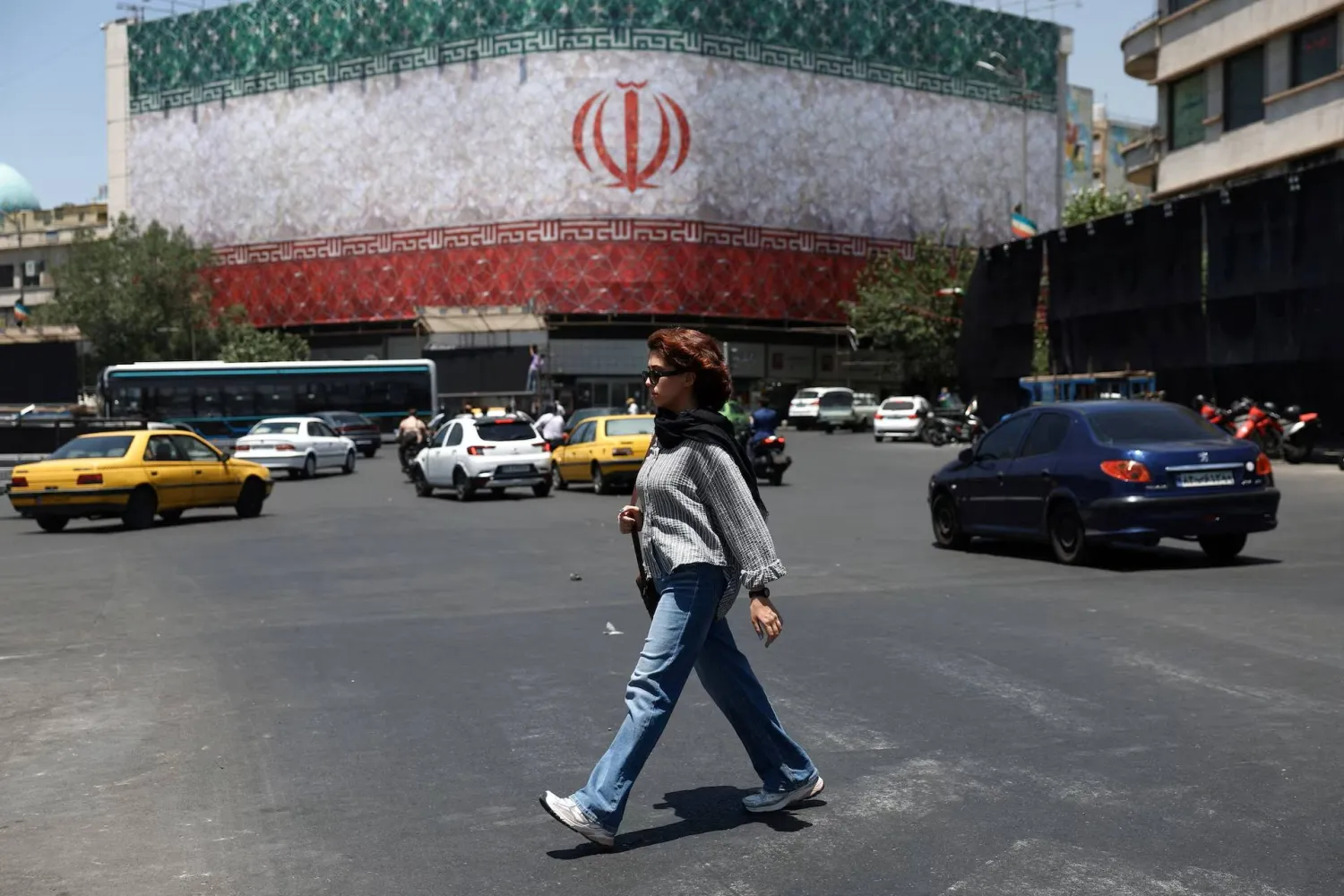
A street in Tehran, June 14, 2026. Majid Asgaripour/WANA (West Asia News Agency) via REUTERS
TT

Iran Rules Out UN Inspections of Damaged Nuclear Sites Until War Ends

A street in Tehran, June 14, 2026. Majid Asgaripour/WANA (West Asia News Agency) via REUTERS

Iran will not let UN inspectors visit its damaged nuclear facilities until the Middle East war has ended and the United States meets its conditions, a senior Iranian official said.

The remarks came days after the International Atomic Energy Agency urged Tehran to take steps towards resuming inspections, which have been suspended since last year's 12-day war with Israel, when the US also struck Iranian nuclear sites.

"We will not grant the IAEA access to the facilities until Iran's conditions are met and the war has permanently ended," Deputy Foreign Minister Kazem Gharibabadi said in a televised interview late Sunday.

Iranian nuclear facilities were hit again during the war which broke out on February 28 when US-Israeli strikes killed Iran's supreme leader Ali Khamenei.

IAEA inspectors visited Iran's Bushehr nuclear power plant in September but have not gained access to other bombed sites including Natanz, Fordow and Isfahan.

Gharibabadi said the agency's request to inspect damaged facilities was "likely aimed at assessing the effectiveness of American weaponry".

Efforts to end the Middle East war have made little headway. Tehran is demanding that Washington unfreeze Iranian assets and lift sanctions, among other conditions, in exchange for reopening the Strait of Hormuz, the vital energy shipping route it has blockaded during the conflict.

Iranian officials have said talks on Iran's nuclear program would come at a later stage.

Earlier this month, the US military announced a $20 million reward for information on Iran's nuclear program, a move Tehran called "repugnant".


A Fire in a Building in Southern Thailand Kills 11 People

 In this image taken with a smartphone and provided by the Kusoldharm Phuket Foundation, damage is seen at a motorcycle rental shop on the ground floor of a residential building following a fire in Phuket, Thailand, Monday, Nov. 16, 2026. (Kusoldharm Phuket Foundation via AP)
In this image taken with a smartphone and provided by the Kusoldharm Phuket Foundation, damage is seen at a motorcycle rental shop on the ground floor of a residential building following a fire in Phuket, Thailand, Monday, Nov. 16, 2026. (Kusoldharm Phuket Foundation via AP)
TT

A Fire in a Building in Southern Thailand Kills 11 People

 In this image taken with a smartphone and provided by the Kusoldharm Phuket Foundation, damage is seen at a motorcycle rental shop on the ground floor of a residential building following a fire in Phuket, Thailand, Monday, Nov. 16, 2026. (Kusoldharm Phuket Foundation via AP)
In this image taken with a smartphone and provided by the Kusoldharm Phuket Foundation, damage is seen at a motorcycle rental shop on the ground floor of a residential building following a fire in Phuket, Thailand, Monday, Nov. 16, 2026. (Kusoldharm Phuket Foundation via AP)

A fire burned through a building in southern Thailand early Monday, killing 11 people, authorities said.

The fire started around 2 a.m. in the building in Phuket that has a motorcycle rental shop on the ground floor and residences on the upper floors, officials of the local government said. It took firefighters about an hour to bring the fire under control.

There were 17 other people who were slightly injured.

Phuket police commander Surachai Sooksai said officers are still investigating the cause of the fire, but initial investigations found an electrical transformer near the building had exploded shortly before the fire started.

Phuket Gov. Chodnarin Koedsom said the rental shop had about 100 motorcycles, along with stored gas, engine oil, plastic materials and tires. He said these combustible materials may have contributed to the rapid spread of the fire and the thick, toxic smoke.

He said the victims appeared to try to escape the fire to the higher floors. One body was found on the third floor and 10 others were found on the fifth floor.

Phuket is on an island in southern Thailand and a popular tourist destination.


China Says Xi-Putin-Trump Meeting Has ‘Groundbreaking Significance’

US President Donald Trump looks at Chinese President Xi Jinping as Xi arrives ahead of a state visit at Joint Base Andrews, Maryland, US, September 23, 2026. (Reuters)
TT

China Says Xi-Putin-Trump Meeting Has ‘Groundbreaking Significance’

US President Donald Trump looks at Chinese President Xi Jinping as Xi arrives ahead of a state visit at Joint Base Andrews, Maryland, US, September 23, 2026. (Reuters)

China's Foreign Ministry said on Monday that this week's trilateral meeting between the Chinese, US and Russian leaders is of "groundbreaking significance" and will promote world peace and stability.

The meeting between Chinese President Xi Jinping, US President Donald Trump and Russian President Vladimir Putin will take place on Thursday in China's southern city of Shenzhen, the site of this week's APEC summit.

Trump will raise efforts to reduce nuclear arms at the meeting, ‌the White House ‌said last week. China has rebuffed attempts ‌to ⁠talk about nuclear ⁠arms with Russia and the United States, which have the largest stockpiles of such weapons.

Chinese Foreign Ministry spokesperson Mao Ning told reporters in Beijing this would be the first face-to-face meeting among the heads of state of China, Russia, and the United States.

"They will exchange views in ⁠depth on safeguarding world peace and promoting strategic ‌stability in major-power relations, which ‌is of groundbreaking significance," she added.

Under the current circumstances, the ‌three countries bear an important responsibility to cooperate in ‌addressing global challenges and to promote world peace and stability, Mao said.

"Stronger communication among China, Russia, and the United States, along with managing differences and stabilizing relations, serves the interests of all ‌three countries," she added.

It also meets the expectations of the international community, and helps "stabilize the ⁠global situation ⁠and advance dialogue and cooperation".

Mao did not give details of what exactly is on the agenda for the trilateral meeting.

Speaking in Manila on Monday, UN chief Antonio Guterres said the United Nations is prepared to support any denuclearization effort that may arise from the summit meeting of the three countries.

China has said it was more appropriate for Russia and the US to speak directly because of their large arsenals.

The UN has long advocated nuclear disarmament, warning that rising geopolitical tension and growing rivalry among major powers have fueled global nuclear risks.