

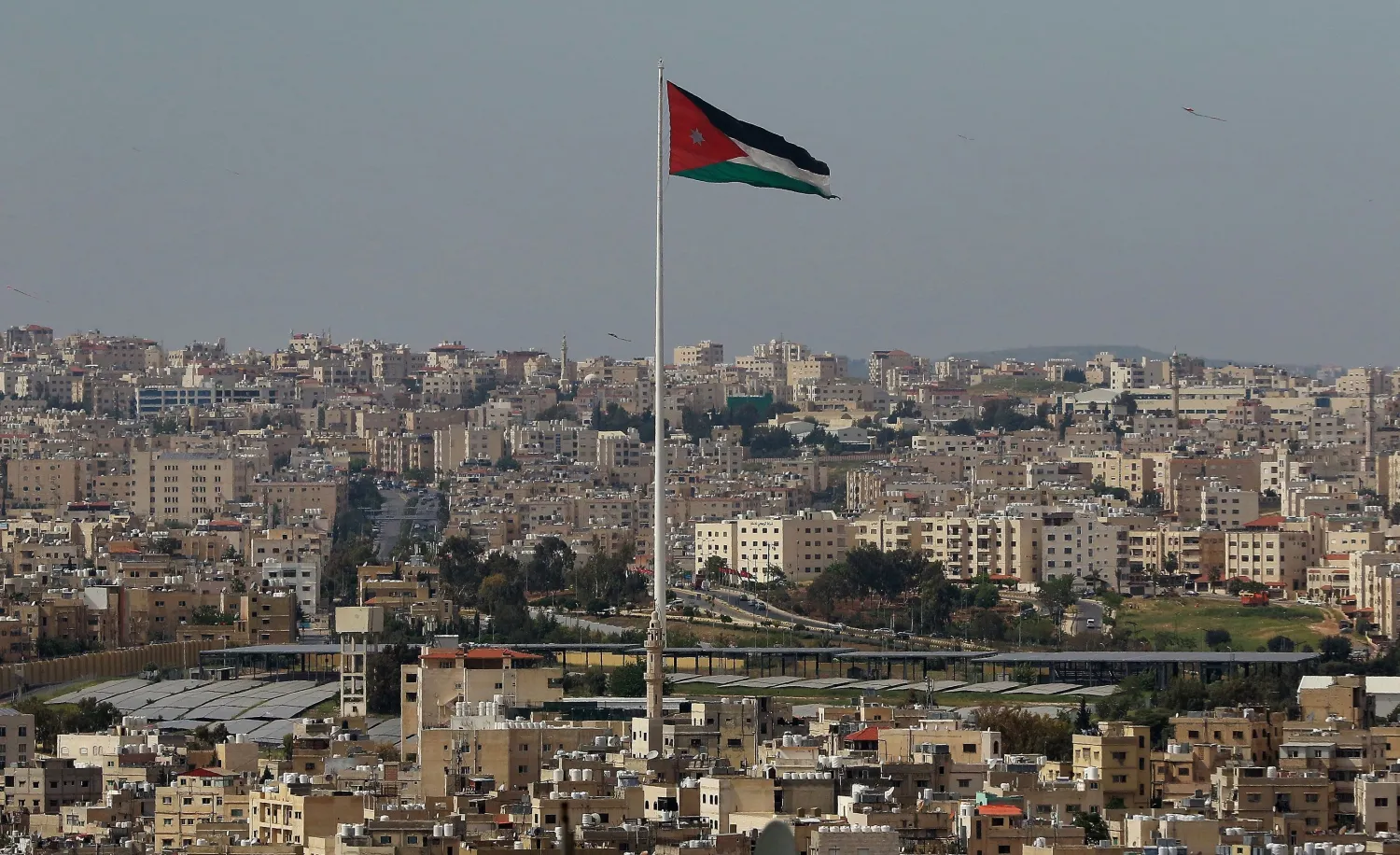

Jordanian Industry Sees 3.8% Growth in 2022


Jordanian capital, Amman (Reuters)
TT

Jordanian Industry Sees 3.8% Growth in 2022


Jordanian capital, Amman (Reuters)

The Chairman of the Amman Chamber of Industry (ACI), Engineer Fathi Al-Jaghbir, said that the Jordanian industry showed an unprecedented performance since the beginning of 2022, recording a 3.8 percent growth rate compared to the same period last year.

Exports were estimated at 3 billion dinars.

“This rate is considered the highest in the past decade,” the state news agency Petra cited Jaghbir as saying on Saturday.

“The sector’s contribution to the GDP exceeded 29.5 percent,” he stated.

He said the next stage will focus on increasing the share of Jordanian industrial products in global markets, especially non-traditional destinations, stressing that "this goal will be a top priority."

Jaghbir noted that future efforts will focus on markets of European countries, Latin America and East Asia, to increase commodity-based and geographical diversification of the industry and reduce its reliance on traditional markets.

He added that the ACI Board of Directors aims to unify efforts to confront the challenges facing the sector.

The chamber also seeks to enhance the industrial sector's competitiveness and raise employment rates through a comprehensive strategy aimed at advancing industrial development and improving the business environment through action plans, consistent with Economic Modernization Vision's objectives.

Jaghbir noted that the next stage will see steps to reduce production costs, protect the national product, increase geographic diversification, raise the number of manpower and operating rates, provide financing and grants, and empower industry chambers.

Jordan’s public debt rose 3 percent to 29.6 billion dinars ($41.7 billion) in the first eight months of 2022 compared to 28.7 billion dinars at the end of 2021.

Its domestic debt reached 14 billion dinars at the end of August, while its foreign debt reached 15.58 billion dinars.



Russian Central Bank Cuts Key Interest Rate as Growth Slows

People walk in front of the Bank of Russia (Central Bank of the Russian Federation) headquarters in Moscow, Russia, 20 March 2026. EPA/MAXIM SHIPENKOV
TT

Russian Central Bank Cuts Key Interest Rate as Growth Slows

People walk in front of the Bank of Russia (Central Bank of the Russian Federation) headquarters in Moscow, Russia, 20 March 2026. EPA/MAXIM SHIPENKOV

Russia's central bank on Friday cut its key interest rate to 15 percent from 15.5 percent as the economy slows under pressure from Moscow's protracted and expensive war in Ukraine and Western sanctions.

Huge spending on its forces in Ukraine had initially spurred growth and helped Moscow buck predictions of economic collapse after it launched its offensive in 2022.

But last year, Russia's economy expanded by just one percent -- a steep drop from growth of around four percent recorded in 2023 and 2024.

"High-frequency data and business surveys indicate slower growth in economic activity in early 2026. Consumer demand cooled after its sharp rise in late 2025," the state lender said in a statement announcing the rate cut.

Inflation was running at 5.9 percent on an annual basis, it added -- above its target of four percent.

Massive military spending had pushed up inflation, triggering the central bank to raise borrowing costs to more than 20 percent at their peak.

That hit businesses, with some smaller firms forced to close and several large companies announcing layoffs, or seeking state aid.

The war has also thinned Russia's government finances, having posted a deficit in every year since it ordered troops into Ukraine.

But Russia's economic fortunes have been buoyed by surging oil prices triggered by the war in the Middle East.

Benchmark Brent crude has been trading above $100 a barrel -- 40 percent higher than before the US and Israel launched strikes on Iran at the end of February.

For Russia, every extra $10 per barrel gives the government a $1.6 billion a month windfall in tax revenues, Sergey Vakulenko from Carnegie Endowment estimated.

Oil and gas revenues provide roughly a fifth of Russia's state income and had been running at a five-year low, dragged down by sanctions, production issues and Ukrainian attacks on energy facilities, before the outbreak of the war in the Middle East.


Oil Up despite Efforts by US, Allies to Boost Supply and Open Strait of Hormuz

FILE PHOTO: Pumpjacks are seen against the setting sun at the Daqing oil field in Heilongjiang province, China December 7, 2018. REUTERS/Stringer
TT

Oil Up despite Efforts by US, Allies to Boost Supply and Open Strait of Hormuz

FILE PHOTO: Pumpjacks are seen against the setting sun at the Daqing oil field in Heilongjiang province, China December 7, 2018. REUTERS/Stringer

Oil prices gained on Friday despite leading European nations, Japan and Canada offering to join efforts to secure safe passage for ships through the Strait of Hormuz and the US outlining moves to boost oil supply.

"The potential for a quick reversal in energy prices is unlikely because damage has been done to production," said Ole Hansen, the head of commodity strategy at Saxo Bank. "The fact on the ground remains that we have a tight market." Brent futures rose $1.67, or 1.5%, to $110.32 a barrel at 1030 GMT, while US West Texas Intermediate (WTI) crude added 33 cents, or 0.3%, to $96.47.

For the week, benchmark Brent was on ‌track to rise ‌nearly 7%, while WTI was set to fall about 2% ‌in ⁠its first weekly decline ⁠in five weeks.

Israel and Iran traded fresh attacks on Friday, following a hit on an oil refinery in Kuwait, Reuters said.

In a joint statement on Thursday, after earlier hesitating, Britain, France, Germany, Italy, the Netherlands and Japan expressed "our readiness to contribute to appropriate efforts to ensure safe passage through the Strait", through which 20% of the world's oil and LNG transit.

Looking to curb soaring oil prices, US Treasury Secretary Scott Bessent said the US may soon remove ⁠sanctions from Iranian oil stranded on tankers, and said a further ‌release of crude from the US Strategic Petroleum ‌Reserve was possible.

Brent jumped higher than $119 a barrel on Thursday, coming close to a March 9 ‌peak, after Iran responded to an Israeli attack on a major gas field ‌by knocking out 17% of Qatar's LNG capacity, causing damage that will take up to five years to repair.

US President Donald Trump said he told Israel not to repeat attacks on Iranian gas infrastructure. Israeli Prime Minister Benjamin Netanyahu said his country had acted alone in the attack ‌and Iran no longer has the capacity to enrich uranium or make ballistic missiles.

Earlier in the Friday session, both benchmarks had ⁠shed some of their "war ⁠premiums" as world leaders started to acknowledge a need for restraint and de-escalation, said Priyanka Sachdeva, senior market analyst at Phillip Nova. She added that markets will remain sensitive to the critical Hormuz chokepoint.

"The damage has been inflicted, and even if safe passage for tankers is somehow negotiated through Hormuz, reviving logistics fully fledged can take an awfully long time," Sachdeva said.

In a boost to US supply, North Dakota's crude output is expected to rise this month and in the following months as operators in the third-largest oil-producing state restart inactive wells and winter restrictions are eased, the state's regulator said on Thursday.

The North Dakota Department of Mineral Resources said, however, the pace of activity would depend on how long oil prices stay high and that oil majors' budgets have already been set.


Syria Sets 2026 Budget at Around $10.5 Billion

10 March 2026, Syria, Damascus: Syrian President Ahmed al-Sharaa meets with representatives of youth from various initiatives and sectors at the People's Palace in Damascus. Photo: -/APA Images via ZUMA Press Wire/dpa
TT

Syria Sets 2026 Budget at Around $10.5 Billion

10 March 2026, Syria, Damascus: Syrian President Ahmed al-Sharaa meets with representatives of youth from various initiatives and sectors at the People's Palace in Damascus. Photo: -/APA Images via ZUMA Press Wire/dpa

Syria's President Ahmed al-Sharaa said on Friday the 2026 budget was set at around $10.5 billion, nearly triple last year's level, state TV reported.

He said GDP is estimated to reach $60 billion-$65 billion this year, adding the economy could return to 2010 levels and improve services.

Speaking after Eid al-Fitr prayers in Damascus, Sharaa said the government will prioritize ending displacement camps and enabling returns, with funds ⁠allocated to rebuilding infrastructure ⁠in hard-hit areas including Idlib and Aleppo, where rival armed factions have clashed in recent months.

He said government spending rose to about $3.5 billion in 2025, while GDP reached around $32 billion after growth of 30% to 35%, with the ⁠budget recording a surplus for the first time.

He added that a dedicated infrastructure fund of at least $3 billion would be financed from government spending.

According to Reuters, Sharaa said additional funds would go to eastern regions such as Deir Ezzor, Hasaka and Raqqa - areas heavily damaged during the war against ISIS - focusing on services, while about 40% of the 2026 budget will be spent on health ⁠and education.

He ⁠said territory retaken by the government had returned key resources to state control, supporting the economy, but acknowledged rebuilding will take time.

He also said Syria is seeking stability and balanced ties abroad after years of conflict.

The country has attracted growing foreign investment as it rebuilds, with Gulf states among key backers, including Saudi Arabia's involvement in major infrastructure projects worth billions of dollars, and the UAE's DP World signing an $800 million ports deal.