The Kingdom Declares Saudi Green Initiative an Annual Event

Saudi Minister of Energy Prince Abdulaziz bin Salman speaks at the launch of the second edition of the Saudi Green Initiative Forum. (SPA)
TT

The Kingdom Declares Saudi Green Initiative an Annual Event

Saudi Minister of Energy Prince Abdulaziz bin Salman speaks at the launch of the second edition of the Saudi Green Initiative Forum. (SPA)

Saudi Energy Minister Prince Abulaziz bin Salman announced on Friday that the Green Saudi Initiative forum would be an annual event in order to review the implementation of the Kingdom’s climate goals.

“Crown Prince Mohammed bin Salman decided to hold the initiative annually; because we are confident in our steps, we challenge everyone,” the minister said at the opening of the second edition of the Green Saudi Initiative forum in Sharm el-Sheikh.

“We committed ourselves to the goal of achieving carbon neutrality in 2060… During the next year, we will announce 10 new projects,” he added.

Addressing Angela Wilkinson, Secretary-General and CEO of the World Energy Council, and Jared Daniels, CEO of the Global CCS Institute, who accompanied him on stage at the inauguration, Prince Abdulaziz said: “You asked for an evaluation of our environmental programs, so you should be open to the long list that I will present.”

The Saudi energy minister reviewed a set of initiatives, including the implementation of the circular carbon economy approach and the Clean Fuel solutions for cooking, which could benefit more than 750 million individuals worldwide.

He also touched on the Kingdom’s endeavor to accelerate the adoption of clean energy technologies and sources, with the aim of reducing hydrocarbon emissions by diversifying the energy mix used in generating electricity.

Prince Abdulaziz talked about other environmental goals, including the planting of 10 billion trees. He also explained that Aramco had the lowest level of methane emissions by all standards, stressing that the Kingdom was on the path to achieving zero neutrality.

On Thursday, Saudi Aramco signed a joint development agreement with the Ministry of Energy to establish a carbon capture and storage center.

Amin Al-Nasser, CEO of Saudi Aramco, said that the company had signed a joint development agreement with SLB and Linde to establish a carbon capture and storage center with a potential to store up to 9 million tons of carbon dioxide safely annually by 2027.

He said that Aramco was set to contribute around 6 million tons, with the rest to come from other industrial sources.

The facility will be located in Jubail on the east coast of Saudi Arabia, with a goal of making a significant contribution to the 44 million tons the kingdom plans to capture by 2035, Nasser revealed.


Civil Defense: One Killed, Two Injured by Intercepted Houthi Drone Debris in Taif

The attack resulted in the death of a Yemeni resident - SPA
TT

Civil Defense: One Killed, Two Injured by Intercepted Houthi Drone Debris in Taif

The attack resulted in the death of a Yemeni resident - SPA

The General Directorate of Civil Defense stated that Civil Defense teams in Taif Governorate responded on Friday to falling debris from the interception and destruction of a drone launched by the terrorist Houthi militia, SPA reported.

The attack resulted in the death of a Yemeni resident, injuries to a Saudi woman and a Pakistani resident whose condition is critical, as well as material damage to civilian buildings and vehicles.

The directorate confirmed that standard emergency procedures for such incidents have been implemented.


Experts: Houthi Attacks on Islamic Holy Sites Violate International Law

Houthi militia attacks have escalated systematically, targeting Islamic holy sites and civilian facilities in Saudi Arabia (SPA)
TT

Experts: Houthi Attacks on Islamic Holy Sites Violate International Law

Houthi militia attacks have escalated systematically, targeting Islamic holy sites and civilian facilities in Saudi Arabia (SPA)

The Houthis have continued to target Islamic holy sites, most recently with a drone attack on Makkah, while the Coalition stressed that “the security of the Two Holy Mosques is a red line.” Experts told Asharq Al-Awsat that attacks on places of worship constitute a violation of international law.

Tuesday’s targeting of Makkah was not the first such attack. Coalition spokesman Maj. Gen. Turki Al-Maliki said it followed an earlier ballistic missile attack in July 2017.

The Coalition stressed that “the security of the Two Holy Mosques and the Umrah performers is a red line” and that its Joint Forces Command “will not hesitate to take the necessary and deterrent measures against the terrorist Houthi militia and its hostile and terrorist behavior.”

The drone targeting Makkah, intercepted and destroyed by the Royal Saudi Air Defense Forces south of the city, marked another attack on Islamic holy sites and places of worship. It followed Saturday’s targeting of a mosque in Al-Tuwal governorate in Jazan, as well as an attack launched from Iraqi territory against Madinah.

The Coalition statement said the incident “can only be described as a disgraceful act — an attempt to target the cradle of revelation, the land of the divine message and a destination cherished by millions of Muslims from around the world.”

It said the attack also sought to terrorize pilgrims visiting the Grand Mosque and harm citizens and residents.

“This hostile attempt will remain a black mark on the record of violations committed by the extremist terrorist Houthi militia, as it was a deliberate act intended to provoke the feelings of millions of Muslims,” the statement said.

Saudi Arabia’s Foreign Ministry condemned the attack, while several Arab and Islamic countries and other states in the region and around the world expressed solidarity. They also praised the Royal Saudi Air Defense Forces for intercepting the hostile drone before it entered restricted airspace over Makkah.

Violation of International Law

Under the Rome Statute of the International Criminal Court, intentionally directing attacks against buildings dedicated to religion, including mosques and places of worship, constitutes a war crime in international and non-international armed conflicts, provided they are not military objectives.

Places of worship of cultural or spiritual importance receive additional protection under Article 53 of Additional Protocol I and Article 16 of Additional Protocol II to the Geneva Conventions. Rule 38 of customary international humanitarian law also requires particular care to avoid damage to buildings dedicated to religious purposes.

Deliberate attacks on mosques and places of worship during armed conflict therefore violate international humanitarian law and may amount to war crimes when the sites are not military objectives.

Targeting Regional Security

Dr. Khaled Al-Habbas, former Arab League assistant secretary-general for political affairs, told Asharq Al-Awsat that attacks on the Kingdom by Iran-aligned militias underscored what he described as their functional role as proxies directed by the Revolutionary Guard Corps to destabilize regional security and stability.

Given Saudi Arabia’s regional and international standing and influence, its spiritual and economic importance, its position as a strategic depth for Gulf states and at the heart of the Arab and Islamic worlds, Al-Habbas argued that Iran had sought to target the Kingdom through its regional proxies.

Such attacks, he maintained, amounted to targeting the security and stability of the entire region and, beyond that, regional and international security.

‘Aggression Against the Islamic World’

Al-Habbas stressed that the escalation came amid a decline in Iran’s regional role, including its ability to control the Strait of Hormuz. He described the conduct and aggression of its proxies against the Kingdom as evidence of disregard for good-neighborly relations, international law and the purposes and principles of the UN Charter.

Attacks on holy sites, he added, constituted a serious violation of their sanctity and “blatant aggression against all Islamic countries” that required condemnation and action.

“Despite the Kingdom’s consistent approach of de-escalation and support for a political settlement, it certainly has the right to defend its security and stability,” Al-Habbas said, calling on Arab and Islamic countries to confront what he described as the arrogance and aggression of Iran and its proxies.

He also urged the international community to take a firm stance against the militias, arguing that regional security was inseparable from international security because of the region’s geostrategic and economic importance.

Political analyst Abdul Latif Al-Mulhim described such attacks as a continuation of what he called the Houthis’ systematic hostile approach and attacks targeting residential areas and vital facilities, in flagrant defiance of international and humanitarian laws and conventions.

He argued that the attacks reflected the group’s extremist criminal conduct, its rejection of all peace efforts and a threat to regional and international security and stability.

International Responsibility

Al-Habbas and Al-Mulhim agreed that the attacks, coinciding with the militia’s control of the Bab Al-Mandab Strait and its imposition of restrictions on maritime navigation, offered the world and the international community a clear indication of the conduct to be expected from the group if it continued such practices.

They warned of an imminent threat to the region’s security and economic future if the international community delayed fulfilling its responsibilities in combating the group’s actions.



Arab and Islamic Condemnations Follow Houthi Targeting of Makkah

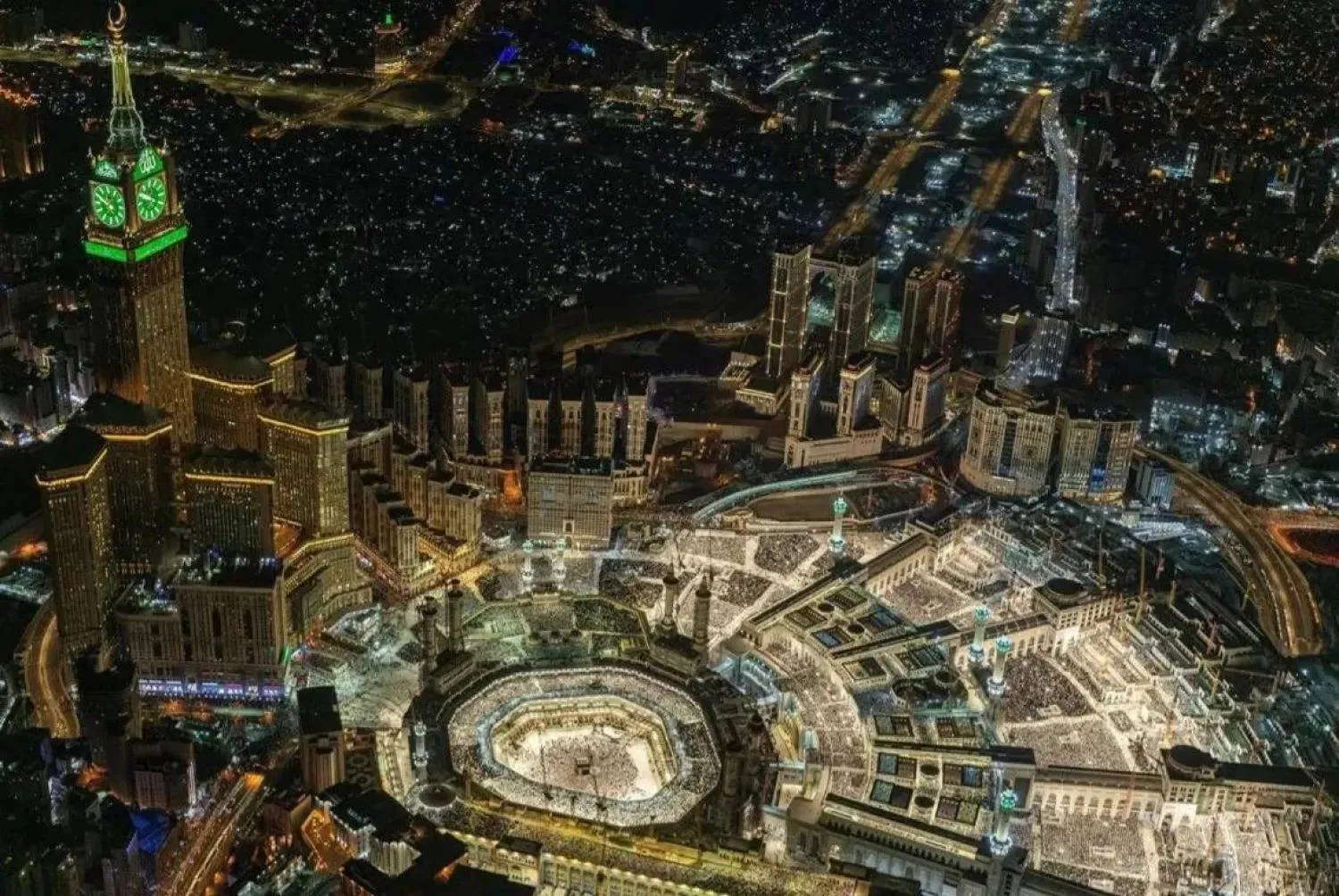
An aerial view of the Grand Mosque and parts of Makkah (SPA)
TT

Arab and Islamic Condemnations Follow Houthi Targeting of Makkah

An aerial view of the Grand Mosque and parts of Makkah (SPA)

The Houthi targeting of Makkah has drawn widespread condemnation across the Arab and Islamic world, with governments and religious institutions denouncing the attack and expressing solidarity with Saudi Arabia.

Syria, the United Arab Emirates, Bahrain, Türkiye, Algeria, Libya, Lebanon and Egypt joined the condemnation, with Al-Azhar and the Arab Parliament also denouncing the targeting of the holy city and stressing the need to respect its sanctity.

The statements described the targeting of Makkah as a grave escalation and a violation of the city’s religious sanctity, while reaffirming support for efforts to protect the holy sites and prevent further threats to regional security.

The statements also condemned the attack, calling for a firm international response to attempts to threaten the security of Makkah and the safety of worshippers, and underscoring the need to preserve the sanctity of the holy sites.