Several Beijing Districts Shut Schools as China COVID Cases Rise

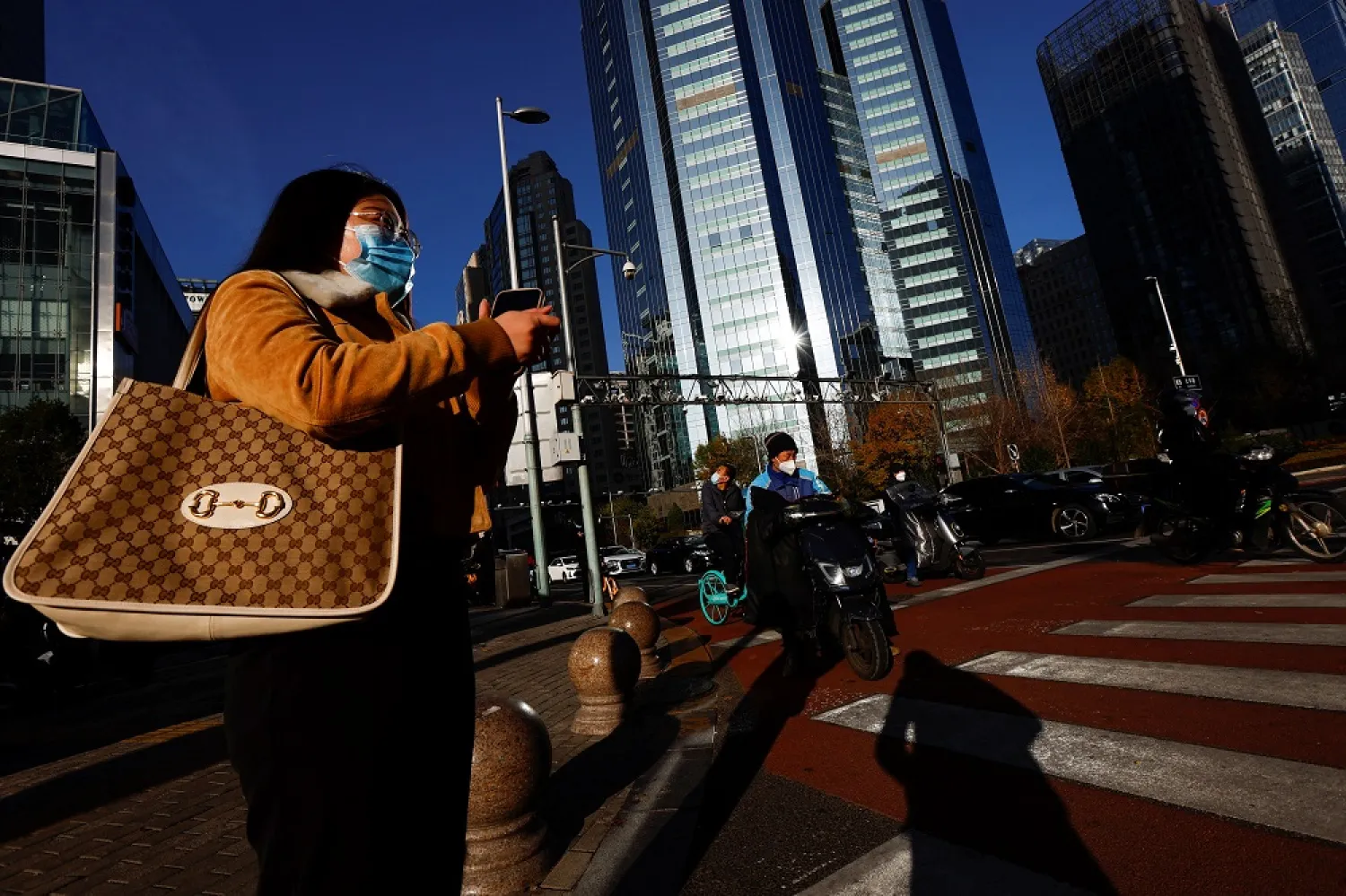
People wait to cross the street during morning rush hour, following the outbreak of the coronavirus disease (COVID-19), in the Central Business District (CBD) in Chaoyang District, Beijing, China November 21, 2022. (Reuters)
TT

Several Beijing Districts Shut Schools as China COVID Cases Rise

People wait to cross the street during morning rush hour, following the outbreak of the coronavirus disease (COVID-19), in the Central Business District (CBD) in Chaoyang District, Beijing, China November 21, 2022. (Reuters)

Students in schools across several Beijing districts buckled down for online classes on Monday after officials called for residents in some of its hardest-hit areas to stay home, as COVID cases in China's capital and nationally ticked higher.

China is fighting numerous COVID-19 flare ups, from Zhengzhou in central Henan province to Chongqing in the southwest and for Sunday reported 26,824 new local cases, nearing the country's pandemic peak in April. It also recorded two deaths in Beijing, up from one on Saturday, which was China's first since late May.

Guangzhou, a southern city of nearly 19 million people that is battling the largest of China's recent outbreaks, ordered a five-day lockdown for its Baiyun district, its most populous. It also suspended dine-in services and shut night clubs and theatres in Tianhe, home to the city's main business district.

The latest wave is testing China's resolve to stick to adjustments it has made to its zero-COVID policy, which calls for cities to be more targeted in their clampdown measures and steer away from catch-all lockdowns and testing that have strangled the economy and frustrated residents.

Asian share markets and oil prices slipped on Monday as investors fretted about the economic fallout from the intensifying COVID situation in China, with the risk aversion benefiting bonds and the dollar.

Several Chinese cities began cutting routine community COVID-19 testing last week, including the northern city of Shijiazhuang, which became the subject of fervent speculation that it could be a test bed for policy relaxation. This sparked worry among some local residents.

But late on Sunday, Shijiazhuang announced it would conduct mass testing in six of its eight districts over the next five days after new daily local cases hit 641. It also encouraged residents to shop online and ordered some schools to suspend in-person teaching.

"They lasted a week," said one popular comment on Weibo on Shijiazhuang's curbs, which was among the most viewed topics on the social media platform.

The capital Beijing reported 962 new infections, up from 621 a day earlier. Its sprawling Chaoyang district, home to 3.5 million people, urged residents to stay home, with school going online. Some schools in Haidian, Dongcheng and Xicheng also halted in-person teaching.

The People's Daily newspaper, the mouthpiece of the Chinese Communist Party on Monday published another article reiterating the need to catch infections early but avoid take a "one-size-fits-all" approach, its eighth such piece since China adjusted policy earlier this month.

‘Feeling the stones’

China's recent efforts to make its COVID-19 curbs more targeted have sparked investor hopes of a more significant easing even as China faces its first winter battling the highly transmissible Omicron variant.

Many analysts expect such a shift to begin only in March or April, however, with the government arguing that President Xi Jinping's signature zero-COVID policy saves lives and is necessary to prevent the healthcare system being overwhelmed.

Experts warn that full reopening requires a massive vaccination booster effort and a change in messaging in a country where the disease remains widely feared. Authorities say they plan to build more hospital capacity and fever clinics to screen patients and are formulating a vaccination drive.

Oxford Economics said it only expects and exit from zero-COVID in the second half of 2023, with vaccination rates for the elderly still comparatively low.

"From an epidemiological and political perspective, we do not think the country is ready yet to open up," it said in a Monday report.

Hao Hong, chief economist at GROW Investment Group, said in a separate note a gradual and managed reopening may already be underway, with rounds of back and forth as China "crosses the river while feeling the stones".

"Despite the mounting challenges, it is not a question of whether China will reopen, but a question of over how long a period and how best to manage to minimize healthcare costs and potential lives lost," he said. "We assign a probability of 4/5 to the gradual reopening scenario."


Iran Rules Out UN Inspections of Damaged Nuclear Sites Until War Ends

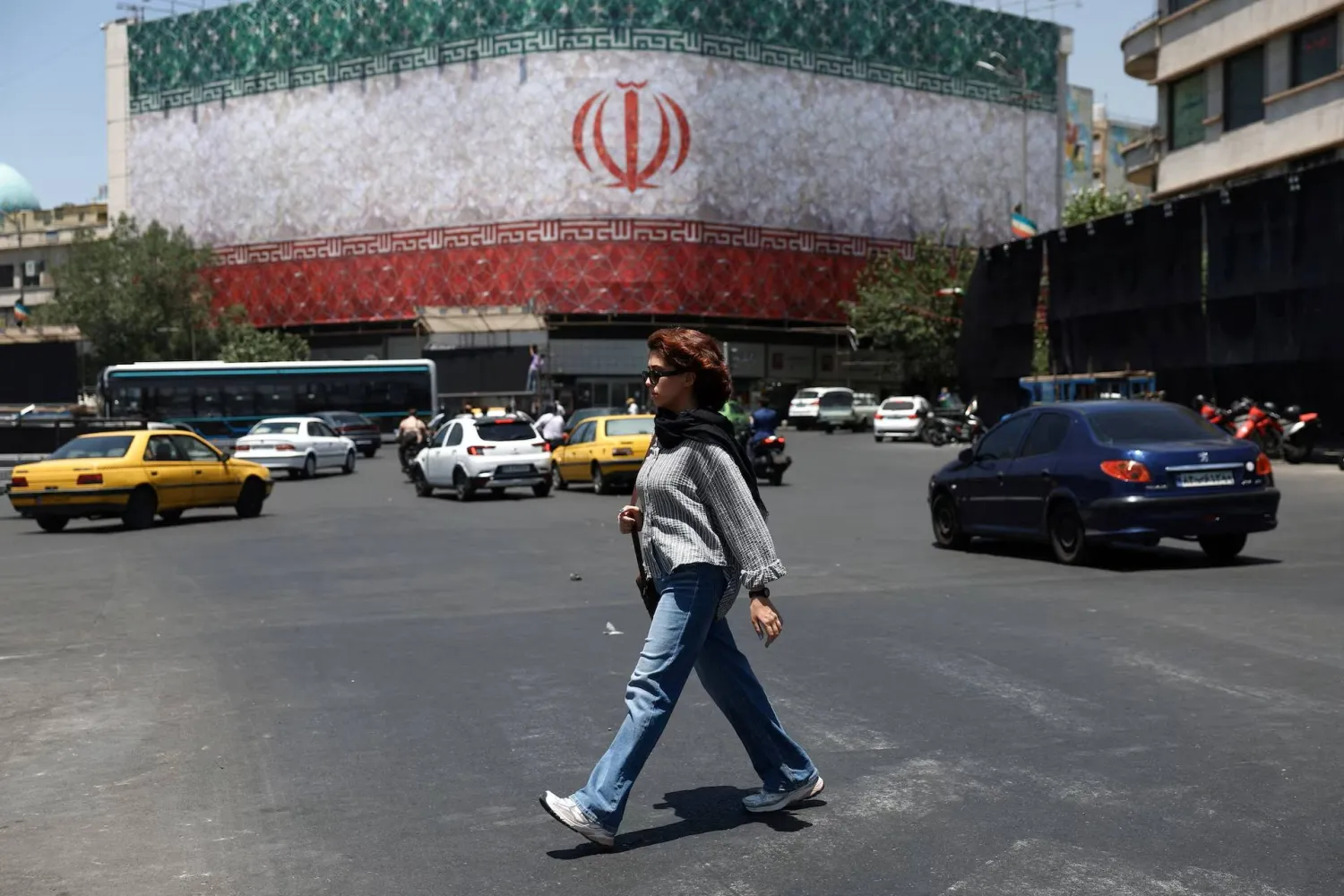
A street in Tehran, June 14, 2026. Majid Asgaripour/WANA (West Asia News Agency) via REUTERS
TT

Iran Rules Out UN Inspections of Damaged Nuclear Sites Until War Ends

A street in Tehran, June 14, 2026. Majid Asgaripour/WANA (West Asia News Agency) via REUTERS

Iran will not let UN inspectors visit its damaged nuclear facilities until the Middle East war has ended and the United States meets its conditions, a senior Iranian official said.

The remarks came days after the International Atomic Energy Agency urged Tehran to take steps towards resuming inspections, which have been suspended since last year's 12-day war with Israel, when the US also struck Iranian nuclear sites.

"We will not grant the IAEA access to the facilities until Iran's conditions are met and the war has permanently ended," Deputy Foreign Minister Kazem Gharibabadi said in a televised interview late Sunday.

Iranian nuclear facilities were hit again during the war which broke out on February 28 when US-Israeli strikes killed Iran's supreme leader Ali Khamenei.

IAEA inspectors visited Iran's Bushehr nuclear power plant in September but have not gained access to other bombed sites including Natanz, Fordow and Isfahan.

Gharibabadi said the agency's request to inspect damaged facilities was "likely aimed at assessing the effectiveness of American weaponry".

Efforts to end the Middle East war have made little headway. Tehran is demanding that Washington unfreeze Iranian assets and lift sanctions, among other conditions, in exchange for reopening the Strait of Hormuz, the vital energy shipping route it has blockaded during the conflict.

Iranian officials have said talks on Iran's nuclear program would come at a later stage.

Earlier this month, the US military announced a $20 million reward for information on Iran's nuclear program, a move Tehran called "repugnant".


A Fire in a Building in Southern Thailand Kills 11 People

 In this image taken with a smartphone and provided by the Kusoldharm Phuket Foundation, damage is seen at a motorcycle rental shop on the ground floor of a residential building following a fire in Phuket, Thailand, Monday, Nov. 16, 2026. (Kusoldharm Phuket Foundation via AP)
In this image taken with a smartphone and provided by the Kusoldharm Phuket Foundation, damage is seen at a motorcycle rental shop on the ground floor of a residential building following a fire in Phuket, Thailand, Monday, Nov. 16, 2026. (Kusoldharm Phuket Foundation via AP)
TT

A Fire in a Building in Southern Thailand Kills 11 People

 In this image taken with a smartphone and provided by the Kusoldharm Phuket Foundation, damage is seen at a motorcycle rental shop on the ground floor of a residential building following a fire in Phuket, Thailand, Monday, Nov. 16, 2026. (Kusoldharm Phuket Foundation via AP)
In this image taken with a smartphone and provided by the Kusoldharm Phuket Foundation, damage is seen at a motorcycle rental shop on the ground floor of a residential building following a fire in Phuket, Thailand, Monday, Nov. 16, 2026. (Kusoldharm Phuket Foundation via AP)

A fire burned through a building in southern Thailand early Monday, killing 11 people, authorities said.

The fire started around 2 a.m. in the building in Phuket that has a motorcycle rental shop on the ground floor and residences on the upper floors, officials of the local government said. It took firefighters about an hour to bring the fire under control.

There were 17 other people who were slightly injured.

Phuket police commander Surachai Sooksai said officers are still investigating the cause of the fire, but initial investigations found an electrical transformer near the building had exploded shortly before the fire started.

Phuket Gov. Chodnarin Koedsom said the rental shop had about 100 motorcycles, along with stored gas, engine oil, plastic materials and tires. He said these combustible materials may have contributed to the rapid spread of the fire and the thick, toxic smoke.

He said the victims appeared to try to escape the fire to the higher floors. One body was found on the third floor and 10 others were found on the fifth floor.

Phuket is on an island in southern Thailand and a popular tourist destination.


China Says Xi-Putin-Trump Meeting Has ‘Groundbreaking Significance’

US President Donald Trump looks at Chinese President Xi Jinping as Xi arrives ahead of a state visit at Joint Base Andrews, Maryland, US, September 23, 2026. (Reuters)
TT

China Says Xi-Putin-Trump Meeting Has ‘Groundbreaking Significance’

US President Donald Trump looks at Chinese President Xi Jinping as Xi arrives ahead of a state visit at Joint Base Andrews, Maryland, US, September 23, 2026. (Reuters)

China's Foreign Ministry said on Monday that this week's trilateral meeting between the Chinese, US and Russian leaders is of "groundbreaking significance" and will promote world peace and stability.

The meeting between Chinese President Xi Jinping, US President Donald Trump and Russian President Vladimir Putin will take place on Thursday in China's southern city of Shenzhen, the site of this week's APEC summit.

Trump will raise efforts to reduce nuclear arms at the meeting, ‌the White House ‌said last week. China has rebuffed attempts ‌to ⁠talk about nuclear ⁠arms with Russia and the United States, which have the largest stockpiles of such weapons.

Chinese Foreign Ministry spokesperson Mao Ning told reporters in Beijing this would be the first face-to-face meeting among the heads of state of China, Russia, and the United States.

"They will exchange views in ⁠depth on safeguarding world peace and promoting strategic ‌stability in major-power relations, which ‌is of groundbreaking significance," she added.

Under the current circumstances, the ‌three countries bear an important responsibility to cooperate in ‌addressing global challenges and to promote world peace and stability, Mao said.

"Stronger communication among China, Russia, and the United States, along with managing differences and stabilizing relations, serves the interests of all ‌three countries," she added.

It also meets the expectations of the international community, and helps "stabilize the ⁠global situation ⁠and advance dialogue and cooperation".

Mao did not give details of what exactly is on the agenda for the trilateral meeting.

Speaking in Manila on Monday, UN chief Antonio Guterres said the United Nations is prepared to support any denuclearization effort that may arise from the summit meeting of the three countries.

China has said it was more appropriate for Russia and the US to speak directly because of their large arsenals.

The UN has long advocated nuclear disarmament, warning that rising geopolitical tension and growing rivalry among major powers have fueled global nuclear risks.