Eight Reasons Behind European 'Belated Recognition' of Iran’s Threathttps://english.aawsat.com/home/article/4003451/eight-reasons-behind-european-belated-recognition-iran%E2%80%99s-threat
Eight Reasons Behind European 'Belated Recognition' of Iran’s Threat
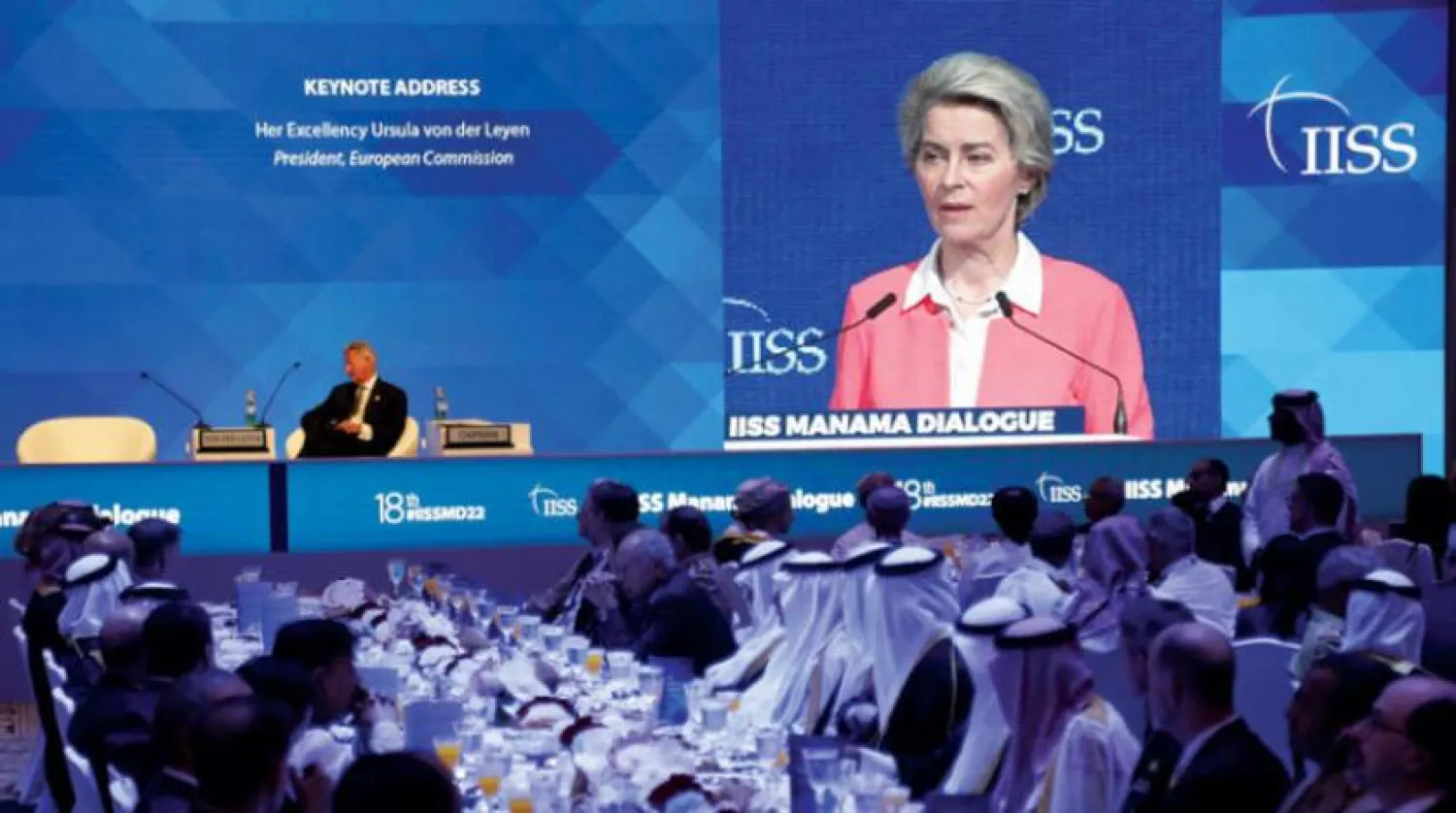
European Commission President Ursula von der Leyen during her opening speech at the Manama Dialogue on Nov. 18 (AFP)
Manama- Ibrahim Hamidi
TT
TT
Eight Reasons Behind European 'Belated Recognition' of Iran’s Threat
European Commission President Ursula von der Leyen during her opening speech at the Manama Dialogue on Nov. 18 (AFP)
European Commission President Ursula von der Leyen chose the Manama Dialogue platform to reveal an acknowledgement that the Europeans took a long time to “understand a very simple fact that while we work to prevent Iran from developing nuclear weapons, we must also focus on other forms of weapons proliferation, from drones to ballistic missiles.”
This “recognition”, which came from the top European official, and on a Gulf platform, surprised those present at the public opening session of the Manama Dialogue, including dozens of senior military officials in the region and the world.
In fact, this statement was only an evidence to the position that Western countries have reached in the recent period, as participants noted in this edition of the Bahraini capital dialogue an escalating US and European rhetoric against Tehran and its policies in the region and the world, in conjunction with the successive Western sanctions on Iranian figures and entities.
But what are the reasons behind this sudden change in the European position?
According to analyses by Western officials in closed sessions, on the sidelines of the Manama Dialogue, we can talk about the accumulation of a series of reasons:
First, the nuclear negotiations. There is a belief that Western countries agreed to present a “fair and good offer” to the Iranian delegation in Vienna last March. But Tehran has not yet responded, nor has it retracted the steps it had taken on the nuclear front. Rather, it stepped up nuclear enrichment of uranium, and externally, moved its proxies in more than one arena in the region and the world. It is estimated that the threshold for nuclear weapons has decreased to “weeks” after it was “months.”
Second, the International Energy Agency. UN reports showed continued work on uranium enrichment in three facilities. Tehran refused to cooperate with the UN institution or reply to its requests, which led to a decision by the Agency’s Board of Governors with the support of 35 countries. It appears that Tehran responded by initiating 60 percent enrichment at the Fordow facility using IR-6 centrifuges.
Third, protests and cracks. The steadfastness and expansion of protests in Iran after the murder of the young Kurdish woman, Mahsa Amini, and the high degree of violence committed by the Iranian security services, highlighted “the fragility of the system.”
In remarks on the sidelines of the Manama Dialogue, Intelligence experts and diplomats said that they believe that the collapse of the regime was unlikely, but raised questions about the outcome of the protests, with regards to the successor of Ali Khamenei, the nuclear program or the structure of the regime.
Fourth, documents and agents. Western officials have monitored Iran’s manipulation of its proxies and militias in Iraq, Syria, Yemen and others. There has been talk of a Western interception of weapons sent to the Houthis in the Gulf and to Hezbollah in Syria, the bombing of Iraqi Kurdistan, and expansions in countries such as Albania.
Fifth, threats. Western countries, including Britain and Canada, monitored serious threats by Iranian agencies to opponents and journalists covering the Iranian file and the protests. This was met with diplomatic summons by London and Ottawa, and the adoption of security measures to protect sites and media and political figures in Britain and Canada.
Sixth, the Iranian drones in Ukraine. Perhaps the most important reason is Iran’s involvement, alongside Russia, in the Ukraine war. The Russian army’s use of Iranian “drones” to bomb areas in Ukraine has been confirmed. A number of Western officials spoke, in closed meetings, of evidence of the presence of Iranian military experts in Crimea, and indications of the imminent arrival of Iranian ballistic missiles to Ukraine. One of them asked: “How will the West feel when it wakes up to the news of the fall of an Iranian missile in Kyiv, a European capital?” While another asked: “What is the fate of betting on Russia’s support in Syria and others to curb Iran’s role?”
At this point, talks emerged about the Iranian-Russian thread, as British Foreign Secretary James Cleverly said that the policies of Moscow and Tehran are “a threat to the region and the world.”
Seventh, the effect of energy. There is an additional reason for the “Western spinning” towards the Gulf, which is the renewed belief in the importance of gas, oil and sea lanes in that region of the world. In the face of Tehran’s behavior and the growing importance of the Gulf role, the statements of European and Western officials and their public visits came to recognize the new equation.
Eighth, neutrality. Participants also interpreted this new position as a Western desire to push Arab countries out of neutrality in the Ukraine war. Among the attendees, an Arab official whispered after Ursula von der Leyen’s statement: “Suddenly, they want us to support their positions... What about our issues?”
Another official pointed to Western attempts to “get us out of neutrality and support the Western position in Ukraine.”
It is clear that there is another Gulf - Arab position. Initially, caution was observed in statements and stances towards Iran during the Manama Dialogue, and some regional participants were happy about the late European revelations.
There was no Gulf coping with the Western rush and the European “urgency” for the partnership. While cautious positions were noted, a “diplomatic attack” came from the Secretary-General of the Gulf Cooperation Council, Nayef Al-Hajraf.
In the opening speech that included the campaign against Iran, Ursula von der Leyen criticized the “slowness” of the Gulf Cooperation Council to sign a collective joint agreement with the European Union, and warned of the possibility of resorting to bilateral agreements with each Gulf country if long-decade negotiations did not result in an agreement between the two blocs.
This criticism was met with a similar response from Al-Hajraf, who requested to make an immediate speech. Negotiations took place and a quick bilateral meeting was held to resolve the problem, and it was believed that the page had been turned. But the next day, Al-Hajraf returned to the matter, and before giving his speech on another subject, he insisted on responding to Ursula von der Leyen’s criticism, saying: “We are ready when you are.”
In the public sessions of the Manama Dialogue and during its private bilateral meetings and talks, there were additional signs of the features of the new equation, which was expressed by one of the participants who said: “It is possible to talk about the centrality of the Gulf and the growing Western and Chinese interest in the region... Riyadh’s hosting of the Gulf Cooperation Council summit, in addition to the Arab summit that will be attended by Chinese President Xi Jinping next month, after a similar summit with US President Joe Biden, is further evidence of this centrality.”
Drones vs. Airstrikes: How the Deterrence Equation Between Israel and Hezbollah Changedhttps://english.aawsat.com/features/5282016-drones-vs-airstrikes-how-deterrence-equation-between-israel-and-hezbollah-changed
Drones vs. Airstrikes: How the Deterrence Equation Between Israel and Hezbollah Changed
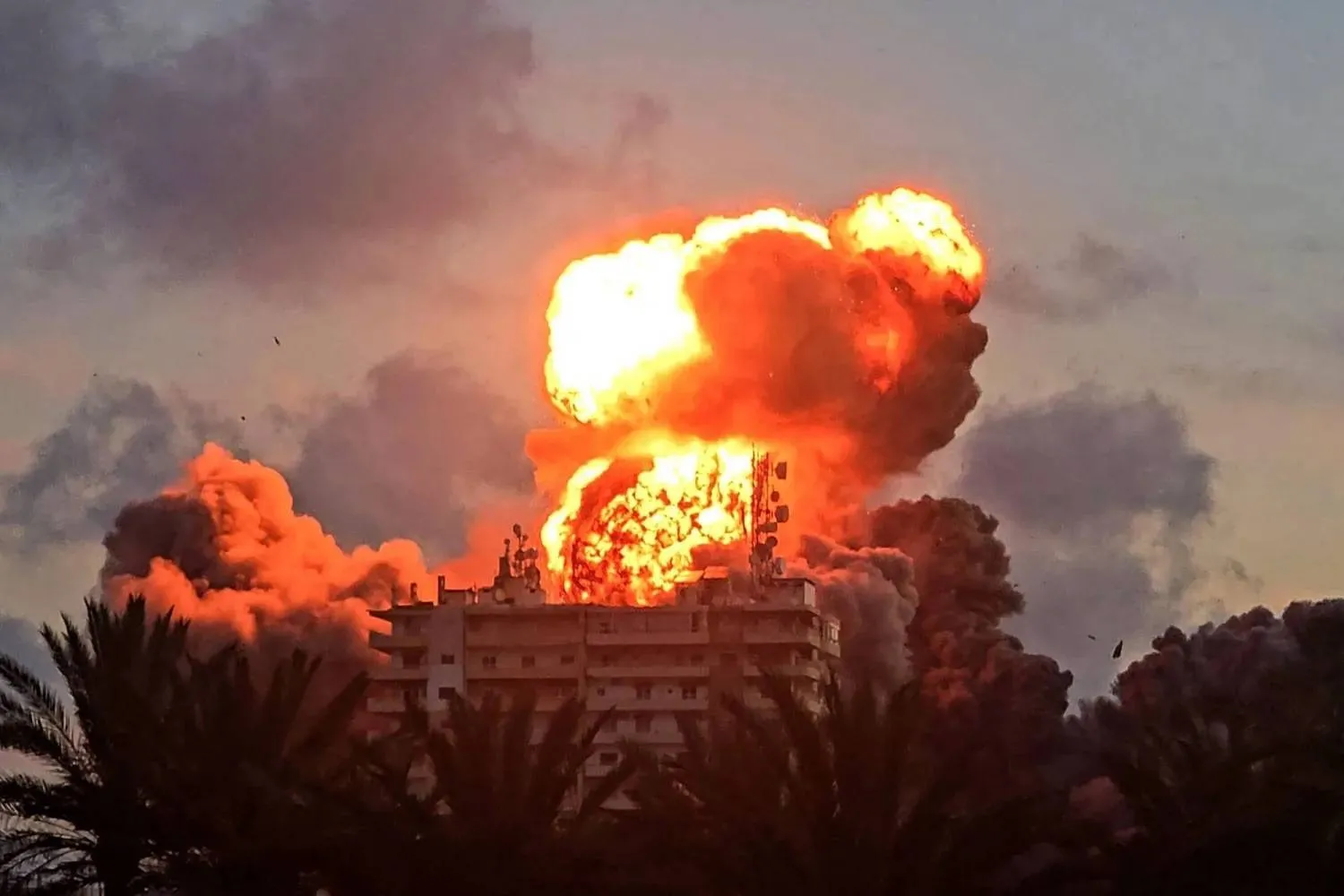
A fireball rises from a building in the southern Lebanese city of Tyre following an Israeli airstrike (AFP).
Israel is pressing forward with firepower, evacuation warnings, and limited ground incursions, while Hezbollah is responding with drones and direct engagements along advanced positions north of the Litani River.
Yet behind this reciprocal escalation, the deterrence equation that governed the border throughout the years following the 2006 war appears to be facing an unprecedented test, as military operations expand and reach areas that until recently were considered beyond the immediate danger zone.
Airstrikes that now reach as far as Zahrani, clashes around Zawtar al-Sharqiya, and Israel’s gradual advance toward the outskirts of Nabatieh all indicate, according to Lebanese military assessments, that the confrontation has entered a different phase.
In this new stage, drones alone are no longer capable of maintaining a deterrent balance, while Israel is pursuing a policy of mounting military pressure aimed at reshaping realities on the ground ahead of any potential settlement or negotiations.
Drones Do Not Create Deterrence
Retired Brig. Gen. Dr. Hisham Jaber, head of the Middle East Center for Studies argued that the drones used by Hezbollah do not achieve genuine deterrence against the continued expansion of Israeli air and ground operations.
He maintained that Israel’s ongoing airstrikes and ground incursions demonstrate that the deterrence equation is no longer functioning.
Jaber also linked battlefield developments to the erosion of the deterrence that had existed after the 2006 war, arguing that “the deterrence that lasted from 2006 to 2023 was real and effective.” However, he said Hezbollah’s entry into a war of attrition after opening its support front for Gaza led to the collapse of that equation.
He further warned that Israel’s objectives may not be limited to Zawtar and its surroundings but could expand farther north.
A Policy of Depopulation and Prolonged Attrition
Jaber said Israel’s policy of warnings and evacuations is designed to empty areas of their civilian populations.
“Once Israel evacuates an area of its residents, it becomes able to strike any movement within it,” he explained. “At that point, anyone traveling by car or motorcycle becomes a potential target.”
He added: “My greatest concern is that southern Lebanon may already have entered a prolonged war of attrition, because current battlefield indicators do not suggest a quick path toward ending this escalation or returning to the previous rules of engagement.”
Assessing both the military and political landscape, he argued that Israeli Prime Minister Benjamin Netanyahu “will not stop the war in Lebanon at this stage, regardless of the losses incurred,” noting that Israel “has not yet achieved any of its declared military or political objectives.”
He added that “Tel Aviv has failed to disarm Hezbollah and has also been unable to impose the conditions it seeks on Lebanon.”
According to his assessment, current developments indicate that “things will not return to the way they were,” arguing that the conflict has entered a new phase that will have lasting consequences for southern Lebanon and the balance of power there.
As for Hezbollah, Jaber said the group also “cannot simply halt the war midway through, given the complexities of the battlefield and the interwoven regional and international calculations.”
No Deterrent Balance Exists
For his part, retired Brig. Gen. Khalil Helou argued that “the drones used by Hezbollah have failed to establish a deterrent balance against Israel’s intensive air campaign,” stressing that “Israel is inflicting far greater damage and losses than it is receiving.”
He explained that fiber-optic-guided FPV (First-Person View) drones suffer from technical limitations related to both range and payload capacity.
“In practical terms, the range of these drones is between three and 15 kilometers and may reach around 20 kilometers as a reasonable upper limit,” he said. “The cable connecting the drone adds weight and affects its operational capabilities.”
Helou argued that claims of their use at distances of up to 60 kilometers are “militarily unrealistic.”
He added that “Hezbollah is attempting to achieve battlefield effects and inflict casualties through drones, but developments on the ground show that Israel is imposing far greater damage on both Hezbollah and Lebanon.”
Have Hezbollah’s Drones Changed the Rules of Engagement with Israel?https://english.aawsat.com/features/5281999-have-hezbollah%E2%80%99s-drones-changed-rules-engagement-israel
Have Hezbollah’s Drones Changed the Rules of Engagement with Israel?
Smoke rises following Israeli bombardment on the village of Jibchit in southern Lebanon on May 23, 2026. (AFP)
The “support war” waged by Lebanon’s Hezbollah in backing Hamas in late 2023 shattered the doctrine of “deterrence” that the Iranian-backed group had embraced and promoted for nearly two decades in its confrontation with its traditional adversary, Israel. Israel, for its part, also helped reinforce this assumption, which proved entirely mistaken the following year. The new round of fighting in 2026 then offered both sides an opportunity to establish a new set of rules governing the conflict.
Israeli patience and cunning
Israel did not rush into a direct war with Hezbollah after the group launched a wave of largely “performative” attacks, beginning with rockets fired at the outskirts of Israeli military positions in the Shebaa Farms. Instead, it quietly steered the confrontation in a different direction, displaying notable restraint and considerable strategic calculation.
This approach was reflected in diplomatic efforts undertaken by Tel Aviv through Washington to persuade Hezbollah to separate the Lebanese front from the Palestinian one. In July 2024, then US envoy Amos Hochstein reportedly told Lebanese officials that he was prepared to deliver what would amount to a political victory for Hezbollah Secretary-General Hassan Nasrallah if the group halted its operations.
Nasrallah immediately rejected the proposal. According to those who relayed the message to him, he replied that the war in Gaza would first have to end. After that, other matters could be discussed.
This was not Hezbollah’s first strategic misjudgment. The shape of the new conflict unfolding in Lebanon’s border villages quickly revealed a clear Israeli technological and military advantage. A senior Hezbollah official later disclosed that in previous confrontations, fighters could launch a rocket, calmly gather their equipment after informing command that the launch had been successful, and leave the site before Israeli aircraft arrived.
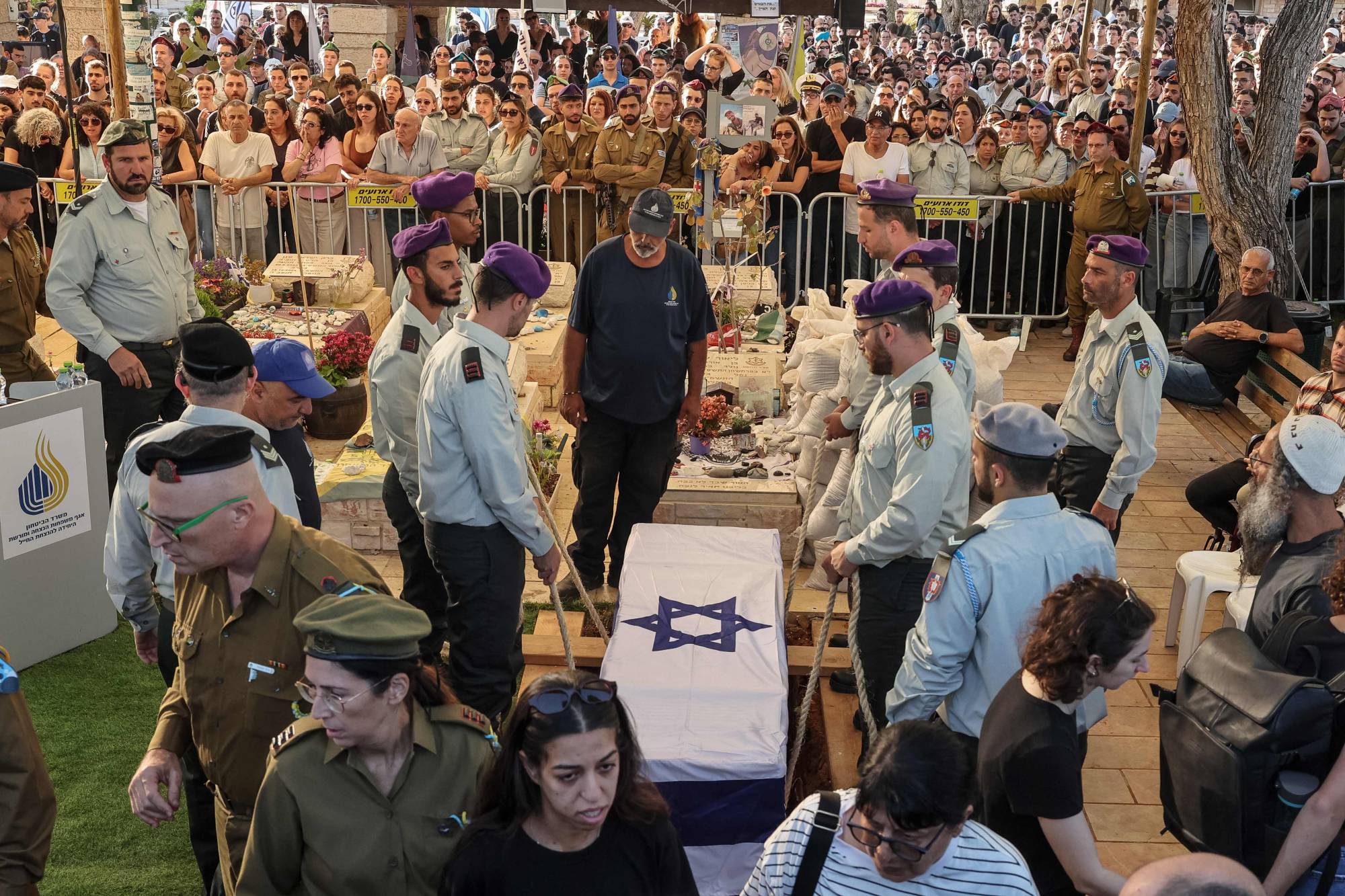
People react while attending the funeral of an Israeli soldier Captain Doctor Ori Yosef Silvester, a 30-year-old army doctor for the Givati Brigade's Shaked Battalion, who was killed in southern Lebanon, at the Segula Cemetery in Petah Tikva on June 2, 2026. (AFP)
In the new conflict, however, the window between launch and retaliation had narrowed to between five and twenty seconds. As a result, the official said, fighters often dug into the ground and sought immediate cover after firing in the hope of surviving. Every launch effectively became a near-suicidal operation.
Subsequent developments underscored Israel’s superiority even more clearly. Israeli forces carried out a series of precise assassinations targeting Hezbollah military commanders, culminating in a strike that eliminated most of the leadership of the Radwan Force, the group’s elite unit.
Israel then killed Hezbollah’s military commander and launched the “pager operation,” which put thousands of Hezbollah operatives out of action at the push of a button. This was followed by the assassination of Nasrallah in a massive airstrike on Beirut’s southern suburbs and, later, the killing of his successor, Hashem Safieddine.
Instruments of war
According to field sources, the weapons and tactics employed by both sides suggest that they prepared for a prolonged war of attrition rather than a decisive battle.
Beginning in the first week after the latest ceasefire agreement, Hezbollah reduced its reliance on rockets, scaled back the use of suicide drones, and curtailed the deployment of guided anti-tank missiles, whose operators were often vulnerable to detection. Instead, it introduced first-person-view (FPV) drones.
These drones are typically operated within a range of 10 to 15 kilometers in southern Lebanon and are guided through fiber-optic cables linking the aircraft directly to its operator. A thin wire connects the control station to the drone carrying the explosive payload, allowing it to evade electronic jamming.
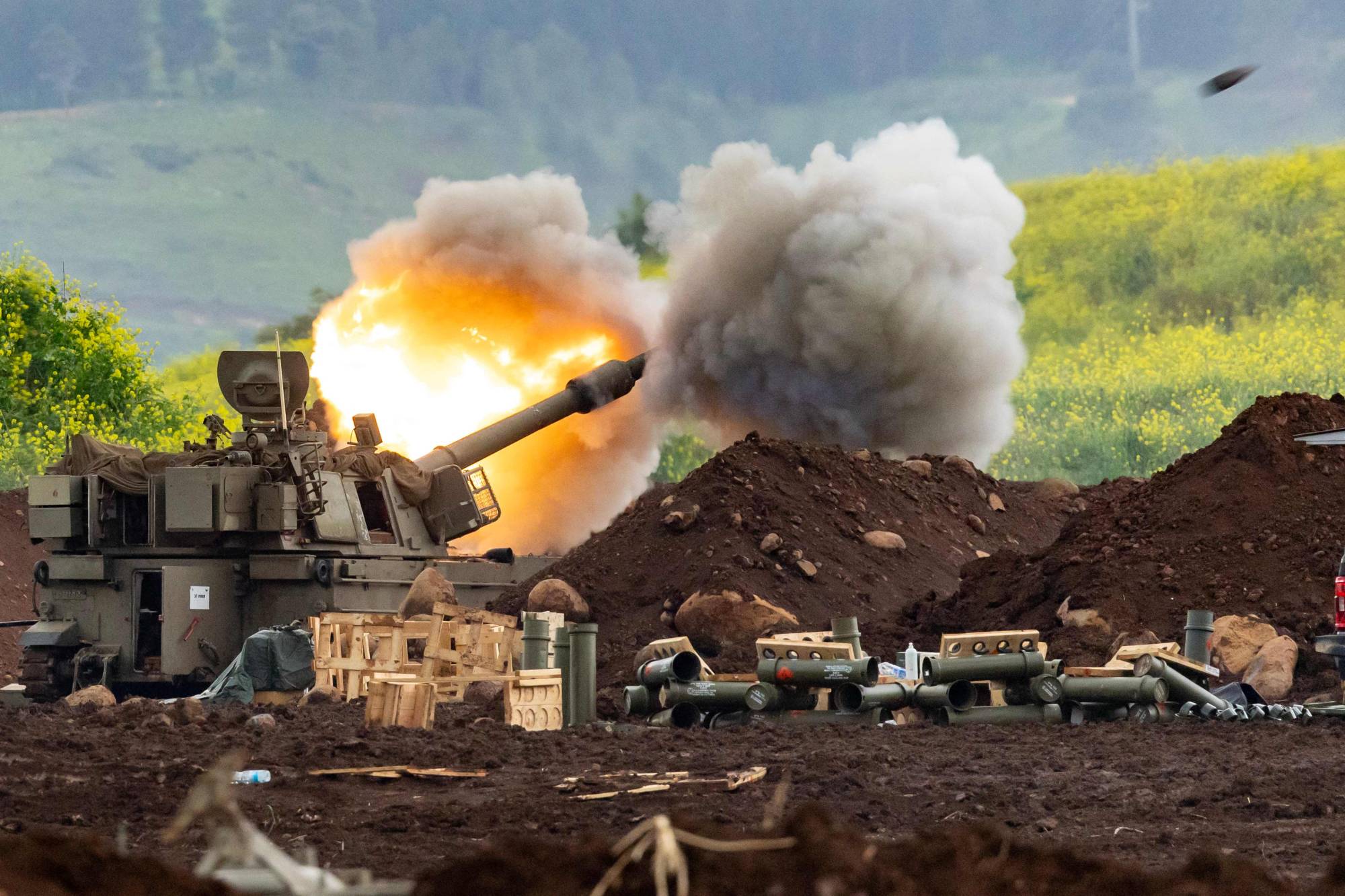
An Israeli self-propelled howitzer artillery gun fires rounds towards southern Lebanon from a position in the upper Galilee in northern Israel near the border on March 15, 2026. (AFP)
Hezbollah in 2026: A war of drones
Hezbollah sought to regain the initiative in the latest conflict, which erupted in March and coincided with the war with Iran. Israel conveyed a message that it was not interested in opening a front with Lebanon so long as Hezbollah remained on the sidelines.
The group reassured officials in Beirut that it would not initiate hostilities. It nevertheless surprised observers by launching rockets toward northern Israel, prompting a fierce Israeli response.
Unlike the image it initially projected through the launch of six rudimentary rockets, Hezbollah appeared far more organized and capable in the fighting that followed, revealing capabilities that had remained concealed during 15 months of relative calm. The group claimed to be carrying out as many as 100 operations a day against Israeli forces and introduced new weapons systems to the battlefield.
Its ground strategy also evolved. Rather than relying on static defenses or attempting to halt Israeli advances outright, Hezbollah focused on inflicting the greatest possible damage on advancing forces.
Rise of drones
Rockets no longer dominate the battlefield between Israel and Hezbollah. After weeks of fighting that erupted in the spring of 2026, a notable shift emerged in the military operations, with attack and suicide drones moving to the forefront and becoming one of the most influential factors shaping combat on both sides of the border.
For years, Hezbollah’s military identity was closely associated with its vast rocket arsenal, which represented Israel’s primary security concern. The current conflict, however, has shown that the group no longer relies exclusively on rockets. Instead, it has expanded its use of drones on a large scale.
According to Israeli assessments, a substantial share of Hezbollah’s recent attacks has involved attack and suicide drones, while conventional rockets have assumed a less prominent role than before.
Israeli researchers argue that this shift reflects lessons drawn from recent conflicts, particularly the war in Ukraine, where inexpensive drones demonstrated their ability to inflict significant losses on technologically superior forces.
According to Israeli reports and military studies published since the outbreak of the war in March, Hezbollah’s principal weapon is no longer its rocket arsenal alone but the attack and suicide drones that have become the primary threat facing Israeli forces in southern Lebanon.
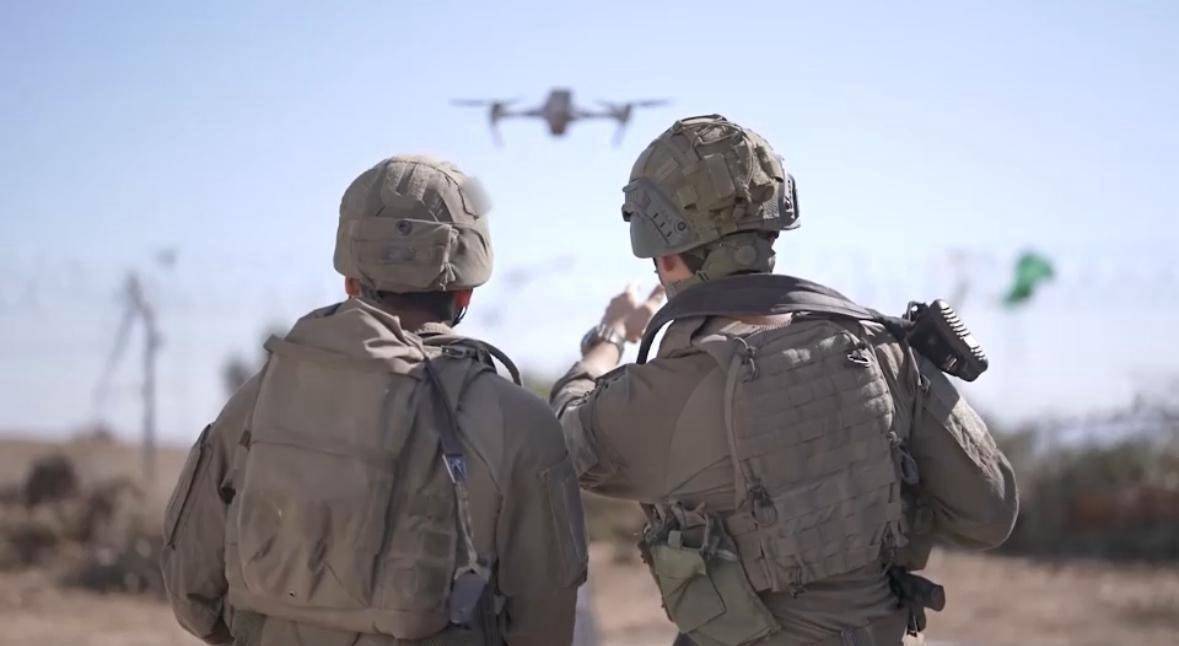
Israeli soldiers operate a drone. (Israeli army)
Foremost among these are FPV suicide drones guided by thin fiber-optic cables, making them effectively immune to electronic jamming. Their small size, low-altitude flight profiles, and erratic maneuverability pose additional challenges for Israeli radar and air-defense systems.
These drones carry relatively small explosive payloads, typically weighing no more than five kilograms. A Lebanese security source told Asharq Al-Awsat that Hezbollah employs three different types of warheads depending on the intended target—whether a tank, a conventional vehicle, or personnel.
Former Israeli officers say the threat posed by these drones extends beyond fixed military targets. They are also capable of tracking moving forces and striking tanks, vehicles, and field command centers, placing continuous pressure on Israeli ground units in southern Lebanon.
No definitive figures are available regarding the number of suicide drones Hezbollah has used since the beginning of the war. Unofficial Israeli estimates, however, suggest that the number may range from several hundred launches to more than a thousand.
Israel recently stated that Hezbollah had launched more than 120 drones of this type. The group, meanwhile, has released dozens of videos purporting to show drones striking vehicles, armored platforms, electronic systems, and personnel in the field.
Israel says Hezbollah’s operations have killed 20 soldiers and wounded dozens more since March.
In addition, Hezbollah has claimed responsibility for detonating explosive devices against Israeli vehicles deep inside operational areas and for repelling Israeli incursions using light and medium machine guns, as well as rocket-propelled grenades (RPGs).
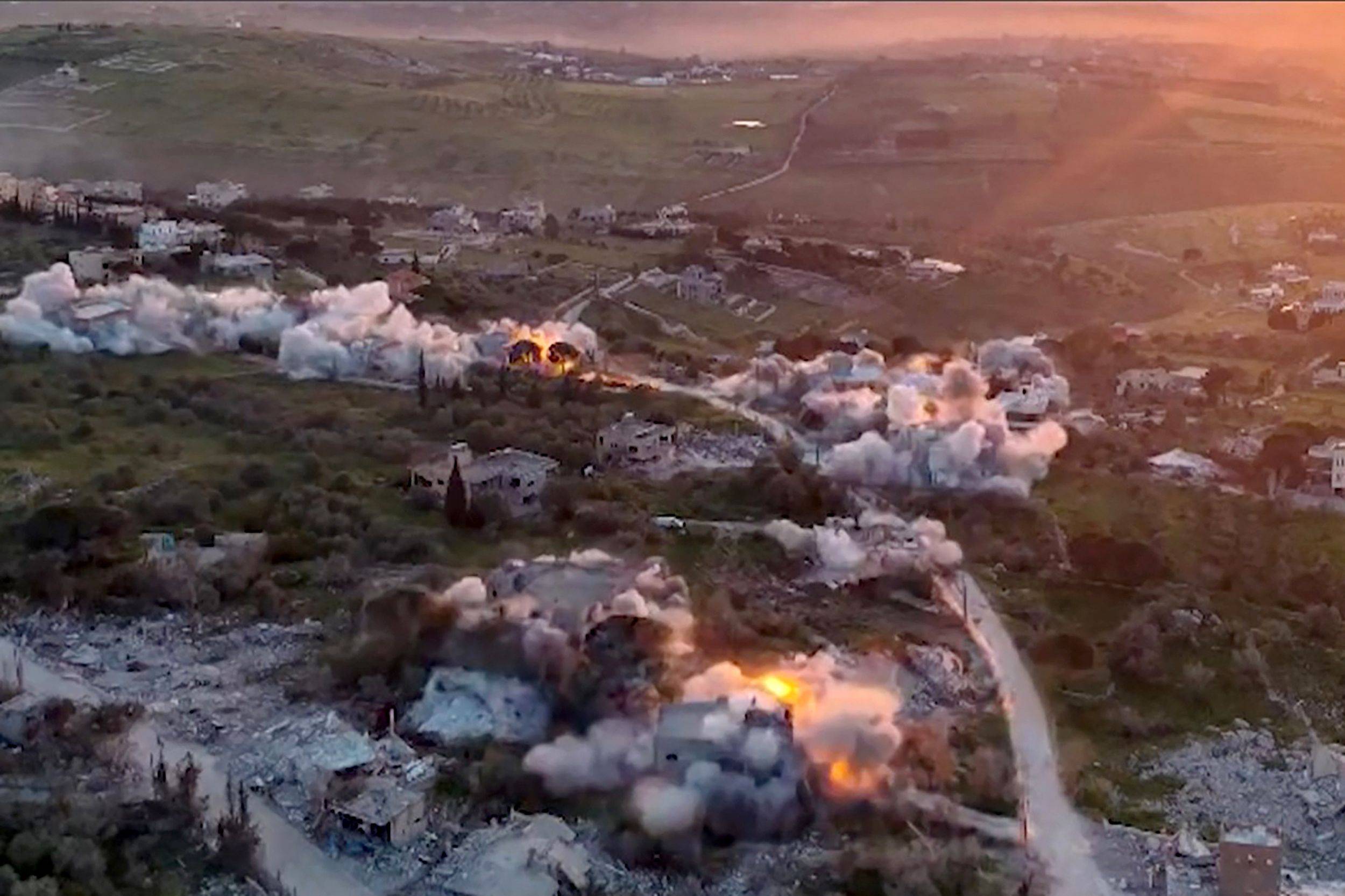
A screengrab image taken from a handout video released by the Israeli army and created on April 27, 2026, shows Israeli army footage of what it says is the destruction of Hezbollah infrastructure in Lebanon, where a ceasefire has been in place since mid-April. (Israel Army / AFP)
Anti-armor missiles
Anti-armor missiles remain the backbone of Hezbollah’s ground warfare capability and have been used against Israeli tanks, vehicles, and fortifications.
Israeli sources point in particular to the Almas missile family, derived from Israel’s Spike missile system. According to those sources, Iran reverse-engineered the weapon after Hezbollah fighters captured an Israeli missile during the 2006 war. Russian-made Kornet systems and other anti-tank platforms also remain in service.
A third category of weapons consists of short- and medium-range rockets and artillery projectiles used extensively against military positions, troop concentrations, and bases in the Galilee and northern Israel. Their use, however, declined relative to drones during many phases of the 2026 conflict.
Reconnaissance and attack drones
Reconnaissance and attack drones rank fourth among Hezbollah’s principal battlefield systems.
Not all of them are suicide drones. Some are used for surveillance, fire correction, and target acquisition, while others carry small munitions and return to base after completing their missions.
Israeli sources have also reported limited use of anti-aircraft missiles and air-defense fire directed at Israeli aircraft.
Nevertheless, these systems have not proven as decisive as drones and anti-armor missiles in the current conflict.
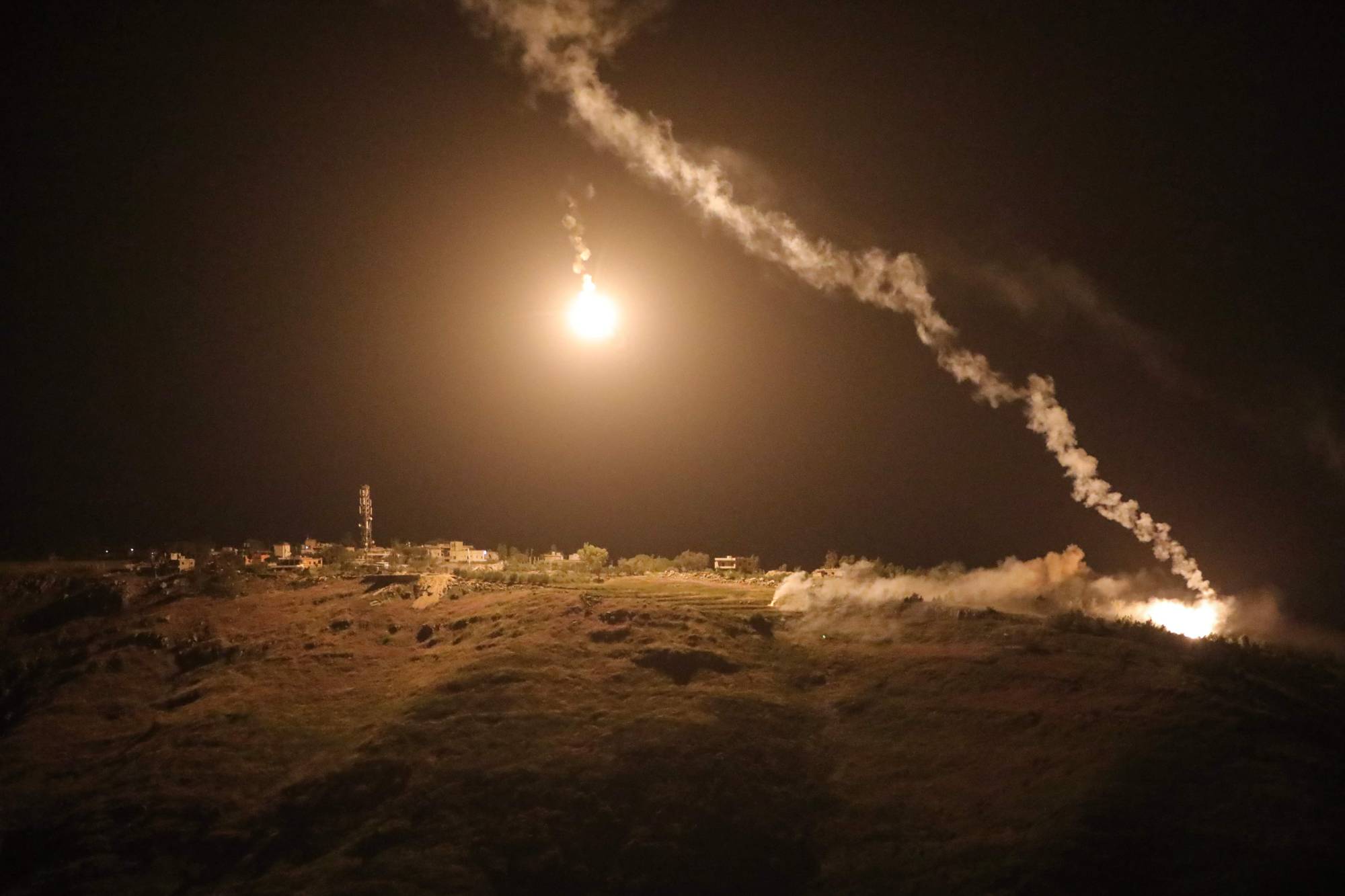
A photograph taken from the southern area of Marjeyoun shows flares fired by the Israeli military descending over the village of Arnoun late on May 13, 2026. (AFP)
Evolving tactics
Israel, too, has adapted its methods of warfare.
Rather than relying primarily on armored formations advancing under air cover, it has sought to reduce casualties and increase mobility.
Lebanese security sources said the Israeli military has adopted tactics centered on small special forces teams moving along unpaved routes to avoid mines and ambushes. At the first sign of resistance, these units withdraw while combat aircraft strike hostile firing positions.
Alongside heavy air raids conducted by fighter jets and precision strikes carried out by drones against individuals traveling in cars and motorcycles, Israel has introduced two additional systems to the battlefield.
The first consists of loitering munitions, which have appeared in footage targeting motorcycles and personnel in the field.
The second is the extensive use of guided artillery rounds in 155 mm and 240 mm calibers, according to field sources in southern Lebanon. These systems have been employed against villages located well beyond the border zone.
The sources described the rounds as laser-guided, providing greater accuracy and enabling strikes at distances reaching up to 30 kilometers inside Lebanese territory.
According to Israeli statements and observations by military research centers during the 2026 war, unmanned aerial systems have been among the most heavily utilized assets in Lebanon. Israel maintains an extensive drone network covering both front-line and rear areas, including the Hermes 900 and Hermes 450 platforms, as well as smaller Skylark reconnaissance drones.
These systems have been used for surveillance, target acquisition, fire direction, and precision strikes against both mobile and fixed targets.
A beachgoer stands in the water against the backdrop of smoke rising from the site of an Israeli strike that targeted the southern Lebanese village of al-Mansouri on May 22, 2026. (AFP)
Precision munitions and guided missiles
Israel has also employed long-range missiles from the Spike NLOS family, as well as precision-guided aerial munitions launched from aircraft and drones against command centers and launch sites.
Tanks and armored units remain central to Israeli ground operations in southern Lebanon, although many have come under attack from drones and anti-armor missiles.
Israel has also employed artillery, surface-to-surface missiles, long-range rocket launchers, and self-propelled guns to strike targets deep inside Lebanon, along with precision ground-to-ground missiles against preselected objectives.
Air-defense systems
Israel possesses several major air-defense systems, most notably Iron Dome, David’s Sling, and Arrow.
Yet Israeli reports themselves acknowledge that these systems have faced difficulties countering the small suicide drones used by Hezbollah, particularly those guided through fiber-optic cables.
Israeli media previously reported that the military had introduced the Ro’em artillery system into service in southern Lebanon. The Israeli-made 155 mm system is wheel-mounted for enhanced mobility, features automatic loading, requires a crew of only three rather than seven personnel, offers a firing range of up to 40 kilometers, and incorporates advanced command-and-control capabilities.
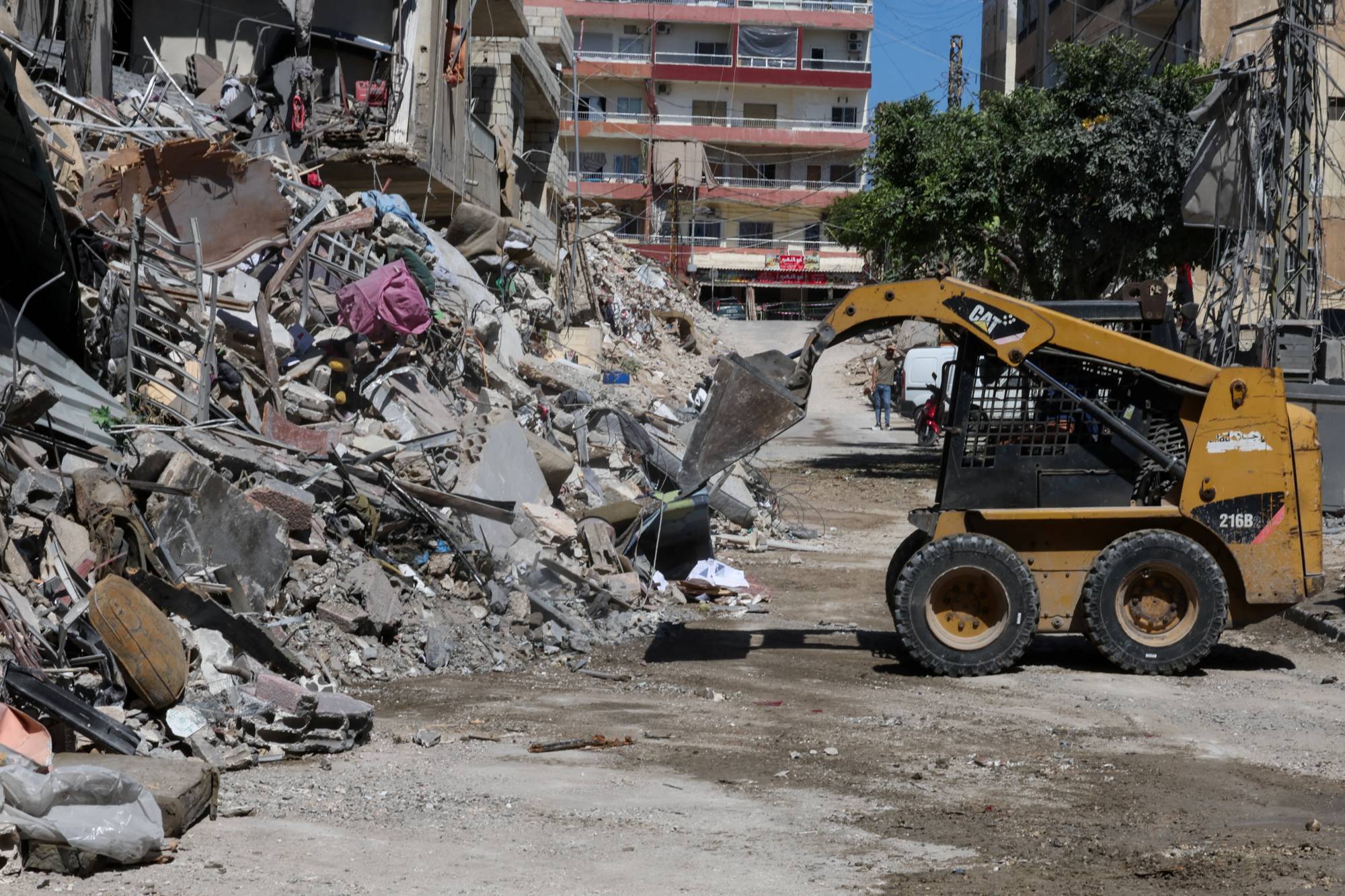
Heavy machinery clears the rubble at the site of an overnight Israeli strike in the southern city of Tyre, Lebanon, May 23, 2026. (Reuters)
Rules of engagement
Since the ceasefire took effect, Hezbollah has sought to establish rules of engagement that would confine the fighting to occupied territory by refraining from targeting Israeli towns and settlements in the north. The Israeli military, however, gradually expanded the battlefield through sustained airstrikes and bombardment reaching the outskirts of Sidon.
Speaking to Asharq Al-Awsat, retired Brig. Gen. Said Kozah said Hezbollah has been attempting since the ceasefire to establish a new operational equation with Israel based on the principle that every Israeli strike should trigger a response. However, he argued, Israel continues to work against this.
Kozah noted that describing the situation as “rules of engagement” is not entirely accurate because the term is generally used between regular armies or within a clearly defined military framework.
“In practice,” he said, “Hezbollah is attempting to entrench a new set of rules under which any Israeli attack would be met with retaliation—whether through strikes against Israeli positions in occupied Lebanese territory or through rocket fire directed into Israel.”
He added that Hezbollah had recently carried out operations against Israeli positions in the border area, some involving drones and others consisting of infiltration attempts or direct attacks.
He also remarked that rocket launches into Israel had declined in recent days and that many had been intercepted because of the relatively limited numbers employed.
According to Kozah, Hezbollah seeks through these operations to reinforce the legitimacy of retaining its weapons under the banner of resisting occupation within Lebanese territory. At the same time, the group avoids addressing the factors that led to the current level of escalation and occupation.
As for whether Hezbollah has succeeded in imposing this new equation, Kozah said the situation suggests Israel remains the one setting the rules.
“The Israeli military is not limiting its operations to the buffer zone or the so-called ‘Yellow Line,’” he said. “It continues to conduct operations, clearing activities, and strikes against villages north of that line, effectively rejecting the balance Hezbollah is trying to establish.”
Report: World Conflicts Hit Peak in 2025https://english.aawsat.com/features/5281917-report-world-conflicts-hit-peak-2025
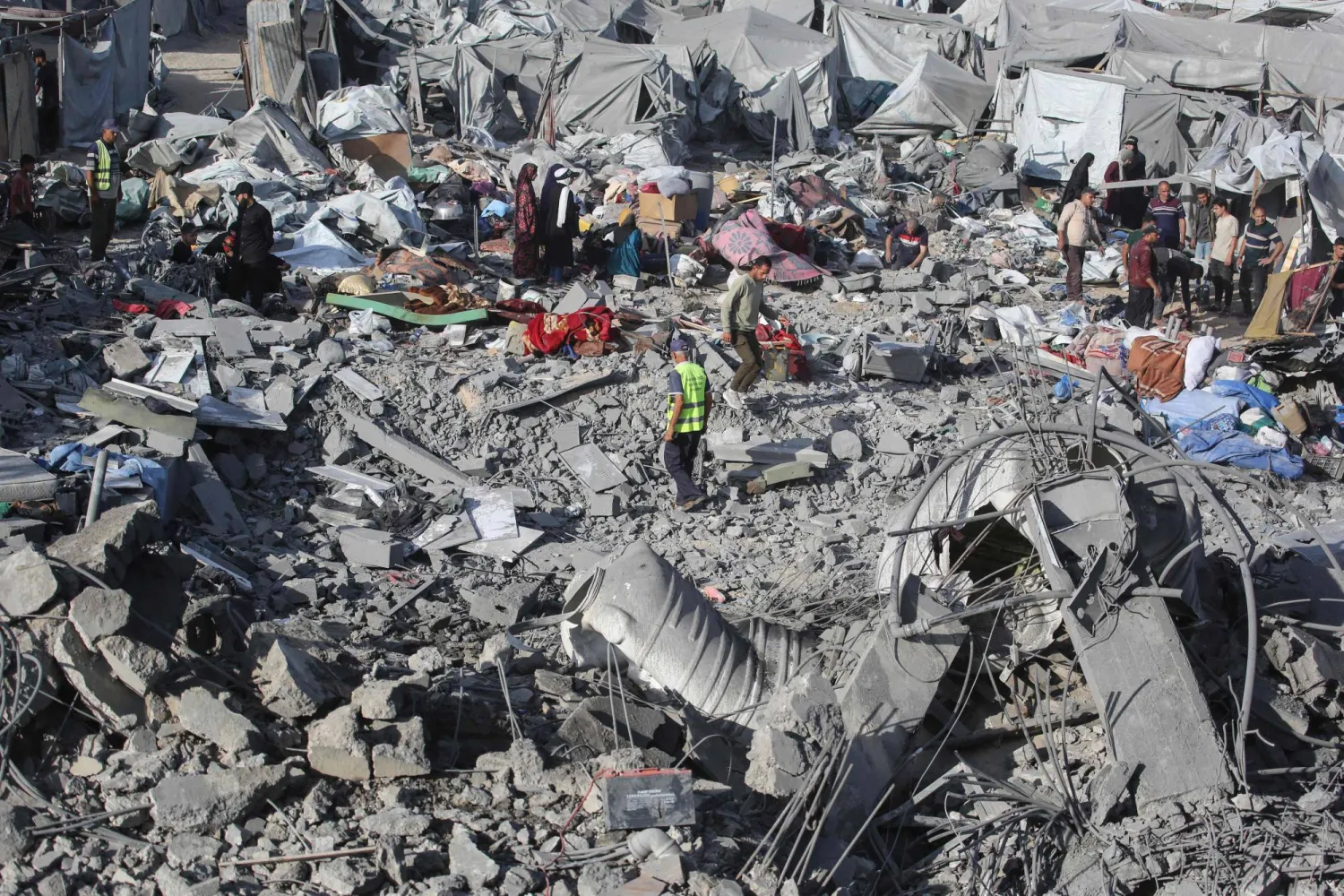
Palestinians assess damage at the site of an Israeli airstrike in Khan Younis, southern Gaza Strip, on June 7, 2026. (AFP)
The world saw the highest number of state conflicts since the Second World War in 2025, a Norwegian study said on Tuesday, warning of a surge in attacks targeting civilians.
The annual "Conflict Trends" report from the Peace Research Institute Oslo (PRIO) said 65 conflicts involving at least one state were recorded worldwide last year, a new high since 1946.
Conflicts between states also hit a new 80-year peak, doubling from the year before to eight -- including border clashes between India and Pakistan, Afghanistan and Pakistan, and Cambodia and Thailand, as well as Russia's invasion of Ukraine and Israeli military operations against Syria.
"Unfortunately, there are not a lot of positive things," researcher Siri Aas Rustad told a group of media outlets, including AFP.
"Usually, I'm able to sort of squeeze something positive out of it, but this year it's shocking, the numbers."
Last year was the third deadliest since the end of the Cold War, with around 245,000 deaths directly related to fighting or political violence -- nearly 76,500 of them attributed to attacks directly targeting civilians, compared with 14,200 in 2024.
The sharp increase in civilian deaths is due to the conflict between the army and paramilitaries in Sudan, where the siege and massacres carried out in El-Fasher city in the Darfur region are estimated to have left some 60,000 people dead.
Since the end of the Cold War, only 1994 and 2021 have seen more bloodshed, due to the Rwanda genocide and the war in Ethiopia's Tigray region respectively.
- Africa worst affected -
"What has happened in the past five or six years is that we have several big conflicts going on at the same time and they seem to take over from each other. The world doesn't get any break," Rustad said.
"And that's different from previously -- this continuous high intensity level of conflict globally."
The PRIO study is based on figures compiled by the Uppsala Conflict Data Program (UCDP), attached to Uppsala University.
It distinguishes between three main types of organized violence: conflicts involving at least one state, non-state conflicts, and one-sided violence against civilians.
Africa remained the region most affected by the first type of conflict with 29, followed by Asia, the Middle East, the Americas, and Europe.
Rustad said Israel was "clearly one of the most aggressive countries in the world at the moment", pointing to its involvement in different types of conflicts in Gaza, Syria, Lebanon, against Iran, and against Houthi militants.
She also pointed to the United States, saying President Donald Trump's return to power had brought "not just attacking and increasing violence, but also the trade barriers they're putting up."
"We are putting a lid on collaboration. The (UN) Security Council doesn't work at the moment. We get a much more polarized world," she said.
لم تشترك بعد
انشئ حساباً خاصاً بك لتحصل على أخبار مخصصة لك ولتتمتع بخاصية حفظ المقالات وتتلقى نشراتنا البريدية المتنوعة