


UN Complains about Syria’s ‘Procrastination’ in Eliminating its Chemical Program

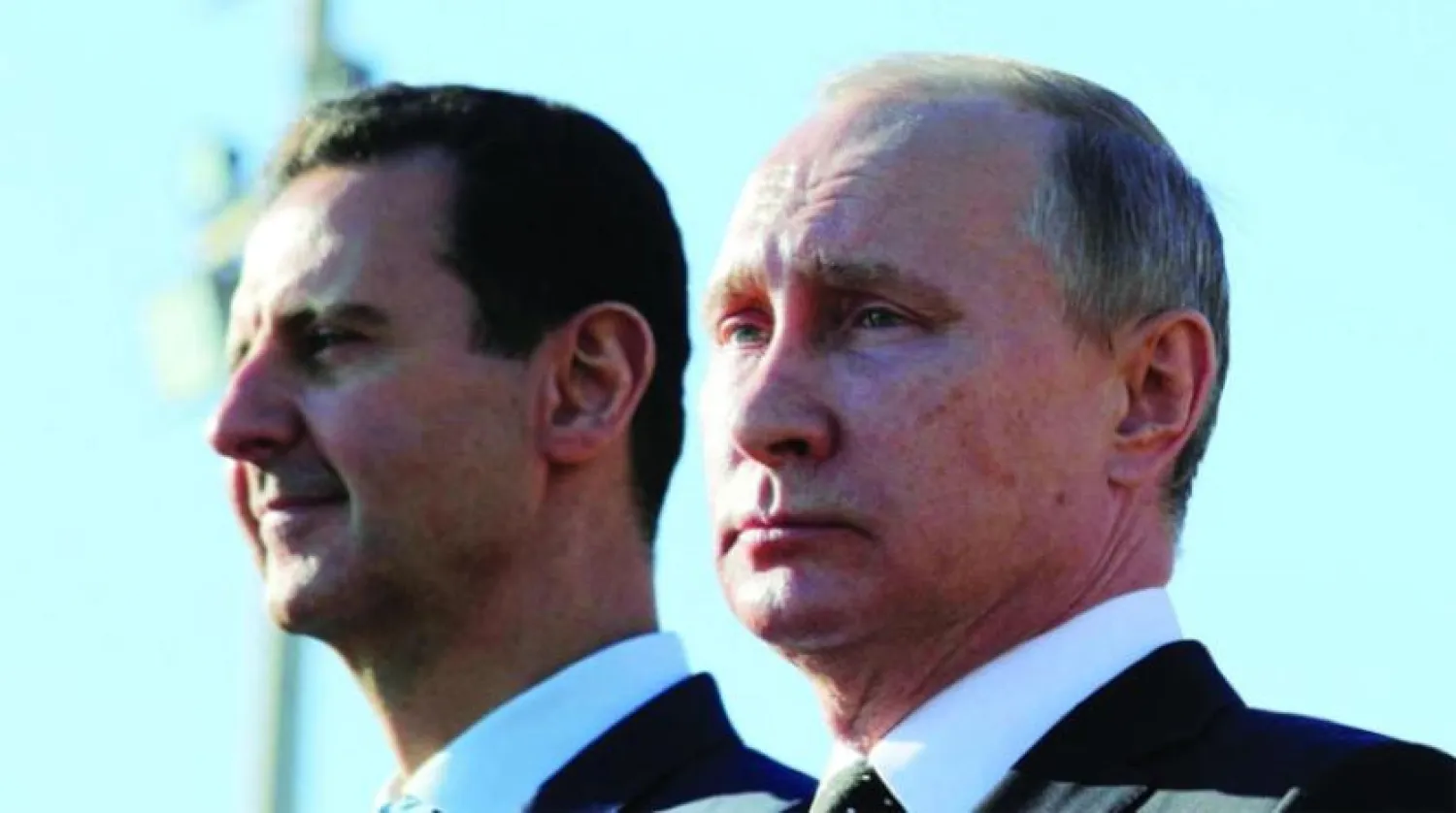
Washington accuses President Bashar al-Assad's regime of “insulting” the Organization for the Prohibition of Chemical Weapons and says it is fully supported by Russia. (Sputnik - Reuters)
TT

UN Complains about Syria’s ‘Procrastination’ in Eliminating its Chemical Program

Washington accuses President Bashar al-Assad's regime of “insulting” the Organization for the Prohibition of Chemical Weapons and says it is fully supported by Russia. (Sputnik - Reuters)

The High Representative of the United Nations Office for Disarmament Affairs, Izumi Nakamitsu, complained about the Syrian authorities’ procrastination in responding to requests by the Organization for the Prohibition of Chemical Weapons (OPCW) Technical Secretariat to complete the elimination of its chemical weapons program.

She made her remarks on Monday while briefing the UN Security Council on the progress in the implementation of Security Council resolution 2118 (2013) on the elimination of the Syrian chemical weapons program.

Nakamitsu affirmed that her office has been in regular contact with its counterparts at the OPCW on its activities related to resolution 2118.

She said that efforts by the OPCW Declaration Assessment Team (DAT) to clarify all outstanding issues regarding the initial declaration and the Syrian government’s subsequent declarations have not progressed since the Council last met on this issue.

She regretted the unsuccessful efforts by the OPCW Technical Secretariat to organize the next round of consultations between the DAT and the Syrian National Authority.

Nakamitsu attributed the postponement of inspections of the two facilities of the Scientific Studies and Research Centre (SSRC) scheduled for December 2022 to “operational reasons.”

“I have been advised that the OPCW Technical Secretariat has not yet received the requested information from the Syrian Arab Republic,” she noted.

The Secretariat proposed to hold a meeting with Syria in Beirut in November 2022 to identify limited in-country activities in line with the plan of activities agreed in 2019, to receive declarations or documents it had previously requested, and to provide the Syrian National Authority with the results of the analysis of samples collected in April 2019, together with an assessment of an outstanding issue opened in 2016.

However, she told the Council that efforts by the OPCW Technical Secretariat to convene this meeting were “unsuccessful.”

“Full cooperation by the Syrian Arab Republic with the OPCW Technical Secretariat is essential to closing all outstanding issues,” the UN officials stressed.

She added that due to the identified gaps, inconsistencies and discrepancies that remain unresolved, the declaration submitted by Syria cannot be considered accurate and complete in accordance with the Chemical Weapons Convention.

Commenting on Nakamitsu’s briefing, the political counselor at the US Mission to the UN, John Kelley, said obfuscation and delay are still the only terms to describe the Assad regime’s effort to address its chemical weapons stockpiles.

He said that the Assad regime’s continuous obstruction is an “insult” to the OPCW, the Security Council, and the international community, affirming that the Syrian regime continues to enjoy the “full support of the Russian Federation.”

Syria’s representative to the UN Al-Hakam Dandy, for his part, said the Syrian government refutes the false accusations against Syria by some Western countries.

He went on to underscore the illegitimacy of the Investigation and Identification Team, stating that its mandate was the result of certain States’ attempts to pursue their own ulterior motives in Syria.

He called on the Council to reconsider its approach, address all relevant developments objectively, and avoid politicization or exerting pressure on the OPCW Technical Secretariat.


US Sanctions Target Lebanon’s 'Deep State' Before Washington Security Meeting

The Lebanese government meets under President Joseph Aoun (Lebanese Presidency)
TT

US Sanctions Target Lebanon’s 'Deep State' Before Washington Security Meeting

The Lebanese government meets under President Joseph Aoun (Lebanese Presidency)

The latest US Treasury sanctions on Lebanese and Iranian figures linked to Hezbollah looked less like another routine political measure and more like a direct warning to the Lebanese state and its security and military institutions.

The sanctions came days before a Lebanese US security meeting in Washington on May 29, expected to address the future of security in southern Lebanon and the state’s role in controlling illegal weapons.

The Treasury measures marked a notable shift. For the first time, they targeted serving officers in official security institutions, signaling that Washington has moved beyond pressuring Hezbollah and its political allies to warning Lebanese state bodies themselves against leniency or obstruction in implementing government and security decisions.

Lebanon has not issued an official response. Ministerial sources told Asharq Al-Awsat that the timing of the sanctions “raises questions, especially since there was no atmosphere suggesting such a step, but the US Treasury has its own considerations.” They said the measures “could have a negative impact on the course of negotiations.”

The US message, decisions are not enough; implementation is required

The sanctions were issued shortly before the Lebanese-US security meeting in Washington, as international pressure mounts on Lebanon to meet its commitments to restrict weapons to the state.

By targeting officers in the army and General Security, Washington appeared to be saying that the problem is no longer limited to whether the Lebanese government has made a political decision. The issue is whether executive and security institutions can carry it out.

Dr. Sami Nader, head of the Levant Institute for Strategic Affairs, said the sanctions target what he called the “deep state” inside Lebanese institutions. For Washington, he said, the problem is no longer only the existence of a political decision, but the lack of actual implementation inside administrations and security and military institutions.

Nader told Asharq Al-Awsat that the United States is signaling that the Lebanese government has, at certain stages, taken decisions related to its security commitments and Hezbollah’s weapons. The Lebanese army, he said, has also drawn up plans and implementation mechanisms.

But according to the US reading, those decisions face obstruction in parts of the state, where some actors work to delay or block implementation, allowing Hezbollah’s influence in official institutions to continue.

Nader said the importance of the sanctions lies in the fact that they do not only target Hezbollah’s political environment. They move toward a direct accusation that the party has influence inside security and military chains of command.

Washington, he said, is effectively saying the problem is no longer inside the Cabinet, where decisions are made, but in what happens after those decisions are issued and passed to the executive and security agencies tasked with enforcing them.

Targeting official officers for the first time carries major political and security significance, Nader said, because it reflects a US conviction that certain figures within certain institutions are obstructing missions aimed at controlling the security situation or implementing government decisions.

The sanctions, therefore, form part of an escalating US track aimed at increasing pressure on official Lebanon before the Washington meeting, “to free the implementation mechanism,” Nader said, and to push the Lebanese state to make clearer commitments on applying decisions and dealing with Hezbollah’s weapons.

Details of the sanctions, officers, lawmakers and the Iranian ambassador

The sanctions covered Iran’s ambassador to Beirut, Mohammad Reza Sheibani, Hezbollah lawmakers Hassan Fadlallah, Ibrahim al-Moussawi and Hussein al-Hajj Hassan, and former minister Mohammad Fneish.

They also targeted two prominent Amal Movement figures, Ahmad Baalbaki and Ali Safawi, as well as Brigadier General Khattar Nassereddine, head of the National Security Department at the General Directorate of General Security, and Colonel Samer Hamadeh, head of the southern suburbs branch at the Lebanese army’s Intelligence Directorate.

The US Treasury Department said those targeted are “embedded in the Lebanese parliament, military, and security agencies,” accusing them of working to preserve Hezbollah’s influence inside state institutions and obstructing the path to peace.

US Treasury Secretary Scott Bessent said Hezbollah is a terrorist organization and must be fully disarmed. He said Washington would continue targeting officials who enable Hezbollah to continue its violent campaign and obstruct lasting peace.

Alongside the sanctions, the US State Department announced a reward of up to $10 million for information leading to the disruption of Hezbollah’s financial mechanisms, another sign that Washington is tightening political, financial and security pressure in the next phase.

The army and General Security respond, loyalty is to the state

The Lebanese army and General Security moved quickly to reject the US accusations, issuing statements that stressed: “Loyalty is to the institution and the homeland.”

The army command said all officers and soldiers “perform their national duties with full professionalism and responsibility.” It said their loyalty is “only to the military institution and the homeland,” and that they carry out their duties away from any pressure or other considerations.

The General Directorate of General Security also voiced full confidence in its officers and personnel, stressing their commitment to laws and regulations and to working “away from any external dictates or pressure.” It said any proven violation would be subject to legal and judicial accountability.

Hezbollah and Amal, sanctions are “intimidation” and pressure on the state

Hezbollah described the sanctions as “an American attempt to intimidate the Lebanese people and an attack on the sovereignty of the state and its security institutions.”

The party said the sanctions “will not affect its choices,” and called the targeting of official officers “a blatant attempt to subject security institutions to the conditions of American guardianship.”

The Amal Movement said the sanctions against figures affiliated with it were “unacceptable and unjustified,” describing them as an attack on the movement’s political role and its position inside the state.

Hezbollah’s parliamentary bloc also condemned the sanctions on lawmakers and officers, calling them direct interference in Lebanese affairs and an attempt to pressure official state institutions into complying with US demands.


Lebanon Not Bound by US Sanctions, No Action Against Officers Yet

A woman holds pictures of Lebanese parliament Speaker Nabih Berri (R) and Hezbollah's leader Naim Qassem (L) while residents of the devastated southern Lebanese border villages protest against the destruction of their villages and being prevented from returning by order of the Israeli army, at Martyrs’ Square in central Beirut on April 30, 2026. (AFP)
TT

Lebanon Not Bound by US Sanctions, No Action Against Officers Yet

A woman holds pictures of Lebanese parliament Speaker Nabih Berri (R) and Hezbollah's leader Naim Qassem (L) while residents of the devastated southern Lebanese border villages protest against the destruction of their villages and being prevented from returning by order of the Israeli army, at Martyrs’ Square in central Beirut on April 30, 2026. (AFP)

Attention in Lebanon is turning to how the state will respond to unprecedented US sanctions that targeted two officers from the army and General Security, along with figures, including MPs, from Hezbollah and its ally the Amal Movement that is headed by parliament Speaker Nabih Berri.

Although Lebanon is not legally bound to comply with the decision, and no direct measures have so far been taken against the two targeted officers, Interior Minister Ahmad al-Hajjar said he had asked General Security Director General Maj. Gen. Hassan Choucair to investigate any violations, if any exist, and take the necessary measures.

No measures yet

Security sources said what was surprising was that the army and General Security had not been notified of the sanctions through official and legal channels, as both commands learned of the measures through statements and the media.

The sources asked: “As long as Col. Samir Hamadeh is the head of the Beirut southern suburbs branch at the Lebanese army’s Intelligence Directorate, who is he supposed to coordinate with on the ground in the southern suburbs?”

They explained that intelligence coordinates with other parties in other areas, while also dismissing as “misguided” claims that significant intelligence was being shared with Hezbollah.

“So far, no measures have been taken against them, and they are still carrying out their duties,” they added.

The US Treasury accuses the two officers of sharing significant intelligence with Hezbollah during the ongoing conflict over the past year.

'Political message’

Legal and constitutional expert Said Malek said the sanctions against officers were “a political message from the US Treasury Department that dealing with Hezbollah, which is internationally banned and whose military wing in Lebanon has effectively been disbanded, has become prohibited and carries consequences.”

He told Asharq Al-Awsat that “the Lebanese state, through the relevant ministries and administrations, is not obliged to comply with the decision, even if it could obstruct the payment of salaries to those targeted, their transactions, or their cooperation with local and foreign agencies.”

“The government may understand the adoption of such decisions, but they are not binding on the state. In other words, nothing requires that these individuals be held accountable or punished, as they are subject to Lebanese laws, not decisions taken by a Western administration,” Malek explained.

Who was targeted?

Among the nine figures targeted by the sanctions were four Hezbollah lawmakers:

  • MP Mohammad Fneish, whom the US Treasury said heads Hezbollah’s Executive Council and is responsible for reorganizing the party’s administrative and institutional structure to preserve its armed presence in Lebanon.
  • MP Hassan Fadlallah, whom the Treasury said helped establish Al-Nour Radio, which is designated by the United States, and served as a senior director at Al-Manar television, also designated by Washington.
  • MP Ibrahim al-Moussawi, a longtime Hezbollah official who currently heads the party’s media committee.
  • MP Hussein al-Hajj Hassan, whom the Treasury described as one of the most prominent figures opposing Hezbollah's disarmament.

In a clear message to the Amal Movement, the sanctions also included Ahmad Asaad Baalbaki and Ali Ahmad Safawi. The Treasury statement said they were security officials in Amal.

“Baalbaki serves as Amal’s security director and coordinates shows of force with Hezbollah’s leadership to intimidate political opponents in Lebanon,” said the Treasury.

“Safawi is the commander of the Amal militia in southern Lebanon. Acting as Baalbaki’s subordinate, Safawi coordinated with and took direction from Hizballah on attacks against Israel as well as leading Amal militia forces in joint Hizballah-Amal military operations against Israel.”

Notably, the sanctions also targeted Mohammad Reza Sheibani, Iran’s ambassador-designate to Lebanon, whom Lebanon’s Foreign Ministry declared persona non grata after withdrawing its approval of his accreditation and asking him to leave Beirut. Sheibani has defied the order and remained in Lebanon.

The US statement noted “Iran’s violation of diplomatic norms, as well as the practices routinely used by the ambassador in communication between the two states, was cited as the reason for Sheibani’s expulsion.”


Israeli Airstrikes on Southern Lebanon Kill 10, Including Paramedics and a Child

Smoke rises from the site of an Israeli strike that targeted the Nabatieh village in southern Lebanon on May 22, 2026. (AFP)
TT

Israeli Airstrikes on Southern Lebanon Kill 10, Including Paramedics and a Child

Smoke rises from the site of an Israeli strike that targeted the Nabatieh village in southern Lebanon on May 22, 2026. (AFP)

Israeli airstrikes on southern Lebanon Friday killed 10 people, including six paramedics and a Syrian girl, Lebanon’s Health Ministry said, the latest in near-daily attacks from both sides that have not stopped despite the fragile, US-brokered ceasefire in the Israel-Hezbollah war.

The first strike hit the village of Hanouiyeh, killing four paramedics working for Hezbollah’s Islamic Health Association and wounding two others including one paramedic, the ministry said.

Another strike Friday morning on the village of Deir Qanoun al-Nahr in the coastal Tyre province killed six people, including a Syrian child and two paramedics from the Al-Rissala Scouts Association, a paramedic group affiliated with Hezbollah’s ally, the Amal movement, the ministry said. An additional six people were injured, including three paramedics and a Syrian woman.

The Health Ministry said the two attacks “violated” international law.

On Thursday, the UN World Health Organization, WHO, reported 169 confirmed attacks on healthcare workers and facilities in Lebanon, resulting in 116 deaths, since the latest Israel-Hezbollah war began.

The Israeli military did not respond to a request for comment. It has previously accused the Iran-backed Hezbollah group of using ambulances as cover for militant activities, without offering evidence.

The attacks by Israel and Hezbollah have continued despite a US-brokered ceasefire.

Earlier this week, Lebanon's Health Ministry said that the death toll in the latest round of fighting between Israel and the Iranian-backed Hezbollah in Lebanon surpassed 3,000.

The latest Israel-Hezbollah war began on March 2, after Hezbollah fired rockets into northern Israel two days after the US and Israel started their attacks on Iran.

Also Friday, the Lebanese army and the General Security Directorate issued statements declaring that their officers are disciplined, professional and loyal solely to their institutions and the nation.

The statements came a day after the US Department of the Treasury imposed sanctions on a group of Hezbollah-affiliated legislators, state security officials and allies of the group for allegedly seeking to preserve the Iran-backed group’s influence over Lebanese state institutions and obstruct disarmament efforts.

It was the first time Washington has sanctioned sitting Lebanese state security officials, one from the country’s General Security Directorate and the other from the military intelligence, both of them accused of providing Hezbollah with “illicit support” and intelligence during the ongoing conflict.
