Commander of the Syrian Democratic Forces (SDF) Mazloum Abdi said the American administration of former President Donald Trump “betrayed” its allies in the SDF when it did not oppose the Turkish infiltration in Syria in late 2019. In an interview to Asharq Al-Awsat, he revealed that the current administration has prevented Türkiye from carrying out a new operation in Syria.
Asked if he was concerned that his forces would be “betrayed” again, he replied that “we are always worried but hope that the new American administration would fulfill its pledges and commitments and prevent Türkiye from carrying out any operation.”
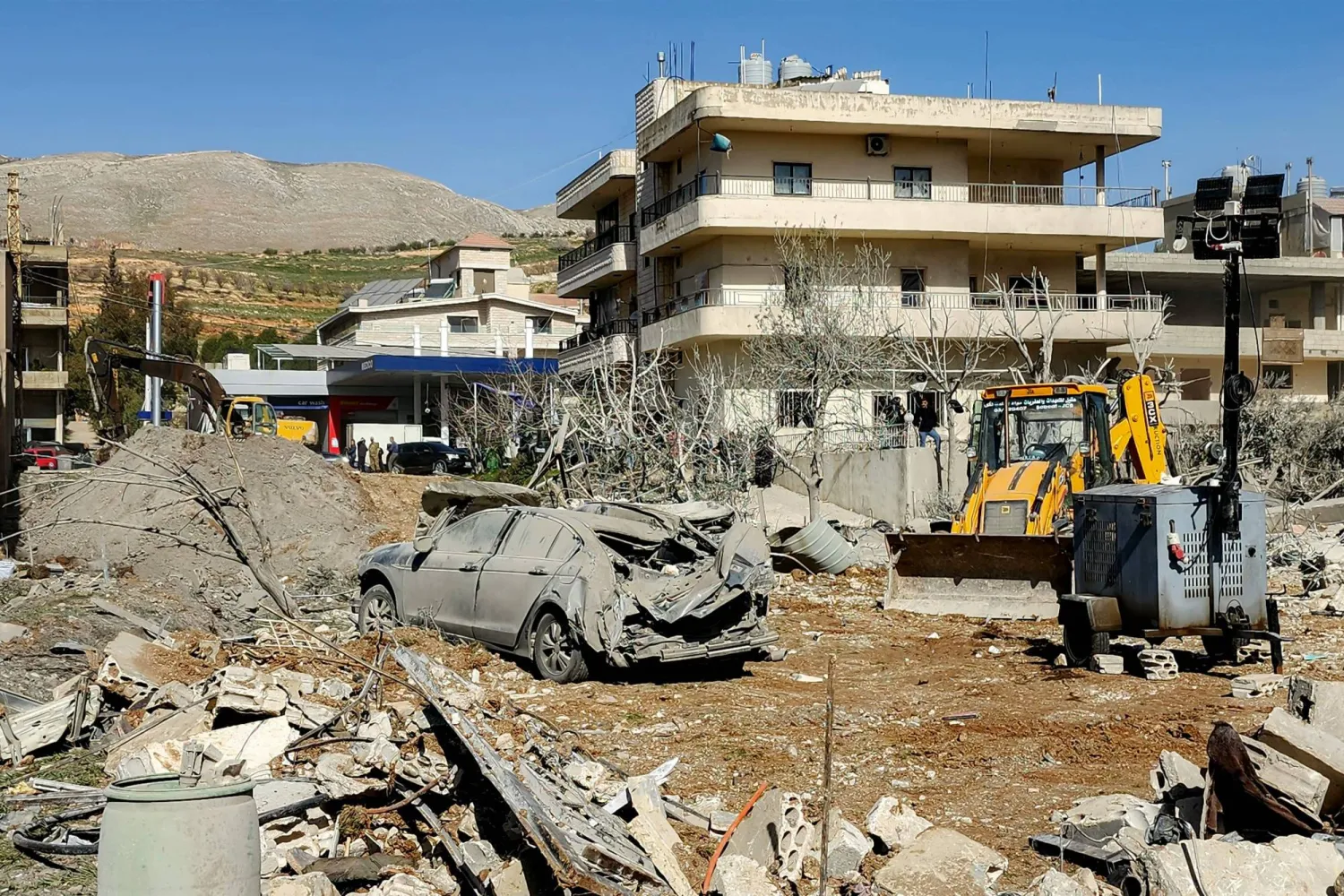
He noted that Turkish fighter jets had targeted the al-Hol camp for the displaced 80 kilometers deep into Syrian territory. “All Syrian skies were open to them and the US did nothing but make statements,” he stressed.
Abdi spoke of the discussions he held with commander of the Russian forces in Syria Aleksandr Chaiko, who visited him at his headquarters east of the Euphrates River. They addressed Chaiko’s mediation with Ankara. “We can say that Russia is now standing in a neutral position between us and Türkiye,” said Abdi.
Russia is trying to ensure that the 2019 Sochi agreement is being implemented and it is tackling violations when they happen.
“On our end, we have many reservations over Türkiye and the many violations it is committing,” Abdi added.
On the SDF’s role in Syria’s future, he stated that the force is generally part of the military’s defense organization. “But we have our conditions,” he told Asharq Al-Awsat over Zoom on Monday. “We have dispatched delegations to hold negotiations in Damascus. I want to go to Damascus when the conditions for a solution are right.”
The SDF officially announced that it has stopped cooperation with the international anti-ISIS coalition. At the same time, we noticed that coalition and American forces deployed patrols in cooperation with the SDF. Can you explain this?
Just so matters can be understood accurately, we had stated that the Turkish attacks were ongoing. The targeting of forces that were deploying these patrols led to the halt of these operations. The patrols were reduced to a minimum when the strikes were happening. Now, joint work has resumed.
The issue was related to the security situation. Now that it has improved somewhat, the joint cooperation resumed.
So cooperation between the SDF and coalition has returned to the way it was, whether related to fighting ISIS or in deploying patrols.
Exactly. It has returned to the way it was 20 months ago.
We noticed in recent days that the intense Turkish strikes had eased. Why? Was American pressure on Ankara truly behind this?
I believe the American pressure on Ankara played a hand to an extent. With time, international pressure also mounted on Ankara. Ankara violated understandings that it had reached with Russia and the US alike. This prompted the major pressure that in turn led to a drop in strikes.
The second factor, frankly, is that we, as a military force, had been well prepared. For example, the Kobani (Ain al-Arab) region, Manbij and Tal Rifaat were heavily attacked by Turkish jets and artillery, and yet, the SDF did not lose a single member. The Turks did not achieve their desired result.
There is a belief that the US had granted Türkiye an undeclared green light to carry out its attacks over ten days. We have seen massive destruction of gas and oil infrastructure and attacks close to American military bases. Do you have any information about these claims?
We can’t speak of a green light or coordination between the forces on the ground. But we have been very critical of the coalition forces because they are on the ground and had they fulfilled their pledges properly, the attacks would not have been this destructive. They had a very weak position towards the attacks. The Turks, just as the US Defense Department said, put the lives of American troops at risk.
Did Turkish jets really fly over Syrian territory?
They entered through Deir Ezzor. They struck the al-Hol camp, some 80 kilometers deep in Syrian territories. All Syrian skies were open to them.
And the US did nothing to stop them?
Nothing, but make statements to the media.
The US or the West betrayed the Kurds seven times in the past 100 years Are you worried that another betrayal will happen or that Washington would abandon the Kurds in spite of the great sacrifices made in fighting ISIS?
The last Turkish operation took place in 2019. At the time, coordination was ongoing between the Trump administration and the Turks, which led to the operation that we deemed a betrayal at the time. to take place. And to be honest, the American administration has since 2019 been exerting the greatest pressure to prevent Türkiye from carrying out a new ground operation. They have not allowed it
Now, they have stated that the Biden administration will not allow a destructive ground operation to happen.
We are always worried, but we hope the new American administration would fulfill its pledges and past commitments with Türkiye. We hope it would keep its word and prevent Türkiye from carrying out any operation.
Days ago, you said that the Turkish escalation was a test to the Biden administration. Are you satisfied with the result of this test? Have you been reassured that the US is not plotting a betrayal?
So far, we have seen that the Americans have been in direct contact with the Turks. We have asked them to keep up the pressure so that the Turks, specifically [President Recep Tayyip] Erdogan, would realize that they cannot launch any operation if they wanted to remain in power and continue to rule after the upcoming elections.
So you are not worried about the betrayal?
Let us be clear, that hasn’t happened yet. We are worried, and frankly, we believe the American position is not enough, but we will let things unfold over time.
Agreements were reached between Russia, Türkiye and the US in 2019. Türkiye says that the SDF did not fulfill its pledges by withdrawing 30 or 32 kms from the border. Is it true that the SDF did not meet its pledges?
Everyone knows that we fulfilled all agreements in full. The Russian guarantors have been around since 2019 and they are responsible for the agreement. As for the Americans, they have a deal with the Turks.
What measures have you taken on the ground to carry out the agreement?
First and foremost, the Turks’ main excuse was that there was a threat to their national security. Setting aside some extraordinary issues, we, as the SDF have repeatedly said that we have never carried out an operation that threatens Türkiye’s national security. No military operation directly aimed at Türkiye have been carried out from these regions.
They have demanded the withdrawal of the Kurdish People’s Protection Units (YPG) and the removal of all heavy weapons. Is this true?
These forces are not deployed in these regions. Officially, the forces deployed on the border are the Syrian military. They are fully deployed along the border.
You have said that you have not threatened Türkiye’s security. Of course, Türkiye says that the Istanbul bombing was carried out by people affiliated with the SDF and YPG and that it has evidence to back this claim.
But the US, Britain, and European countries say that they don’t have such evidence and Türkiye never presented it. Has Türkiye presented its evidence to you?
The main problem is that the Turks don’t cooperate with anyone. They haven’t provided the Americans with information. They only provide information through the media. They want the world to believe their information. We have stated that we view the attack as terrorist but we had nothing to do with it.
I’ll give you new information: We are relying on the information that Türkiye is providing to the media and not officially. Today, we completed the first part of the probe in all the information that Türkiye has provided and we have submitted the findings to the relevant parties, including the Americans.
We have proven that we have nothing to do with the operation. We concluded that some of the people who were identified by Türkiye were living in cities that were controlled by ISIS. We gave them our detailed information. The woman who carried out the attack had previously carried out several visits to Afrin where her relatives live.
Afrin is controlled by Türkiye?
Yes. Leaders of the so-called Syrian National Army and others were stationed there before we drove them out of the region before 2018.
The names Türkiye presented were affiliated with armed factions in Jarablus and other regions. We presented the names of the people from Jarablus and Afrin along with the evidence. We will complete the second phase of the probe in the coming days.
Who do you think is behind the attack?
We don’t want to accuse anyone, but we know that it has something to do with the regions that are occupied by Türkiye. We have evidence that some of the explosives were obtained from those regions. The suspects came from those areas as well. They are present in Afrin and Jarablus. The probe must prove that the SDF had nothing to do with the operation.
What about the talks with Russia? Turkish media has leaked a lot of information. The commander of the Russian forces was in Qamishli. What have the Russians offered you after the Turkish escalation?
Let us correct this information first. They said he came from Qamishli airport. When they visit us, they come to our bases.
Do they pass through American checkpoints to visit you?
They come to our bases.
The Russian command came to us. We completed meetings with the Russian forces commander Chaiko not too long ago. Türkiye accuses Russia of not forcing us to commit to the 2019 Sochi agreement. For its part, Russia is trying to make the Turks commit to the agreement.
We can say that Russia is now standing in a neutral position between us and Türkiye. It is trying to apply the agreement and tackle violations when they happen. For our part, we have several reservations against Türkiye and the many violations it is committing.
For instance, they speak of a 30km buffer zone, while they recently infiltrated it 70 – 80 kms deep. They have established infrastructure and boast a military force. These are all violations.
On our end, we have been asking them to play their role and make Türkiye commit to the agreement. Of course, Türkiye has reservations against us, including claims that we are threatening its national security.
We are committed to the agreement, in spite of individual violations that are acts of retaliation. We will commit to the 2019 agreements.
Officially, we are not present on the border, so their demand that we pull out 30kms deep is not valid. The security forces (Asayish) are there, but they are not part of the deal. The Asayish will be present in all areas. They were not part of the withdrawal deal. The SDF is committed to the agreements.
Our meetings with the Russians were primarily aimed at addressing the violations.
It was said that Russia offered the withdrawal of the SDF from Kobani and Manbij in return for the deployment of the regime forces.
Let me tell you something, the regime has more forces there than we do, nearly double ours. The regime is deployed in Kobani, Manbij and Tal Rifaat. The regime has enough forces in these regions.
An attack on Kobani and Manbij will be more of a problem for the regime than us. The regime is present on the border and they will be targeted. The regime may then take the decision to withdraw and refrain from fighting. It may choose to leave the area to the Turkish army or to fight.
Is it true that Iran mobilized its forces in the Aleppo countryside and is now presenting itself as a partner on the ground?
The Iranians are present in Tal Rifaat and al-Shahba, and Nobl and al-Zahraa in the Aleppo countryside. East of the Euphrates and al-Jazira, they are not deployed in an official capacity, but stationed there with the regime.
What about the talks with Damascus? We know that you signed a document with Syria’s national security chief Ali Mamlouk in 2019. An agreement was reached on the deployment of forces in specific regions. Was this deal carried out in full?
We consider that it was carried out fully, whether with the regime or Russia, which in turn had reached deals with Türkiye and others. We did not agree to the return of regime institutions. We only agreed on the border guard and the presence of the regime on the border. We committed to this and assisted in the army’s deployment in full on the border. Currently, we have no need for more agreements.
We are in agreement with the regime over main issues related to maintaining Syria’s territorial integrity. Problems lie in other areas, such as administrative affairs and issues related to education, for example.
There are, however, disagreements over the Kurdish language, the future of the SDF and the autonomous Kurdish administration.
Overall, for example, we are not opposed to the SDF becoming part of the defense organization of the Syrian army. We have conditions, however. We boast over 100,000 fighters, who have spent the past ten years in combat. They need a constitutional and legal resolution. The SDF must have a role and specific distinction in the military. We are in agreement over general issues, but the problems lie in the details.
It appears that Damascus is demanding that you send a greater amount of oil. You are sending greater amounts to al-Sheikh Masoud in Aleppo, while government-held regions are suffering from a major fuel and energy crisis.
Let me tell you something, Türkiye is threatening Tal Rifaat and al-Sheikh Masoud. Moreover, the regime has imposed a stifling siege on these regions. It is blocking diesel fuel, flour and food shipments. The people are hungry and suffering in the cold and are living without electricity. This has been going on since the Turks began making their threats. This is unacceptable. We may be forced to reply in kind if the situation persists.
What was the extent of the destruction to the gas and oil infrastructure by Türkiye’s attacks?
The attacks were aimed at taking institutions out of service, including the lone home gas company. It was taken out of service after being directly targeted. Several refineries were also hit. Over 50 percent of the sectors were damaged. Repairs and reconstruction are underway.
Mamlouk and Turkish intelligence chief Hakan Fidan met in Moscow in July. Syrian and Turkish security officers met in Kasab later. Are you worried about the Syrian-Turkish security cooperation? Do you believe Ankara and Damascus have set up security coordination, especially on how to confront the SDF?
Let us be more accurate. We know that the Syrian state opposes the Turkish occupation of more Syrian territories. This is a general national stance. But we have our concerns.
When Türkiye carries out its threats, our priority should lie in resisting the occupation and standing together against the attempted occupation.
In the end, Türkiye is trying to occupy Syrian territories, such as Kobani, Tal Rifaat and others. We believe that Damascus has voiced a weak position against this threat. It is trying to benefit from it rather than stand with us against the Turkish occupation.
They want to exploit the situation to pressure the regions that we may hold dialogue about in the future, such as Manbij, Deir Ezzor, Raqqa and others. I wanted to bring this up because a national stance has not been taken over it.
Generally, we know that several meetings have been held and they aren’t denying it.
We have heard claims that Türkiye sometimes asks to coordinate attacks with the regime against certain targets and that Damascus had turned it down. We hope this is true and that they would not coordinate to attack us in these regions.
Moreover, we have heard through the media that Syrian President Bashar Assad is refusing to meet with Erdogan until after elections are held in Türkiye. We believe this is the right position and will help resolve the Syrian problem.
Erdogan wants to be victorious in the elections and eliminate the Kurds. He has two options: Either carry out a military operation and later declare victory that he will invest for electoral gain, or reach an agreement with Damascus at the expense of the Kurds. He will also invest this in the elections.
I have learned that you refuse to visit Damascus. Why so? What are your conditions for negotiations?
We dispatch delegations to Damascus. I want to go when the conditions for the solution are available. I want my trip to Damascus to help in reaching a peaceful solution to the current crisis.