


Riyadh Declaration Affirms Taiwan an Integral Part of China, Centrality of Palestinian Cause

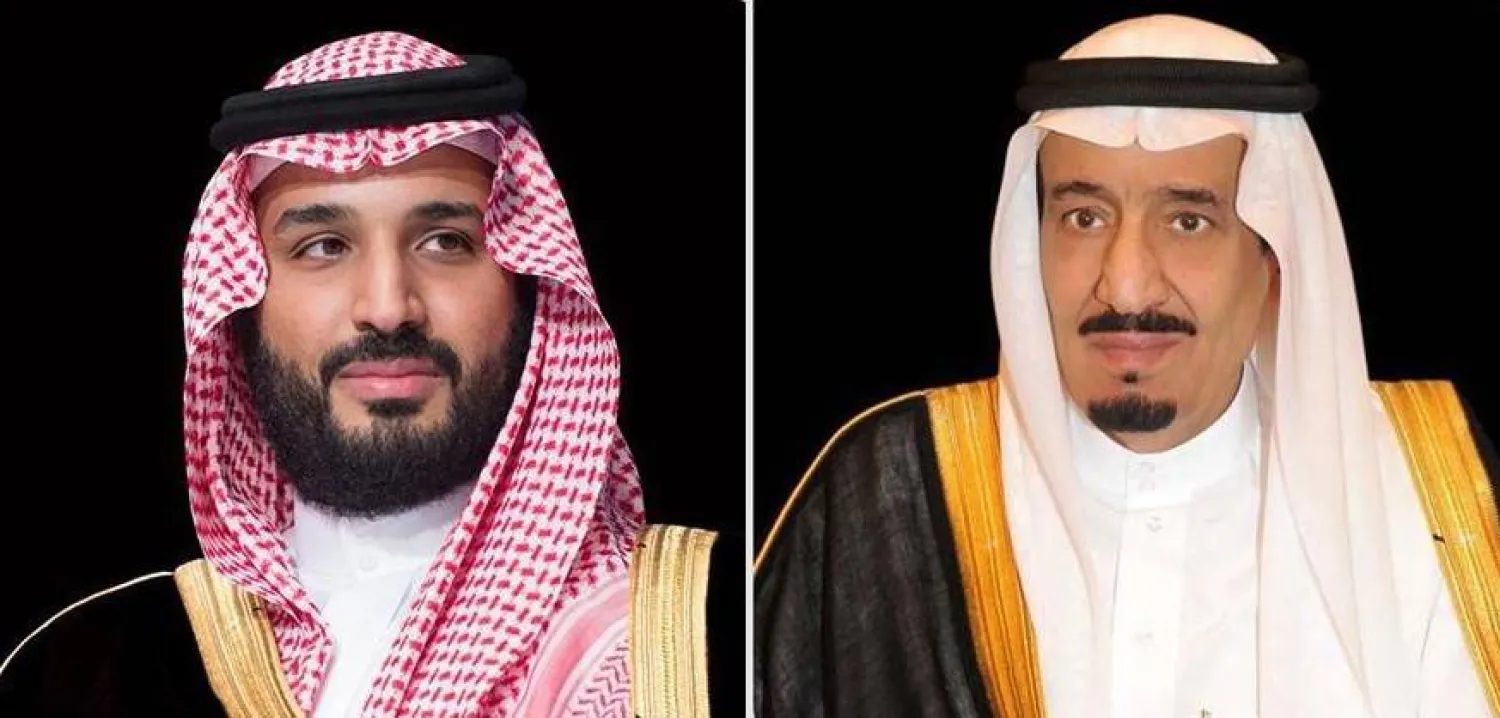
Crown Prince Mohammed bin Salman upon receiving the leaders and heads of delegations of the countries participating in the Arab-Chinese Summit in Riyadh (SPA)
TT

Riyadh Declaration Affirms Taiwan an Integral Part of China, Centrality of Palestinian Cause

Crown Prince Mohammed bin Salman upon receiving the leaders and heads of delegations of the countries participating in the Arab-Chinese Summit in Riyadh (SPA)

The Riyadh Declaration, issued at the end of the Arab-Chinese summit in Riyadh on Friday, underlined the two sides’ keenness to strengthen strategic partnership, based on comprehensive cooperation and joint development for a better future.

The declaration also reaffirmed the firm commitment to the principles of the UN Charter, including mutual respect for the states’ sovereignty and territorial integrity and the need to refrain from the use or threat of force in international relations, in addition to respecting the principle of good neighborliness and non-interference in the internal affairs of states.

Moreover, the document issued at the end of Chinese President Xi Jinping’s visit to Saudi Arabia emphasized the centrality of the Palestinian Cause in the Middle East, and the necessity to find a just and lasting solution based on the two-state solution, by ending the Israeli occupation of the Palestinian territories, and establishing an independent Palestinian state on the 1967 borders with East Jerusalem as its capital.

The declaration highly valued China’s endeavors to contribute to spreading international peace and development, including the high-level dialogue for global development through the two initiatives of Chinese President Xi Jinping, and the importance of adhering to the concept of common, comprehensive, cooperative, and sustainable security.

According to the document, the two sides also agreed to deploy all efforts to enhance solidarity and cooperation, and to promote peace and development in the region, expressing their determination to maintain political consultation on issues of common interests.

Emphasizing the firm commitment of the Arab countries to the principle of “one China”, the declaration affirmed support for Beijing’s efforts to preserve its sovereignty and territorial integrity, noting that Taiwan was an integral part of Chinese territory and rejecting its independence.

Furthermore, the declaration supported the Chinese position in the Hong Kong file, and China’s efforts to maintain national security and develop democracy within the framework of one country, two systems.

The Riyadh Declaration announced an endeavor to promote cooperation between China and the Arab countries in various dimensions and levels, to face common challenges. It also emphasized the importance of concerted regional and international efforts to find political solutions to regional crises, in accordance with international legitimacy resolutions and relevant agreements and references, especially the crises in Syria, Libya, and Yemen.

Highlighting the need for joint action to confront terrorist and extremist organizations, the declaration expressed support for the efforts made by Lebanon, Somalia, and Sudan to achieve security, stability, development, and prosperity, and to combat terrorism.

The two sides voiced the necessity to find a political solution to the Ukrainian crisis and restore security and peace in accordance with international law, the UN Charter, and the principles of good neighborliness, sovereignty, and territorial integrity of states.

They also expressed Arab readiness to participate in the implementation of the Belt and Road initiative, which they said provided promising opportunities for cooperation and development.

The statement stressed support for efforts aimed at preventing the spread of nuclear weapons and other weapons of mass destruction, in accordance with the Treaty on the Non-Proliferation of Nuclear Weapons (NPT), calling for the importance of freeing the Middle East from weapons of mass destruction.

The closing statement expressed sincere thanks and appreciation to the Custodian of the Two Holy Mosques, King Salman bin Abdulaziz, and Crown Prince Muhammad bin Salman, for the Kingdom’s hosting of this historic summit.



Saudi FM Stresses Ongoing Support for UN Efforts to Promote Values of Dialogue, Tolerance

The Saudi Foreign Minister chaired the opening of the 11th UNAOC Global Forum in Riyadh. SPA
TT

Saudi FM Stresses Ongoing Support for UN Efforts to Promote Values of Dialogue, Tolerance

The Saudi Foreign Minister chaired the opening of the 11th UNAOC Global Forum in Riyadh. SPA

Saudi Minister of Foreign Affairs Prince Faisal bin Farhan bin Abdullah chaired on Sunday the opening session of the 11th Global Forum of the United Nations Alliance of Civilizations (UNAOC), hosted by Riyadh, under the theme “Two Decades of Dialogue for Humanity: Advancing a New Era of Mutual Respect and Understanding in a Multipolar World."

The forum was attended by UN Secretary-General Antonio Guterres, High Representative for the United Nations Alliance of Civilizations Miguel Angel Moratinos, a number of foreign ministers from different countries, political and religious leaders, heads of international organizations, and representatives of civil society.

In his address at the opening session, the Saudi Foreign Minister affirmed that the Kingdom’s hosting of the forum reflects its continued support for United Nations efforts to promote the values of dialogue, tolerance, and peaceful coexistence among civilizations and cultures.

He underscored that Saudi Vision 2030 embodies a national approach grounded in moderation and openness to other civilizations, as well as in confronting hate speech and extremism.

Prince Faisal highlighted that the convening of the 11th session of the United Nations Alliance of Civilizations serves to review past efforts and to exchange views and ideas on how to manage diversity and differences by building bridges of communication and dialogue among various civilizations and religions.

Prince Faisal stressed that youth are the true embodiment of hope, stating: “They are the leaders of the future and messengers of peace. In this context, I cannot help but express my great pleasure at seeing such a large number of young people in this hall.”

“A youth forum is being held on the sidelines of this forum, and this venue will host the graduation of the eighth cohort of the Young Leaders Qualification Program of the (Salam) Project for Civilizational Communication. Accordingly, it can be said that this United Nations Alliance of Civilizations forum is a forum for youth,” he added.

The forum aims to review the achievements of two decades of global dialogue, discuss current challenges, and envision the future of joint action to enhance mutual understanding among peoples and build bridges of communication that support international peace and stability.


Libya’s Unity Gov. Urges Stronger Partnership with Saudi Arabia on Development Projects

Abdul Hamid Dbeibah during his meeting with members of the Saudi delegation (Dbeibah's Office)
TT

Libya’s Unity Gov. Urges Stronger Partnership with Saudi Arabia on Development Projects

Abdul Hamid Dbeibah during his meeting with members of the Saudi delegation (Dbeibah's Office)

Libya’s Government of National Unity has called for strengthening partnerships with Saudi Arabia in development projects.

The appeal came during a meeting on Thursday between Prime Minister Abdul Hamid Dbeibah and a high-level delegation from Saudi Arabia’s Amiantit Group.

The group is one of the world's leading companies in the manufacturing of pipes and tanks, offering innovative solutions for water management and infrastructure.

The meeting was also attended by a representative of Technical Link Services for Communications (TLS), a subsidiary of Etihad Salam Telecommunications, which specializes in communications and information technology solutions.

Discussions centered on strengthening Libyan-Saudi cooperation to advance infrastructure projects, stimulate investment in the industrial and agricultural sectors, and expand prospects for collaboration.

The meeting followed agreements with Libya’s Ministry of Housing and Construction on water infrastructure, specialized factories, and advanced water treatment solutions.

The agreements also included deals that aim to upgrade Libya’s communications infrastructure and modernize its IT and telecom services.

In January, on the sidelines of the World Economic Forum in Davos, Dbeibah had outlined Libya’s vision to strengthen cooperation with Gulf countries, particularly Saudi Arabia to attract international investment across various economic and development sectors.

He discussed with several Saudi officials ways to reinforce bilateral partnerships in oil, gas, and renewable energy, highlighting Saudi Arabia as a key partner in developing Libya’s oil infrastructure.


Saudi-Emirati Team in Aden to Restore Calm in Eastern Yemen

A view of Yemen's interim capital Aden. (Reuters file)
TT

Saudi-Emirati Team in Aden to Restore Calm in Eastern Yemen

A view of Yemen's interim capital Aden. (Reuters file)

A Saudi-Emirati team arrived in Yemen’s interim capital Aden on an urgent mission to put in place executive mechanisms for the withdrawal of the Southern Transitional Council (STC) forces from the Hadhramaut and al-Mahra provinces and returning them under the control of previous forces under the direct supervision of the Saudi-led Arab coalition.

The team will discuss arrangements related to the handover of positions to the National Shield Forces to ensure that the situation returns to the way it was before the escalation.

The step is in line with Saudi Arabia’s intense efforts to end the escalation in eastern Yemen, in rejection of any unilateral measures taken by the STC in Hadhramaut, which the coalition viewed as an attempt to impose a new status quo or drag the province into internal strife that threatens peace and stability.

Sources told Asharq Al-Awsat that the arrival of the team consolidates Riyadh’s rejection of activities that may create mistrust or deepen the divisions inside Yemen’s legitimate institutions.