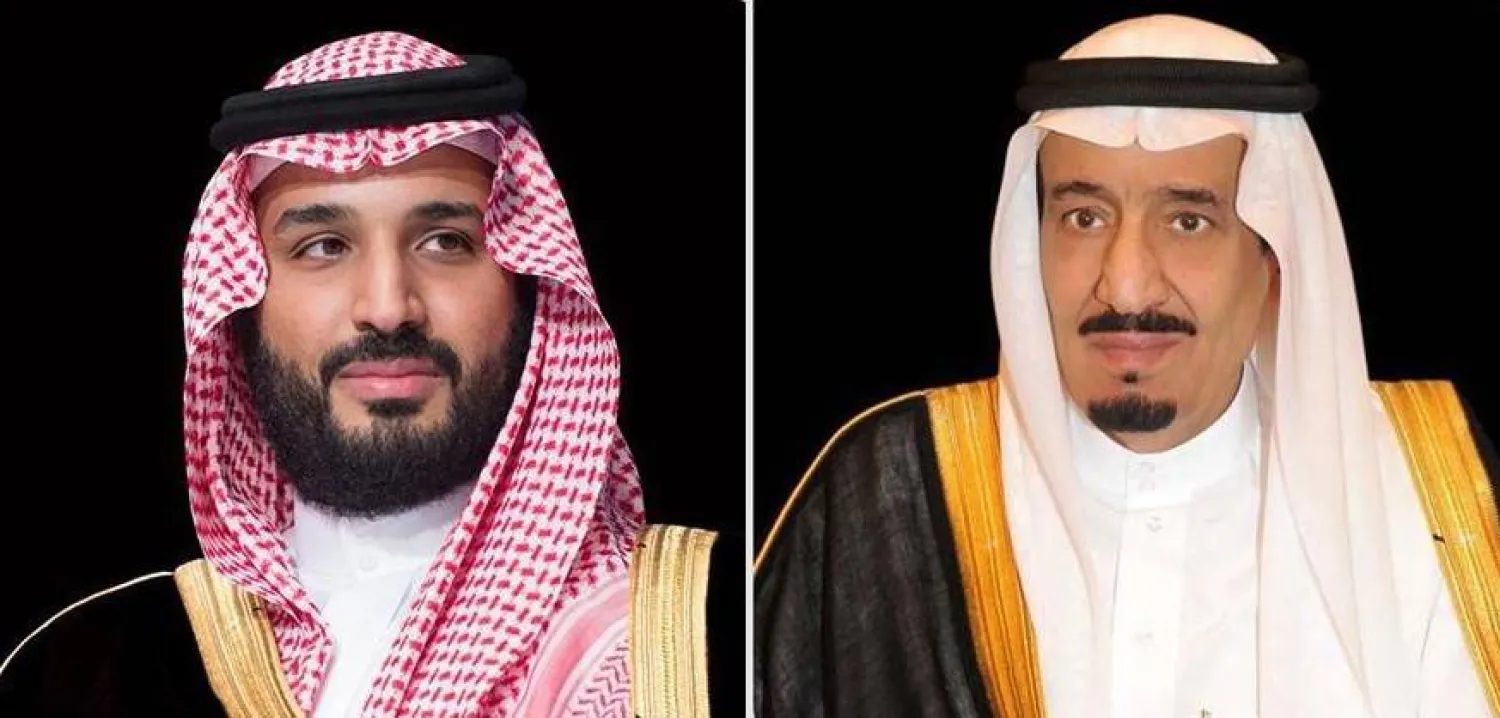
The final communique of the Riyadh Gulf-China Summit for Cooperation and Development affirmed the leaders' agreement to boost strategic partnership with China, pushing toward new horizons in various political, economic, social, and development levels.
The leaders discussed regional and international issues, and agreed on the importance of concerted efforts to achieve peace, security, stability, and prosperity in all parts of the world.
The closing statement reiterated the need to restore international peace and security through mutual respect and cooperation between countries to achieve development and progress and adhere to the principles of international law and humanitarian law, the UN Charter, and good neighborliness.
It also called for preserving the international order based on respect for the sovereignty, territorial integrity, and political independence of states, non-interference in their internal affairs, and non-use or threat of force.
The leaders stressed the need to support the Treaty on the Non-Proliferation of Nuclear Weapons, prevent the proliferation of weapons of mass destruction in the GCC region, and ensure the peaceful nature of the Iranian nuclear program to preserve regional and international security and stability.
They reaffirmed the call on Iran to fully cooperate with the International Atomic Energy Agency.
The two sides stressed the need for relations between the GCC states and Iran to follow the principle of good neighborliness and non-interference in internal affairs and respect for states' independence, sovereignty, and territorial integrity.
They noted that relations should also be based on peacefully resolving disputes.
The leaders stressed the importance of a comprehensive dialogue with the participation of the regional countries to address the Iranian nuclear file and the destabilizing regional activities.
They also called for confronting support for terrorist and sectarian groups and illegal armed organizations, prevent the proliferation of ballistic missiles and drones, ensure the safety of international navigation and oil facilities, and adhere to UN resolutions and international legitimacy.
They affirmed their support for all peaceful efforts, including the initiative and endeavors of the UAE to reach a peaceful solution to the issue of the three islands, Greater Tunb, Lesser Tunb, and Abu Musa, through bilateral negotiations under the rules of international law.
The leaders called on Iraq to respect the sovereignty of Kuwait and the sanctity of its lands and to abide by Security Council resolutions, and the agreements concluded between the two countries and deposited with the UN.
They also urged Iraq to complete the demarcation of the maritime borders with Kuwait.
The leaders stressed the need to reach a just solution to the Palestinian cause based on the two-state solution, following relevant UN resolutions and the Arab Peace Initiative.
They also asserted establishing an independent Palestinian state on the 1967 borders, with East Jerusalem as its capital, ending settlement and all unilateral measures and respecting the historical status quo in Jerusalem.
The leaders affirmed their support for the Presidential Leadership Council in Yemen, headed by President Rashad al-Alimi. They hoped to reach a political solution following the GCC initiative and its Executive Mechanism, the Yemeni National Dialogue Conference (NDC) outcomes, and the Security Council resolution 2216.
They called on all Yemeni parties to immediately initiate direct negotiations under the UN auspices, adhere to the continuation of the armistice, and support the humanitarian, relief, and development needs of the Yemeni people.
The leaders condemned all terrorist attacks launched by the Houthi militia on civilian targets in Saudi Arabia, the UAE, Yemen, and international waterways and shipping routes.
They called on all countries to cooperate in combating these acts and abide by the arms embargo stipulated in Security Council Resolutions 2216 and 2624.
The leaders affirmed their full support for Iraq's sovereignty, security, stability, development, and prosperity and its efforts to combat terrorism.
They also stressed the need to intensify efforts to reach a political solution to the Syrian crisis that preserves Syria's unity and sovereignty following Security Council Resolution 2254, their standing with the Lebanese people, and their continued support for Lebanon's sovereignty, security, and stability.
They also affirmed their support for efforts to resolve the Libyan crisis following Security Council resolutions, encouraging all Libyan parties to hold elections, unify state institutions under UN supervision, and exiting all foreign fighters and mercenaries.
The leaders stressed the importance of strengthening security and stability in Afghanistan, intensifying efforts to provide humanitarian assistance to the Afghan people.
They called on the de facto authority in Afghanistan to implement its obligations to guarantee the fundamental rights, interests, and freedoms of all Afghan people, form an inclusive government, and ensure that any terrorist groups do not use Afghan lands or the exploitation of Afghan territory to export narcotics.
The leaders affirmed their positions in support of all international efforts to find a political solution to end the Ukraine crisis under international law and the UN Charter to protect lives and property and preserve regional and global security and stability.
The leaders directed the continuation of the strategic dialogue between the two sides at all levels to discuss issues of common concern and coordinate positions regarding them.
They stressed the importance of mutual support to achieve the common interests of both sides and the importance of boosting cooperation to achieve their common interest, including the completion of free trade negotiations.
The leaders expressed their keenness to promote dialogue between civilizations, preserve cultural diversity, and encourage communication and cooperation in culture, education, tourism, media, and sports.
The leaders praised Qatar's success in hosting the 2022 FIFA World Cup, and its good organization, denouncing the malicious media campaigns directed against Doha.