Saudi Joint Cooperation Agreement with WFP Aids More than 500,000 Yemenis

Officials at the KSrelief during the signing of the new support agreement for Yemen, Friday (Saba)
TT

Saudi Joint Cooperation Agreement with WFP Aids More than 500,000 Yemenis

Officials at the KSrelief during the signing of the new support agreement for Yemen, Friday (Saba)

Saudi Arabia will provide aid for more than 500,000 needy Yemenis in a new humanitarian support initiative through the World Food Program (WFP). The Saudi aid coincides with demands by humanitarian organizations in Yemen's Marib for urgent assistance to thousands of displaced families in the governorate to face the cold weather.

The King Salman Humanitarian Aid and Relief Centre (KSrelief) signed via video conferencing a cooperation agreement with the WFP to help meet the urgent food needs of the most vulnerable households in Yemen. The agreement is worth $20 million and would benefit 524,000 individuals.

The humanitarian aid deal was signed by Eng. Ahmed Al Baiz, KSrelief’s Assistant Supervisor General of Operations and Programs, and Mageed Yahia, Representative for the GCC Region, WFP.

The Saudi official confirmed that under this agreement, 16,908 tons of wheat flour will be purchased and distributed. The objective is to enhance food security, improve livelihoods and resilience, and protect people who suffering from acute food insecurity from hunger. The aid will cover the governorates of Aden, Dhale, Al Hudaydah, Marib, Shabwa, Taiz, and Hajjah.

“Support from KSrelief has helped keep famine at bay,” says Richard Ragan, WFP Yemen Representative and Country Director.

“This contribution comes at a critical time for the neediest families.”

The UN representative said that the Kingdom of Saudi Arabia contributed to WFP’s response in Yemen since 2015 with $1.168 billion, including $380 million in 2019 which helped WFP scale-up operations to reach 13 million people - pulling Yemen back from the brink of famine.

In the meantime, humanitarian and aid organizations in the civil community in Marib called on the UN organization to bear responsibility and act urgently to rescue thousands of displaced households whose lives are jeopardized by the cold weather.

These calls were made after the expanded two-day meeting held by the Office of Social Affairs and Labor.


Saudi FM, Russian Counterpart Discuss Regional Developments

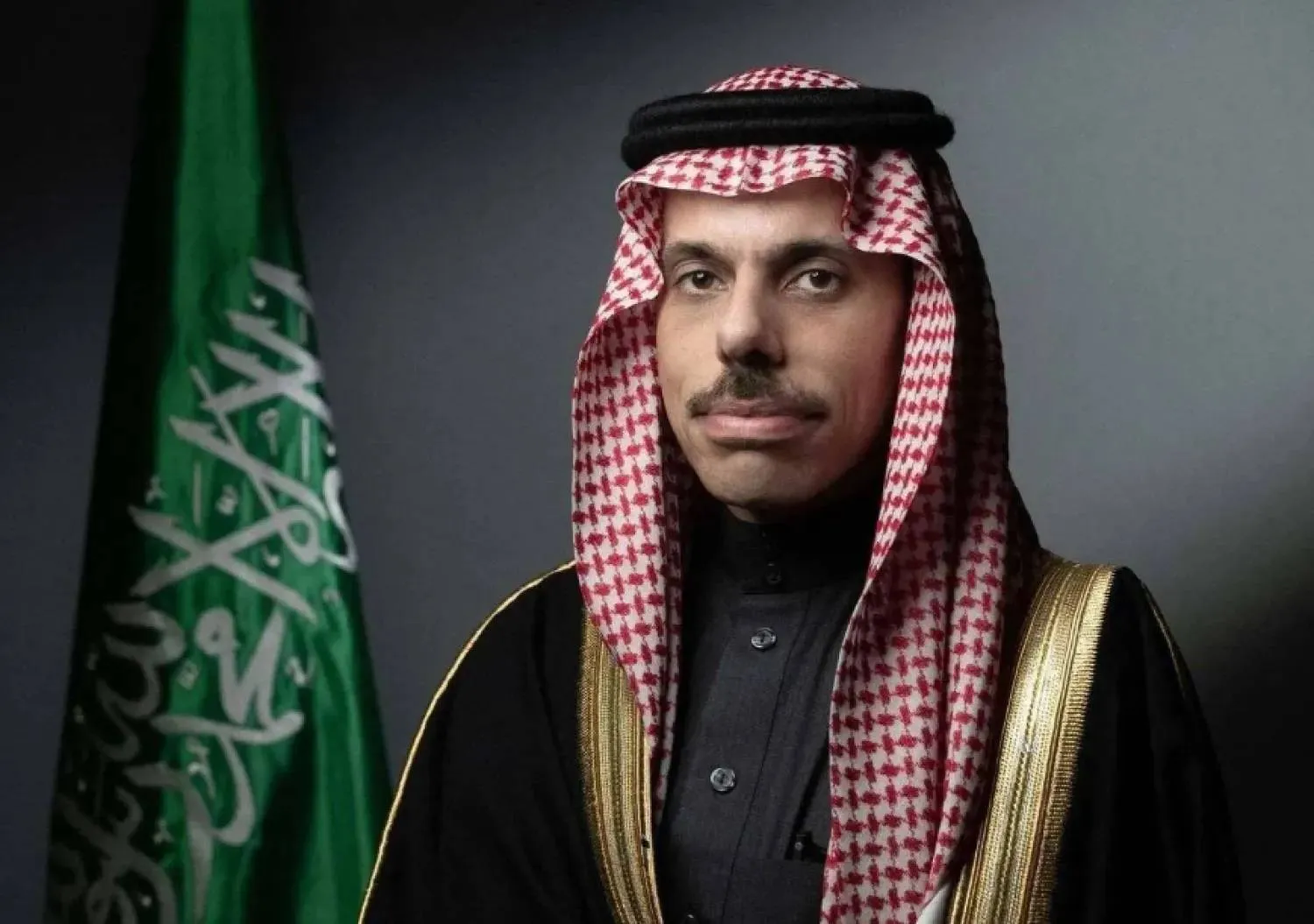
Saudi Minister of Foreign Affairs Prince Faisal bin Farhan bin Abdullah/File Photo
TT

Saudi FM, Russian Counterpart Discuss Regional Developments

Saudi Minister of Foreign Affairs Prince Faisal bin Farhan bin Abdullah/File Photo

Saudi Minister of Foreign Affairs Prince Faisal bin Farhan bin Abdullah held a phone call with Russian Minister of Foreign Affairs Sergei Lavrov, during which they discussed the latest developments in the region, the Saudi Press Agency said on Thursday.

The discussion comes amid heightened tensions in parts of the Middle East, prompting continued diplomatic engagement between major international stakeholders.


Gulf States Pursue IRGC, Hezbollah Cells Amid Ongoing Attacks

 Suspects identified as fugitives abroad (Bahrain’s Interior Ministry) 
Suspects identified as fugitives abroad (Bahrain’s Interior Ministry) 
TT

Gulf States Pursue IRGC, Hezbollah Cells Amid Ongoing Attacks

 Suspects identified as fugitives abroad (Bahrain’s Interior Ministry) 
Suspects identified as fugitives abroad (Bahrain’s Interior Ministry) 

Gulf Cooperation Council states are pursuing hunting down terrorist cells linked to Tehran and Lebanon’s Hezbollah, as they continue to counter Iranian attacks, intercepting more than 6,246 missiles and drones, according to the Gulf Research Center.

Monitoring by Asharq Al-Awsat shows that within 30 days, Gulf security services uncovered nine cells tied to Iran or its allies, particularly Hezbollah, across four countries: Qatar, Bahrain, Kuwait, and the UAE.

The first cell was announced in Qatar on March 3, and the latest on March 30—meaning all nine were dismantled within 27 days, or roughly one Iran-linked cell every three days.

Seventy-four suspects across nine Iranian cells

About 74 individuals were arrested or identified across the nine cells, according to official data. They include nationals of Kuwait, Lebanon, Iran, and Bahrain.

According to official statements and confessions, the suspects were involved in coordinating with operatives abroad in ways that undermine state sovereignty and endanger public safety. Charges include raising funds for attacks, plotting assassinations targeting leaders and public figures, damaging strategic interests, infiltrating national economies, and executing schemes that threaten financial stability.

They also face accusations of espionage, collecting intelligence on military and critical sites, and possessing drones and coordinates of sensitive locations.

“Exporting the revolution”

The activities and charges mirror previously uncovered Iran-linked networks in the Gulf. Gulf security specialist Dhafer Alajmi said Iran has pursued a policy of exporting its 1979 revolution, turning sleeper cells into an existential threat to Gulf states.

Gulf countries began dismantling such networks early in the current conflict. The first announced operation came less than 72 hours after the outbreak of US, Israeli, and Iranian military confrontations, reflecting heightened security vigilance.

In Bahrain, authorities uncovered three cells involving 14 individuals, including 12 detained and two identified as fugitives abroad.

In Kuwait, three cells linked to the banned Hezbollah group involved 45 individuals, some arrested and others identified overseas.

The UAE announced the dismantling of a network linked to Hezbollah and Iran comprising five members.

Qatar, the first to act on March 3, said two cells working for the Revolutionary Guards involved 10 suspects.

A three-dimensional strategy

Alajmi said Tehran relies on a three-dimensional strategy to encircle the region: local terrorist cells, recruitment within Gulf states to carry out bombings and assassinations, and regional armed proxies such as the Houthis and Hezbollah to exert missile and drone pressure.

He also pointed to “nuclear blackmail,” using nuclear facilities as cover for destabilizing activities and as leverage against the international community.

He said Gulf states have demonstrated exceptional efficiency through preemptive operations that foiled dozens of plots and uncovered weapons and explosives linked to the Revolutionary Guard.

He cited strict anti-money laundering and counterterrorism financing laws that have constrained Iran-linked networks financially, alongside defense alliances, enhanced security coordination such as the Peninsula Shield Force, and advanced air defense systems.

He added that public awareness has denied such cells a supportive environment, turning them from pressure tools into losing assets.

“An old, renewed tactic”

Bahraini writer Faisal Al-Sheikh said targeting Bahrain and the wider Gulf through terrorist cells and proxy networks is a long-standing Iranian tactic central to its proxy warfare strategy, aimed at undermining states from within and spreading instability.

He described it as a system built on recruiting agents and exploiting weak loyalties, calling it “organized betrayal.”

Lebanese political analyst Ibrahim Raihan said Tehran uses such cells to destabilize Gulf states and signal that any attack on it would trigger broader regional chaos.

Developments since the start of hostilities show Gulf forces have not only intercepted attacks in the air but are also engaged in a parallel ground campaign to dismantle Iran-linked networks operating within their borders.



Russia Stresses its Support to Saudi Arabia’s Sovereignty, Security

Prince Mohammed bin Salman bin Abdulaziz Al Saud, Crown Prince and Prime Minister, and Russian President Vladimir Putin. (Asharq Al-Awsat)
TT

Russia Stresses its Support to Saudi Arabia’s Sovereignty, Security

Prince Mohammed bin Salman bin Abdulaziz Al Saud, Crown Prince and Prime Minister, and Russian President Vladimir Putin. (Asharq Al-Awsat)

Prince Mohammed bin Salman bin Abdulaziz Al Saud, Crown Prince and Prime Minister, held telephone talks on Thursday with Russian President Vladimir Putin on the rapid developments in the region amid the military escalation.

They tackled the negative repercussions of the escalation and its impact on marine navigation and the global economy.

Putin stressed to Crown Prince Mohammed Russia’s support to Saudi Arabia’s sovereignty and security.

The leaders also exchanged views on several regional and international issues of common interest.