
Israel’s New Defense Minister: Netanyahu Loyalist, Settlers’ Friend 

A file photo taken on March 26, 2010 shows Israeli officer general Yoav Galant, chief of the south command, during a press conference near the border with the Gaza Strip. (AFP)
TT

Israel’s New Defense Minister: Netanyahu Loyalist, Settlers’ Friend 

A file photo taken on March 26, 2010 shows Israeli officer general Yoav Galant, chief of the south command, during a press conference near the border with the Gaza Strip. (AFP)

Israel's new defense minister Yoav Galant is a former general, a staunch ally of Benjamin Netanyahu and a vocal advocate of Israeli settlements in the occupied West Bank. 

In the military, the 64-year-old oversaw Israel's 2005 withdrawal from the Gaza Strip and later commanded the "Operation Cast Lead" offensive against its Hamas rulers in 2008-2009.  

Since entering politics in 2015, he has served as minister for education, housing and immigration -- and has been a prominent backer of Israel's settlements, regarded as illegal under international law, that are today home to some 475,000 settlers. 

Some observers fear a radical change in policy on the occupied West Bank under Netanyahu's new government. 

Shlomo Neeman, who heads the Yesha Council, an umbrella group representing Israeli settlers living in the West Bank, welcomed Galant ahead of his appointment on Thursday. 

"Yoav Galant is a man who has done a lot for the settlement of Judea and Samaria," he said, using the Jewish biblical terms for the West Bank. 

Ahead of his nomination, Galant's predecessor Benny Gantz spoke with Palestinian president Mahmud Abbas, stressing "the important ties forged between the Israeli defense establishment and political echelon and the Palestinian Authority".  

Galant, born in the Mediterranean port of Jaffa in 1958 to Polish Holocaust survivors, was a career soldier.  

He was an officer in the elite marine unite known as Flotilla-13 when it carried out an operation against the Palestinian Fatah movement in Lebanon in 1978.  

The unit killed around 20 Palestinian gunmen, etching the operation into the Israeli military's history books.  

Top general  

Between 1982 and 1984, Galant took a break from the army to become a lumberjack in Alaska.  

Galant reached the rank of general in 2002, serving as former prime minister Ariel Sharon's military attaché.  

Galant would later rise to become commander of the southern military command, overseeing Israel's 2005 withdrawal from the Gaza Strip, including the evacuation of 8,000 settlers from the Palestinian enclave. 

He then commanded Israel's "Operation Cast Lead", a 22-day operation in Gaza that killed 1,440 Palestinians and 13 Israelis.  

A United Nations report accused both Israel and Hamas of war crimes during that conflict.  

Nominated as the army's chief of staff in 2010, Galant was mired in scandal over the appropriation of public land to build his house.  

An investigative report led to a petition in the supreme court which did not result in criminal charges, but posed potential legal problems to his appointment.  

Instead, Benny Gantz, whom Galant now succeeds at the defense ministry, was selected.  

After leaving the army, he became director of a drilling company owned by Franco-Israeli tycoon Beny Steinmetz, but resigned in 2014 to enter politics.  

In 2015, Galant served as housing minister as part of the center-right Kulanu party, though he later joined Netanyahu's right-wing Likud in 2019.  

Under previous Netanyahu governments, Galant served as both immigration and education minister between 2019 and 2021. 


Iran's 'Axis of Resistance' under Threat after US-Israeli War

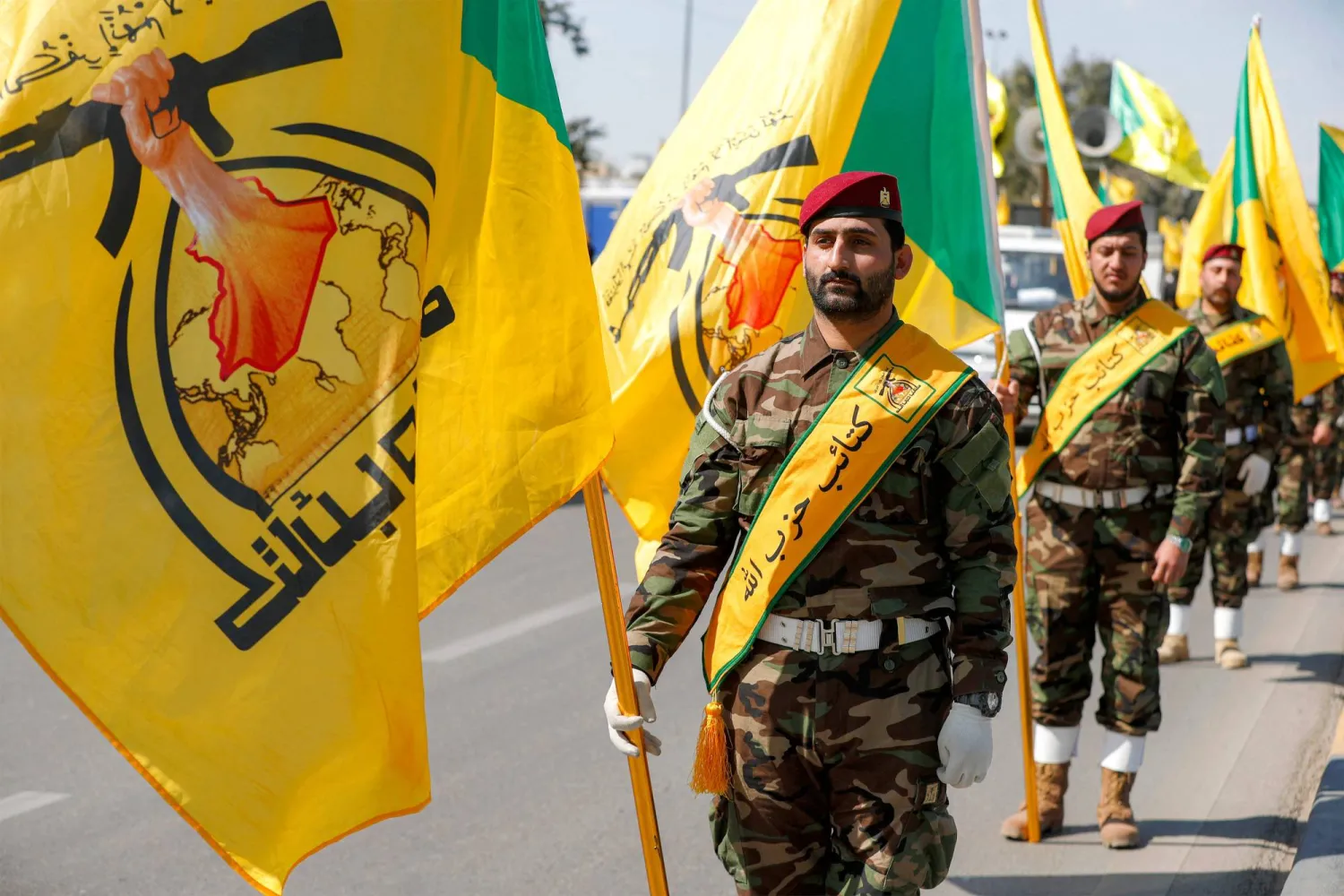
Members of Iraq's pro-Iran paramilitary group Kataib Hezbollah march with the group's banners in a funeral for slain fighters killed in a US-Israeli airstrike on their headquarters in al-Qaim near the border with Syria, during a ceremony in Baghdad on March 2, 2026. (AFP)
TT

Iran's 'Axis of Resistance' under Threat after US-Israeli War

Members of Iraq's pro-Iran paramilitary group Kataib Hezbollah march with the group's banners in a funeral for slain fighters killed in a US-Israeli airstrike on their headquarters in al-Qaim near the border with Syria, during a ceremony in Baghdad on March 2, 2026. (AFP)

Iran once boasted that it controlled four Arab capitals: Baghdad, Damascus, Beirut and Sanaa in an alliance dubbed the "Axis of Resistance".

But the network -- long used as a regional force against Israel -- has been weakened since the Gaza war and now risks collapse, upending the regional balance, analysts said.

"The axis of resistance is over," said Atlantic Council researcher Nicholas Blanford.

Two days after Hamas launched its October 7, 2023 attack on Israel, Prime Minister Benjamin Netanyahu said his country's response would "change the Middle East".

Backed by Israel's powerful ally, the United States, the Israeli leader did not just intend to defeat the Iran-backed Palestinian group, but the entire axis.

The weakening of Lebanon's Hezbollah after its 2024 war with Israel and the fall of Syrian ruler Bashar al-Assad paved the way for Israel to aim directly at Iran.

Since Saturday, the country has been the target of a major US-Israeli offensive, which even killed Iran's supreme leader Ali Khamenei.

Most of the axis's members like Hezbollah, Yemen's Houthis or Iraqi Shiite groups are "trying to understand how to survive", Renad Mansour, senior research fellow at the Chatham House international affairs think-tank, told AFP.

- 'Defensive approach' -

Since deciding to enter the war by launching rockets at Israel on Monday, Hezbollah brought a major Israeli retaliation, which saw bombings across Lebanon and an Israeli ground incursion to create a buffer zone.

"Naim Qassem doesn't want to get involved in this fight," Blanford, who wrote a book on Hezbollah, said, referring to the group's chief.

However, the analyst said Tehran may have forced Qassem to intervene.

Iraq, a longtime battlefield between Washington and Tehran, saw Iran-backed groups claim dozens of drone attacks on US bases, though many were downed.

To Mansour, these groups lack "the necessary military capabilities to inflict significant damage" while the most prominent ones are now "intertwined in the Iraqi state".

The Houthis in Yemen have so far stayed away from the conflict.

"The Houthis are in a calculated holding pattern, or perhaps a defensive approach," said Ahmed Nagi, senior analyst at the International Crisis Group.

However, Nagi believes that while the axis "is facing an existential threat, that does not necessarily mean it will disintegrate".

"The network operates on more than a military level; its political, social and religious ties remain deeply rooted among its groups and are unlikely to unravel because of battlefield setbacks alone."

The regional upheavals will depend on the outcome of this war, particularly the collapse or survival of the Iranian regime.


Netanyahu’s Political Future at Stake with Iran War, Say Experts

03 March 2020, Israel, Tel Aviv: Israeli Prime Minister Benjamin Netanyahu delivers an address. (dpa)
TT

Netanyahu’s Political Future at Stake with Iran War, Say Experts

03 March 2020, Israel, Tel Aviv: Israeli Prime Minister Benjamin Netanyahu delivers an address. (dpa)

With elections approaching in Israel, the war with Iran has handed Prime Minister Benjamin Netanyahu an opportunity to restore an image deeply scarred by Hamas's October 7, 2023 attack, experts say.

But any political dividend would depend on how the conflict unfolds and how long it lasts, they said according to AFP.

A day after Iran's supreme leader Ali Khamenei was killed in a wave of US-Israeli strikes, Netanyahu said that his close ties with Washington had enabled Israel to "do what I have long aspired to do for 40 years: to strike the terrorist regime decisively".

The Gaza war, sparked by Hamas's unprecedented attack on Israel on October 7, 2023, eroded Netanyahu's popularity.

Critics have accused him of seeking to evade responsibility for the authorities' failure to prevent the deadliest day in Israel's history.

At 76, the leader of the right-wing Likud party is Israel's longest-serving prime minister, with more than 18 cumulative years in office across multiple stints.

Known for his political resilience, Netanyahu has been without a parliamentary majority since the summer, amid a crisis with his ultra-Orthodox religious allies.

He is also standing trial in a long-running corruption case and has sought a presidential pardon, with US President Donald Trump repeatedly pressuring President Isaac Herzog to grant one.

- 'Total victory' -

Elections must be held by October 27 at the latest.

Netanyahu will call early elections, says Emmanuel Navon, a political analyst at Tel Aviv University.

"It's obvious. He won't wait until October given the commemoration of the October 7 anniversary," Navon said.

"If Netanyahu was at rock bottom after the Hamas attack, he has since gradually turned the tide," he added, citing heavy blows dealt by the Israeli military to Hamas, Hezbollah and Iran since the start of the Gaza war.

A Likud party led by Netanyahu would emerge ahead in elections held today, opinion polls suggest.

That would likely see him tasked with forming the next government, though he would still lack a majority with his current allies.

A victory over Iran could change that calculus, experts say.

"This offensive undeniably reinforces the image Netanyahu seeks to cultivate, the one associated with his 'total victory' slogan," independent geopolitical analyst Michael Horowitz told AFP.

"Netanyahu wants to show that this is not a campaign slogan but a reality. It is his national agenda and his electoral strategy," he added.

- 'Iran remains Iran' -

Raviv Druker, a prominent journalist on Channel 13 television, argued that Netanyahu "will try to convince people that the victory is total even if that is an illusion," noting that "Hamas still runs Gaza, and Iran remains Iran even after Saturday's strike".

On the popular news website Walla, journalist Ouriel Deskal went further, suggesting Netanyahu may have chosen the timing of the hostilities to automatically delay -- under a state of emergency -- the March 30 deadline for passing a budget for which he has struggled to secure a majority.

Without a budget, the government would fall on April 1 and elections would be called.

In that scenario, Netanyahu would enter the campaign from a position of weakness.

By contrast "if this war against Iran is a success for Israel, it will be a political victory for Netanyahu," Navon said.

But should the war drag on, the picture could shift dramatically, Horowitz warned.

"Public tolerance for a long war with heavy casualties, combined with a high cost of living, remains extremely low," he said.

During the war last June, Iranian missiles killed 30 people in Israel. Since Saturday, 10 people have been killed in Iran's retaliatory strikes.

"Israel's victories are primarily attributed to the army and to civilian resilience, which enabled the country to wage the longest war in its history," Horowitz noted.

"The army's popularity is rising, not necessarily Netanyahu's."


US Debuts Suicide Drone in Iran After Fast-Tracked Pentagon Procurement

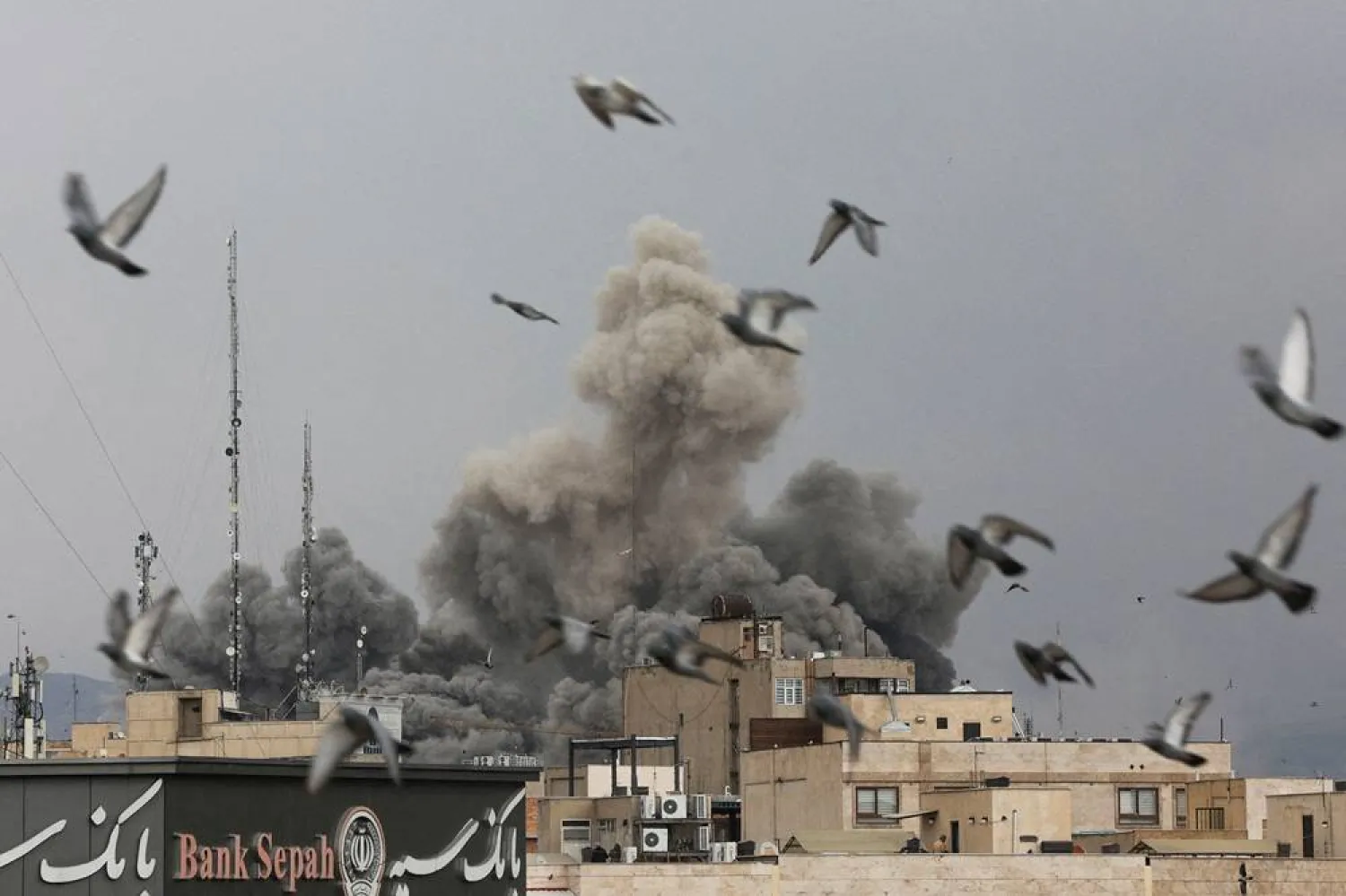
Birds fly as smoke rises following an explosion, after Israel and the US launched strikes on Iran, amid the US-Israel conflict with Iran, in Tehran, Iran, March 2, 2026. Majid Asgaripour/WANA (West Asia News Agency) via Reuters
TT

US Debuts Suicide Drone in Iran After Fast-Tracked Pentagon Procurement

Birds fly as smoke rises following an explosion, after Israel and the US launched strikes on Iran, amid the US-Israel conflict with Iran, in Tehran, Iran, March 2, 2026. Majid Asgaripour/WANA (West Asia News Agency) via Reuters

The US successfully debuted a low-cost suicide drone in combat in Iran just eight months after its Pentagon unveiling, as the US pushes to accelerate weapons programs.

The Low-Cost Uncrewed Combat Attack System (LUCAS) drone, manufactured by Arizona's SpektreWorks, was showcased in July 2025 when Defense Secretary Pete Hegseth walked the Pentagon's inner courtyard with more than a dozen companies competing to supply the military with new equipment.

Drones have become central to modern warfare following their effective use in the Ukraine war, including Iran-made Shahed systems flown by Russia that closely resemble the LUCAS. The sector is also among the most fiercely competitive in ‌the US defense industry, ‌with SpektreWorks vying for Pentagon contracts against major defense primes ‌and ⁠a wave of ⁠Silicon Valley–backed startups such as Anduril, Shield AI and AeroVironment.

US Central Command said LUCAS drones are modeled after the Shahed.

RAPID DEPLOYMENT

The rapid fielding of the LUCAS represents a departure from traditional Pentagon acquisition timelines, which typically span years from initial development to operational deployment. Defense officials said the compressed timeline reflects lessons learned from observing drone warfare in Ukraine, where both sides have employed thousands of low-cost unmanned systems.

The LUCAS deployment comes as the Pentagon pushes to rapidly expand ⁠American industrial capacity for producing inexpensive, attritable drones under the $1 billion ‌Drone Dominance Program authorized in the "One Big Beautiful Bill ‌Act of 2025."

The LUCAS drone uses an open architecture that allows different payloads and communications systems, ‌and can be deployed either for strikes or as a target drone, according to company ‌materials. It can be launched from the ground or a truck.

At about $35,000 each, it is far cheaper than the MQ-9 Reaper, which costs roughly $20 million to $40 million but is reusable and far more sophisticated.

The government owns the LUCAS design intellectual property, meaning multiple manufacturers could produce the system, ‌though SpektreWorks currently holds manufacturing contracts.

SpektreWorks declined to comment for this story.

DRONES USE STARLINK AND VIASAT SATELLITES

During its development at the ⁠Pentagon, the LUCAS ⁠drone was paired with satellite communications systems including Viasat’s MUSIC and SpaceX’s Starlink or Starshield, according to two sources familiar with the program. Reuters could not determine what connectivity systems are being used during current Iran operations.

Neither SpaceX nor Viasat returned requests for comment.

A startup called Noda provides the software to control the drones, known as an "orchestrator" that allows warfighters to control multiple autonomous systems, one of the sources familiar with the program said. Noda declined to comment.

Drone experts told Reuters the LUCAS design shares similarities with Iran's Shahed drone, which Tehran has supplied to Russia for use in Ukraine. The Shahed is believed to be a copy of Israel's Harpy loitering munition, according to defense analysts. The Harpy design has been widely replicated by countries including China and Taiwan.

The LUCAS also bears resemblance to the Drone Anti-Radar (DAR), a loitering munition jointly developed in the 1970s and 1980s.