


Iran Executes British-Iranian Accused of Spying, Prompts Western Condemnation 

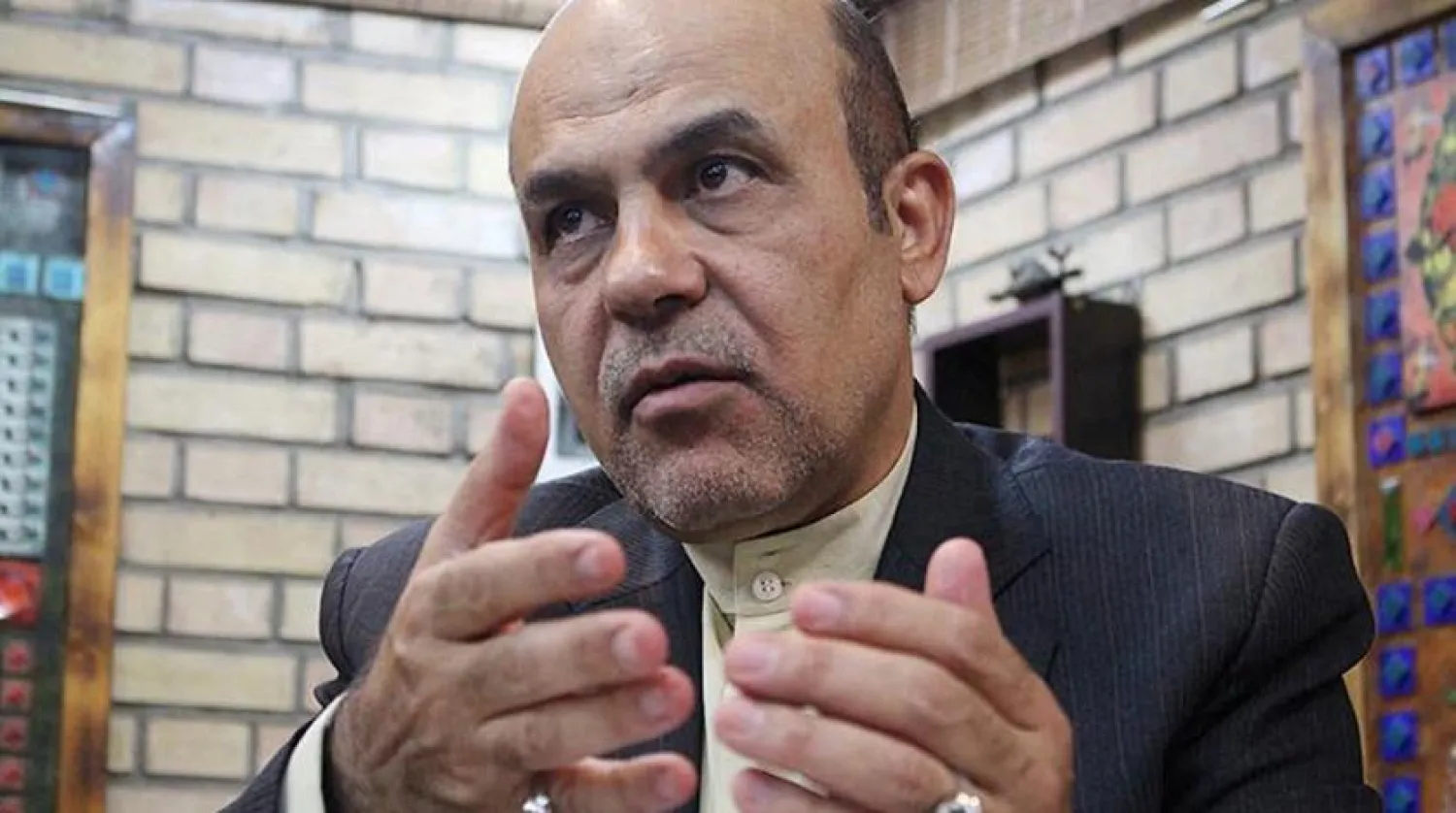
Alireza Akbari, Iran's former deputy defense minister, speaks during an interview with Khabaronline in Tehran, Iran, in this undated picture obtained on January 12, 2023. Khabaronline/WANA (West Asia News Agency)/Handout via Reuters
TT

Iran Executes British-Iranian Accused of Spying, Prompts Western Condemnation 

Alireza Akbari, Iran's former deputy defense minister, speaks during an interview with Khabaronline in Tehran, Iran, in this undated picture obtained on January 12, 2023. Khabaronline/WANA (West Asia News Agency)/Handout via Reuters

Iran has executed a British-Iranian national who once served as its deputy defense minister, its judiciary said, defying calls from London and Washington for his release after he was handed the death sentence on charges of spying for Britain. 

Britain, which had declared the case against Alireza Akbari politically motivated, condemned the execution, with Prime Minister Rishi Sunak calling it "a callous and cowardly act carried out by a barbaric regime". 

Akbari, 61, was arrested in 2019. 

The Iranian judiciary's Mizan news agency reported the execution without saying when it had taken place. Late on Friday, British Foreign Secretary James Cleverly had said Iran must not follow through with the sentence. 

The execution looks set to further worsen Iran's long-strained relations with the West, which have deteriorated since talks to revive its 2015 nuclear deal hit deadlock and as Tehran unleashed a deadly crackdown on protesters last year. 

France and the United States both condemned the execution. 

In an audio recording purportedly from Akbari and broadcast by BBC Persian on Wednesday, he said he had confessed to crimes he had not committed after extensive torture. 

"Alireza Akbari, who was sentenced to death on charges of corruption on earth and extensive action against the country’s internal and external security through espionage for the British government's intelligence service ... was executed," Mizan said. 

The Mizan report accused Akbari of receiving payments of 1,805,000 euros ($1.95 million), 265,000 pounds ($323,989.00), and $50,000 for spying. 

Sunak said on Twitter he was "appalled by the execution", saying Tehran had "no respect for the human rights of their own people".  

Cleverly said in a statement it would "not stand unchallenged", later announcing Britain had imposed sanctions on Iran's prosecutor general. 

US Ambassador to London Jane Hartley called the execution "appalling and sickening". 

The US State Department on Saturday described the execution as being politically motivated and unjust, adding it was working with the UK and other allies to hold Iran accountable for alleged human rights abuses. 

British statements on the case have not addressed the Iranian charge that Akbari spied for Britain. 

Iran's foreign ministry summoned the British ambassador on Saturday over what it called London's "meddling in Iran's national security realm", the state news agency IRNA reported. 

Iranian state media, which have portrayed Akbari as a super spy, broadcast a video on Thursday, which they said showed that he played a role in the 2020 assassination of Iran's top nuclear scientist, Mohsen Fakhrizadeh, killed in an attack outside Tehran which authorities blamed at the time on Israel. 

In the video, Akbari did not confess to involvement in the assassination but said a British agent had asked for information about Fakhrizadeh. 

Iran’s state media often airs purported confessions by suspects in politically charged cases. 

Reuters could not establish the authenticity of the state media video and audio, or when or where they were recorded. 

Akbari was a close ally of Ali Shamkhani, now the secretary of Iran’s Supreme National Security Council, who was defense minister from 1997 to 2005, when Akbari was his deputy as part of the administration of reformist President Mohammad Khatami. 

He fought during the Iran-Iraq war in the 1980s as a member of the Revolutionary Guards. 

It marks a rare case of the Islamic Republic executing a serving or former senior official. One of the last occasions was in 1984, when Iranian navy commander Bahram Afzali was executed after being accused of spying for the Soviet Union. 

‘3,500 hours of torture’ 

French President Emmanuel Macron said the execution was a "despicable and barbaric act". "His name adds to too long a list of victims of repression and the death penalty in Iran," he wrote on Twitter. 

Iran's ties with the West have also been strained by its support for Russia in Ukraine, where Western states say Moscow has used Iranian drones during the invasion. 

Britain, which has a long history of fraught ties with Iran, and other Western states have been fiercely critical of Tehran's crackdown on anti-government protests, sparked by the death in custody of a young Iranian-Kurdish woman in September. 

Iran has issued dozens of death sentences as part of the crackdown, executing at least four people. 

In the audio recording broadcast by BBC Persian, Akbari said he had made false confessions as a result of torture. 

"With more than 3,500 hours of torture, psychedelic drugs, and physiological and psychological pressure methods, they took away my will. They drove me to the brink of madness... and forced me to make false confessions by force of arms and death threats," he said. 

Amnesty International said the execution displayed again Tehran's "abhorrent assault on the right to life". 

In Akbari's case "it is particularly horrific given the violations he revealed he was subjected to in prison," it said in a Tweet. 

The Iranian authorities have not responded to accusations that Akbari was tortured. 

An Iranian state TV report - details of which Reuters could not independently verify - said he was arrested on espionage charges in 2008 before he was freed on bail and left Iran. 

It 2009 he went to Austria under the pretext of medical treatment, then to Spain and eventually to England, the report said. 

In an interview with BBC Persian broadcast on Friday, Akbari's brother Mehdi said he had returned to Iran in 2019 based on an invitation from Shamkhani. 


US Military Strikes Another Alleged Drug Boat in Eastern Pacific, Killing 3

A shot of a boat targeted by a US raid in the Caribbean (archive - Reuters)
TT

US Military Strikes Another Alleged Drug Boat in Eastern Pacific, Killing 3

A shot of a boat targeted by a US raid in the Caribbean (archive - Reuters)

The US military said Friday that it has carried out another deadly strike on a vessel accused of trafficking drugs in the Eastern Pacific Ocean.

US Southern Command said on social media that the boat “was transiting along known narco-trafficking routes in the Eastern Pacific and was engaged in narco-trafficking operations.” It said the strike killed three people. A video linked to the post shows a boat floating in the water before bursting into flames.

Friday’s attack raises the death toll from the Trump administration’s strikes on alleged drug boats to at least 148 people in at least 43 attacks carried out since early September in the Caribbean Sea and eastern Pacific Ocean.

President Donald Trump has said the US is in “armed conflict” with cartels in Latin America and has justified the attacks as a necessary escalation to stem the flow of drugs. But his administration has offered little evidence to support its claims of killing “narcoterrorists.”

Critics have questioned the overall legality of the strikes as well as their effectiveness, in part because the fentanyl behind many fatal overdoses is typically trafficked to the US over land from Mexico.


Afghanistan Quake Causes No ‘Serious’ Damage, Injuries, Says Official

Afghan men prepare meals during the holy fasting month of Ramadan in Kabul, Afghanistan, 19 February 2026. (EPA)
TT

Afghanistan Quake Causes No ‘Serious’ Damage, Injuries, Says Official

Afghan men prepare meals during the holy fasting month of Ramadan in Kabul, Afghanistan, 19 February 2026. (EPA)

A 5.8-magnitude earthquake that rocked eastern Afghanistan including the capital Kabul has resulted in only minor damage and one reported injury, a disaster official told AFP on Saturday.

The quake hit on Friday just as people in the Muslim-majority country were sitting down to break their Ramadan fast.

The epicenter was near several remote villages around 130 kilometers (80 miles) northeast of Kabul, the United States Geological Survey said.

"There aren't any serious casualties or damages after yesterday's earthquake," said Mohammad Yousuf Hamad, spokesman for the National Disaster Management Authority.

He added that one person had sustained "a minor injury in Takhar", in Afghanistan's north, "and three houses had minor damage in Laghman" province.

Zilgay Talabi, a resident of Khenj district near the epicenter, said the tremor was "very strong, it went on for almost 30 seconds".

Earthquakes are common in Afghanistan, particularly along the Hindu Kush mountain range, near where the Eurasian and Indian tectonic plates meet.

In August last year, a shallow 6.0-magnitude quake in the country's east wiped out mountainside villages and killed more than 2,200 people.

Weeks later, a 6.3-magnitude quake in northern Afghanistan killed 27 people.

Large tremors in western Herat, near the Iranian border, in 2023, and in Nangarhar province in 2022, killed hundreds and destroyed thousands of homes.

Many homes in the predominantly rural country, which has been devastated by decades of war, are shoddily built.

Poor communication networks and infrastructure in mountainous Afghanistan have hampered disaster responses in the past, preventing authorities from reaching far-flung villages for hours or even days before they could assess the extent of the damage.


Serbia Urges Citizens to Quit Iran ‘As Soon as Possible’

People walk past an anti-US billboard in Tehran, Iran, January 26, 2026. Majid Asgaripour/WANA (West Asia News Agency) via Reuters
TT

Serbia Urges Citizens to Quit Iran ‘As Soon as Possible’

People walk past an anti-US billboard in Tehran, Iran, January 26, 2026. Majid Asgaripour/WANA (West Asia News Agency) via Reuters

Serbia has urged its citizens in Iran to leave the country "as soon as possible", after US President Donald Trump threatened military action over the country's nuclear program.

The Balkan nation had already invited Serbian nationals in mid-January to leave Iran and not to travel there, as the country's clerical authorities launched a bloody crackdown on a mass protest movement.

"Due to the deteriorating security situation, citizens of the Republic of Serbia are not recommended to travel to Iran in the coming period," the foreign ministry said in a statement on its website published overnight Friday to Saturday.

"All those who are in Iran are recommended to leave the country as soon as possible."

Iran said on Friday that it was hoping for a quick deal with the United States on Tehran's nuclear program, long a source of discord between the two foes.

But Trump, after ordering a major naval build-up in the Middle East aimed at heaping pressure on Tehran, said on Friday that he was "considering" a limited military strike if the negotiations proved unfruitful.
