Egypt Cabinet Approves 13 Draft Agreements to Explore Oil, Gas
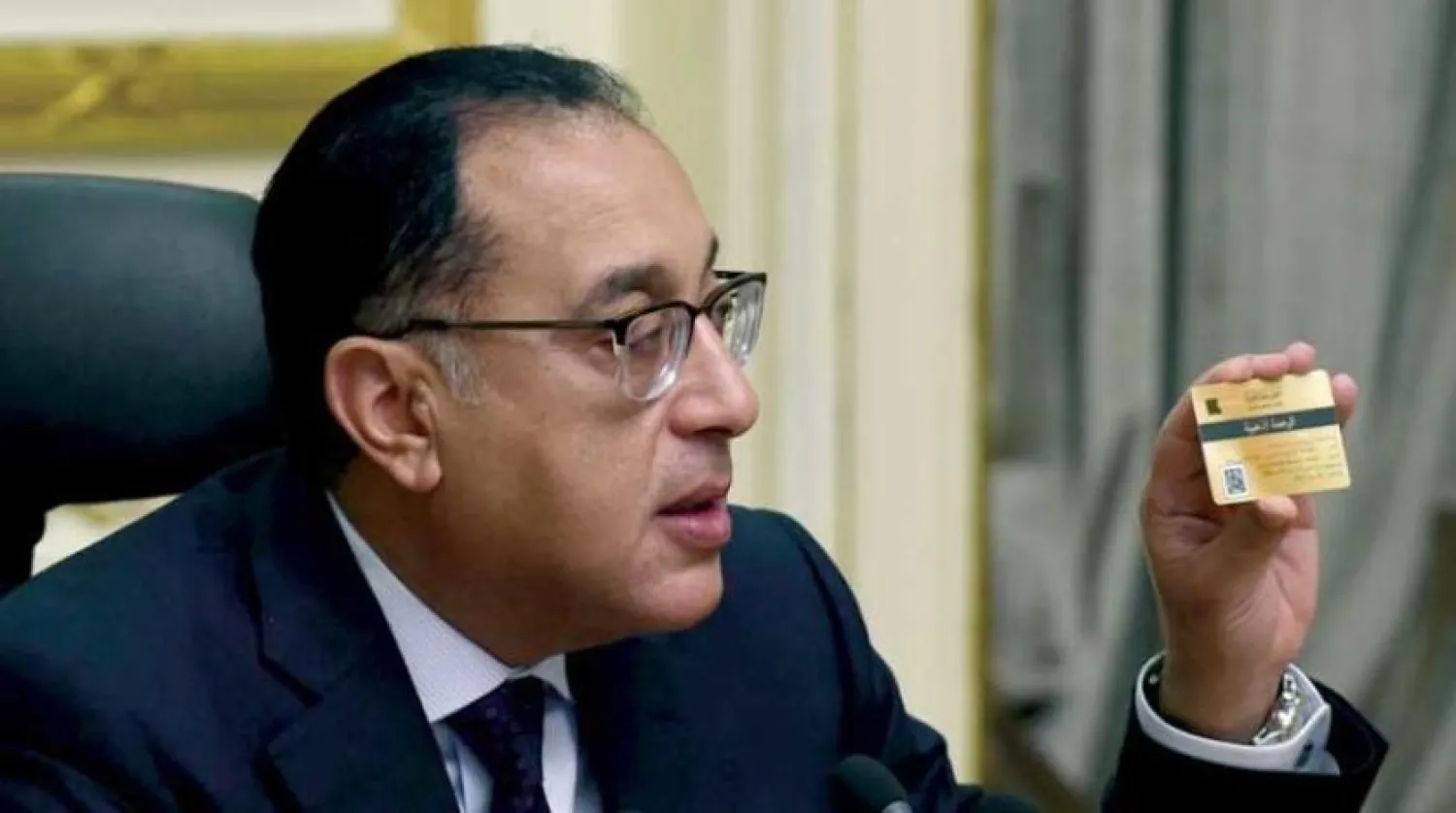
Egyptian Prime Minister Mostafa Madbouly showcases the golden license during a press conference on Wednesday. (Asharq Al-Awsat)
The Egyptian Cabinet approved on Wednesday 13 draft agreements between the Egyptian General Petroleum Corporation, the Egyptian Natural Gas Holding Company, and a number of international companies.
Under the deals, the Egyptian General Petroleum Corporation will be responsible for oil exploration in areas west of Wadi Natrun, east of Siwa, west of Magharra, west of Abu Gharadiq, east of Alam Saweesh, and in the Gulf of Suez, according to the Cabinet.
The Egyptian Natural Gas Holding Company will be in charge of natural gas and crude oil exploration in the Mediterranean Sea areas, including north of Fayrouz and Rafah, Tiba, and Tabiya as well as northeast of Arish and Bellatrix City East.
In another context, Prime Minister Mostafa Madbouly said in a press conference after the Cabinet meeting that the government granted weeks ago nine licenses for various projects.
This falls under the directives of Egyptian President Abdel Fattah al-Sisi to encourage the private sector’s role and increase its contribution to economic growth.
Madbouly showcases a sample of the golden license, which comes in the form of a “smart card” with a “QR Code” so that all license-related data are accessible through it.
The PM pointed out that the Cabinet is expanding during its meetings the scope of activities that can be covered under the golden license.
Madbouly called on project owners to submit their requests for golden licenses to the supreme committee, which is supervised by the prime minister and convenes regularly to issue the licenses.
Egypt is set to announce next week a detailed plan to offer stakes of at least 20 state companies over the course of 2023, Madbouly added.
An Egyptian plan to sell stakes in public companies, first announced more than five years ago, has gained new urgency since the Russian invasion of Ukraine triggered heavy foreign investment outflows from Egyptian financial markets and threw the economy into crisis.
FILE PHOTO: A model of an oil pump is seen in front of a Saudi Arabian flag in this illustration taken January 9, 2026. REUTERS/Dado Ruvic/Illustration/File Photo
Sources: Saudi Arabia Restarts East-West Oil Pipeline
FILE PHOTO: A model of an oil pump is seen in front of a Saudi Arabian flag in this illustration taken January 9, 2026. REUTERS/Dado Ruvic/Illustration/File Photo
Saudi Arabia has restarted operations at its East-West Pipeline and could resume exports from the Red Sea port of Yanbu later on Tuesday, three sources briefed on the matter said.
Drone attacks forced Saudi Arabia to shut its East-West Pipeline on September 13, halting crude loadings at the kingdom's Yanbu port.
The resumption of supplies on Tuesday helped to drive selling on global oil markets, traders said. Brent crude futures fell by more than $2 a barrel to its lowest since September 8.
Two trading sources said traders were getting ready for Saudi oil loadings by moving tankers to Egypt's Mediterranean Port Said for ship-to-ship transfers and also to Sidi Kerir.
EU Strikes New Free Trade Deal with the Philippineshttps://english.aawsat.com/business/5321151-eu-strikes-new-free-trade-deal-philippines
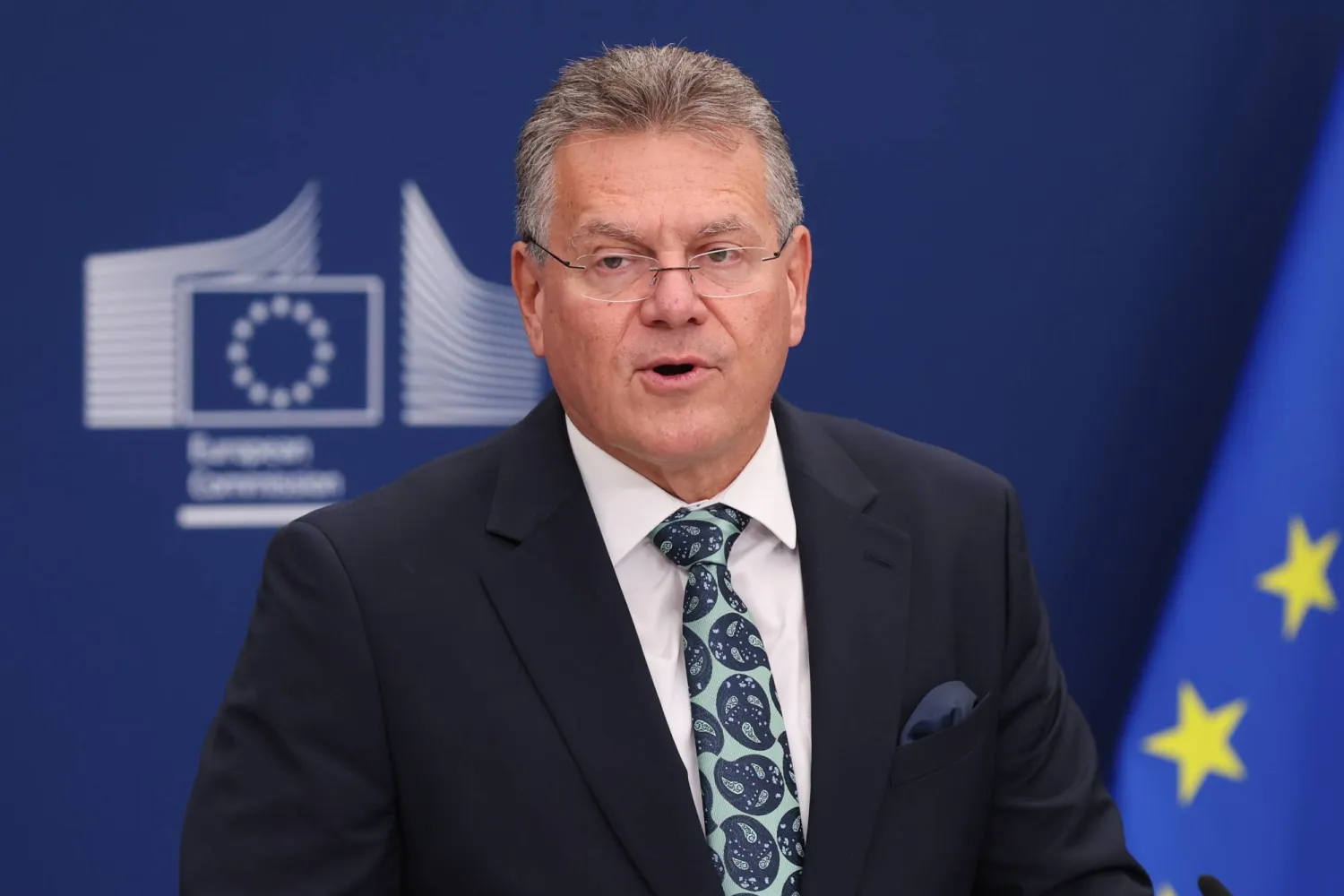
European Commissioner for Trade and Economic Security Maros Sefcovic gives a press statement on EU-Philippines trade relations at the European Commission in Brussels, Belgium, 22 September 2026. EPA/OLIVIER HOSLET
EU Strikes New Free Trade Deal with the Philippines
European Commissioner for Trade and Economic Security Maros Sefcovic gives a press statement on EU-Philippines trade relations at the European Commission in Brussels, Belgium, 22 September 2026. EPA/OLIVIER HOSLET
The European Union and the Philippines announced a new free trade deal on Tuesday in the latest bilateral agreement struck by Brussels as it seeks to diversify its economy as tensions persist with traditional trading partners including China, Russia and the United States.
The EU's top trade negotiator, Maroš Šefčovič, said that he and Philippine Trade Secretary María Cristina Aldeguer-Roque structured the deal to grow the nearly 30 billion euros (around $35 billion) of annual trade between the 27-nation EU and the Southeast Asian nation of 115 million people.
“It also delivers stronger, more diversified supply chains at the moment when resilience has become a strategic priority,” Šefčovič said.
Trade is dominated by electronics, with the EU exporting aircraft, pork and pharmaceuticals while importing semiconductors, integrated circuits and industrial machinery manufactured in the Philippines.
The Philippines is the third nation from the ASEAN bloc after Vietnam and Singapore to sign a bilateral trade deal with the EU. Negotiations are ongoing between the
European Commission and Thailand, Indonesia and Malaysia, while a larger free-trade agreement is hoped for in the long term between ASEAN itself and the EU.
“There is a bigger picture here too,” The Associated Press quoted Šefčovič as sayhing. “This agreement sends a clear signal that the EU is reinforcing its engagement with the Indo-Pacific.”
The EU has sought growth and stability in new trade links from Australia to Argentina as the bloc itself is beset by a geopolitical maelstrom, including conflicts in the Middle East and the war in Ukraine.
The EU also has been dealing with the need to explore alternative energy sources, heightened tensions with the Trump administration, officials from EU member states accusing Russia of hybrid attacks, and China running a gargantuan trade imbalance and a near-monopoly over critical mineral supplies.
The EU deal with the Philippines roughly tracks with the “ middle powers ” strategy laid out at the World Economic Forum in Davos, Switzerland, earlier this year by Canadian Prime Minister Mark Carney. Last week, he was the guest of honor in the European Parliament in Strasbourg at the annual State of the European Union speech by European Commission President Ursula von der Leyen.
She said then that the EU would forge a new kind of “ associated membership ” for Canada.
“In this new world, we must urgently reimagine our partnerships,” von der Leyen said during her speech.
BlackRock: Saudi Arabia Accounts for More Than 60% of Capital-Raising in the Regionhttps://english.aawsat.com/business/5321137-blackrock-saudi-arabia-accounts-more-60-capital-raising-region
BlackRock: Saudi Arabia Accounts for More Than 60% of Capital-Raising in the Region
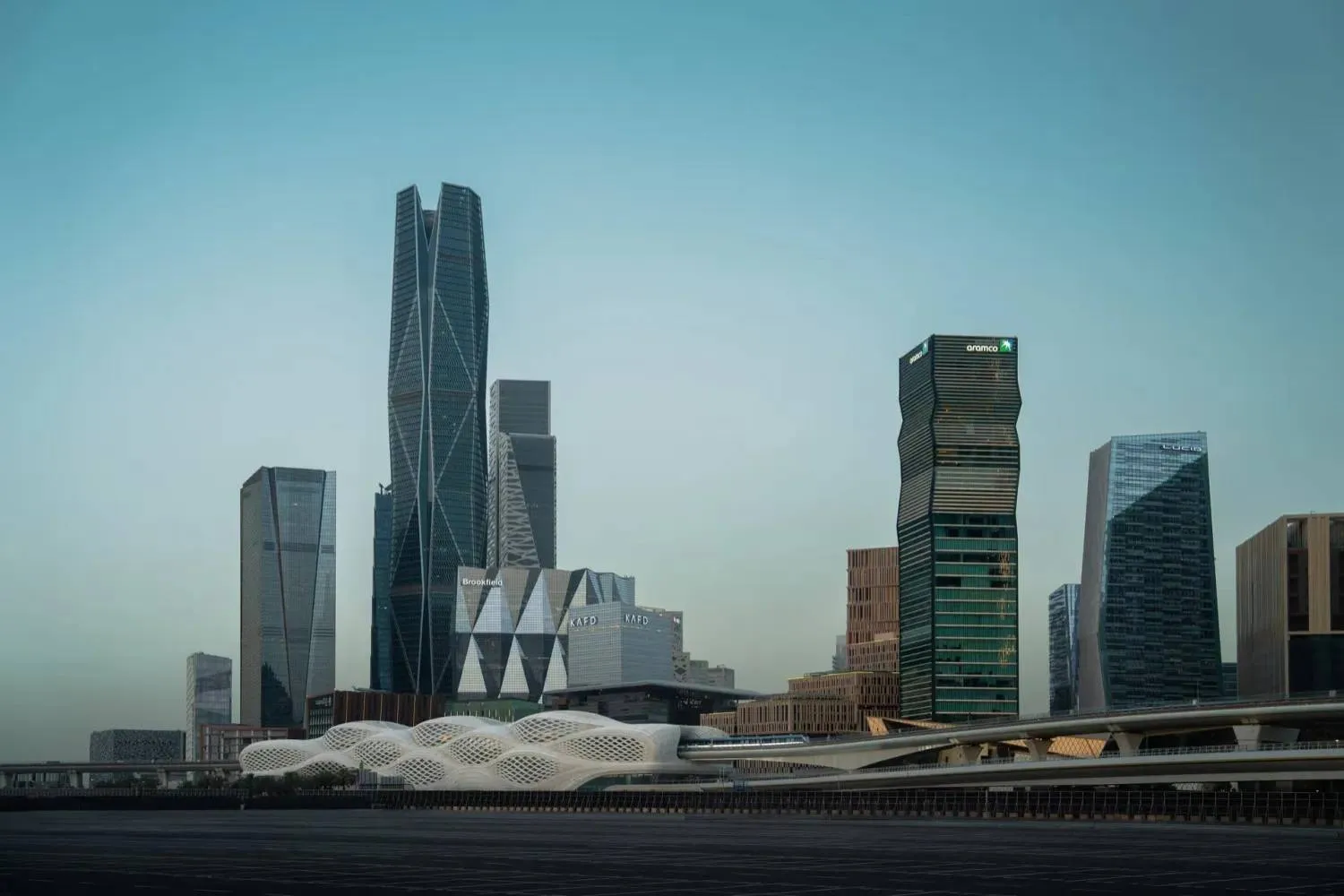
The King Abdullah Financial District (KAFD) in Riyadh
Saudi Arabia is leading fundraising in the region, accounting for over 60% of all Middle East-based funds closed since 2015, a sign of the Kingdom's growing role as a destination for private investment, alongside a broader regional shift from being merely a source of capital to becoming a market that attracts investment and redeploys it domestically.
BlackRock's Aladdin released on Tuesday “Market Evolution: The Middle East,” a new report examining the region's shift from a source of global private markets capital to a destination for private capital deployment.
The report says Saudi Arabia’s economic transformation programs, growing infrastructure investments, and advancing institutional capabilities are driving the expansion of the Kingdom’s private capital market. At the same time, investor appetite for technology, infrastructure, and other sectors continues to grow.
Saudi Arabia’s leadership in capital fundraising has been accompanied by an accelerating pace of domestic capital deployment.
According to the report, “Saudi Arabia's Public Investment Fund has accelerated domestic deployment, overtaking rest-of-world direct deal activity in the Middle East deals in 2023 and has extended that lead since.”
This shift reflects a broader trend toward building a local market capable of absorbing a larger share of investment capital. In 2024, Larry Fink, Chairman and CEO of BlackRock, stated that BlackRock Riyadh Investment Management Platform, launched in partnership with PIF, aims to elevate Saudi Arabia’s capital markets and attract greater foreign institutional investment.
He noted that the ambition extends beyond connecting global investors to Saudi Arabia; it also includes “bringing capital back to Saudi Arabia.”
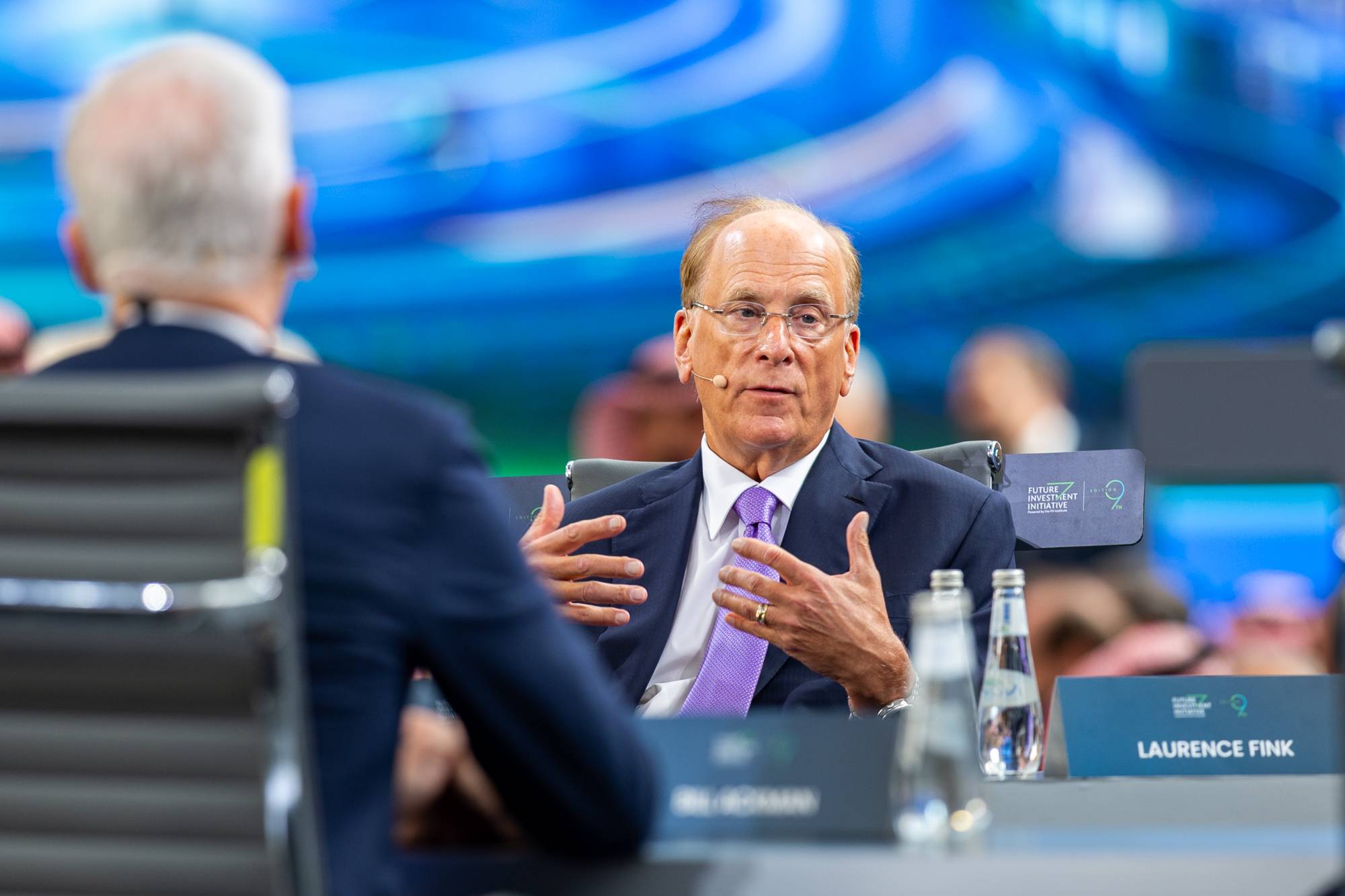
Larry Fink, Chairman and CEO of BlackRock, speaking at a session of the Future Investment Initiative conference (Asharq Al-Awsat file photo)
Fink later highlighted the development of local capital markets as a central theme in his discussions with regional leaders. He emphasized that BlackRock’s partnership with PIF was designed to encourage investment and strengthen the Kingdom’s capital markets.
These developments coincide with growing interest among major investors in the region in private assets. “Middle East sovereign wealth funds tracked by Preqin allocate 43% of their exposure to private capital, compared with 35% for their rest-of-world peers, and appetite continues to build,” said the report.
“The share of Middle East LP investors positive on or considering private equity mandates has climbed from 70% in 2019 to 83% in 2026. Among LP investors elsewhere in the world, that figure has moved only marginally over the same period, from 60% to 61%, showing regional conviction is growing well ahead of the global baseline,” it added.
Managing Director and Head of Aladdin Business Development for the Middle East, Central Asia, Africa and India Ayman Daif said: "The direction of travel in the region points to a structural shift: capital is increasingly being deployed at home, and the institutions and ecosystems are being built around it.”
"The next phase of growth will be shaped by continued collaboration between sovereign wealth funds, family offices and global investment managers, alongside broader adoption of technology and data-driven investment approaches,” he stated.
"This comes as BlackRock Investment Institute research suggests GCC countries will invest about $2.1 trillion by 2030, with spending focused on making economies more resilient to disruptions in trade, shipping and energy markets,” Daif added.
FILE PHOTO: The company logo and trading information for BlackRock is displayed on a screen on the floor of the New York Stock Exchange (NYSE) in New York, US, March 30, 2017. REUTERS/Brendan McDermid/File Photo
The report identifies Saudi Arabia and the UAE as the region's leading private capital markets, supported by economic transformation programs, expanding infrastructure investment and growing institutional sophistication, with centers such as Kuwait also increasing activity.
The report’s findings also highlight the growing importance of infrastructure and digital infrastructure investment. Regional investors cite opportunities across energy, utilities, transport, data centers and artificial intelligence-related infrastructure as key drivers of future growth.
Family offices are also playing an increasingly important role in the region's investment ecosystem. The report finds family offices now account for nearly half of active private capital investors in the Middle East, with private equity representing their largest area of investment interest.
GCC family offices tilt toward private equity at 27% of future search mandates, ahead of real estate at 19%, private credit at 16%, infrastructure at 14%, hedge funds at 13%, and natural resources at 11%.
As an indication of the resilience of the region’s venture capital market amid a more challenging global funding environment, aggregate Middle East VC deal value averaged $2.4 billion per year between 2021 and 2025, holding steady throughout the period.
Add-ons have also risen from 20% of total buyout deal activity in 2020 to 46% in 2025, reflecting the growing use of this strategy to expand companies and existing investment platforms.
“Market Evolution: The Middle East” draws on Preqin Pro data as of June 2026, covering funds closed in the Middle East since 2015 and private capital deal activity since 2020.
The report also draws on preliminary results from Preqin's upcoming Middle East Investor Survey, which had captured responses from 26 regional investors and remained open at the time of publication, alongside interviews with BlackRock leaders across the region.
لم تشترك بعد
انشئ حساباً خاصاً بك لتحصل على أخبار مخصصة لك ولتتمتع بخاصية حفظ المقالات وتتلقى نشراتنا البريدية المتنوعة