Warm Water Melts Weak Spots on Antarctica’s ‘Doomsday Glacier’, Say Scientists

A robot nicknamed Icefin operates under the sea ice near McMurdo Station in Antarctica in 2020. (Icefin/NASA PSTAR RISE UP via AP)
TT

Warm Water Melts Weak Spots on Antarctica’s ‘Doomsday Glacier’, Say Scientists

A robot nicknamed Icefin operates under the sea ice near McMurdo Station in Antarctica in 2020. (Icefin/NASA PSTAR RISE UP via AP)

Scientists studying Antarctica's vast Thwaites Glacier - nicknamed the Doomsday Glacier - say warm water is seeping into its weak spots, worsening melting caused by rising temperatures, two papers published in Nature journal showed on Wednesday.

Thwaites, which is roughly the size of Florida, represents more than half a meter (1.6 feet) of global sea level rise potential, and could destabilize neighboring glaciers that have the potential to cause a further three-meter (9.8-foot) rise.

As part of the International Thwaites Glacier collaboration - the biggest field campaign ever attempted in Antarctica - a team of 13 US and British scientists spent about six weeks on the glacier in late 2019 and early 2020.

Using an underwater robot vehicle known as Icefin, mooring data and censors, they monitored the glacier's grounding line, where ice slides off the glacier and meets the ocean for the first time.

In one of the papers, led by Cornell University-based scientist Britney Schmidt, researchers found that warmer water was making its way into crevasses and other openings known as terraces, causing sideways melt of 30 meters (98 feet) or more per year.

"Warm water is getting into the weakest parts of the glacier and making it worse," Schmidt told Reuters.

"That is the kind of thing we should all be very concerned about," she said about the findings which underscored how climate change is reaching isolated Antarctica.

The other paper's findings, which Schmidt also worked on, showed about five meters (16 feet) per year of melt near the glacier's grounding line - less than what the most aggressive thinning models previously predicted.

But she said the melting was still of grave concern.

"If we observe less melting... that doesn't change the fact that it's retreating," Schmidt said.

Scientists have previously depended on satellite images to show the behavior of the ice, making it difficult to get granular details. The papers represent the first time a team has been to the grounding line of a major glacier, providing a look right where "the action begins," Schmidt said.

The findings will help in the development of climate change models, said Paul Cutler, program director of Antarctic Sciences at the National Science Foundation. He reviewed the papers, but was not involved in the research.

"These things can now be taken on board in the models that will predict the future behavior, and that was exactly the goal of this work," he said.

Wreck of Australia's 1st Warship Built at Home Found 128 Years after Sinking

This undated photo, courtesy of the Royal Australian Navy and provided by the Australian National Maritime Museum, shows HMCS Spitfire, whose wreck was found 128 years to the day after it sank off the north coast of Queensland, Australia. (Royal Australian Navy via AP)
TT

Wreck of Australia's 1st Warship Built at Home Found 128 Years after Sinking

This undated photo, courtesy of the Royal Australian Navy and provided by the Australian National Maritime Museum, shows HMCS Spitfire, whose wreck was found 128 years to the day after it sank off the north coast of Queensland, Australia. (Royal Australian Navy via AP)

The wreck of the first Australian warship built in the country, HMCS Spitfire, was found 128 years to the day after it sank off the north coast of what is now Queensland state, officials said Thursday.

The 19-meter (62-foot) schooner was launched in Sydney in 1855 to fight a potential Russian invasion. But Spitfire had been operating as a fishing boat four decades later when it sprung a leak and foundered on Aug. 21, 1898, off Piper Island, documents show.

A Royal Australian Navy mine hunter vessel found and exposed 16 meters (52 feet) of the wreck nearly three months ago, also on Aug. 21, after a monthlong search using a dive team and remotely operated vehicles, a joint statement from multiple agencies said.

“It is remarkable luck that Spitfire was discovered on the 128th anniversary of its sinking,” The Associated Press quoted Queensland heritage officer Celeste Jordan as saying in the statement.

The discovery was not announced sooner because of reporting processes between government agencies required under laws designed to protect shipwrecks, the Defense Department explained Thursday.

Bearing the designation of HMCS, meaning Her Majesty’s Colonial Schooner, Spitfire was commissioned in 1855 during the Crimean War when the British colonial government of New South Wales in Sydney feared the Russian Pacific Fleet would invade, Australian National Maritime Museum archaeologist James Hunter said.

Britain was at war with Russia in a conflict centered on Ukraine’s Crimean Peninsula. Gold had recently been discovered in New South Wales and the neighboring colony of Victoria, making them lucrative targets for conquest.

The Australian colonies then relied on Britain’s navy for defense and British warships were rare in the most distant reaches of the empire.

The Crimean War ended in 1856 without the Australian two-mast sailing vessel ever being used in battle. Spitfire became a pilot vessel in 1857 at Moreton Bay in what would soon become the Colony of Queensland, but was then still part of New South Wales, documents show.

The Queensland government sold Spitfire in 1885 into private ownership for use as a fishing boat.

Shipbuilder John Cuthbert delivered Spitfire two months after winning the contract. The speed suggested the warship’s construction already had been underway for a different purpose, Hunter said.

It was built from native timbers including an ironbark keel, blackbutt frames and kauri planking. The ship had copper sheathing below the waterline.

Russia’s Pacific Fleet at the time was mostly iron-hulled, steam-powered and “armed to the teeth warships,” Hunter told Australian Broadcasting Corp.

Spitfire was armed with a single cannon that fired 32-pound (14.5-kilogram) iron cannonballs.

“Would that have bounced off the side of one of those larger, Russian iron-hulled warships? Probably,” Hunter said.

There are no plans to salvage the wreck, which is largely buried in seabed sand. Authorities have not revealed Spitfire's exact location because it lies at a depth that can be reached by scuba divers. The ship is protected by federal and state law.

Vice Admiral Matthew Buckley, chief of the Australian navy, said Spitfire represents the beginning of the service's continuing story.

“Spitfire occupies a unique place in Australia’s naval history as the first warship built in Australia for Australian service,” Buckley said.


Cincinnati Zoo Trying to Shake Loose Fiona the Hippo after she Swallowed a Hat

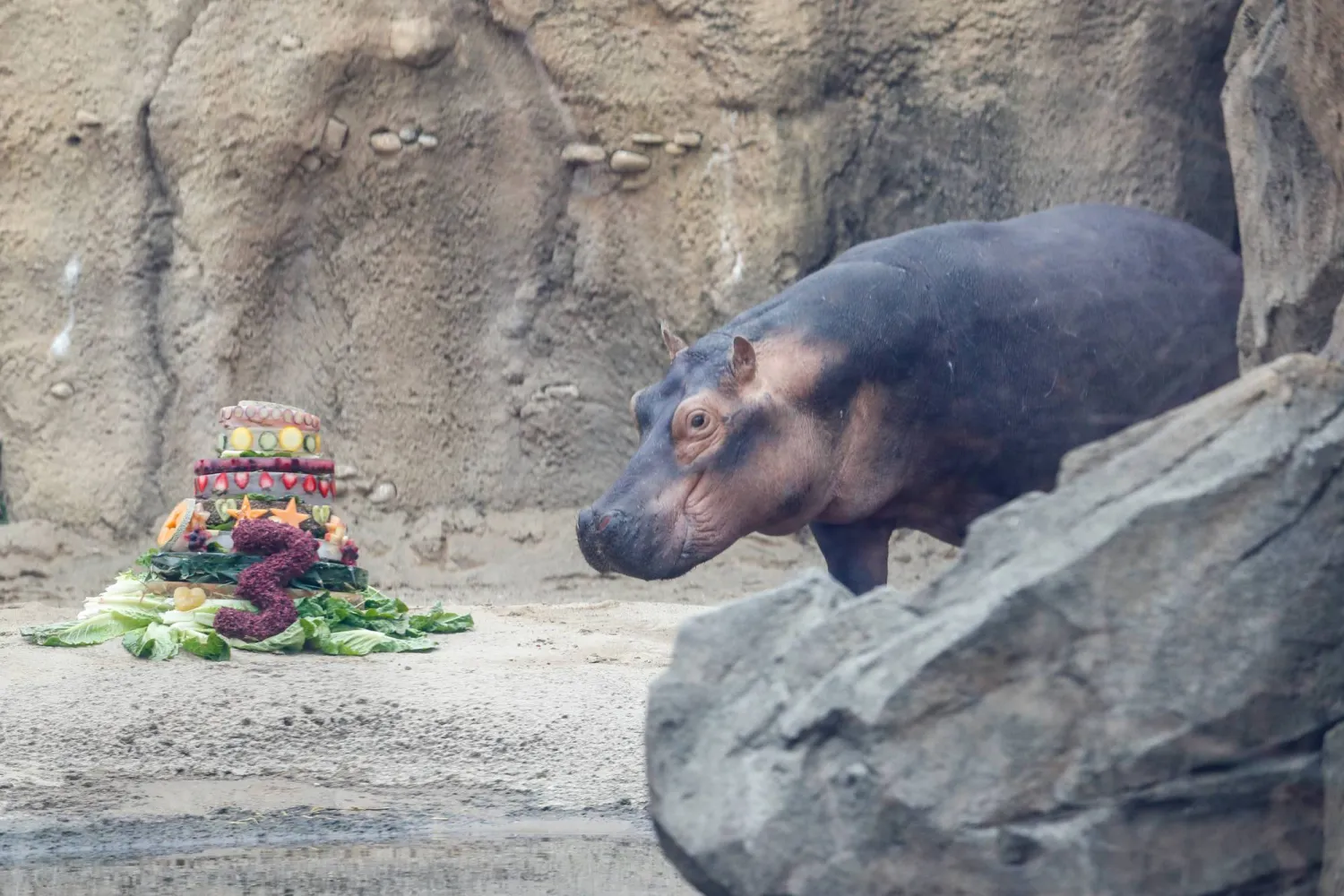
FILE - Fiona, a Nile Hippopotamus, prepares to eat her specialty birthday cake to celebrate turning three-years old this Friday, in her enclosure at the Cincinnati Zoo & Botanical Garden, Jan. 23, 2020, in Cincinnati. (AP Photo/John Minchillo, File)
TT

Cincinnati Zoo Trying to Shake Loose Fiona the Hippo after she Swallowed a Hat

FILE - Fiona, a Nile Hippopotamus, prepares to eat her specialty birthday cake to celebrate turning three-years old this Friday, in her enclosure at the Cincinnati Zoo & Botanical Garden, Jan. 23, 2020, in Cincinnati. (AP Photo/John Minchillo, File)

Fiona, the Cincinnati Zoo's famed hippo, underwent a colonoscopy this week, and now veterinarians are trying a new way to help her pass a knit cap that she swallowed after it slipped into her enclosure.

The zoo's animal care team borrowed a vibration plate from a horse farm, hoping the shaking will help move things along through her digestive tract, the zoo said Wednesday.

Video released by the zoo Wednesday shows Fiona snorting and moving about her indoor enclosure, The Associated Press reported.

Veterinarians sedated her Tuesday for a second time to evaluate her condition, said Mike Wenninger, the zoo’s director of animal health.

An ultrasound showed some bunching of her intestines, indicating she is still trying to pass the obstruction, Wenninger said. They also conducted a colonoscopy, using a 9-foot scope, he said.

Specialists have told the zoo that surgery isn’t an option for full-grown hippos, he said.

Fiona became a global sensation as a tiny newborn after her premature birth in 2017. During her first year, the zoo recorded her progress while fans worldwide followed her growth online.

She initially couldn’t stand on her own and weighed just 29 pounds (13.2 kilograms) at birth, 25 pounds (11.3 kilograms) less than the lowest recorded birth weight for her species.

The beloved hippo swallowed the hat just over a week ago. A visitor tossed it into the air, and a ceiling fan caught and catapulted it through a small opening above the area’s viewing windows, said zoo spokesperson Michelle Curley.

Zoo staff are now monitoring her around the clock, trying to keep her hydrated and giving Fiona her favorite foods to help her pass the knit cap, the zoo said.

“Her care team even offered her a sniff of coffee, a scent she has always liked,” Curley said Wednesday. “And they were happy to see her respond.”


Homo Erectus Was More Adaptable Than Previously Thought

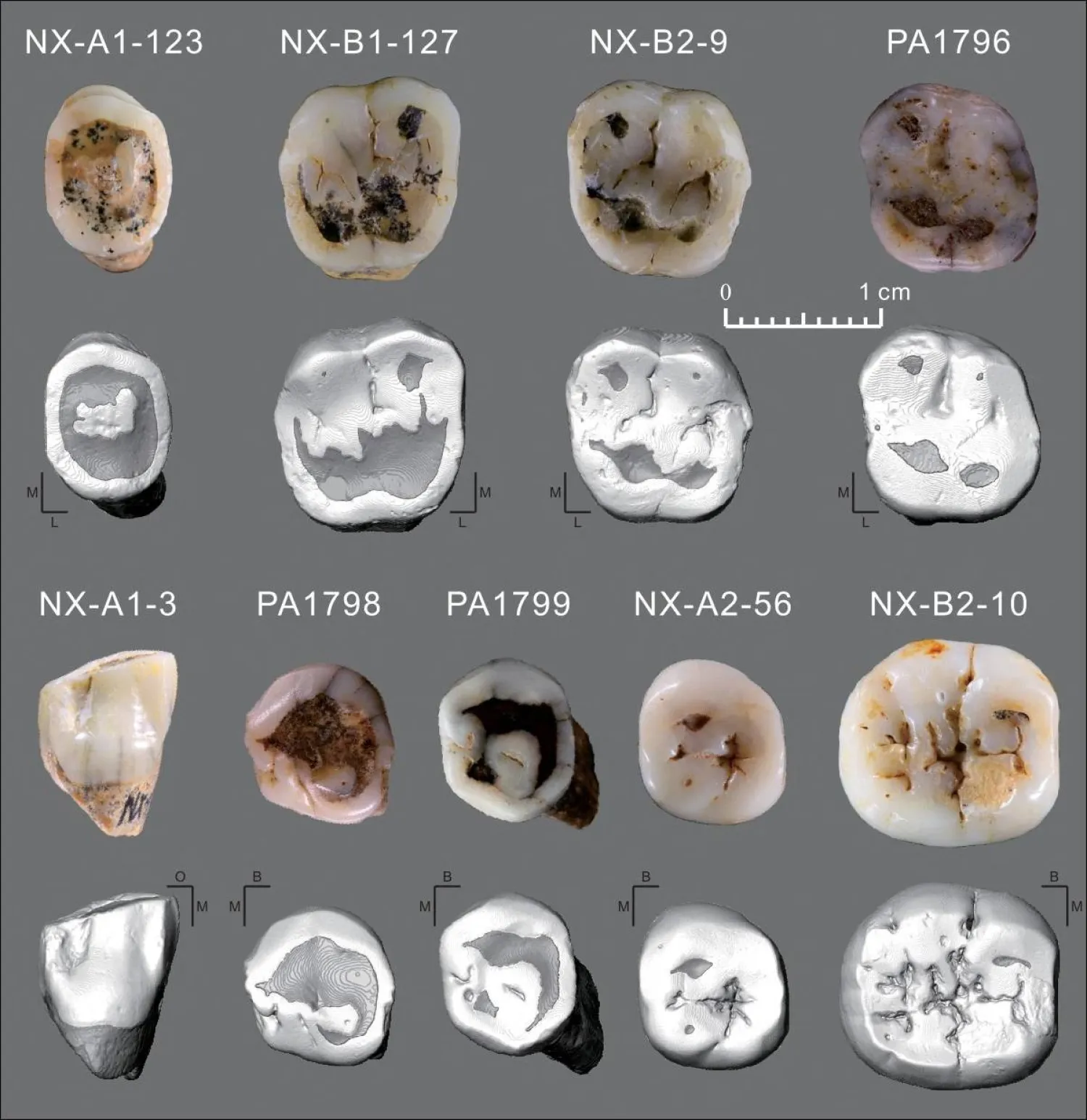
The nine human teeth found in the Naxian and Baxian caves in Guangxi province, southern China, eight of which have been confidently identified as belonging to the species Homo erectus, are shown in an undated composite image released on November 18, 2026.  Kira Westaway/Macquarie University/Handout via REUTERS
The nine human teeth found in the Naxian and Baxian caves in Guangxi province, southern China, eight of which have been confidently identified as belonging to the species Homo erectus, are shown in an undated composite image released on November 18, 2026. Kira Westaway/Macquarie University/Handout via REUTERS
TT

Homo Erectus Was More Adaptable Than Previously Thought

The nine human teeth found in the Naxian and Baxian caves in Guangxi province, southern China, eight of which have been confidently identified as belonging to the species Homo erectus, are shown in an undated composite image released on November 18, 2026.  Kira Westaway/Macquarie University/Handout via REUTERS
The nine human teeth found in the Naxian and Baxian caves in Guangxi province, southern China, eight of which have been confidently identified as belonging to the species Homo erectus, are shown in an undated composite image released on November 18, 2026. Kira Westaway/Macquarie University/Handout via REUTERS

Homo erectus -- our distant relative -- adapted to an environment in the dense forests of southern China, according to two studies published on Wednesday that challenge the prevailing theory about how it went extinct.

Our ancestors survived for nearly two million years -- far longer than Homo sapiens, the only human species in existence today, which has only been around for some 300,000 years.

The ancient humans migrated from the grassy savannas of Africa, across Asia, to the open environments and light forests of Java, where the most recent fossils dating back 108,000 years have been found.

Until now, scientists thought that their disappearance in Asia was due to their inability to adapt when their environment began to transform into a tropical rainforest.

"The prevailing view about Pleistocene hominins in East and Southeast Asia is that, other than Homo sapiens, they couldn't exploit forest environments," said paleontologist Yingqi Zhang, from the Chinese Academy of Sciences.

"They couldn't survive in the subtropical forest environments in southern China. So the forests in southern China formed a barrier for them to migrate. That's the former view. But our findings turn that around completely," he told reporters, according to AFP.

The two studies, published in Nature, focus on the discovery of nine fossilized hominin teeth in two neighboring caves in southern China.

Analysis of their proteins has made it possible to unambiguously attribute eight of them to Homo erectus, while the ninth remains unidentified for the time being.

Using several dating techniques, the scientists were able to show that the fossils date back to between 324,000 and 184,000 years ago.

Until now, the most recent fossils attributed to Homo erectus in China dated back to about 400,000 years ago.

"Our research fills that gap," said the researchers, who in the second study were able to reconstruct the environment in which the hominins lived.

In total, nearly 20,000 animal teeth were found in the two caves and were likely accumulated at the time by porcupines that collected bones to eat and sharpen their teeth.

"Basically, these teeth we found in the caves are the things they left behind," said Zhang.

The collection of animal remains included fossils of orangutans, elephants and rhinoceroses.

They also found fossils of the elephant-like Stegodon and Megalovis, which resembled a large goat, both of which are now extinct.

The researchers analyzed the carbon isotopes present in the animals' tooth enamel to uncover clues about their diets.

Renaud Joannes-Boyau, a geoarchaeologist at Southern Cross University in Australia, said food, drink and other elements in the environment are absorbed by various parts of the body.

"If it's in your teeth, it stays forever," he added.

"That carbon tells us what kind of plants in the environment are there and what kind of ecosystem. And then what we see is a very, very dense rainforest."

Because teeth grow in a manner similar to tree rings, scientists were also able to reconstruct the early years of these individuals, with even more surprising results.

Analysis of specific isotopes, which can be used to identify the environment, revealed that Homo erectus migrated long distances during childhood, from present-day Vietnam, some 250 kilometers (155 miles) away from the caves.

"Homo erectus was a survivor, a champion of resilience and adaptation to a lot of different climates. He was probably very resourceful," said Joannes-Boyau.

Kira Westaway, a researcher from Macquarie University in Australia, said the prevailing view of Homo sapiens was of adaptability and flexibility as well as skillfulness.

"Now as we start to do this kind of study in this kind of depth... we start to see other ancient humans having similar skill sets," she added.

"It really just throws up that question: if we're not as unique as we have always thought ourselves, what was the actual cause of it, why we survived and the others didn't.

"This really throws up a lot more questions than it answers."