


Prince Harry Contacted about Coronation; Attendance Unclear

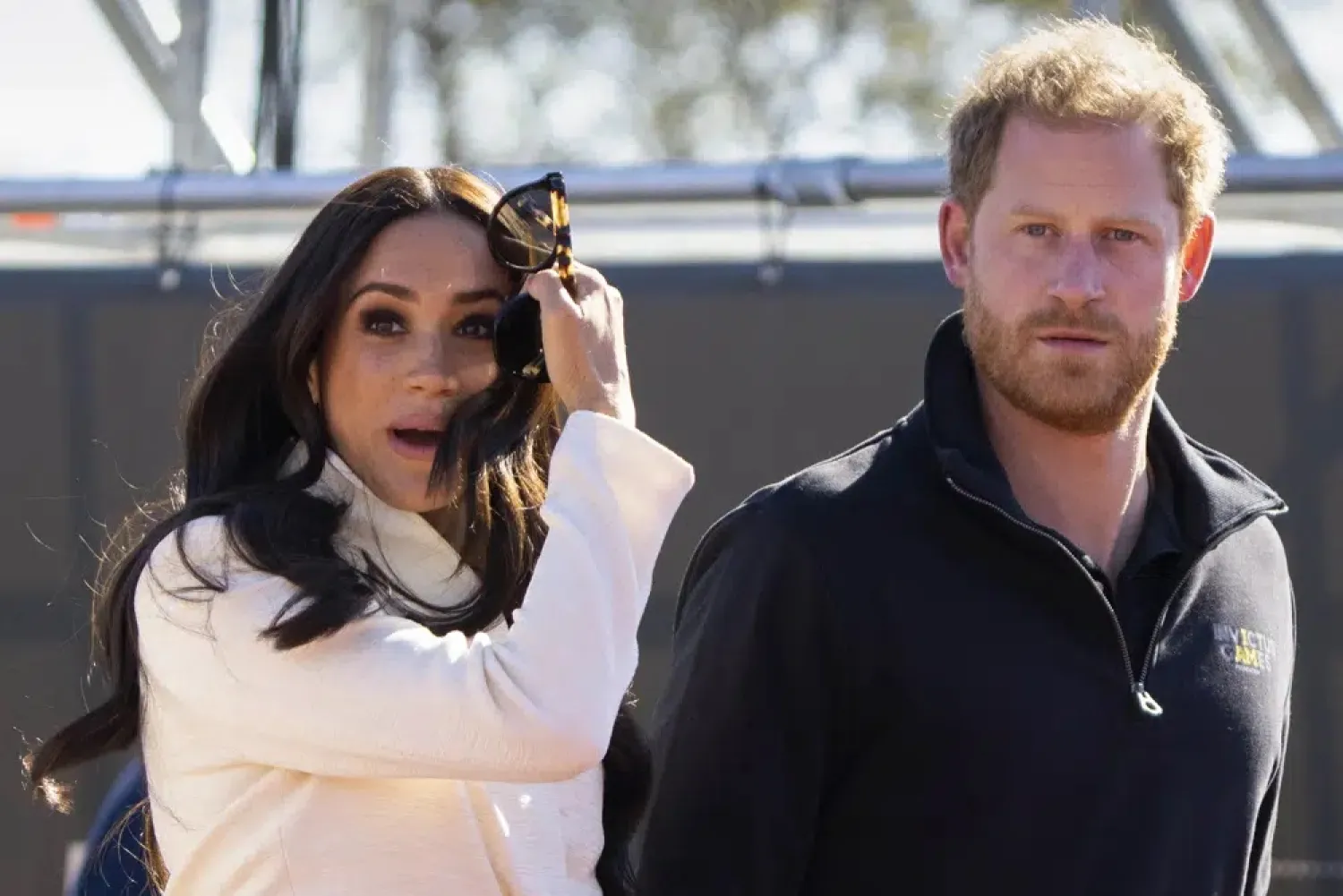
Prince Harry and Meghan Markle, Duke and Duchess of Sussex visit the track and field event at the Invictus Games in The Hague, Netherlands, Sunday, April 17, 2022. (AP)
TT

Prince Harry Contacted about Coronation; Attendance Unclear

Prince Harry and Meghan Markle, Duke and Duchess of Sussex visit the track and field event at the Invictus Games in The Hague, Netherlands, Sunday, April 17, 2022. (AP)

King Charles III’s office has been in touch with Prince Harry about the new monarch’s coronation, raising the possibility the prince will attend the historic ceremony despite tensions within the royal family.

If Harry and his wife, Meghan, were to attend the May 6 coronation at Westminster Abbey in London, it would be the first meeting between Charles and his younger son since Harry deepened the rift within the House of Windsor by revealing family secrets in his bestselling book, “Spare.”

A spokesperson for Harry and Meghan, also known as the Duke and Duchess of Sussex, confirmed Sunday that Harry had received “email correspondence” from the king’s office about the coronation. Buckingham Palace did not immediately respond to a request for comment.

“An immediate decision on whether the Duke and Duchess will attend will not be disclosed by us at this time,” the couple’s office said in a statement.

Speculation about whether Harry and Meghan would be invited to the coronation has raged since the release of Harry’s explosive memoir, which contained damning allegations of intrigue behind the palace walls.

The disclosures, including details of private conversations with his father and brother, Prince William, fanned tensions between Harry and his family that became public when he and his wife moved to North America in 2020.

The book also included allegations that members of the royal family regularly feed the press unflattering information about other members of the House of Windsor in exchange for positive coverage of themselves.

The prince singled out Camilla, the queen consort, accusing her of leaking private conversations to the media as she sought to rehabilitate her image after marrying Charles. Camilla was once reviled for her long-term affair with Charles, which contributed to the breakdown of his marriage to the late Prince Diana, Harry and William’s mother.

The acrimony between Harry and his family once again spilled into public view this week when the Sussexes acknowledged they were asked to vacate their home in Britain.

Frogmore Cottage, on the grounds of Windsor Castle west of London, was the couple’s main residence before they gave up royal duties and moved to Montecito, a wealthy enclave in Southern California.

The Sun newspaper reported that Charles asked them to relinquish the dwelling on Jan. 11, the day after Harry’s memoir was published.

But issues other than the book may have sparked the request.

Charles, who became king after the death of Queen Elizabeth II in September, has said he plans to cut the number of working royals and reduce the cost of the monarchy as he seeks to modernize the 1,000-year-old institution in hopes of ensuring its survival.

With Harry and Meghan now living in California, leaving a royal residence without occupants so they have a place to stay on their occasional visits to the UK may have been seen as a bad look.

Harry, meanwhile, continues to share his personal experiences and critique of the royal family as he promotes his book.

While taking part Saturday in a live-streamed conversation with Dr. Gabor Mate, author of “The Myth Of Normal: Trauma, Illness & Healing In A Toxic Culture,” the prince discussed his past drug use and said he had urged other members of the family to have therapy.

He said criticism of “Spare″ won’t make him be silent because talking about these issues has helped him deal with the trauma in his life.

“The more they criticize, the more they comment, the more I feel the need to share,” Harry said. “I found a way to be able to look around, and firstly ignore, the criticisms and the abuse.”



Before Megalodon, Researchers Say a Monstrous Shark Ruled Ancient Australian Seas

 A illustration made in Sept. 3, 2025, of a gigantic 8 meter (26 foot) long mega-predatory lamniform shark swimming beside a long-necked plesiosaur in the seas off Australia 115 million years ago. (Pollyanna von Knorring/Swedish Museum of Natural History via AP)
A illustration made in Sept. 3, 2025, of a gigantic 8 meter (26 foot) long mega-predatory lamniform shark swimming beside a long-necked plesiosaur in the seas off Australia 115 million years ago. (Pollyanna von Knorring/Swedish Museum of Natural History via AP)
TT

Before Megalodon, Researchers Say a Monstrous Shark Ruled Ancient Australian Seas

 A illustration made in Sept. 3, 2025, of a gigantic 8 meter (26 foot) long mega-predatory lamniform shark swimming beside a long-necked plesiosaur in the seas off Australia 115 million years ago. (Pollyanna von Knorring/Swedish Museum of Natural History via AP)
A illustration made in Sept. 3, 2025, of a gigantic 8 meter (26 foot) long mega-predatory lamniform shark swimming beside a long-necked plesiosaur in the seas off Australia 115 million years ago. (Pollyanna von Knorring/Swedish Museum of Natural History via AP)

In the age of dinosaurs — before whales, great whites or the bus-sized megalodon — a monstrous shark prowled the waters off what's now northern Australia, among the sea monsters of the Cretaceous period.

Researchers studying huge vertebrae discovered on a beach near the city of Darwin say the creature is now the earliest known mega-predator of the modern shark lineage, living 15 million years earlier than enormous sharks found before.

And it was huge. The ancestor of today’s 6-meter (20-foot) great white shark was thought to be about 8 meters (26 feet) long, the authors of a paper published in the journal Communications Biology said.

“Cardabiodontids were ancient, mega-predatory sharks that are very, very common from the later part of the Cretaceous, after 100 million years ago,” said Benjamin Kear, the senior curator in paleobiology at the Swedish Museum of Natural History and one of the study’s authors. “But this has pushed the time envelope back of when we’re going to find absolutely enormous cardabiodontids.”

Sharks have a 400-million-year history but lamniforms, the ancestors of today’s great white sharks, appear in the fossil record from 135 million years ago. At that time they were small — probably only a meter in length — which made the discovery that lamniforms had already become gigantic by 115 million years ago an unexpected one for researchers.

The vertebrae were found on coastline near Darwin in Australia’s far north, once mud from the floor of an ancient ocean that stretched from Gondwana — now Australia — to Laurasia, which is now Europe. It’s a region rich in fossil evidence of prehistoric marine life, with long-necked plesiosaurs and ichthyosaurs among the creatures discovered so far.

The five vertebrae that launched the quest to estimate the size of their mega-shark owners were not a recent discovery, but an older one that had been somewhat overlooked, Kear said. Unearthed in the late 1980s and 1990s, the fossils measured 12 centimeters (4.7 inches) across and had been stored in a museum for years.

When studying ancient sharks, vertebrae are prizes for paleontologists. Shark skeletons are made of cartilage, not bone, and their fossil record is mostly made up of teeth, which sharks shed throughout their lives.

“The importance of vertebrae is they give us hints about size,” Kear said. “If you’re trying to scale it from teeth, it’s difficult. Are the teeth big and the bodies small? Are they big teeth with big bodies?”

Scientists have used mathematical formulas to estimate the size of extinct sharks like megalodon, a massive predator that came later and may have reached 17 meters (56 feet) in length, Kear said. But the rarity of vertebrae mean questions of ancient shark size are difficult to answer, he added.

The international research team spent years testing different ways to estimate the size of the Darwin cardabiodontids, using fisheries data, CT scans and mathematical models, Kear said. Eventually, they arrived at a likely portrait of the predator’s size and shape.

“It would’ve looked for all the world like a modern, gigantic shark, because this is the beauty of it,” Kear said. “This is a body model that has worked for 115 million years, like an evolutionary success story.”

The study of the Darwin sharks suggested that modern sharks rose early in their adaptive evolution to the top of prehistoric food chains, the researchers said. Now, scientists could scour similar environments worldwide for others, Kear said.

“They must have been around before,” he said. “This thing had ancestors.”

Studying ancient ecosystems like this one could help researchers understand how today’s species might respond to environmental change, Kear added.

“This is where our modern world begins,” he said. “By looking at what happened during past shifts in climate and biodiversity, we can get a better sense of what might come next.”


Move over Larry: Maximus the PM's Cat Grabs Belgium Spotlight

Larry the Downing Street cat is a global celebrity in his own right, with more than 900,000 followers on X. JUSTIN TALLIS / AFP/File
TT

Move over Larry: Maximus the PM's Cat Grabs Belgium Spotlight

Larry the Downing Street cat is a global celebrity in his own right, with more than 900,000 followers on X. JUSTIN TALLIS / AFP/File

It is no secret that a tabby named Larry wields considerable power in Downing Street. Now in Belgium, a rescue cat named Maximus has shot to social media stardom as bewhiskered sidekick and PR weapon of Prime Minister Bart De Wever.

Taken in from a shelter by the Flemish conservative leader over the summer, the grey fluffball has become a fixture on Instagram -- snapped batting at string or lolling around in the boss's office.

But while Larry has risen above politics as Chief Mouser to six British prime ministers, the adventures of De Wever's four-legged friend come with a dose of salty commentary on Belgium's turbulent public life, said AFP.

Cartoon bubbles have captured Maximus musing sardonically -- in Flemish -- on everything from the country's long-running budget showdown to strikes over his boss's austerity measures, or a new voluntary military service for young Belgians.

'Maximus, can you catch a drone?'

Less than six months after his account went live in July, Maximus has caught up with his master when it comes to Instagram followers.

The account name -- @maximustp16 -- stands for "Maximus Textoris Pulcher", a cryptic reference to that of his boss, which means "The Weaver" in Dutch.

Those in the know say the fel-influencer's posts are put up by the prime minister's personal assistant.

But the Belgian leader -- known for his deadpan sense of humor -- is also pretty prolific online, and regularly cross-posts with the cat's account when he wants to strike a lighter note.

Since taking office in February, De Wever has posted a whole series of vignettes of himself with Maximus, pushing him in a stroller or taking a nap by his side.

His first response in October to the news of a foiled plot to attack him using drone-mounted explosives?

A post showing the prime minister and reclining cat with the cartoon caption "Maximus, can you catch a drone?"

"No -- but I'm catching dreams like no one else!" the mog replies.

'Noise and hot air'

All good fun, but what is the strategy at work?

For political analyst Dave Sinardet the spoof account is chiefly a way for the 54-year-old De Wever to freshen up his public image -- and show he does not take himself too seriously.

"It's a smart way to do political PR," said Sinardet, a university professor in Brussels. "It makes politicians seem friendlier, gentler -- considering that most people see them as rational, even arrogant figures."

The Flemish nationalist faces an uphill challenge -- under fire from left-wing parties who accuse him of unpicking social protections with rolling strikes and protests targeting his government all year.

Deploying pets as political PR assets is nothing new: every US president in history, with the exception of Donald Trump, has posed with animals at the White House.

Larry the Downing Street cat is a global celebrity in his own right, with his @Number10cat account on X boasting almost 900,000 followers.

But De Wever's posts with Maximus are not to everyone's liking at home.

A video of the prime minister pretending to play "Amazing Grace" on the bagpipes -- the pipe being Maximus's tail -- during tense budget talks had the opposition hissing.

"Quite the summary of their politics: noise and hot air," snapped the socialist lawmaker Patrick Prevot.


Indonesia Floods Were 'Extinction Level' for Rare Orangutans

Residents rest as they search for the remains of their house, buried under piles of uprooted trees swept by the flash flood, in Lintang Baru village in Aceh Tamiang, northern Sumatra, on December 11, 2025. (Photo by Aditya Aji / AFP)
TT

Indonesia Floods Were 'Extinction Level' for Rare Orangutans

Residents rest as they search for the remains of their house, buried under piles of uprooted trees swept by the flash flood, in Lintang Baru village in Aceh Tamiang, northern Sumatra, on December 11, 2025. (Photo by Aditya Aji / AFP)

Indonesia's deadly flooding was an "extinction-level disturbance" for the world's rarest great ape, the tapanuli orangutan, causing catastrophic damage to its habitat and survival prospects, scientists warned on Friday.

Only scientifically classified as a species in 2017, tapanulis are incredibly rare, with fewer than 800 left in the wild, confined to a small range in part of Indonesia's Sumatra.

One dead suspected tapanuli orangutan has already been found in the region, conservationists told AFP.

"The loss of even a single orangutan is a devastating blow to the survival of the species," said Panut Hadisiswoyo, founder and chairman of the Orangutan Information Centre in Indonesia.

And analysis of satellite imagery combined with knowledge of the tapanuli's range suggests that the flooding which killed nearly 1,000 people last month may also have devastated wildlife in the Batang Toru region.

The scientists focused on the so-called West Block, the most densely populated of three known tapanuli habitats, and home to an estimated 581 tapanulis before the disaster.

There, "we think that between six and 11 percent of orangutans were likely killed," said Erik Meijaard, a longtime orangutan conservationist.

"Any kind of adult mortality that exceeds one percent, you're driving the species to extinction, irrespective of how big the population is at the start," he told AFP.

But tapanulis have such a small population and range to begin with that they are especially vulnerable, he added.

Satellite imagery shows massive gashes in the mountainous landscape, some of which extend for more than a kilometer and are nearly 100 meters wide, Meijaard said.

The tide of mud, trees and water toppling down hillsides would have carried away everything in its path, including other wildlife like elephants.

David Gaveau, a remote sensing expert and founder of conservation start-up The Tree Map, said he was flabbergasted by the before-and-after comparison of the region.

"I have never seen anything like this before during my 20 years of monitoring deforestation in Indonesia with satellites," he told AFP.

The devastation means remaining tapanulis will be even more vulnerable, with sources of food and shelter now washed away.

Over nine percent of the West Block habitat may have been destroyed, the group of scientists estimated.

In a draft paper shared with AFP and set to be published as a pre-print in coming days, they warned the flooding represents an "extinction-level disturbance" for tapanulis.

They are urging an immediate halt to development in the region that will damage remaining habitat, expanded protected areas, a detailed survey of the affected area and orangutan populations and work to restore lowland forests.

The highland homes currently inhabited by tapanulis are not their preferred habitat, but it is where remaining orangutans have been pushed by development elsewhere.

Panut said the region had become eerily quiet after the landslides.

"This fragile and sensitive habitat in West Block must be fully protected by halting all habitat-damaging development," he told AFP.