


Diverse Talent in Hollywood Takes Reins to Speed up Change

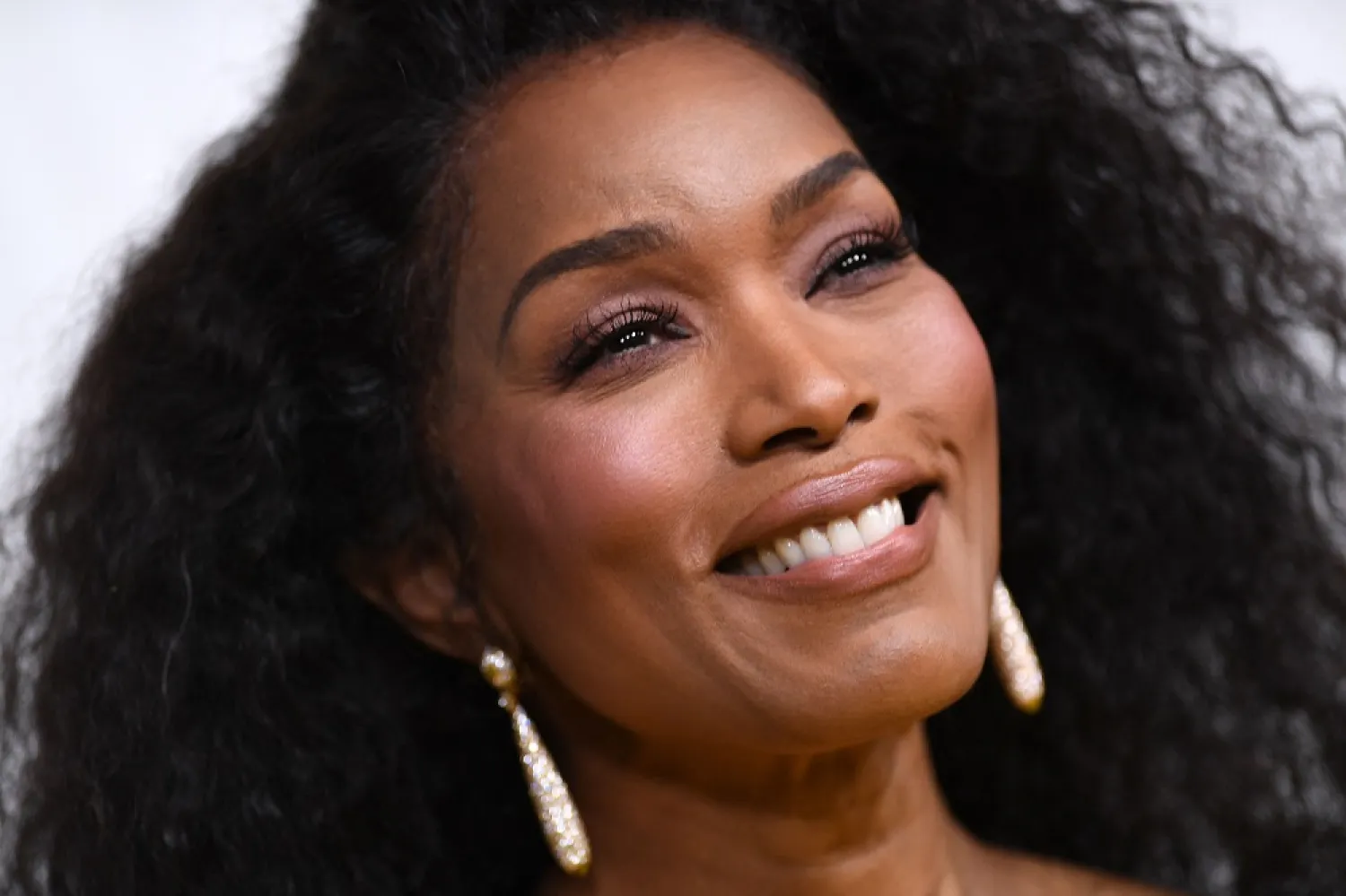
US actress Angela Bassett arrives for the 29th Screen Actors Guild Awards at the Fairmont Century Plaza in Century City, California, on February 26, 2023. (AFP)
TT

Diverse Talent in Hollywood Takes Reins to Speed up Change

US actress Angela Bassett arrives for the 29th Screen Actors Guild Awards at the Fairmont Century Plaza in Century City, California, on February 26, 2023. (AFP)

For Angela Bassett, vying for an acting Oscar for the second time next Sunday in a 40-year career, every role she has taken has been an opportunity to break through perceptions of "us as Black women."

"To show our humanity, to tell the diversity of our stories, and to share the complexity of what it means to be Black and woman," Bassett said last week at the African American Film Critics Association (AAFCA) Awards. Nominated for her role in "Black Panther: Wakanda Forever", the 64-year-old waited 29 years for her second Oscar nomination.

While Hollywood has made progress on diversifying talent and storytelling since the 2015 outcry of #OscarsSoWhite - when all 20 acting nominations went to white actors - the pace of change is not fast enough for both the famous and those waiting to emerge.

Diverse creators are building incubators, their own production pipelines and venues where they can screen work and receive feedback and support each other.

This year, there has been criticism that Black-led films like "The Woman King" and "Till" were overlooked for Oscar best picture and acting nominations, and the British Academy Film Awards (BAFTA) last month came under fire for having all white winners.

Of the 13,252 Oscar nominees since 1929, 6% are from underrepresented ethnicities, a USC Annenberg Inclusion at the Academy Awards report concludes. And out of all Academy Award winners, only 2% have been women of color.

"There’s a consistent lack of recognition for Black female directors," "The Woman King" director Gina Prince-Bythewood said at the AAFCA awards. "There’s never been a Black female director nominated in the history of the Academy Awards."

New production companies

Following in the footsteps of successful creators like Oprah Winfrey, Tyler Perry, Shonda Rhimes and Issa Rae, who opened doors for underrepresented talent, screenwriter Amy Aniobi, TV writer Felicia Pride, actor Khalimah Gaston and filmmakers Fanny and Nelson Grande are building pathways to bring more diverse voices to Hollywood.

Aniobi met actor Issa Rae after college and together they went from YouTube comedy series "Awkward Black Girl" to five-season Emmy-nominated HBO Max series "Insecure" with a majority Black cast. Now, Aniobi has a deal with HBO to develop shows.

Her production company SuperSpecial creates shows, films and shorts while her Tribe Writers' Program bridges the gap between independent writing and opportunities with mainstream platforms, like Disney and AMC.

For Aniobi, though there are more Black shows than there have been in the last 10 years, the budgets are smaller. Without investing in stories and hiring Black executives, the industry is doomed to repeat mistakes, she said.

"When we are invested in each other as people, we don't think 'it's you or me.' It's for both of us or none of us," Aniobi said.

Rhimes, creator of the medical drama "Grey’s Anatomy," sparked TV representation in 2005 with a diverse cast in the ABC show. She developed her production company, Shondaland, which is behind the diverse period series "Bridgerton" on Netflix.

Echoing her work is Felicia Pride, who has written for "Grey’s Anatomy" and the Oprah Winfrey Network’s "Queen Sugar."

Despite having mentors when she first started, Pride knew there were obstacles for Black creators, so she started her production company, Honey Chile, which develops content for and by Black women who are 40 and older.

Fighting negative stereotypes

Khalimah Gaston found opportunity on the Tyler Perry show "Ruthless," as an actor and formed The Screening Room in 2016. Located in Atlanta and Los Angeles, it creates collaborative spaces for diverse talent to support each other.

Leaning into the model of Tyler Perry Studios in Atlanta, she gives artists a space to network, screen their work and get feedback. The Web series "Brooklyn. Blue. Sky." was screened there, picked up by BET and directed by Rhavynn Drummer of Tyler Perry Studios.

As the most underrepresented group in the industry, Latino talent is also keen to change their narrative.

There were 32 years without Latino nominees at the Academy Awards, with the most recent shutout in 2002. Only 18% of the total nods for Latinos have been in the four acting categories.

"Every Latino actor I’ve met has dealt with the same thing of not getting opportunities, or having to play negative stereotypes that really affects the way our community is perceived," Fanny Grande said.

When no production companies gave her a chance, she advocated for herself and her community by crowdfunding the 2021 film "Homebound," centered on a non-stereotypical Latin American family.

Fanny and husband Nelson Grande co-founded Avenida Productions, a platform for Latino filmmakers and others to work on short films, documentaries, commercials, large-scale projects and streaming.

Asian creatives, neglected or misrepresented for decades, are faring well this year, in large part thanks to Oscar front-runner "Everything Everywhere All at Once."

This year's Oscar nominations had the highest number and percentage of Asian nominees of all time with 20 nominations. Half of those nominees were from "Everything Everywhere," the highest-grossing film ever for 10-year-old independent studio A24.



Perry Bamonte, Keyboardist and Guitarist for The Cure, Dies at 65

Perry Bamonte of The Cure performs at North Island Credit Union Amphitheater on May 20, 2023 in Chula Vista, California. (Getty Images/AFP)
TT

Perry Bamonte, Keyboardist and Guitarist for The Cure, Dies at 65

Perry Bamonte of The Cure performs at North Island Credit Union Amphitheater on May 20, 2023 in Chula Vista, California. (Getty Images/AFP)

Perry Bamonte, keyboardist and guitarist in The Cure, has died at 65, the English indie rock band confirmed through their official website on Friday.

In a statement, the band wrote that Bamonte died "after a short illness at home" on Christmas Day.

"It is with enormous sadness that ‌we confirm ‌the death of our ‌great ⁠friend and ‌bandmate Perry Bamonte who passed away after a short illness at home over Christmas," the statement said, adding he was a "vital part of The Cure story."

The statement said Bamonte was ⁠a full-time member of The Cure since 1990, ‌playing guitar, six-string bass, ‍and keyboards, and ‍performed in more than 400 shows.

Bamonte, ‍born in London, England, in 1960, joined the band's road crew in 1984, working alongside his younger brother Daryl, who worked as tour manager for The Cure.

Bamonte first worked as ⁠an assistant to co-founder and lead vocalist, Robert Smith, before becoming a full member after keyboardist Roger O'Donnell left the band in 1990.

Bamonte's first album with The Cure was "Wish" in 1992. He continued to work with them on the next three albums.

He also had various acting ‌roles in movies: "Judge Dredd,About Time" and "The Crow."


First Bond Game in a Decade Hit by Two-month Delay

'007 First Light' depicts a younger Bond earning his license to kill. Ina FASSBENDER / AFP
TT

First Bond Game in a Decade Hit by Two-month Delay

'007 First Light' depicts a younger Bond earning his license to kill. Ina FASSBENDER / AFP

A Danish video game studio said it was delaying the release of the first James Bond video game in over a decade by two months to "refine the experience".

Fans will now have to wait until May 27 to play "007 First Light" featuring Ian Fleming's world-famous spy, after IO Interactive said on Tuesday it was postponing the launch to add some final touches.

"007 First Light is our most ambitious project to date, and the team has been fully focused on delivering an unforgettable James Bond experience," the Danish studio wrote on X.

Describing the game as "fully playable", IO Interactive said the two additional months would allow their team "to further polish and refine the experience", giving players "the strongest possible version at launch".

The game, which depicts a younger Bond earning his license to kill, is set to feature "globe-trotting, spycraft, gadgets, car chases, and more", IO Interactive added.

It has been more than a decade since a video game inspired by Bond was released. The initial release date was scheduled for March 27.


Movie Review: An Electric Timothee Chalamet Is the Consummate Striver in Propulsive ‘Marty Supreme’

 Timothee Chalamet attends the premiere of "Marty Supreme" at Regal Times Square on Tuesday, Dec. 16, 2025, in New York. (AP)
Timothee Chalamet attends the premiere of "Marty Supreme" at Regal Times Square on Tuesday, Dec. 16, 2025, in New York. (AP)
TT

Movie Review: An Electric Timothee Chalamet Is the Consummate Striver in Propulsive ‘Marty Supreme’

 Timothee Chalamet attends the premiere of "Marty Supreme" at Regal Times Square on Tuesday, Dec. 16, 2025, in New York. (AP)
Timothee Chalamet attends the premiere of "Marty Supreme" at Regal Times Square on Tuesday, Dec. 16, 2025, in New York. (AP)

“Everybody wants to rule the world,” goes the Tears for Fears song we hear at a key point in “Marty Supreme,” Josh Safdie’s nerve-busting adrenaline jolt of a movie starring a never-better Timothee Chalamet.

But here’s the thing: everybody may want to rule the world, but not everybody truly believes they CAN. This, one could argue, is what separates the true strivers from the rest of us.

And Marty — played by Chalamet in a delicious synergy of actor, role and whatever fairy dust makes a performance feel both preordained and magically fresh — is a striver. With every fiber of his restless, wiry body. They should add him to the dictionary definition.

Needless to say, Marty is a New Yorker.

Also needless to say, Chalamet is a New Yorker.

And so is Safdie, a writer-director Chalamet has called “the street poet of New York.” So, where else could this story be set?

It’s 1952, on Manhattan’s Lower East Side. Marty Mauser is a salesman in his uncle’s shoe store, escaping to the storeroom for a hot tryst with his (married) girlfriend. This witty opening sequence won’t be the only thing recalling “Uncut Gems,” co-directed by Safdie with his brother Benny before the two split for solo projects. That film, which feels much like the precursor to “Marty Supreme,” began as a trip through the shiny innards of a rare opal, only to wind up inside Adam Sandler’s colon, mid-colonoscopy.

Sandler’s Howard Ratner was a New York striver, too, but sadder, and more troubled. Marty is young, determined, brash — with an eye always to the future. He’s a great salesman: “I could sell shoes to an amputee,” he boasts, crassly. But what he’s plotting to unveil to the world has nothing to do with shoes. It’s about table tennis.

How likely is it that this Jewish kid from the Lower East Side can become the very face of a sport in America, soon to be “staring at you from the cover of a Wheaties box?”

To Marty, perfectly likely. Still, he knows nobody in the US cares about table tennis. He’s so determined to prove everyone wrong, starting at the British Open in London, that when there’s a snag obtaining cash for his trip, he brandishes a gun at a colleague to get it.

Shaking off that sorta-armed robbery thing, Marty arrives in London, where he fast-talks his way into a suite at the Ritz. Here, he spies fellow guest Kay Stone (Gwyneth Paltrow, in a wise, stylish return to the screen), a former movie star married to an insufferable tycoon (“Shark Tank” personality Kevin O’Leary, one of many nonactors here.)

Kay’s skeptical, but Marty finds a way to woo her. Really, all he has to say is: “Come watch me.” Once she sees him play, she’s sneaking into his room in a lace corselet.

This would be a good time to stop and consider Chalamet’s subtly transformed appearance. He is stick-thin — duh, he never stops moving. His mustache is skimpy. His skin is acne-scarred — just enough to erase any movie-star sheen. Most strikingly, his eyes, behind the round spectacles, are beady — and smaller. Definitely not those movie-star eyes.

But then, nearly all the faces in “Marty Supreme” are extraordinary. In a movie with more than 100 characters, we have known actors (Fran Drescher, Abel Ferrara); nonacting personalities (O’Leary, and an excellent Tyler Okonma (Tyler, The Creator) as Marty’s friend Wally); and exciting newcomers like Odessa A’Zion as Marty’s feisty girlfriend Rachel.

There are also a slew of nonactors in small parts, plus cameos from the likes of David Mamet and even high wire artist Philippe Petit. The dizzying array makes one curious how it all came together — is casting director Jennifer Venditti taking interns? Production notes tell us that for one hustling scene at a bowling alley, young men were recruited from a sports trading-card convention.

Elsewhere on the creative team, composer Daniel Lopatin succeeds in channeling both Marty’s beating heart and the ricochet of pingpong balls in his propulsive score. The script by Safdie and cowriter Ronald Bronstein, loosely based on real-life table tennis hustler Marty Reisman, beats with its own, never-stopping pulse. The same breakneck aesthetic applies to camera work by Darius Khondji.

Back now to London, where Marty makes the finals against Japanese player Koto Endo (Koto Kawaguchi, like his character a deaf table tennis champion). “I’ll be dropping a third atom bomb on them,” he brags — not his only questionable World War II quip. But Endo, with his unorthodox paddle and grip, prevails.

After a stint as a side act with the Harlem Globetrotters, including pingpong games with a seal — you’ll have to take our word for this, folks, we’re running low on space — Marty returns home, determined to make the imminent world championships in Tokyo.

But he's in trouble — remember he took cash at gunpoint? Worse, he has no money.

So Marty’s on the run. And he’ll do anything, however messy or dangerous, to get to Japan. Even if he has to totally debase himself (mark our words), or endanger friends — or abandon loyal and brave Rachel.

Is there something else for Marty, besides his obsessive goal? If so, he doesn’t know it yet. But the lyrics of another song used in the film are instructive here: “Everybody’s got to learn sometime.”

So can a single-minded striver ultimately learn something new about his own life?

We'll have to see. As Marty might say: “Come watch me.”