


One of Silicon Valley's Top Banks Fails; Assets are Seized

The four biggest US banks lost a whopping $52 billion in market value on Thursday. TIMOTHY A. CLARY / AFP/File
TT

One of Silicon Valley's Top Banks Fails; Assets are Seized

The four biggest US banks lost a whopping $52 billion in market value on Thursday. TIMOTHY A. CLARY / AFP/File

Regulators rushed Friday to seize the assets of one of Silicon Valley's top banks, marking the largest failure of a US financial institution since the height of the financial crisis almost 15 years ago.

Silicon Valley Bank, the nation’s 16th-largest bank, failed after depositors hurried to withdraw money this week amid anxiety over the bank’s health. It was the second biggest bank failure in US history after the collapse of Washington Mutual in 2008.
The bank served mostly technology workers and venture capital-backed companies, including some of the industry's best-known brands.

“This is an extinction-level event for startups,” said Garry Tan, CEO of Y Combinator, a startup incubator that launched Airbnb, DoorDash and Dropbox and has referred hundreds of entrepreneurs to the bank.

“I literally have been hearing from hundreds of our founders asking for help on how they can get through this. They are asking, ‘Do I have to furlough my workers?’”

There appeared to be little chance of the chaos spreading in the broader banking sector, as it did in the months leading up to the Great Recession. The biggest banks — those most likely to cause an economic meltdown — have healthy balance sheets and plenty of capital.

Nearly half of the US technology and health care companies that went public last year after getting early funding from venture capital firms were Silicon Valley Bank customers, according to the bank’s website.

The bank also boasted of its connections to leading tech companies such as Shopify, ZipRecruiter and one of the top venture capital firms, Andreesson Horowitz.

Tan estimated that nearly one-third of Y Combinator’s startups will not be able to make payroll at some point in the next month if they cannot access their money.

Internet TV provider Roku was among casualties of the bank collapse. It said in a regulatory filing Friday that about 26% of its cash — $487 million — was deposited at Silicon Valley Bank.

Roku said its deposits with SVB were largely uninsured and it didn’t know “to what extent” it would be able to recover them.

As part of the seizure, California bank regulators and the FDIC transferred the bank's assets to a newly created institution — the Deposit Insurance Bank of Santa Clara. The new bank will start paying out insured deposits on Monday. Then the FDIC and California regulators plan to sell off the rest of the assets to make other depositors whole.

There was unease in the banking sector all week, with shares tumbling by double digits. Then news of Silicon Valley Bank's distress pushed shares of almost all financial institutions even lower Friday.

The failure arrived with incredible speed. Some industry analysts suggested Friday that the bank was still a good company and a wise investment. Meanwhile, Silicon Valley Bank executives were trying to raise capital and find additional investors. However, trading in the bank’s shares was halted before stock market's opening bell due to extreme volatility.

Shortly before noon, the FDIC moved to shutter the bank. Notably, the agency did not wait until the close of business, which is the typical approach. The FDIC could not immediately find a buyer for the bank's assets, signaling how fast depositors cashed out.

The White House said Treasury Secretary Janet Yellen was “watching closely.” The administration sought to reassure the public that the banking system is much healthier than during the Great Recession.

“Our banking system is in a fundamentally different place than it was, you know, a decade ago,” said Cecilia Rouse, chair of the White House Council of Economic Advisers. “The reforms that were put in place back then really provide the kind of resilience that we’d like to see.”

In 2007, the biggest financial crisis since the Great Depression rippled across the globe after mortgage-backed securities tied to ill-advised housing loans collapsed in value. The panic on Wall Street led to the demise of Lehman Brothers, a firm founded in 1847.
Because major banks had extensive exposure to one another, the crisis led to a cascading breakdown in the global financial system, putting millions out of work.

At the time of its failure, Silicon Valley Bank, which is based in Santa Clara, California, had $209 billion in total assets, the FDIC said. It was unclear how many of its deposits were above the $250,000 insurance limit, but previous regulatory reports showed that lots of accounts exceeded that amount.

The bank announced plans Thursday to raise up to $1.75 billion in order to strengthen its capital position. That sent investors scurrying and shares plunged 60%. They tumbled lower still Friday before the opening of the Nasdaq, where the bank's shares were traded.

As its name implied, Silicon Valley Bank was a major financial conduit between the technology sector, startups and tech workers. It was seen as good business sense to develop a relationship with the bank if a startup founder wanted to find new investors or go public.

Conceived in 1983 by co-founders Bill Biggerstaff and Robert Medearis during a poker game, the bank leveraged its Silicon Valley roots to become a financial cornerstone in the tech industry.

Bill Tyler, director of operations for TWG Supply in Grapevine, Texas, said he first realized something was wrong when his employees texted him at 6:30 a.m. Friday to complain that they did not receive their paychecks.

TWG, which has just 18 employees, had already sent the money for the checks to a payroll services provider that used Silicon Valley Bank. Tyler was scrambling to figure out how to pay his workers.

"We’re waiting on roughly $27,000," he said. "It’s already not a timely payment. It’s already an uncomfortable position. I don’t want to ask any employees, to say, ‘Hey, can you wait until mid-next week to get paid?’”

Silicon Valley Bank's ties to the tech sector added to its troubles. Technology stocks have been hit hard in the past 18 months after a growth surge during the pandemic, and layoffs have spread throughout the industry. Venture capital funding has also been declining.

At the same time, the bank was hit hard by the Federal Reserve's fight against inflation and an aggressive series of interest rate hikes to cool the economy.

As the Fed raises its benchmark interest rate, the value of generally stable bonds starts to fall. That is not typically a problem, but when depositors grow anxious and begin withdrawing their money, banks sometimes have to sell those bonds before they mature to cover the exodus.

That is exactly what happened to Silicon Valley Bank, which had to sell $21 billion in highly liquid assets to cover the sudden withdrawals. It took a $1.8 billion loss on that sale.

Ashley Tyrner, CEO of FarmboxRx, said she had spoken to several friends whose businesses are backed by venture capital. She described them as being “beside themselves” over the bank's failure. Tyrner's chief operating officer tried to withdraw her company's funds on Thursday but failed to do so in time.

“One friend said they couldn't make payroll today and cried when they had to inform 200 employees because of this issue,” Tyrner said.



Türkiye TPAO, Shell Sign Deal to Carry out Exploration Work offshore Bulgaria

A Shell logo is seen at a gas station in Buenos Aires, Argentina, March 12, 2018. (Reuters)
TT

Türkiye TPAO, Shell Sign Deal to Carry out Exploration Work offshore Bulgaria

A Shell logo is seen at a gas station in Buenos Aires, Argentina, March 12, 2018. (Reuters)

Türkiye Petrolleri (TPAO) has signed a partnership agreement with Shell to carry out exploration work in Bulgaria's maritime zone, the Turkish energy ministry and British oil major said on Wednesday.

European Union member Bulgaria, which had been totally dependent on Russian gas until 2022, has been seeking to diversify its gas supplies and find cheaper sources, Reuters reported.

TPAO and Shell will jointly explore the Khan Tervel block, located near Türkiye's Sakarya gas field, and will hold a five-year licence in Bulgaria's exclusive economic zone, Minister Alparslan Bayraktar said.

Shell will continue as operator of the block, while TPAO will take a 33% interest in the licence, a Shell spokesperson said.

Since the start of this year, TPAO has signed energy cooperation agreements with ExxonMobil, Chevron and BP for possible exploration work in the Black Sea and the Mediterranean.

In April, Shell signed a contract with Bulgaria's government to allow the oil major to explore 4,000 square metres in the block.


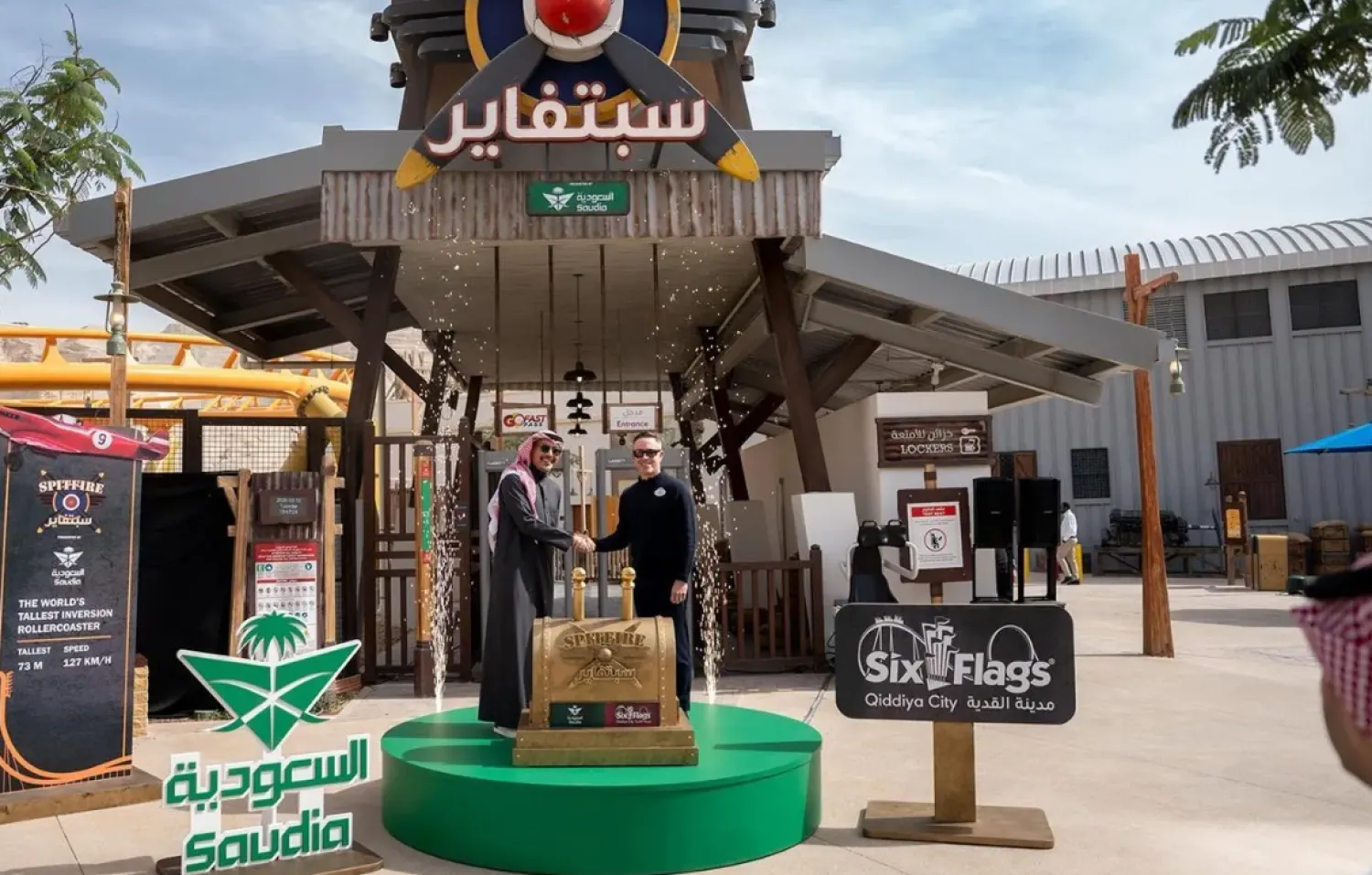
Saudia Signs Strategic Partnership Agreement with Six Flags and Aquarabia Qiddiya City

udia will develop special travel packages designed to enable visitors to experience world-class attractions - SPA
TT

Saudia Signs Strategic Partnership Agreement with Six Flags and Aquarabia Qiddiya City

udia will develop special travel packages designed to enable visitors to experience world-class attractions - SPA

Saudia Airlines has signed a five-year strategic partnership with Six Flags and Aquarabia Qiddiya City, becoming the official premier partner exclusively in the airline category.

As part of the partnership, Saudia will develop special travel packages designed to enable visitors to experience world-class attractions. The collaboration also brings the spirit of Six Flags and Aquarabia Qiddiya City to the skies through special aircraft branding across Saudia’s fleet, SPA reported. 

Chief Marketing Officer of Saudia Group Khaled Tash said in a press release: "Saudia is committed to supporting national development projects as part of its contribution to Vision 2030, aligned with our strategy to bring the world to the Kingdom. Partnerships of this scale with national partners play a key role in positioning Saudi Arabia as a leading global destination for entertainment and tourism."

Park President of Six Flags and Aquarabia Qiddiya City Brian Machamer added: "Our partnership with Saudia not only reflects a shared ambition to connect the Kingdom to the world through world-class entertainment experiences, but strengthens our ability to attract visitors from around the world and realize our vision of setting a new global benchmark for immersive, world-class theme park entertainment and reinforcing Saudi Arabia’s growing presence on the global tourism stage."

Six Flags Qiddiya City sets a new benchmark for exceptional entertainment regionally and globally. Spanning six iconic themed lands, the theme park takes visitors on an immersive journey across 28 rides and attractions designed to world-class standards. Beyond the scale and diversity of its offerings, Six Flags Qiddiya City stands out for pushing the boundaries of engineering and entertainment, featuring five exclusive, record-breaking rides that have redefined global benchmarks. Leading these innovations is Falcons Flight, the roller coaster that has captured global attention as the fastest, tallest, and longest in the world.

Aquarabia Qiddiya City delivers a distinctive aquatic entertainment experience, offering 22 rides and water attractions, along with a man-made river designed for both relaxation and family-friendly water fun. For guests seeking privacy and elevated comfort, Aquarabia features 91 luxury cabanas, positioning the destination as a fully integrated leisure offering that redefines water-based entertainment to the highest international standards.

Located in the Tuwaiq Mountains near Riyadh, Qiddiya City is an emerging destination bringing together entertainment, sports, and culture. Six Flags and Aquarabia Qiddiya City form part of its entertainment offering.


Moody’s Establishes Regional HQ in Riyadh, Deepening Presence in Region

(FILES) Signage for Moody's Corporation is displayed at their headquarters at 7 World Trade Center on March 18, 2025 in New York City. (Photo by ANGELA WEISS / AFP)
TT

Moody’s Establishes Regional HQ in Riyadh, Deepening Presence in Region

(FILES) Signage for Moody's Corporation is displayed at their headquarters at 7 World Trade Center on March 18, 2025 in New York City. (Photo by ANGELA WEISS / AFP)

Moody’s Corporation announced that it has established its regional headquarters in Riyadh, reflecting ongoing commitment to support the development of the Kingdom’s capital markets and economy.

“This investment aligns to the Kingdom's Vision 2030 initiative and underscores its dynamism and growth,” Moody’s said in a statement this week.

The new regional headquarters marks an expansion of Moody’s presence in Saudi Arabia, where the company first opened an office in 2018, and reflects its longstanding commitment to the Middle East.

“The headquarters will strengthen Moody’s engagement with Saudi institutions and enable broader access to Moody’s decision grade data, analytics and insights,” said the statement.

“Our decision to establish a regional headquarters in Riyadh reflects our confidence in Saudi Arabia’s strong economic momentum, as well as our commitment to helping domestic and international investors unlock opportunities with our expertise and insights,” said President and Chief Executive Officer of Moody’s Rob Fauber.

“We are well positioned to provide the analytical capabilities and market intelligence that investors and institutions need to navigate evolving markets across the Middle East,” the statement quoted him as saying.

Mahmoud Totonji will lead the regional headquarters as General Manager.