


US Analysts: Chinese Mediation Represents a Challenge for the US in the Middle East

Saudi and Iranian delegations signing the agreement under China's mediation (SPA)
TT

US Analysts: Chinese Mediation Represents a Challenge for the US in the Middle East

Saudi and Iranian delegations signing the agreement under China's mediation (SPA)

US officials and experts agree that the rapprochement between Saudi Arabia and Iran, with Chinese mediation and sponsorship, constituted a significant diplomatic breakthrough.

Some observers believe the agreement may rearrange alliances and rivalries in the region, leaving the United States on the sidelines, at least temporarily.

The US, which has been the central actor in the Middle East, now finds itself on the sidelines during a moment of significant change, whereas China, which played only a secondary role in the region, has suddenly transformed itself into the new power player.

Publicly, the White House welcomed the restoration of diplomatic relations between Saudi Arabia and Iran and did not express an explicit "concern" about Beijing's role.

However, President Joe Biden's aides suggested too much was being made of the breakthrough, scoffing at suggestions that it indicated any erosion in US influence in the region, according to the New York Times.

The Washington Post quoted a senior administration official briefed on the talks between Tehran and Riyadh, saying that the United States was updated on the negotiations from the beginning.

He indicated that the Saudis had made it clear to US officials that they were interested in restoring diplomatic relations with Iran.

The Saudis also made it clear that they were unwilling to make such a deal without solid guarantees from the Iranians that attacks against them would stop and that they would reduce military support for the Houthis.

The official emphasized that Oman also played an important role, prompting Biden to contact the Sultan this week.

Analysts said it remained unclear how far the rapprochement between Saudi Arabia and Iran would go. After decades of sometimes violent competition for leadership in the Middle East and the broader Islamic world, reopening embassies closed in 2016 represents only a first step.

It is conceivable that this new agreement to exchange ambassadors may not even be carried out in the end, given that it was put on a cautious two-month timetable to work out details.

The key to the agreement was a commitment by Iran to stop further attacks on Saudi Arabia and curtail support for militant groups that have targeted the kingdom.

Despite this, US officials expressed doubts that Iran would live up to its new commitments. They believe that Tehran's turn to Beijing to mediate with the Saudis.

However, it increases China's presence in the region, and also reflects its quest to escape from the isolation imposed by Washington.

Biden administration officials say Iran is under pressure and suffering from deep economic distress because of American sanctions. But that does not mean China, one of the signatories to the original nuclear deal, wants Iran to have a nuclear weapon either.

If Beijing has new sway in Tehran, American officials hope it could use it to curb Iran's nuclear ambitions.

However, it is disconcerting for many veteran US policymakers to see China playing such an outsize role in a region, reflecting two types of approaches to the Saudi Iranian agreement.

Some condemned Biden's policies, blaming them for the decline in Washington's relations with its regional allies and its neglect of the opportunity to achieve a breakthrough in Arab relations with Israel. At the same time, others called for what can be practically achieved, despite suspicions concerning Iran's role.

Head of the Foundation for the Defense of Democracies Mark Dubowitz described the renewed Iranian-Saudi ties due to Chinese mediation as a "lose, lose, and lose for American interests."

Whereas the deputy director for research at the Project on Middle East Democracy, a Washington-based nonprofit group, Amy Hawthorne, said there was no way around it, saying: "this is a big deal."

"The United States could not have brokered such a deal with Iran since we have no relations. But in a larger sense, China's prestigious accomplishment vaults it into a new league diplomatically. It outshines anything the US has been able to achieve in the region since Biden came to office."

Matt Duss, a visiting scholar at the Carnegie Endowment for International Peace, said that anything that lowers the temperature between Iran and Saudi Arabia and reduces the possibility of conflict is a good thing.

"It is also a potentially encouraging sign that countries in the region can pursue such initiatives without requiring lots of goodies and guarantees from the US," Duss added.

Though reducing China's influence in the Middle East and other parts of the world remains a priority for the Biden administration, it is of "two minds" about the agreement, according to John Alterman, a Middle East scholar at the Center for Strategic and International Studies.

Alterman said: "It wants the Saudis to take increasing responsibility for their security, but it does not want Saudi Arabia freelancing and undermining US security strategies."



Makkah Deputy Governor Carries Out Field Inspection of Grand Mosque Readiness for Ramadan 

Deputy Governor of the Makkah Region Prince Saud bin Mishaal bin Abdulaziz is seen during his inspection tour at the Grand Mosque in the holy city of Makkah. (SPA)
TT

Makkah Deputy Governor Carries Out Field Inspection of Grand Mosque Readiness for Ramadan 

Deputy Governor of the Makkah Region Prince Saud bin Mishaal bin Abdulaziz is seen during his inspection tour at the Grand Mosque in the holy city of Makkah. (SPA)

Deputy Governor of the Makkah Region Prince Saud bin Mishaal bin Abdulaziz inspected the readiness of the Grand Mosque and its facilities, conducting a field tour to review operational and service preparations for receiving worshippers and Umrah performers during the holy month of Ramadan, reported the Saudi Press Agency on Tuesday.

Prince Saud was briefed on the operational plans implemented by the relevant authorities, including crowd management mechanisms, service enhancements, and facility preparations aimed at ensuring smooth movement and enhancing comfort and safety levels for visitors to the Grand Mosque, particularly during peak times.

He reviewed developmental initiatives and smart services supporting the operational system, notably electric mobility carts for transporting the elderly, persons with disabilities, and those in need of assistance within the Grand Mosque.

The tour also included an overview of the efforts of guidance teams deployed across the corridors and courtyards of the Grand Mosque, providing multilingual assistance and direction.

Prince Saud reviewed the interactive map and digital mobility platform, which allows visitors to plan their routes in advance and identify service locations, entrances and exits, and less crowded pathways.

He was briefed on crowd management systems, including the visitor density sensor platform that measures human density in real time, and the Tawaf and Sa’i crowd status display service, which allows worshippers to select appropriate times to perform rituals with ease. Models of the modern multilingual guidance system were also reviewed.

Prince Saud also visited the Smart Engineering Command and Control Center, which serves as an advanced central platform linking operational systems and monitoring performance in real time, boosting operational efficiency and raising readiness levels during Ramadan.


Saudi Leadership Provides Two Donations Worth SAR150 Mln Through Jood Eskan Platform

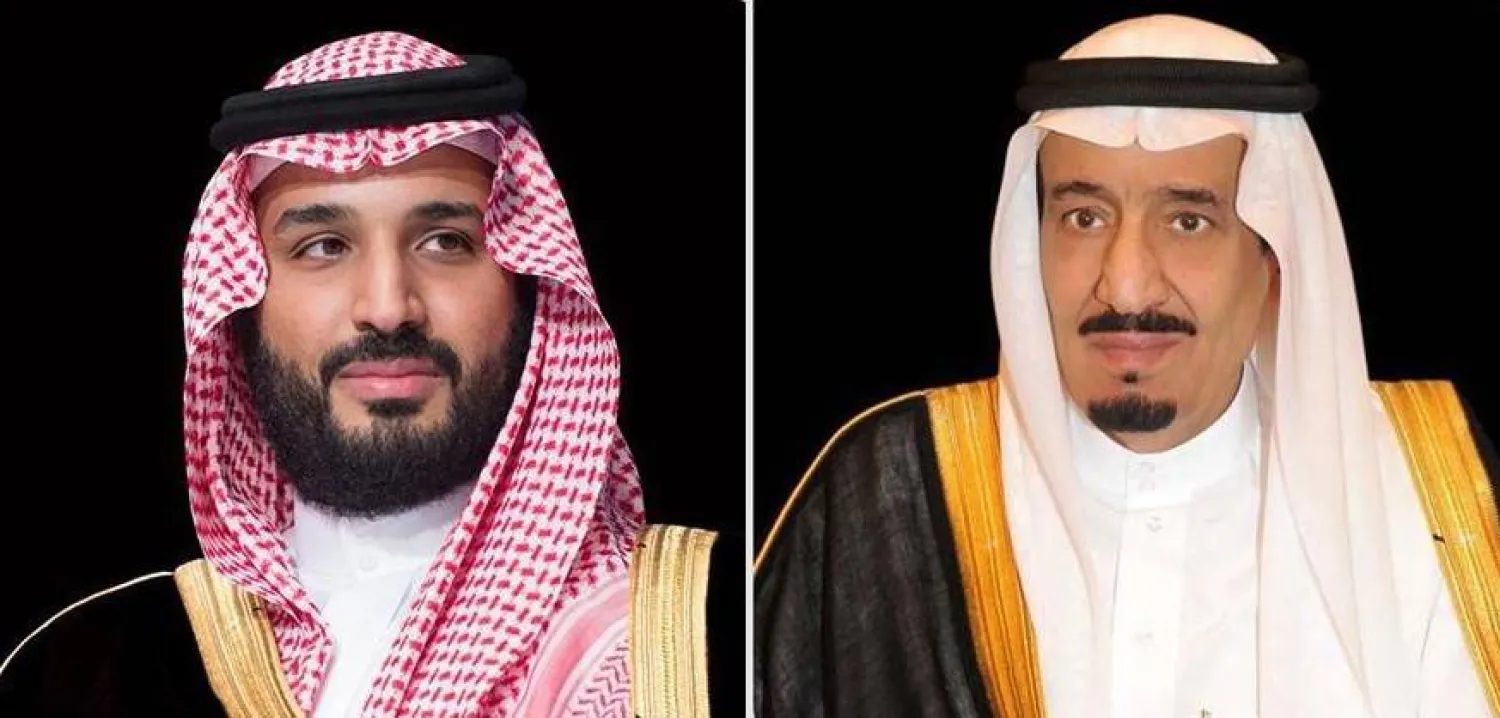
Custodian of the Two Holy Mosques King Salman bin Abdulaziz Al Saud and Prince Mohammed bin Salman bin Abdulaziz Al Saud, Crown Prince and Prime Minister. (SPA)
TT

Saudi Leadership Provides Two Donations Worth SAR150 Mln Through Jood Eskan Platform

Custodian of the Two Holy Mosques King Salman bin Abdulaziz Al Saud and Prince Mohammed bin Salman bin Abdulaziz Al Saud, Crown Prince and Prime Minister. (SPA)

Custodian of the Two Holy Mosques King Salman bin Abdulaziz Al Saud and Prince Mohammed bin Salman bin Abdulaziz Al Saud, Crown Prince and Prime Minister, have provided two generous donations amounting to SAR150 million through the Jood Eskan platform.

The move aligns with the leadership's commitment to supporting all national efforts and initiatives to provide suitable housing for deserving families.

Minister of Municipalities and Housing and Chairman of the Board of Trustees of the Developmental Housing Foundation (Sakan) Majed Al-Hogail expressed his deep gratitude to the leadership for its unwavering support to all national efforts and initiatives aimed at providing suitable housing for eligible families across the Kingdom.

He noted the effective impact of previous generous donations in achieving the goals of housing development, and motivating individuals and institutions to donate through the Jood Eskan platform that is based on community giving that helps provide decent housing and boosts stability and quality of life for deserving families.


Saudi Crown Prince Receives Message on Bilateral Ties from President of Kazakhstan

Prince Mohammed bin Salman bin Abdulaziz Al Saud, Saudi Crown Prince and Prime Minister. (SPA file)
TT

Saudi Crown Prince Receives Message on Bilateral Ties from President of Kazakhstan

Prince Mohammed bin Salman bin Abdulaziz Al Saud, Saudi Crown Prince and Prime Minister. (SPA file)

Prince Mohammed bin Salman bin Abdulaziz Al Saud, Saudi Crown Prince and Prime Minister, received on Tuesday a written message from President of Kazakhstan Kassym-Jomart Tokayev on bilateral relations between their two countries.

The message was received by Minister of Foreign Affairs Prince Faisal bin Farhan bin Abdullah during a meeting with his Kazakh counterpart Yermek Kosherbayev in Riyadh.