


Armenia Raises Peacekeeper 'Problems' with Putin, Fears Escalation

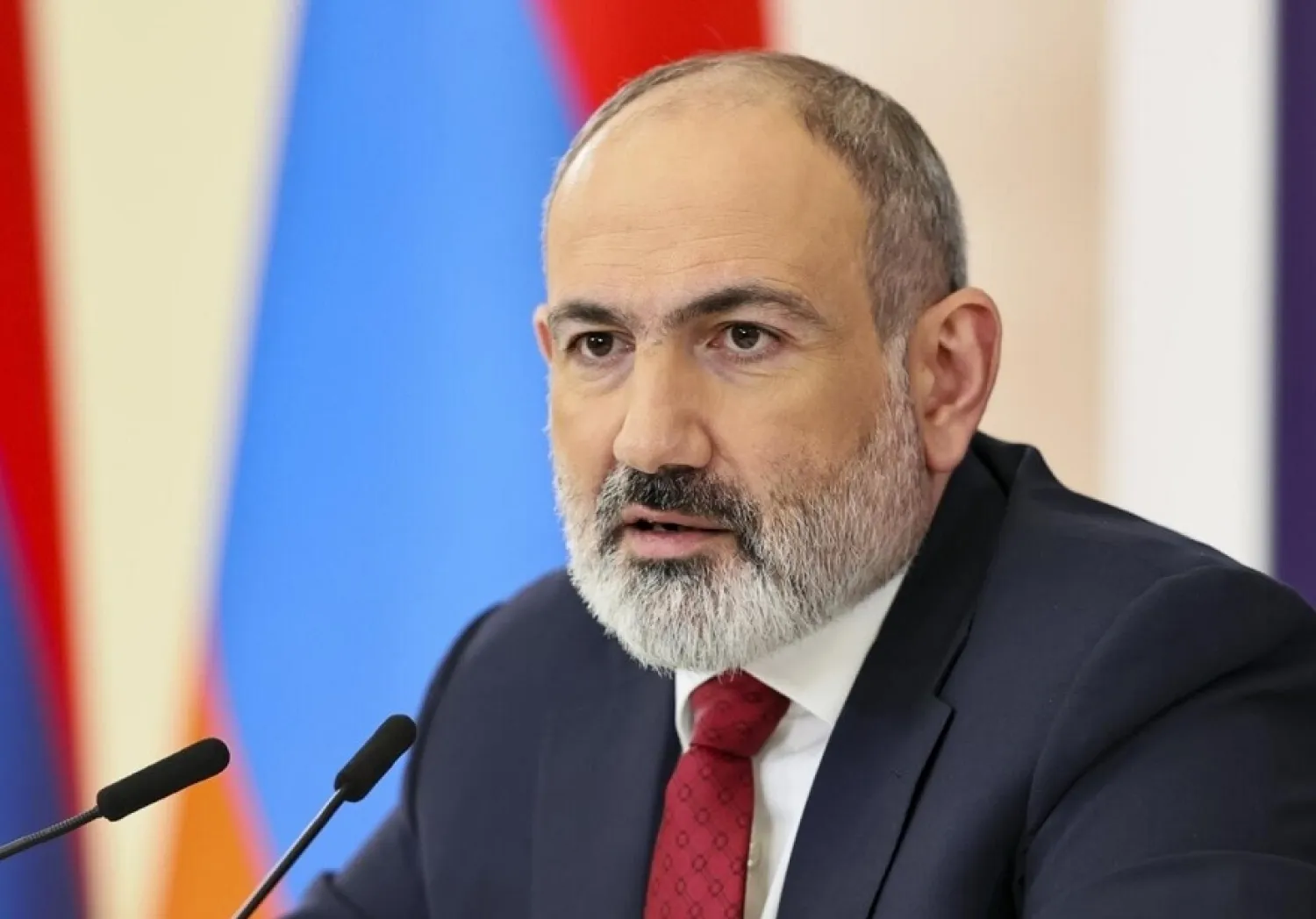
Armenian Prime Minister Nikol Pashinyan gestures during a news conference in Yerevan, Armenia, Tuesday, March 14, 2023. Tigran Mehrabyan, AP
TT

Armenia Raises Peacekeeper 'Problems' with Putin, Fears Escalation

Armenian Prime Minister Nikol Pashinyan gestures during a news conference in Yerevan, Armenia, Tuesday, March 14, 2023. Tigran Mehrabyan, AP

Armenian Prime Minister Nikol Pashinyan said Tuesday he had complained to President Vladimir Putin about "problems" with Russian peacekeepers in Nagorno-Karabakh, warning of an escalation in the restive Caucasus region.

Armenia and Azerbaijan have fought two wars for control of the Armenian-majority region and the latest conflict in 2020 ended with the deployment of Moscow's forces, said AFP.

Pashinyan's comments are the latest sign that Armenia, which relies on Russia as a security guarantor, is growing frustrated with the Kremlin whose attention is focused on Ukraine and confrontation with the West.

"In a phone conversation with Putin yesterday, I spoke of a possible escalation in Nagorno-Karabakh and said that there are problems in the zone where Russian peacekeepers are responsible," Pashinyan said during a press conference.

"Azerbaijan's rhetoric is becoming more and more aggressive every day," he said, denouncing a blockade of the so-called Lachin corridor, which is Karabakh's sole land link with Armenia.

Since mid-December, a group of self-styled Azerbaijani environmental activists has barred traffic in the Lachin corridor to protest what they say is illegal mining.

Pashinyan on Tuesday described the disruptions along the route as "preparation for ethnic cleansing of Armenians."

- Waning influence -

Yerevan has claimed that the blockade has led to a humanitarian crisis and was aimed at driving Armenians from Karabakh, which Baku has denied.

Armenia, which hosts a permanent Russian military base on its territory, is a member of the Collective Security Treaty Organisation (CSTO) that includes several pro-Moscow ex-Soviet republics -- but not Azerbaijan.

Last week Yerevan refused to assume the rotating top post in the security bloc -- partly in a show of frustration over the peacekeepers' failure to prevent Karabakh's blockade.

"It is not that Armenia is leaving the CSTO, the CSTO is leaving Armenia, which is of great concern to us, Pashinyan said.

Yerevan's distancing from the bloc marked another sign of Russia's waning authority in its traditional sphere of influence.

At least three Armenians died in the latest border clashes at the beginning of March.

"I want to underline that this happened in the zone of responsibility of Russian peacekeeping forces. This worries us," Pashinyan said Tuesday.

- Progress, problems, red lines -

Pashinyan also said that Armenia recently received Baku's response to proposals for a full peace treaty, which Yerevan submitted in mid-February.

He noted some progress in the peace process, but said "fundamental problems" remain because "Azerbaijan is trying to put forward territorial claims, which is a red line to Armenia."

Yerevan has accused Baku forces of occupying -- after the 2020 war -- some 150 square kilometers in Armenia, along the countries' shared border.

On February 20, the European Union deployed an expanded monitoring mission to Armenia's volatile border area as Western engagement grows in the region seen by the Kremlin as its geopolitical backyard.

When the Soviet Union collapsed in 1991, ethnic Armenian separatists in Karabakh broke away from Azerbaijan. The ensuing conflict claimed around 30,000 lives.

Another flare-up in violence in 2020 left more than 6,500 dead and ended with a Russian-brokered truce.

Under the deal Armenia ceded territories it had controlled for decades and Russia deployed its peacekeeping contingent to oversee the fragile ceasefire.



China Says Arms Trade With Cambodia, Thailand Unrelated to Border Conflict

Flags flutter at an entrance of Thai-Chinese Rayong Industrial Zone in Rayong province, east of Bangkok, Thailand, April 7, 2016. REUTERS/Chaiwat Subprasom
TT

China Says Arms Trade With Cambodia, Thailand Unrelated to Border Conflict

Flags flutter at an entrance of Thai-Chinese Rayong Industrial Zone in Rayong province, east of Bangkok, Thailand, April 7, 2016. REUTERS/Chaiwat Subprasom

China said on Thursday its arms trade with Thailand and Cambodia is unrelated to the current conflict between the Southeast Asian neighbours, with which Beijing has close ties.

"We hope relevant parties will refrain from making subjective speculation and malicious hype," the Chinese Defense Ministry said in response to reports that Thai troops seized Chinese-made weapons from Cambodian positions as border clashes between the two nations reignited, Reuters reported.

Beijing hopes the two countries can reach a ceasefire as soon as possible, the ministry said, adding that China will continue to advocate for peace and talks.

Border clashes between Thailand and Cambodia resumed this month and have killed more than 40 people and displaced over half a million in both countries.

China's Foreign Minister Wang Yi, in separate calls with his Thai and Cambodian counterparts on Thursday, also called for an immediate ceasefire and criticised "false information" that he said was aimed at smearing China's ties with the two countries.

"As a friend and close neighbour of both Cambodia and Thailand, China least wants to see the two sides engage in armed conflict, and is deeply saddened by civilian casualties caused by the clashes," the Foreign Ministry quoted Wang as saying.

China will continue to play a constructive role in facilitating peace, Wang said, urging both countries to protect the safety of Chinese projects and personnel.

Beijing last week warned Chinese citizens to leave border areas after media reports of injuries.

The Chinese Foreign Ministry said on Wednesday a special envoy for Asian affairs would be visiting Cambodia and Thailand on Thursday to conduct mediation.


UK Police Arrest Pro-Palestinian Protesters as Authorities Toughen Hate Speech Law Enforcement

Police officers carry a protester during a protest to support Palestine Action in London, Saturday, Sept. 6, 2025. (AP Photo/ Joanna Chan)
TT

UK Police Arrest Pro-Palestinian Protesters as Authorities Toughen Hate Speech Law Enforcement

Police officers carry a protester during a protest to support Palestine Action in London, Saturday, Sept. 6, 2025. (AP Photo/ Joanna Chan)

Police in London arrested two people who called for “intifada” during a pro-Palestinian protest, which followed a decision by authorities to toughen enforcement of hate speech laws after a deadly attack on a Hanukkah celebration in Australia.

The arrests Wednesday came hours after police in London and Manchester, England, announced a crackdown on protesters using slogans such as “globalize the intifada.” The Arabic word intifada is generally translated as “uprising.”

While pro-Palestinian demonstrators say the slogan describes the worldwide protests against the war in Gaza, Jewish leaders say it inflames tensions and encourages attacks on Jews, including the attack that killed 15 people on Sunday at Bondi Beach in Sydney, The Associated Press said.

London Metropolitan Police Commissioner Mark Rowley and Greater Manchester Police Chief Constable Stephen Watson said they decided to take a tougher stance after Bondi Beach and an Oct. 2 attack on a Manchester synagogue that left two people dead.

“We know communities are concerned about placards and chants such as `globalize the intifada,’ and those using it at future protest or in a targeted way should expect the Met and GMP to take action,” they said in a joint statement released Wednesday. “Violent acts have taken place, the context has changed — words have meaning and consequence.”

In the hours before Wednesday night’s demonstration in support of Palestine Action, a pro-Palestinian group that was banned as a terrorist organization earlier this year, London police warned protesters to be aware of the earlier announcement.

Two protesters were arrested for “racially aggravated public order offenses” after they shouted slogans calling for intifada during the protest outside the Ministry of Justice on Wednesday night, the Metropolitan Police Service said on social media. A third person was arrested for trying to interfere with the initial arrests.

The term “intifada” is used to describe two major Palestinian uprisings against Israeli policy in the West Bank and Gaza Strip, the first beginning in 1987 and the second beginning in 2000. During the recent conflict in Gaza, the slogan “globalize the intifada” has been widely used by pro-Palestinian protesters around the world.

The debate over such language comes after antisemitic hate crime and online abuse soared in Britain following the Hamas-led attack on Israel on Oct. 7, 2023, and the Israeli military campaign in Gaza that followed.

Around 1,200 people were killed and 251 taken hostage during the initial attack on Israel. More than 70,660 Palestinians have been killed during the ensuing Israeli campaign in Gaza, according to the territory’s health ministry.


Russia Says It Hopes Trump Does Not Make 'a Fatal Mistake' on Venezuela

Supporters of Venezuela's President Nicolas Maduro wave a Venezuelan flag during a rally demanding peace in Caracas on December 15, 2025. (Photo by Juan BARRETO / AFP)
TT

Russia Says It Hopes Trump Does Not Make 'a Fatal Mistake' on Venezuela

Supporters of Venezuela's President Nicolas Maduro wave a Venezuelan flag during a rally demanding peace in Caracas on December 15, 2025. (Photo by Juan BARRETO / AFP)

Russia's foreign ministry said on Thursday that it hoped that US President Donald Trump's administration did not make a fatal mistake over Venezuela and said that Moscow was concerned about US decisions that threatened international navigation.

Trump on Tuesday ordered a "blockade" of all sanctioned oil tankers entering and leaving Venezuela as Washington tried to increase pressure on Nicolas Maduro's government.

There has been an effective embargo in place after the US seized a sanctioned oil tanker off the coast of Venezuela last week, with loaded vessels carrying millions of barrels of oil staying in Venezuelan waters rather than risk seizure.

"We hope that the D. Trump administration, which is characterized by a rational and pragmatic approach, will not make a fatal mistake," Russia's foreign ministry said in a statement.

The ministry said that Venezuela was a friendly country to Russia, and that Moscow hoped the US would not wade into a situation that would have "unpredictable consequences for the entire Western Hemisphere".

Russia quoted Simon Bolivar, a brilliant Venezuelan military tactician who liberated much of South America from centuries of Spanish rule, as saying that every nation had the right to choose its own rulers and that other countries should respect this.

Russia, the ministry said, wanted a normalization of dialogue between Washington and Caracas, and reaffirmed Russia's "solidarity with the Venezuelan people in the face of the trials they are going through."

Russia supports "the Maduro government's course aimed at protecting the national interests and sovereignty of the Motherland."