Saudi Ambassador, IMF Delegation Discuss Conditions for Lebanon’s Recovery

  Saudi Arabia’s ambassador to Lebanon Walid Al-Bukhari met with the visiting IMF delegation, headed by Ernesto Ramirez Rigo. (Markaziah Agency)
Saudi Arabia’s ambassador to Lebanon Walid Al-Bukhari met with the visiting IMF delegation, headed by Ernesto Ramirez Rigo. (Markaziah Agency)
TT

Saudi Ambassador, IMF Delegation Discuss Conditions for Lebanon’s Recovery

  Saudi Arabia’s ambassador to Lebanon Walid Al-Bukhari met with the visiting IMF delegation, headed by Ernesto Ramirez Rigo. (Markaziah Agency)
Saudi Arabia’s ambassador to Lebanon Walid Al-Bukhari met with the visiting IMF delegation, headed by Ernesto Ramirez Rigo. (Markaziah Agency)

Saudi Arabia’s ambassador to Beirut Walid Al-Bukhari discussed with the International Monetary Fund (IMF) delegation the necessary conditions for Lebanon's economic recovery.

Al-Bukhari met with the visiting IMF delegation, headed by Ernesto Ramirez Rigo, on Wednesday at his residence in Yarzeh, east of Beirut.

Talks during the meeting touched on the overall developments in Lebanon and the region, the conditions for recovery that the country needs to overcome its political and economic crisis, as well as other issues of common concern.

The delegation met earlier with the chairman of the Finance and Budget Committee in the Lebanese Parliament, MP Ibrahim Kanaan, and the head of the Administration and Justice Committee, MP George Adwan. Discussions focused on the financial and economic situation and the path towards the agreement with the IMF.

In comments following the meeting, Kanaan said: “The two sides agreed on the need to elect a president for the republic as a starting point for restructuring the institutions and producing a homogeneous government team that has a clear road map for financial and economic rescue and implementation of the required reforms.”

He continued: “It is not only related to passing laws to launch the agreement with the IMF, but, more importantly, the possibility of respecting and implementing them to restore local and international confidence, and thus investments.”

In this regard, Kanaan pointed to the need to adopt a different approach and a new monetary policy within the government and the Banque du Liban, stressing the importance of an independent judiciary that “exercises its role in the event of any discrepancy in government work and the Lebanese administration.”


Saudi FM, Iranian Counterpart Discuss Regional Developments

Saudi Minister of Foreign Affairs Prince Faisal bin Farhan bin Abdullah
TT

Saudi FM, Iranian Counterpart Discuss Regional Developments

Saudi Minister of Foreign Affairs Prince Faisal bin Farhan bin Abdullah

Saudi Minister of Foreign Affairs Prince Faisal bin Farhan bin Abdullah held a phone call with his Iranian counterpart, Abbas Araghchi, the Saudi Press Agency (SPA) reported on Wednesday.

During the call, they discussed the latest regional developments and the efforts to maintain the region's security and stability, SPA said.


US-Gulf Draft UN Resolution to Hold Iran Accountable over Hormuz Closure

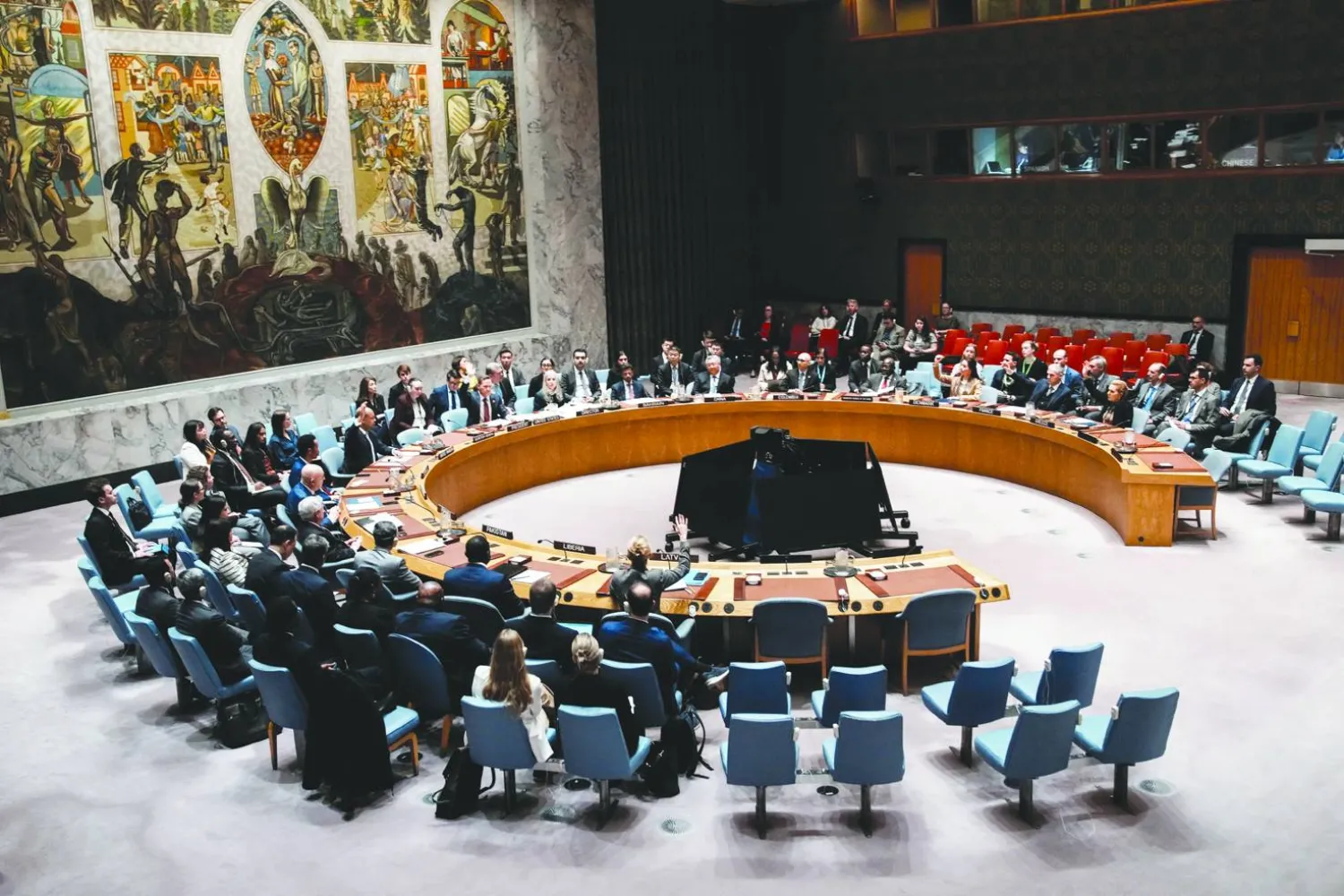
A UN Security Council session held on March 12 (Reuters)
TT

US-Gulf Draft UN Resolution to Hold Iran Accountable over Hormuz Closure

A UN Security Council session held on March 12 (Reuters)

The United States and Bahrain have begun drafting a UN Security Council resolution aimed at holding Iran accountable for closing the Strait of Hormuz and advancing international efforts to reopen it to commercial shipping.

US Ambassador to the UN Mike Waltz, speaking during a phone press conference on Monday, said the draft states that the Security Council strongly condemns repeated attacks and threats by Iran against commercial vessels, as well as actions aimed at obstructing lawful transit through the Strait of Hormuz. These include the laying of naval mines and the imposition of illegal fees on ships.

The proposal determines that such actions constitute a threat to international peace and security, opening the possibility of placing the resolution under Chapter VII of the UN Charter and, consequently, the potential adoption of enforcement measures at a later stage.

It affirms the right of all ships and aircraft to transit the Strait of Hormuz without unlawful interference, in accordance with international law, including the UN Convention on the Law of the Sea.

It further calls on Iran to immediately cease all attacks or threats directed against commercial shipping, as well as any attempts to obstruct or impede freedom of navigation.

A key provision stipulates that Iran must disclose the number of mines it has laid and their precise locations in and around the Strait of Hormuz, and work toward their removal. The draft also calls on Tehran to refrain from interfering in international demining efforts.

Humanitarian corridor

Another clause asks Iran to cooperate with the United Nations in establishing a humanitarian corridor in the Strait of Hormuz, aimed at facilitating the flow of essential goods, including food and fertilizers, which the text says have been disrupted by recent developments in the region.

It also includes a prohibition on any UN member state assisting Iran in closing the strait or restricting transit through it. At the same time, it affirms the right of states to defend their vessels against attacks, in accordance with international law.

This is the latest diplomatic effort by Washington and Manama after China and Russia vetoed a similar resolution hours before a temporary ceasefire was announced in early April.

Waltz said negotiations on the draft would take place this week, adding that it remains unclear whether the resolution will include an enforcement mechanism to secure navigation in the strait.

He revealed that Bahrain is contributing to drafting the text, with input from Saudi Arabia, Kuwait, Qatar and the United Arab Emirates, in a way that would require Iran to halt attacks on commercial vessels and attempts to impose transit fees, as well as to stop laying naval mines and disclose their locations.

Waltz underlined that the draft is narrower in scope than the previous unsuccessful proposal and comes amid a ceasefire with Iran.

The United States and Gulf countries are continuing negotiations this week and are seeking swift adoption of the resolution, provided consensus among the countries concerned is maintained.

Waltz framed the issue not only as part of a confrontation with Iran but also as a matter related to international law and the freedom of global trade, stressing that no country has the right to blackmail global trade.

A previous draft resolution blocked by Russia and China had sought authorization for the use of defensive force to protect navigation in the Strait of Hormuz and free it from Iranian attacks. It also would have allowed states, individually or through voluntary multinational maritime partnerships, to use all necessary and proportionate defensive means, applying to the strait and adjacent waters to secure passage and deter attempts to close, obstruct or otherwise interfere in any way with international navigation through the Strait of Hormuz, through which about one-fifth of the world’s oil passes.



Saudi Arabia Provides New Contribution of $2 Million to Support UNRWA

Saudi Prince Mansour bin Khaled bin Farhan, Ambassador of Saudi Arabia to Jordan, hands UNRWA’s Acting Commissioner-General, Christian Saunders a cheque of $ 2 million as the Kingdom’s annual contribution to UNRWA (Saudi Embassy in Jordan)
TT

Saudi Arabia Provides New Contribution of $2 Million to Support UNRWA

Saudi Prince Mansour bin Khaled bin Farhan, Ambassador of Saudi Arabia to Jordan, hands UNRWA’s Acting Commissioner-General, Christian Saunders a cheque of $ 2 million as the Kingdom’s annual contribution to UNRWA (Saudi Embassy in Jordan)

Saudi Arabia on Tuesday delivered on Tuesday a check worth $2 million to the United Nations Relief and Works Agency for Palestine Refugees in the Near East (UNRWA), representing the Kingdom's annual support for the agency’s budget, programs, and operations in the region.

Saudi Ambassador to Jordan Prince Mansour bin Khalid bin Farhan delivered the check at the embassy to UNRWA’s Acting Commissioner-General, Christian Saunders.

He stressed the Saudi commitment, under the directives of the leadership, to support the Palestinian cause and assist the brotherly Palestinian people.

The Ambassador then highlighted the importance of supporting UNRWA's budget to enable it to fulfill its social, humanitarian, educational, and health responsibilities toward Palestinian refugees, particularly under current conditions.

Prince Mansour noted the agency’s vital role in providing humanitarian services and alleviating suffering.

For his part, Saunders expressed his appreciation to the Kingdom for its continued and steadfast support, which enables UNRWA to implement its programs in service of Palestinian refugees.