Turkish annual consumer price inflation dropped to 50.51 percent in March, official data showed on Monday, slightly below forecast and easing ahead of landmark presidential and parliamentary elections on May 14.
Inflation has been stoked by a currency crisis at end-2021 that pushed it to a 24-year peak above 85 percent in October, before dipping with a favorable base effect to 55.2 percent in February.
The surging prices have hit household earnings and hurt Turkish President Tayyip Erdogan's popularity, making the May elections his biggest-ever political challenge.
The lira weakened slightly to 19.2020 against the dollar after the data, from 19.9600 beforehand. It has touched a series of record lows in recent days.
March consumer prices rose 2.29 percent from a month earlier, less than a predicted 2.85 percent in a Reuters poll.
Türkiye's southeast region was hit almost two months ago by massive earthquakes which killed more than 50,000 people in Türkiye and left millions homeless. The earthquake is expected to cost Türkiye more than $100 billion and shave one to two percentage points off growth this year.
Last month, Türkiye's central bank kept its policy rate steady after easing to 8.5 percent to support growth and employment in the wake of the disaster.
Turkish factory activity continued its expansion in March with improvements in new orders and output although February's massive earthquakes continued to impact the sector.
The Purchasing Managers' Index (PMI) for manufacturing rose to 50.9 last month from 50.1 in February, staying above the 50-point line that separates expansion from contraction, the Istanbul Chamber of Industry and S&P Global said.
The panel said that in some cases earthquake reconstruction efforts led to higher output.
New orders returned to growth for the first time in a year and a half, the survey showed, as business increased solidly over the month and export orders picked up the pace.
Despite the increase in production requirements, employment dipped for the first time in five months, for several reasons including the new early retirement law, the panel said.
Input costs and output prices rose sharply last month amid higher raw material costs, currency weakness, and increased wages, it also said.
China’s September Refined Fuel Exports Surge Amid Iran War, Diesel Exports More Than Triplehttps://english.aawsat.com/business/5330762-china%E2%80%99s-september-refined-fuel-exports-surge-amid-iran-war-diesel-exports-more
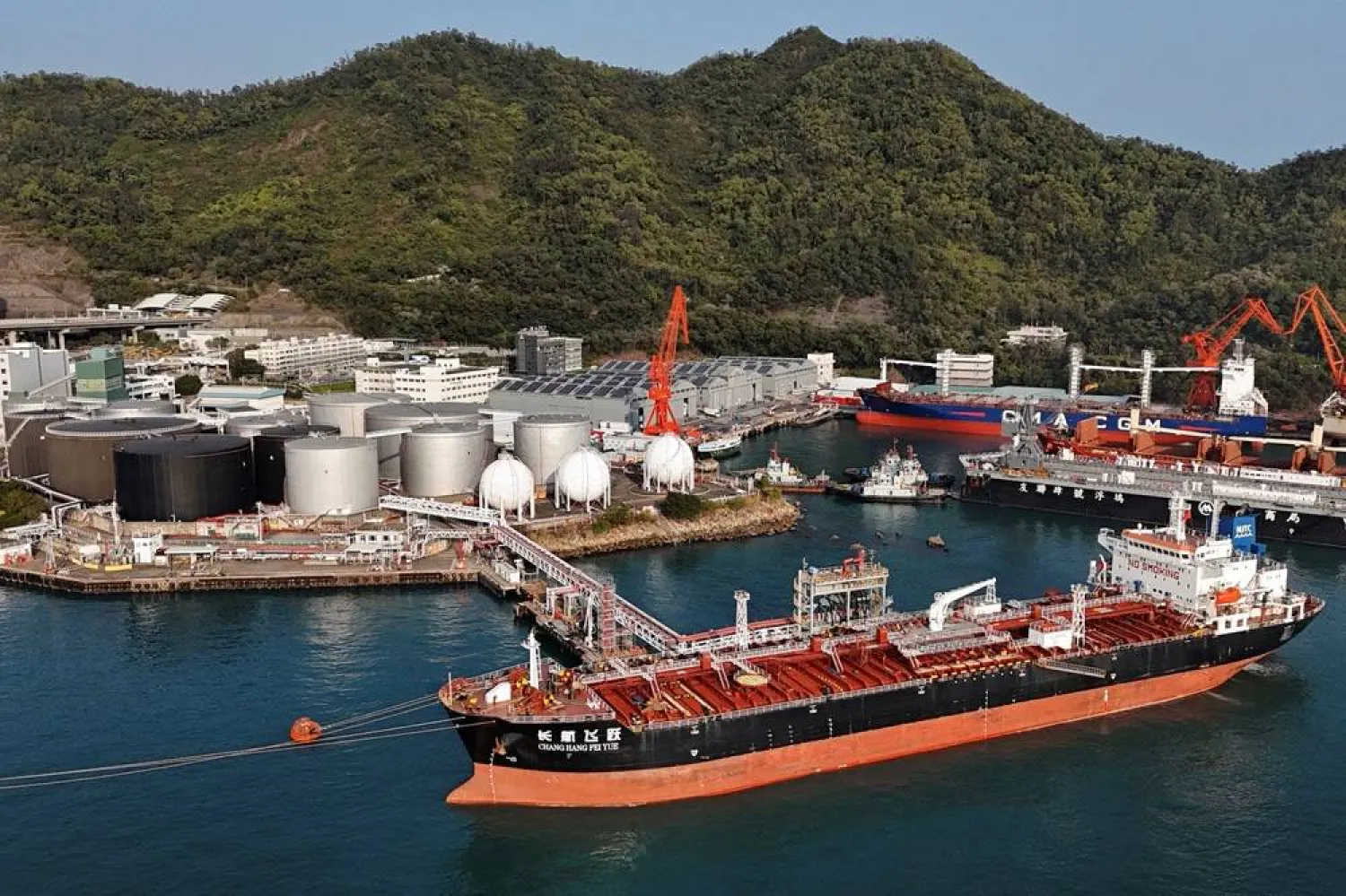
A drone view shows a Chinese-flagged oil tanker moored at an oil terminal at Tsing Yi port in Hong Kong, China March 19, 2026. (Reuters)
TT
TT
China’s September Refined Fuel Exports Surge Amid Iran War, Diesel Exports More Than Triple
A drone view shows a Chinese-flagged oil tanker moored at an oil terminal at Tsing Yi port in Hong Kong, China March 19, 2026. (Reuters)
China's exports of refined oil products in September surged 39.4% year-on-year, data showed on Sunday, with diesel exports reaching their highest in more than three years amid a tight global market as the Iran war and other conflicts curb output from the Middle East and Russia.
China, a key exporter of refined oil products in Asia, restricted exports of refined products, including diesel, gasoline and jet fuel, in mid-March to safeguard domestic supplies amid risks from the Middle East, then eased the curbs in mid-July.
Exports of refined oil products, which include diesel, gasoline, jet fuel and marine fuel, rose 19% in September from the previous month to 7.16 million metric tons, the customs data showed, continuing the strong growth momentum seen in August.
In the first three quarters, the country exported 41.4 million tons of refined oil products, down 3.7% year-on-year.
China's combined exports of gasoline, diesel and jet fuel totaled 4.41 million tons in September, up 56% from last September and exceeding the 2025 monthly average of 3 million tons.
Jet fuel exports rose 16.7% year-on-year to 1.94 million tons in September. In the first nine months, jet fuel exports totaled 13.7 million tons, down 11% year-on-year.
Diesel exports rose 262.3% year-on-year to 1.85 million tons in September to their highest since February 2023. In the first nine months, diesel exports totaled 6.68 million tons, up 31.6% year-on-year.
Gasoline exports stood at 620,000 tons in September, down 4.1% year-on-year. From January to September, China exported 3.04 million tons of gasoline, down 51.9% year-on-year.
The data also showed that LNG imports fell 1.4% year-on-year to 5.61 million tons in September. China's LNG imports totaled 44.62 million tons in the first nine months.
Arab Energy Fund to Asharq Al-Awsat: 54% of Investment Assets Located in Saudi Arabiahttps://english.aawsat.com/business/5330758-arab-energy-fund-asharq-al-awsat-54-investment-assets-located-saudi-arabia
Arab Energy Fund to Asharq Al-Awsat: 54% of Investment Assets Located in Saudi Arabia
The Arab Energy Fund headquarters in Riyadh. (TAEF)
Saudi Arabia accounts for around 54 percent of the total assets under management within the investments and partnerships sector of The Arab Energy Fund, which is studying new investment opportunities in the Kingdom and the region. These opportunities include data centers and their associated infrastructure, oil and gas field services, and fuel and petroleum product storage facilities.
Speaking to Asharq Al-Awsat on the sidelines of the World Petroleum Congress in Riyadh, Maheur Mourali, the Chief Investment Officer of The Arab Energy Fund (TAEF), said the Saudi energy sector is one of the most attractive markets in the region.
This attractiveness is due not only to the size of the market but also to the structural transformations it is undergoing under Vision 2030, alongside the expansion of industrial and infrastructure investments and the diversification of energy sources, he added.
The fund sees promising opportunities in a number of sectors, foremost among which are oil and gas services, petrochemical industries, energy infrastructure, logistics and storage services, alongside sectors related to the energy transition, including renewable energy, district cooling, water management, and energy efficiency solutions, he said.
Mourali explained that the fund focuses on investing in operational companies and platforms capable of scaling, whether through organic growth or acquisitions, in a way that supports building regional entities originating from the Saudi market.
He noted that the upcoming phase will provide significant opportunities for institutional investors capable of providing long-term capital, alongside sector expertise and strategic partnerships that support corporate growth and boost competitiveness.
The fund's total assets reached around 14 billion dollars by the end of the first half of 2026, recording a 16 percent annual growth, according to Mourali, who pointed out that this growth reflects the strength of the fund's financial position and its ability to continue expanding its financing and investment activities.
Data centers
Regarding investment opportunities associated with the expansion of artificial intelligence and data centers, Mourali said that the rapid growth in these applications will be one of the primary drivers for increased electricity demand in the coming years. This is due to data centers requiring substantial electrical capacity and reliable, continuous supplies, as well as advanced cooling and energy consumption management solutions.
He explained that this trend is gaining particular importance in Saudi Arabia with growing investments in digital infrastructure, artificial intelligence, and cloud computing.
Investment opportunities are not limited to the data centers themselves, but encompass their entire associated value chain, including power generation, renewable energy, energy storage systems, cooling, electrical infrastructure, and water management, he stressed.
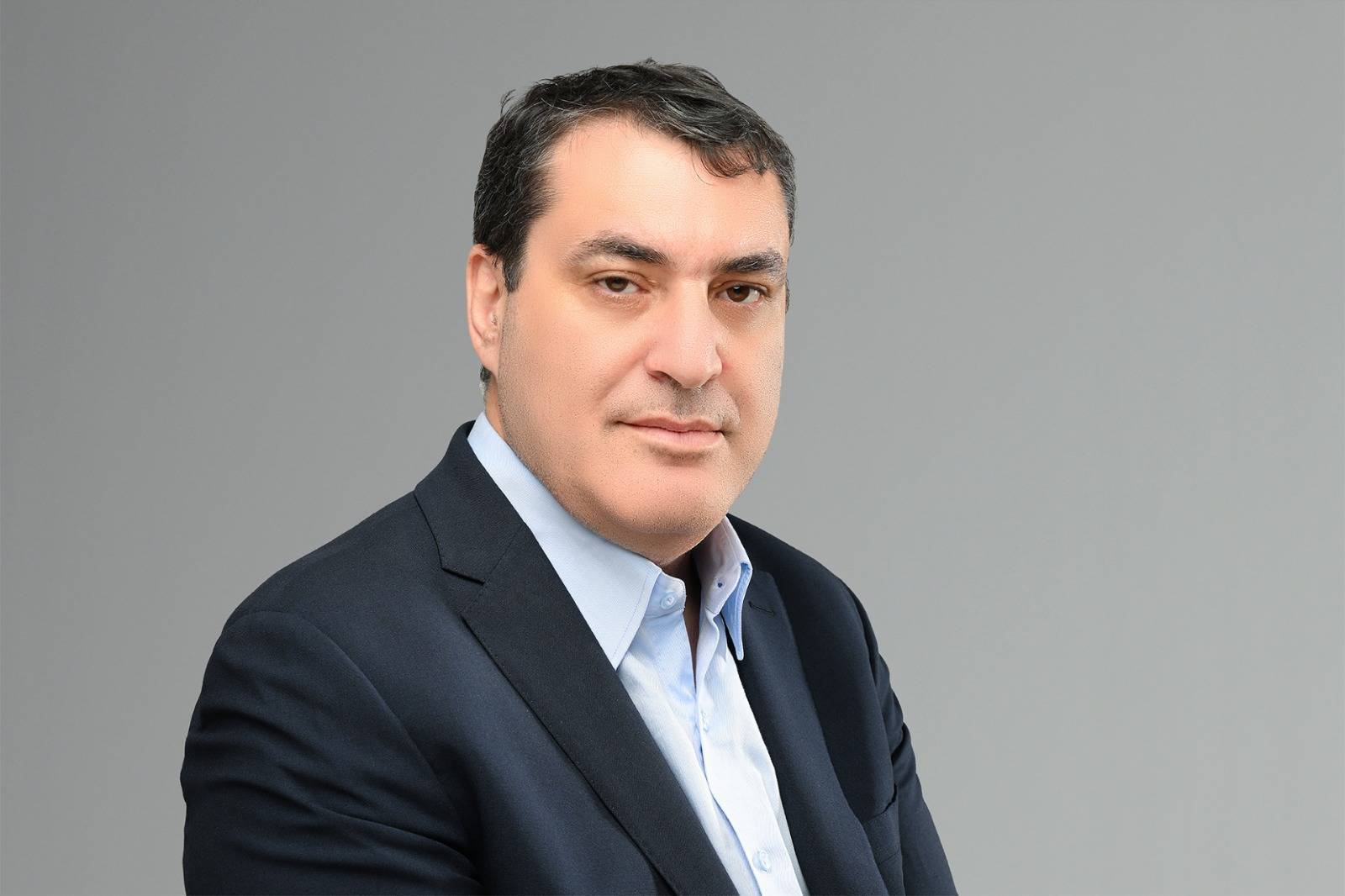
Maheur Mourali, the Chief Investment Officer of The Arab Energy Fund (TAEF). (TAEF)
He added that investing in data centers and their related infrastructure represents one of the fund's strategic focuses in Saudi Arabia and the region, noting that the fund is currently studying and developing a number of opportunities in this field, which will be announced upon the completion of the necessary procedures and approvals.
New investments
On the level of existing investments and potential deals, Mourali explained that the fund continues to strengthen its presence in Saudi Arabia and the region through investments aimed at supporting the growth of companies operating in the energy sector and related fields, developing infrastructure, and bolstering energy security.
He noted that the fund announced in early 2026 a major investment in "APSCO," a company operating in aviation refueling and lubricants distribution, saying that the transaction reflects the fund's direction toward companies that enjoy a strong market position and potential for growth and expansion.
The fund's strategy relies on acquiring influential minority stakes in companies, in partnership with global infrastructure funds, international strategic partners, or local business groups, while focusing on companies that possess strong management teams and distinguished operational expertise, he went on to say.
The fund's role is not limited to providing capital, but extends to supporting the operational capabilities of companies and assisting them in geographic expansion and the development of their activities, he stressed.
Mourali mentioned that the opportunities being studied by the fund include infrastructure supporting the flexibility and continuity of energy exports, oil and gas field services, fuel and petroleum product storage facilities, alongside energy services in their broadest sense.
These opportunities are in varying stages of study, evaluation, and negotiation, he revealed, pointing out that the fund is looking forward to announcing new investments after completing procedures and obtaining the necessary approvals, in accordance with a selective investment approach that focuses on asset quality and achieving sustainable, long-term value.
The Arab Energy Fund, a multilateral developmental financial institution, was established in 1974 with the participation of 10 Arab oil-exporting countries. It started its operations in 1975 and is headquartered in Riyadh. The fund works to finance energy sector projects in the Middle East and North Africa region by providing debt financing solutions and equity investments, alongside advisory services.
The fund was previously known as the Arab Petroleum Investments Corporation (APICORP) before changing its name and corporate identity to The Arab Energy Fund in 2023.
US Goes on the Offensive in Central Asiahttps://english.aawsat.com/business/5330750-us-goes-offensive-central-asia
US Secretary of State Marco Rubio speaks with members of the media before boarding a plane en route to Uzbekistan, at Joint Base Andrews, Md., Saturday, Oct. 17, 2026. (Kylie Cooper/Pool Photo via AP)
TT
TT
US Goes on the Offensive in Central Asia
US Secretary of State Marco Rubio speaks with members of the media before boarding a plane en route to Uzbekistan, at Joint Base Andrews, Md., Saturday, Oct. 17, 2026. (Kylie Cooper/Pool Photo via AP)
It's dealmaking time: despite the roiling geopolitical tensions embroiling Washington on several fronts, US Secretary of State Marco Rubio headed to Central and South Asia late Saturday to boost commercial ties -- and gain an edge over Russia and China.
With the United States mired in its war with Iran, and the conflict in Ukraine showing no signs of abating, Rubio has stepped up his foreign travel with recent trips to Europe and Latin America, smack in the middle of the US midterm election campaign.
He has largely ceded control of the contentious Iran, Ukraine and Gaza situations to US President Donald Trump's special envoys Steve Witkoff and Jared Kushner.
Rubio was instead leading a massive delegation of 200 business leaders to Uzbekistan, where he will take part on Monday in a ministerial meeting of five Central Asian countries.
"This is an important relationship," Rubio said shortly before his departure, calling the trip a strategic visit. "There's countries you'd like to get to because we want to build our relationships with them."
A senior State Department official told reporters on Friday that Rubio was demonstrating Washington's goodwill toward the "deepening partnership across Central Asia," especially in the energy sector.
Central Asia is a resource-rich region as vast as the European Union but only boasts a population of about 80 million people.
"We've been planning this for several months, and it's an incredible opportunity to bring the United States into a region of the world that is vitally important," said a second senior US official, on condition of anonymity.
During his visit to the Uzbek city of Samarkand, an emblematic stop on the historic Silk Road, Rubio will participate in a C5+1 meeting with ministers from Kazakhstan, Kyrgyzstan, Tajikistan, Turkmenistan and Uzbekistan.
In November 2025, Trump welcomed the leaders of those countries to the White House.
The former Soviet republics remain linked to Moscow by energy pipelines, as well as security and migratory networks, but Russian influence has eroded since the start of the war in Ukraine -- with China reaping the benefits.
Beijing is the main trade partner of all five Central Asian nations.
Chinese companies have signed a number of energy-related deals, seeking to buy natural gas in Turkmenistan, uranium in Kazakhstan and rare earths in Tajikistan.
The United States also has made sourcing rare earths and improving its energy mix key parts of its foreign policy.
The US ambassador to India, Sergio Gor -- who also serves as the special envoy for Central and South Asia -- has repeatedly emphasized the need for Washington to have better ties across the region.
- Trade deal -
After his visit to Uzbekistan, Rubio will head to India, with stops in Mumbai and Jamnagar in Gujarat state. Both are industrial hubs and major international port cities.
It will be the secretary of state's second official visit to India this year, after a May trip to New Delhi and Kolkata, signifying Washington's push in the region.
"We're very close" to a trade deal with India, the second senior US official said of negotiations that have dragged on for months.
Last February, the two sides reached a provisional agreement aimed at reducing US tariffs on Indian products.
But just a few days later, the US Supreme Court struck down many of Trump's tariffs, which fueled uncertainty about when a bilateral trade deal could take effect.
Ever since, Washington and Delhi have been locked in negotiations.
Relations were rattled when Trump imposed 25 percent tariffs on Indian goods in retaliation for Delhi's purchases of Russian oil, but those duties have since been lifted.
In Mumbai and Jamnagar, Rubio will offer the new US brand of so-called "commercial diplomacy" in his meetings with Indian business leaders.
He will notably raise plans by the Indian conglomerate Reliance Industries to finance a refinery in Texas. Reliance is led by billionaire Indian tycoon Anant Ambani.
لم تشترك بعد
انشئ حساباً خاصاً بك لتحصل على أخبار مخصصة لك ولتتمتع بخاصية حفظ المقالات وتتلقى نشراتنا البريدية المتنوعة