


China Practices Blockades on Last Scheduled Day of Taiwan Drills

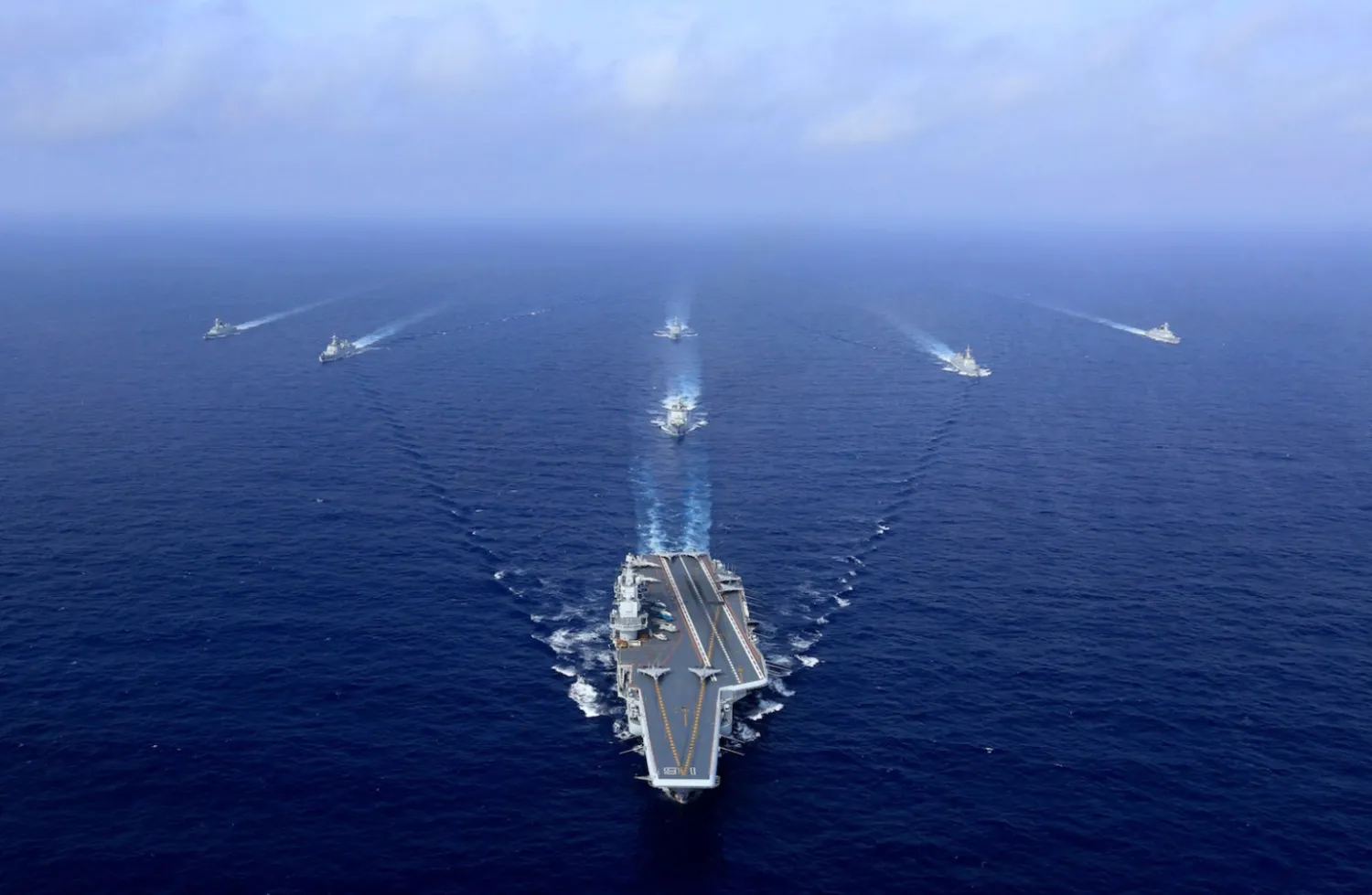
File photo: China's Liaoning aircraft carrier sailing during a drill in the South China Sea in 2018. Photo: AFP
TT

China Practices Blockades on Last Scheduled Day of Taiwan Drills

File photo: China's Liaoning aircraft carrier sailing during a drill in the South China Sea in 2018. Photo: AFP

China's military carried out aerial and naval blockade drills around Taiwan on Monday, its last scheduled day of exercises, with a Chinese aircraft carrier joining in combat patrols as Taipei reported another surge of warplanes near the island.

China announced the three days of drills on Saturday, after Taiwan's President Tsai Ing-wen returned to Taipei following a meeting in Los Angeles with US House of Representatives Speaker Kevin McCarthy, Reuters said.

China views democratically governed Taiwan as its own territory and has never renounced the use of force to bring the island under Beijing's control. Taiwan's government strongly disputes China's claims and has denounced the drills.

Chinese state television said aircraft, including nuclear-capable H-6 bombers armed with live missiles, and warships staged drills to "form a multi-directional island-encompassing blockade situation".

"In the Taiwan Strait, the northwest and southwest of Taiwan and the waters east of Taiwan (Chinese forces) took the initiative to attack, giving full play to their performance advantages, flexibly maneuvering to seize favorable positions, and advancing at high speed to deter opponents," the report said.

The Eastern Theatre Command of the People's Liberation Army said the aircraft carrier the Shandong also took part in combat patrols, and showed fighters taking off from its deck.

Taiwan has been tracking the Shandong since last week in the Pacific Ocean.

Taiwan's defense ministry published a map on Monday of the previous 24 hours of Chinese air force activities, showing four carrier-based Chinese J-15 fighters operating over the Pacific Ocean to Taiwan's east.

The ministry said that as of mid-morning on Monday that it had spotted 59 military aircraft and 11 ships around Taiwan, and that the Shandong carrier group was drilling in the Western Pacific.

The Shandong conducted air operations in waters close to Japan's Okinawan islands on Sunday, Japan's defense ministry said on Monday.

Jet fighters and helicopters took off and landed on the carrier 120 times between Friday and Sunday, with the carrier, three other warships and a support vessel coming within 230 kilometers (143 miles) of Japan's Miyako island, the defense ministry said.

Japan has been following China's military drills around Taiwan "with great interest", a top government spokesperson said on Monday.

Japan has long worried about China's military activities in the area given how close southern Japanese islands are to Taiwan.

"The importance of peace and stability in the Taiwan Strait is not only important for the security of Japan, but also for the stability of the international community as a whole," Chief Cabinet Secretary Hirokazu Matsuno told reporters.

The southern Japanese island of Okinawa hosts a major US air force base, and last August when China staged war games to protest the visit of then-US House Speaker Nancy Pelosi to Taipei, Chinese missiles landed within Japan's exclusive economic zone.

The United States has said it is also watching China's drills closely.

'LOCK ON THE TARGET'
China's military simulated precision strikes against Taiwan in the second day of drills around the island on Sunday.

The Eastern Theatre Command on Monday released a short video on its WeChat account showing an H-6 bomber flying in what it said was the skies north of Taiwan.
"The missiles are in good condition," an unidentified voice says, as the video shows images from the cockpit.

"Start the fire control radar, lock on the target," another voice says, showing images of a missile under the aircraft's wing.

It then shows a pilot readying the fire control button for what it describes as a simulated attack, and then pressing the button, though it did not show any missiles being fired.

Taiwan's military has repeatedly said it will respond calmly to China's drills and not provoke conflict.

The defense ministry separately released pictures on Monday of mobile launchers for the Taiwan-made Hsiung Feng anti-ship missiles at an undisclosed location, as well as missile-armed fast attack boats at sea.

Reuters reporters at the Cape Maobitou park in Pingtung county on Taiwan's southern tip saw Hsiung Feng launchers deployed near a scenic spot on Monday, as soldiers stood guard and tourists watched.

Life in Taiwan has continued normally with no signs of panic or disruption, and civilian flights operating as usual.

"Most normal people probably aren't afraid, with the main reason being that everyone thinks that China will certainly not start a war," said retiree and former soldier Tang Pao-hsiung, 78.

Taiwan's stock market brushed off the tensions, with the benchmark index up around 0.2% early Monday afternoon.



US, Israel Differ Over Timing of Strike on Iran

 Iranians drive past an anti-US billboard in Vanak Square in Tehran, Iran, 14 October 2026- EPA/ABEDIN
Iranians drive past an anti-US billboard in Vanak Square in Tehran, Iran, 14 October 2026- EPA/ABEDIN
TT

US, Israel Differ Over Timing of Strike on Iran

 Iranians drive past an anti-US billboard in Vanak Square in Tehran, Iran, 14 October 2026- EPA/ABEDIN
Iranians drive past an anti-US billboard in Vanak Square in Tehran, Iran, 14 October 2026- EPA/ABEDIN

A group of senior US military officials, including Secretary of War Pete Hegseth, is pushing to resume the war against Iran, while advisers to US President Donald Trump favor continuing to "strangle Iran" through economic sanctions.

In Israel, Prime Minister Benjamin Netanyahu claimed Wednesday that he opposed launching a preemptive strike on Tehran ahead of the Israeli elections, but insisted that he would "bring Iran down" within the next two years.

The US-Israeli differences over the timing of renewed military action coincided with reports that Iran had adopted "new tactics" to target ships transiting the Strait of Hormuz. A container ship was also reported to have caught fire and sunk after striking a mine.

Meanwhile, Iran's Revolutionary Guard Corps (IRGC) spokesperson Brig. Gen. Hossein Mohibbi said Iran had acquired far more advanced weapons following the 40-day war.

On the ground, three people were injured when an unidentified drone struck a fishing boat off Sirik in Hormozgan province, southern Iran.


US Considers Hitting Iran with 'Mother of All Bombs'

An undated handout photo of the “Mother of All Bombs” at Eglin Air Force Base in Florida, US (Reuters)
TT

US Considers Hitting Iran with 'Mother of All Bombs'

An undated handout photo of the “Mother of All Bombs” at Eglin Air Force Base in Florida, US (Reuters)

The United States is considering using its biggest non-nuclear bomb against Iran if President Donald Trump should decide to renew combat in the war that has hit a deadlock, CNN reported Thursday.

The military is planning for the potential use of the GBU-43/B Massive Ordnance Air Blast (MOAB) bomb -- better known by its nickname, the "Mother Of All Bombs" -- to target Iranian energy infrastructure and nuclear sites, according to the news outlet, which quoted officials familiar with the matter.

Trump is trying to boost his low approval ratings ahead of November's midterm elections, with polls showing the unpopular war in Iran and fuel and other price rises it has caused are hurting his Republican Party.

Diplomatic efforts to end the conflict, which erupted with US-Israeli strikes on Iran in February, have been at an impasse since the summer.

But officials have raised doubts over the efficacy of the bomb if it were deployed, particularly its ability to destroy suspected underground nuclear sites in Iran.

"The MOAB is a massive information operation type weapon that is great for huge area clearance but not much else," a source familiar with the plans told CNN.

"It is definitely not designed as a deep penetration warhead."

The United States and Israel have said the war was necessary to prevent Iran from acquiring nuclear weapons -- a goal Tehran has long denied pursuing.

There are also concerns over the possibility of civilian casualties from such a huge weapon, according to AFP.

Washington has in recent weeks dialled back military operations in favour of economic pressure.

In 2017, the US military in Afghanistan dropped the "MOAB" to target ISIS group hideouts in a complex of tunnels and bunkers, killing more than 90 militants.


Pezeshkian: Iran is Facing its Most Intense Blockade since 1979

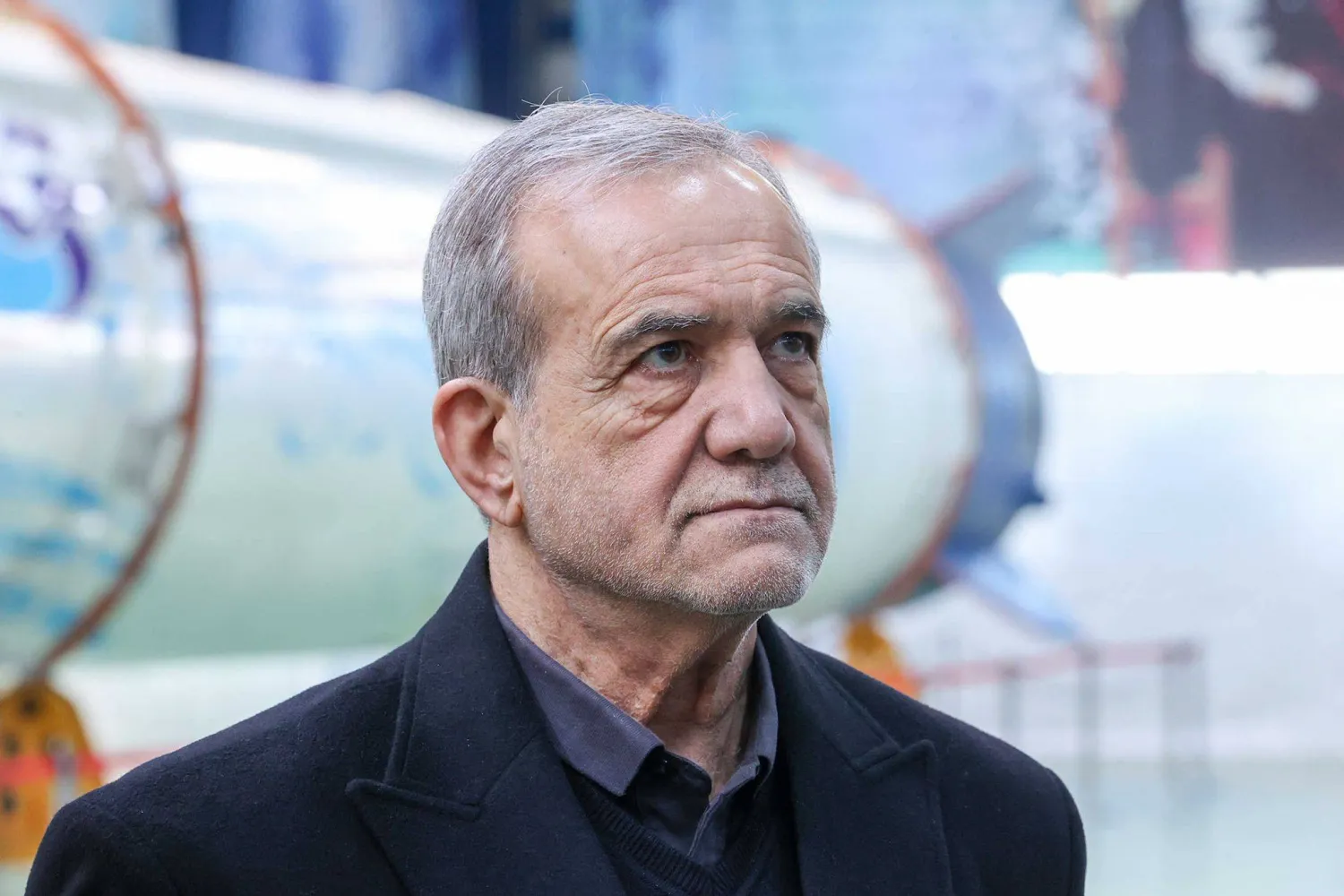
Iranian President Masoud Pezeshkian visits an exhibition that showcases the defense ministry's latest advancements in defense and space in Tehran. Photo: -/Iranian Presidency/dpa
TT

Pezeshkian: Iran is Facing its Most Intense Blockade since 1979

Iranian President Masoud Pezeshkian visits an exhibition that showcases the defense ministry's latest advancements in defense and space in Tehran. Photo: -/Iranian Presidency/dpa

Iranian President Masoud Pezeshkian said Tuesday that the country was facing its most intense blockade since the 1979 Islamic Revolution, accusing the United States of seeking to provoke public protests.

Iran and the United States have been at war since February 28, when US and Israeli strikes killed Iran's supreme leader, Ayatollah Ali Khamenei.

"Over the 48 years since the Revolution, we have never faced such intense blockade, war and difficulties as we are facing now," Pezeshkian said in a speech broadcast by state television.

He accused Washington of seeking to make life difficult for Iranians in order to fuel public anger and trigger unrest.

Pezeshkian said the US was focusing its efforts on making "the people become upset and face difficulties, and then for social protests to emerge so that they can achieve their sinister objectives".

The US imposed a blockade on Iranian ports in response to Tehran's closure of the strategic Strait of Hormuz, diverting or stopping vessels travelling to and from Iranian ports.

Iran has repeatedly accused the US and Israel of fomenting unrest inside the country, and in recent months has executed several Iranians accused of collaborating with its foes.

In late December last year, protests over the cost of living erupted in Iran, spreading nationwide and evolving into a wider anti-government movement.

Iran's rulers blamed the US and Israel for the unrest.