

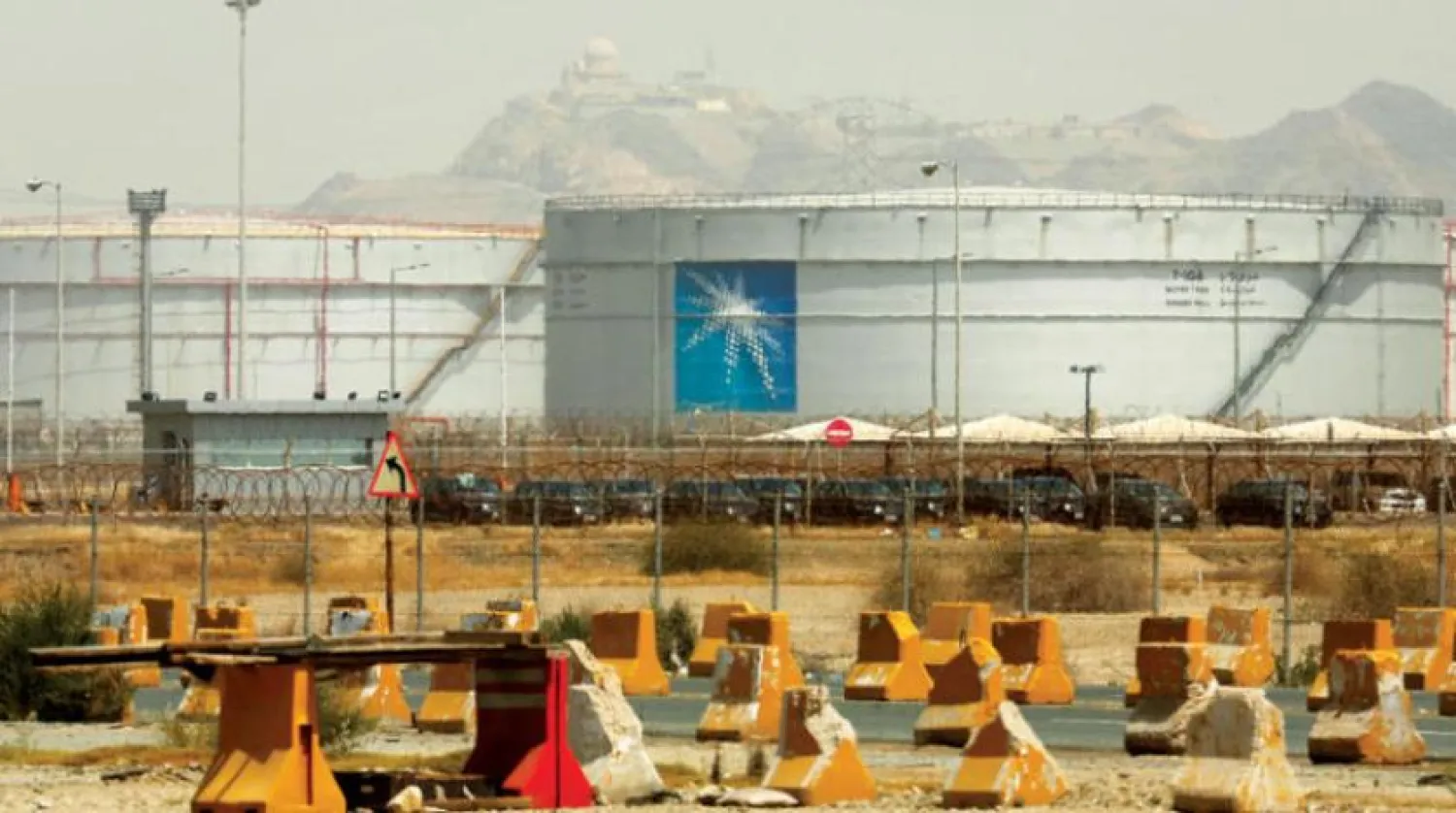

G7 Coalition to Keep Russian Oil Price Cap at $60

Oil tanks in an Aramco facility north of Jeddah. (AP)
TT

G7 Coalition to Keep Russian Oil Price Cap at $60

Oil tanks in an Aramco facility north of Jeddah. (AP)

The Group of Seven (G7) coalition will keep a $60 per barrel price cap on seaborne Russian oil, a coalition official said, despite rising global crude prices and calls by some countries for a lower price cap to restrict Moscow's revenues.

The G7 and Australia made the decision to maintain the cap over the past few weeks after a review of the $60 price - set in December with an aim to reduce Moscow's ability to finance its war in Ukraine, the official said on condition of anonymity.

It comes after four weeks of gains in benchmark oil prices helped by an output cut announced by OPEC+, which groups the Organization of the Petroleum Exporting Countries and allies led by Russia, as well as a recovery in Chinese consumption.

The market was consolidating on Monday with Brent and US crude futures holding above $80 per barrel.

Russian crude has been selling at a discount of around $30 to Brent, the official said.

Coalition officials concluded the price cap was working to both limit Russian revenue while maintaining energy market stability, but said they would continue coordinating to ensure effective monitoring and enforcement, the official added.

The oil price cap bans G7 and European Union companies from providing transportation, insurance, and financing services for Russian oil and oil products if they are sold above the cap.

The US and Britain have also imposed restrictions on Russian oil imports.

The official noted that a recent International Energy Administration (IEA) report concluded that the G7 sanctions regime had been effective "in not restricting global crude and product supplies, while simultaneously curtailing Russia's ability to generate export revenue."

The IEA said on Friday that Russia's March oil revenue rose by $1 billion month on month to $12.7 billion, but was still 43% lower than a year earlier.

Russian crude exports have been consistent at over 3 million barrels per day and global markets have been steady, the G7 official said.

Russia's oil production is forecast to remain stable until 2025, its Deputy Energy Minister Pavel Sorokin was quoted as saying by Neftegazovaya vertikal magazine.

In another context, Saudi Arabia’s crude oil exports slipped more than 2% in February data from the Joint Organisations Data Initiative (JODI) showed on Monday.

The country’s crude exports fell to 7.46 million barrels per day (bpd) in February from 7.66 million bpd in January.

Meanwhile, the crude product was little changed at 10.45 million bpd in February.

Earlier this month, Saudi Arabia’s energy ministry said that the Kingdom is voluntarily cutting its oil production by 500,000 barrels per day from May until the end of 2023.

Despite the output cut, state oil giant Saudi Aramco will supply full crude contract volumes loading in May to several North Asian buyers, several sources with knowledge of the matter said.

Saudi’s domestic crude refinery throughput decreased by 0.134 million bpd to 2.443 million bpd in February, while direct crude burn rose 17,000 bpd to 329,000 bpd.

Monthly export figures are provided by Riyadh and other members of the Organization of the Petroleum Exporting Countries (OPEC) to JODI, which publishes them on its website.

The International Energy Agency (IEA) said on Friday that it sees 2023 demand at a record 101.9 million barrels per day, up 2 million barrels per day from last year and on par with its prediction last month.

While, the US Energy Information Administration has predicted that non-OPEC countries will account for a higher percentage of oil production gains this year and next, a reversal of the last two years.



Cluster2 Company Launches Direct Flights from Muscat to Saudi Arabia's Taif

 Three direct flights will take place per week between Muscat and Taif via Oman Air - SPA
Three direct flights will take place per week between Muscat and Taif via Oman Air - SPA
TT

Cluster2 Company Launches Direct Flights from Muscat to Saudi Arabia's Taif

 Three direct flights will take place per week between Muscat and Taif via Oman Air - SPA
Three direct flights will take place per week between Muscat and Taif via Oman Air - SPA

The Cluster2 Company, operator of Taif International Airport, announced the launch of three direct flights per week between Muscat and Taif via Oman Air, starting January 31, SPA reported.

The launch of international flights through the cluster’s airports comes as part of its ongoing commitment to improving the passenger experience and expanding international travel options, while continuing to build strategic partnerships with global airlines to enhance air connectivity in the Kingdom.


Oil Prices Rise as US Ramps up Action against Venezuela Tankers

A view shows an oil pump jack outside Almetyevsk, in the Republic of Tatarstan, Russia July 14, 2025. REUTERS/Stringer
TT

Oil Prices Rise as US Ramps up Action against Venezuela Tankers

A view shows an oil pump jack outside Almetyevsk, in the Republic of Tatarstan, Russia July 14, 2025. REUTERS/Stringer

Oil prices rose on Monday after the US intercepted ​an oil tanker in international waters off the coast of Venezuela and tensions in Russia's war against Ukraine remained high, with both developments raising fears of supply disruption.

Brent crude futures gained $1.31, or 2.17%, to $61.78 a barrel by 1316 GMT. US West Texas Intermediate crude rose by $1.25, or 2.2%, to $57.77.

Market participants now see a risk of disruption to Venezuelan oil exports because of the US ‌embargo, having previously ‌been complacent in that regard, said ‌UBS ⁠analyst Giovanni ​Staunovo.

Venezuelan crude ‌accounts for about 1% of global supply.

Growing supply from the US and the OPEC+ producer group have largely offset worries over supply disruption elsewhere to keep Brent futures around $65 a barrel in the second half of 2025, though prices have eased in the past month because of oversupply concerns.

Oil prices have been supported by developments off Venezuela while ⁠Russia-Ukraine tensions simmer in the background in an otherwise very bearish market, said June ‌Goh, analyst at Sparta Commodities.

The US Coast ‍Guard is pursuing an oil ‍tanker in international waters near Venezuela in what would be the ‍second such operation over the weekend and the third in less than two weeks if successful, officials told Reuters on Sunday.

A rebound in oil prices has been sparked by US President Donald Trump's announcement of a "total ​and complete" blockade of sanctioned Venezuelan oil tankers and subsequent developments there, followed by reports of a Ukrainian drone strike ⁠on a Russian shadow fleet vessel in the Mediterranean, said IG analyst Tony Sycamore.

The Brent and WTI benchmarks fell by about 1% last week.

US special envoy Steve Witkoff said on Sunday that talks between US, European and Ukrainian officials in Florida over the past three days in an effort to end Russia's war in Ukraine had focused on aligning positions. Those meetings and separate talks with Russian negotiators had been productive, he said.

However, the top foreign policy aide of Russian President Vladimir Putin said that changes made by the Europeans ‌and Ukraine to US proposals had not improved prospects for peace.


GASTAT: Construction Costs in Saudi Arabia Rose 1% in November

The monthly Construction Cost Index survey results showed price stability in November 2025 compared with October 2025. SPA
TT

GASTAT: Construction Costs in Saudi Arabia Rose 1% in November

The monthly Construction Cost Index survey results showed price stability in November 2025 compared with October 2025. SPA

The Construction Cost Index in Saudi Arabia rose 1% in November 2025 compared with the same month last year, driven by equal 1% increases in both residential and non-residential construction costs, according to data released by the Kingdom’s General Authority for Statistics (GASTAT).

The monthly Construction Cost Index survey results showed price stability in November 2025 compared with October 2025.

The Construction Cost Index bulletin is part of GASTAT’s ongoing efforts to develop statistical products for vital sectors and provide a reliable and effective reference with accurate estimates to support decision-making by contractors, real estate developers, and relevant entities.

These efforts contribute to drawing a clear roadmap for residential and non-residential construction projects in the building and construction sector.