


OPEC: We Do Not Target Oil Prices, IEA Should be 'Very Careful'

A US Chevron oil tanker is seen at a port in Venezuela. (Reuters)
TT

OPEC: We Do Not Target Oil Prices, IEA Should be 'Very Careful'

A US Chevron oil tanker is seen at a port in Venezuela. (Reuters)

The International Energy Agency (IEA) should be "very careful" about discouraging investment in the oil industry, which was vital for global economic growth, announced OPEC Secretary General Haitham al-Ghais.

Ghais warned that such statements could lead to oil market volatility in the future.

He said that the Organization of the Petroleum Exporting Countries (OPEC) and its allies, including Russia, a group known as OPEC+, were not targeting oil prices but focusing on market fundamentals.

He warned that finger-pointing and misrepresenting the actions of the oil exporters and their allies was "counter-productive."

IEA Executive Director Fatih Birol has been critical of the OPEC+ group's surprise announcement of production cuts of 1.66 million barrels per day (bpd) from May until the end of 2023.

In an interview with Bloomberg on Wednesday, Birol said OPEC should be careful about pushing oil prices up as that would translate into a weaker global economy.

If anything would lead to future volatility, it is the IEA's repeated calls to stop investing in oil, knowing that all data-driven outlooks envisage the need for more of this precious commodity to fuel global economic growth and prosperity in the decades to come, especially in the developing world, added Birol.

On Thursday, Ghais said blaming oil for inflation was "erroneous and technically incorrect" and that the IEA's repeated calls to stop investing in oil is what would lead to market volatility.

Saudi Arabia also blamed the IEA and its initial predictions for a 3 million bpd fall in Russian production on the back of the Ukraine invasion last year for Washington's decision to sell oil from its reserves.

Russian Deputy Prime Alexander Novak said on Thursday that the OPEC+ group of leading oil producers saw no need for further output cuts despite lower-than-expected Chinese demand but that the organization can constantly adjust policy if necessary.

He stressed that Russia reached its targeted output this month after announcing cuts of 500,000 bpd, or five percent of its oil production, until the year-end.

Russia is part of the OPEC+ group of oil-producing countries that announced a combined reduction of around 1.16 million bpd earlier this month, a surprise decision the US described as unwise.

Novak added that Russian oil and gas condensate production is expected to decline to around 515 million tons (10.3 million bpd) this year from 535 million tons in 2022, broadly in line with a Reuters report this week.

Asked if the group needed to lower its output further because of falling oil prices, Novak replied: "Well, no, of course not because we only made a decision (on the reduction) a month ago, and it will come into force from May for those countries that have joined."

He added that OPEC+ did not expect a shortage in oil supplies in global markets after production cuts, as expected by the International Energy Agency.

Russia maintained its oil production and exports by increasing sales outside of Europe following the severe Western sanctions over the Ukraine war.

Novak said that Russia would this year divert to Asia 140 million tons of oil and oil products that previously would have headed to Europe. He also said Russia would supply 80 million tons and 90 million tons of oil and oil products to the West in 2023.

Meanwhile, oil prices rose on Thursday, recouping earlier losses fueled by fears of a recession in the US and increased Russian oil exports, which offset the impact of OPEC production cuts.

New orders for key US-manufactured capital goods fell more than expected in March, and shipments declined.

US Energy Information Administration (EIA) data showing US crude inventories fell last week by 5.1 million barrels to 460.9 million barrels helped to limit the price fall, far exceeding analyst forecasts of a 1.5 million drop in a Reuters poll.

OPEC's share of India's oil imports fell fastest in 2022/23 to the lowest in at least 22 years, as intake of cheaper Russian oil surged, data from industry sources show.

Sources said that oil loading from western Russian ports in April would be the highest since 2019, exceeding 2.4 million bpd, despite Moscow's pledge to reduce production.

Moscow has also increased fuel supplies to Türkiye, Asia, Africa, the Middle East, and Latin America.



Third ‘Mirkaz AlBalad AlAmeen Platform’ to Open in Makkah on Sunday 

A street in the holy city of Makkah is decorated with Ramadan lights. (SPA)
TT

Third ‘Mirkaz AlBalad AlAmeen Platform’ to Open in Makkah on Sunday 

A street in the holy city of Makkah is decorated with Ramadan lights. (SPA)

The third edition of the “Mirkaz ABalad AlAmeen”, a leading platform for exchanging opportunities in Makkah, will kick off on Sunday, under the theme “Makkah Inspires the World.”

The platform, organized by the Holy Makkah Municipality, will feature 15 exceptional Ramadan evenings focused on dialogue, knowledge exchange, and cross-sector engagement.

Makkah Mayor Musad Aldaood said the platform redefines development from Makkah, where faith meets inspiration and values are transformed into a comprehensive civilizational experience.

He noted that the initiative reflects the ambitions of Saudi Vision 2030 and showcases Makkah to the world as a living model of creativity, leadership, and innovation.

The upcoming edition will host more than 65 speakers, including executive leaders and decision-makers from across all three sectors, alongside futurists, entrepreneurs, and leading voices in culture and inspiration from artists, writers, media professionals, and innovators.

The program targets 12 key sectors: technology and digital transformation, financial investment, communications and media, real estate development, transport and logistics, banking services, youth and sports, tourism and culture, hospitality and catering, Hajj and Umrah, the third sector, and healthcare.


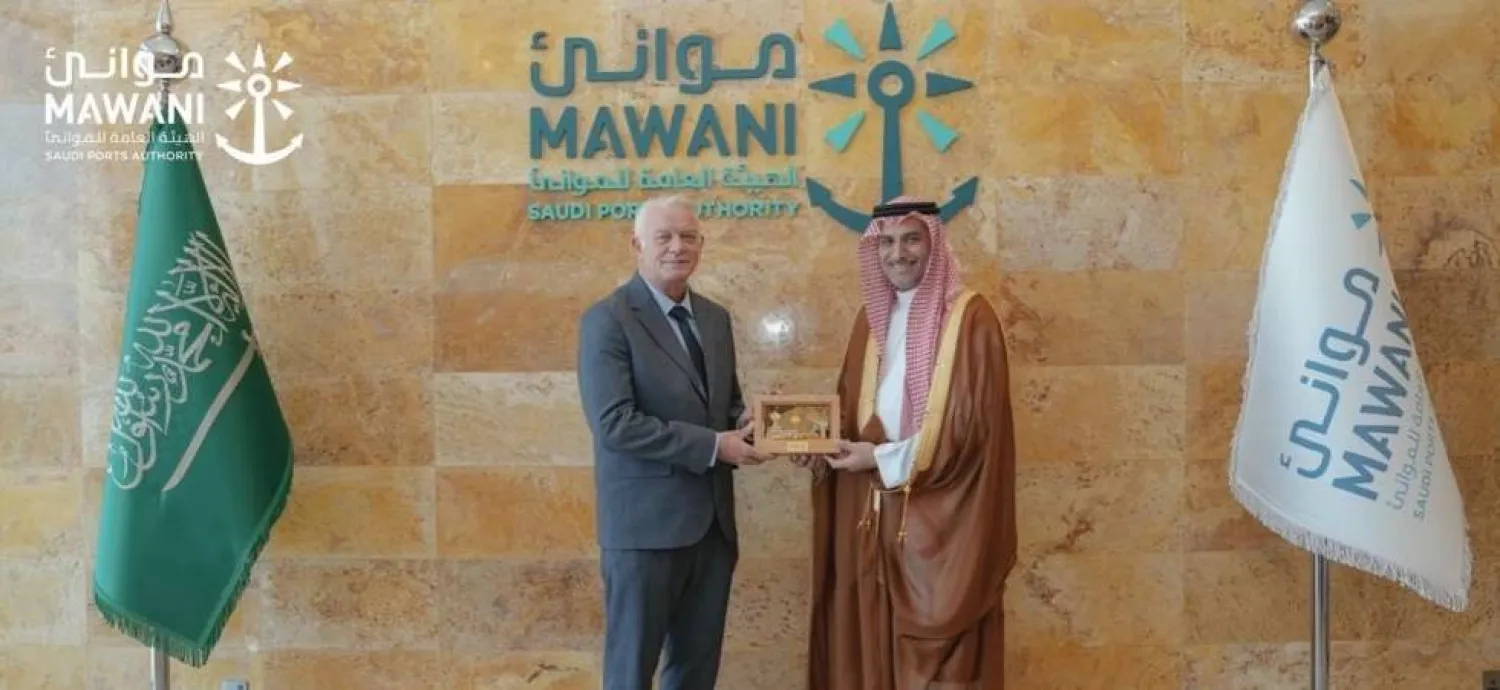
Saudi Arabia’s Mawani Grants Unified License to Global Shipping Line 

The initiative is part of Mawani's ongoing efforts to develop the maritime business environment, enable international companies to invest in the Saudi market, and increase competitiveness within the maritime sector. (Mawani)
TT

Saudi Arabia’s Mawani Grants Unified License to Global Shipping Line 

The initiative is part of Mawani's ongoing efforts to develop the maritime business environment, enable international companies to invest in the Saudi market, and increase competitiveness within the maritime sector. (Mawani)

The Saudi Ports Authority (Mawani) granted on Thursday a unified license to international shipping line Global Shipping Line (PIL), officially recognizing it as an authorized foreign investor to operate maritime agencies in the Kingdom's ports, reported the Saudi Press Agency.

The license is issued in accordance with the regulations outlined in the Maritime Agency Services, reflecting Mawani's commitment to boosting the efficiency of the maritime sector and improving the quality of operational services provided at ports.

It aims to attract global expertise and facilitate knowledge transfer within the Kingdom, aligning with international best practices in the maritime transport industry.

The initiative is part of Mawani's ongoing efforts to develop the maritime business environment, enable international companies to invest in the Saudi market, and increase competitiveness within the maritime sector.

PIL, which operates from its regional headquarters in Riyadh, manages operations in 29 countries.

The move strengthens the Kingdom's position as a crucial logistics hub, in line with the National Transport and Logistics Strategy, while attracting more international shipping lines. It reinforces Saudi Arabia's role as a key link among three continents.


IMF: Restoring Lebanon's Economic Growth Will Require Comprehensive Reforms

FILE PHOTO: A view of the International Monetary Fund (IMF) logo at its headquarters in Washington, D.C., US, November 24, 2024. REUTERS/Benoit Tessier//File Photo
TT

IMF: Restoring Lebanon's Economic Growth Will Require Comprehensive Reforms

FILE PHOTO: A view of the International Monetary Fund (IMF) logo at its headquarters in Washington, D.C., US, November 24, 2024. REUTERS/Benoit Tessier//File Photo

Lebanon's economy has shown resilience despite conflicts in the region, with tourism fueling a bit of a rebound, but restoring growth will require comprehensive reforms, the International Monetary Fund said on Thursday.

IMF spokeswoman Julie Kozack said the global lender remains engaged in complex discussions with Lebanese ‌authorities following their ‌request for an IMF-supported ‌program ⁠in March 2025. The ⁠IMF sent a staff mission to Beirut earlier this month, said Reuters.

The talks have been focused on two big issues, she said, citing the need for banking sector restructuring and a medium-term fiscal ⁠strategy. "The economy has shown resilience ‌despite the impact ‌of conflicts in the region. It has had ‌a bit of a rebound ‌on the back of tourism from the strong diaspora," Kozack said.

"But at the same time, really restoring strong and sustainable growth will ‌require a comprehensive set of reforms to tackle some of the ⁠structural ⁠weaknesses that have really hampered Lebanon's economic performance for many years," she said. Reforms also are needed to attract international support to help Lebanon address its substantial reconstruction needs.

Kozack said Lebanon needs an updated medium-term fiscal framework that includes concrete measures to mobilize additional revenues for much-needed capital spending, as well as a sovereign debt restructuring to restore debt sustainability.