


Sudan Conflict Deals New Blow to Stagnant Economy

Sudanese residents shop in a bazaar in Khartoum, Sudan, May 4, 2019. REUTERS/Umit Bektas/File Photo
TT

Sudan Conflict Deals New Blow to Stagnant Economy

Sudanese residents shop in a bazaar in Khartoum, Sudan, May 4, 2019. REUTERS/Umit Bektas/File Photo

The conflict shaking Sudan has dealt a crippling blow to the heart of the country's economy in the capital Khartoum, as well as disrupting internal trade routes, threatening imports and triggering a cash crunch.

Across swathes of the capital factories, banks, shops and markets have been looted or damaged, power and water supplies have been failing, and residents have reported steep price rises and shortages of basic goods.

Even before the fighting between military factions broke out on April 15 Sudan's economy had been in deep stagnation following a crisis stretching back to the last years of Omar al-Bashir's rule and turmoil after his overthrow in 2019, Reuters said.

Tens of thousands have now fled the violence in Khartoum and its sister cities of Bahri and Omdurman, while millions more have sheltered at home as shelling and air strikes rattle across neighborhoods.

Transport of goods and people has slowed as troops and sometimes gangs roam the streets. Telecom networks have become unreliable and some say they have begun rationing food and water.

"We are afraid, and we are suffering from high prices, shortages, and lack of salaries. This is a war on the citizen," said Ismail Elhassan, an employee at one Khartoum business.

Sudan, already an important exporter of gum arabic, sesame, peanuts, and livestock, has the potential to be a major agricultural and livestock exporter and logistics hub.

But the economy has been held back by decades of sanctions and international isolation, as well as deep corruption. Most Sudanese have struggled with years of rampant inflation, sharp currency devaluations and sliding living standards. About a third of the 46 million population depends on humanitarian aid.

NO DRIVERS

The conflict has hampered trade flows in and out of the East African nation, since banking and customs procedures are centralized in Khartoum. While the country's main port on the Red Sea is operating, at least one big shipping company, Maersk, says it has stopped taking bookings until further notice.

Imports of wheat, key to Sudan's food security, are becoming more difficult, said one Khartoum-based trader. Imports of white goods such as refrigerators across the land border with Egypt, where tens of thousands of Sudanese have fled northwards, have also slowed, said Federation of Egyptian Chambers of Commerce secretary-general Alaa Ezz.

Michel Sidhom, a supply chain manager at a trading company operating in Egypt and Sudan, said its business in Sudan had "completely stopped" as exports of Egyptian fertilizers and flour, typically about 10,000 tons per month each, were halted.

Egypt, Sudan's second biggest destination for livestock, a key export, said it is looking to diversify its sources as a result of the unrest.

Sidhom says his company's traders in Sudan have left Khartoum, and no drivers are willing to risk transporting their goods to the capital city.

"They shut down and left Khartoum until further notice. Whoever stays in Khartoum stays in a battlefield," he said.

SCARCITY, HIGH PRICES

Shortages of items such as flour and vegetables have been reported in Khartoum along with price hikes. Long queues form in front of bakeries and supermarkets in the capital.

The price of one kilogram of lamb has jumped nearly 30% to 4,500 pounds ($7.52), according to a Reuters reporter, while the price of a kilogram of tomatoes doubled to 1,000 pounds ($1.67).

A supermarket owner in Omdurman blamed the inflation on soaring black market fuel prices. A gallon of scarce fuel can now cost as much as 40,000 pounds ($67), up from 2,000 pounds ($3.34).

Even in places where fighting has abated demand is low, said one Omdurman butcher. "Everyone's left," he said.

Sudan's pound has lost about 600% against the dollar since 2018, prompting many to save money in dollars.

Traders in Khartoum face a cash crunch, and people are increasingly dependent on an electronic wallet app known as Bankak, which often suffers outages, to pay bills.

The black market has become distorted, as relatives abroad seek to sell dollars for Bankak transfers, while those in the country seek dollars for safe keeping.

Currency traders offer dollars at rates as high as 700 pounds ($1.17), while buying at as little as 300 pounds ($0.5014), with prices varying widely as transport and communication becomes more difficult.

Sudan's central bank on Sunday said banks outside the capital were carrying out withdrawal and deposit transactions. Within Khartoum, the army and RSF have accused each other of looting banks. The head of one Khartoum bank said he was trying to temporarily move the bank's headquarters outside the capital.

Another executive said that in years of economic reforms, coups, and protests, "this is the biggest challenge to face the banking system, and threatens an almost complete shutdown," he said.

In the city of Atbara, north-east of Khartoum, crowds of people were seen outside of banks, some of which had imposed withdrawal limits.

"My cash has run out because I haven't received my salary and the banking apps don't work," said Elhassan, speaking from Khartoum.



Third ‘Mirkaz AlBalad AlAmeen Platform’ to Open in Makkah on Sunday 

A street in the holy city of Makkah is decorated with Ramadan lights. (SPA)
TT

Third ‘Mirkaz AlBalad AlAmeen Platform’ to Open in Makkah on Sunday 

A street in the holy city of Makkah is decorated with Ramadan lights. (SPA)

The third edition of the “Mirkaz ABalad AlAmeen”, a leading platform for exchanging opportunities in Makkah, will kick off on Sunday, under the theme “Makkah Inspires the World.”

The platform, organized by the Holy Makkah Municipality, will feature 15 exceptional Ramadan evenings focused on dialogue, knowledge exchange, and cross-sector engagement.

Makkah Mayor Musad Aldaood said the platform redefines development from Makkah, where faith meets inspiration and values are transformed into a comprehensive civilizational experience.

He noted that the initiative reflects the ambitions of Saudi Vision 2030 and showcases Makkah to the world as a living model of creativity, leadership, and innovation.

The upcoming edition will host more than 65 speakers, including executive leaders and decision-makers from across all three sectors, alongside futurists, entrepreneurs, and leading voices in culture and inspiration from artists, writers, media professionals, and innovators.

The program targets 12 key sectors: technology and digital transformation, financial investment, communications and media, real estate development, transport and logistics, banking services, youth and sports, tourism and culture, hospitality and catering, Hajj and Umrah, the third sector, and healthcare.


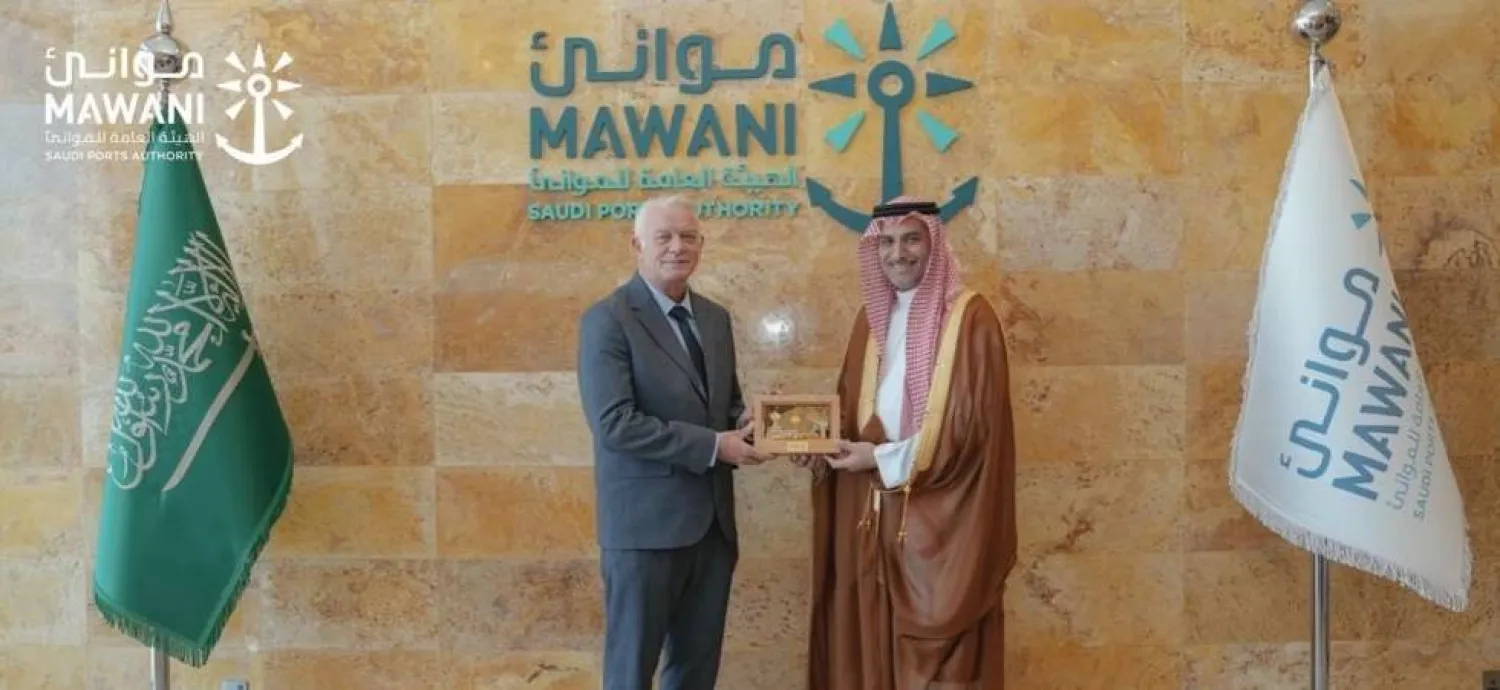
Saudi Arabia’s Mawani Grants Unified License to Global Shipping Line 

The initiative is part of Mawani's ongoing efforts to develop the maritime business environment, enable international companies to invest in the Saudi market, and increase competitiveness within the maritime sector. (Mawani)
TT

Saudi Arabia’s Mawani Grants Unified License to Global Shipping Line 

The initiative is part of Mawani's ongoing efforts to develop the maritime business environment, enable international companies to invest in the Saudi market, and increase competitiveness within the maritime sector. (Mawani)

The Saudi Ports Authority (Mawani) granted on Thursday a unified license to international shipping line Global Shipping Line (PIL), officially recognizing it as an authorized foreign investor to operate maritime agencies in the Kingdom's ports, reported the Saudi Press Agency.

The license is issued in accordance with the regulations outlined in the Maritime Agency Services, reflecting Mawani's commitment to boosting the efficiency of the maritime sector and improving the quality of operational services provided at ports.

It aims to attract global expertise and facilitate knowledge transfer within the Kingdom, aligning with international best practices in the maritime transport industry.

The initiative is part of Mawani's ongoing efforts to develop the maritime business environment, enable international companies to invest in the Saudi market, and increase competitiveness within the maritime sector.

PIL, which operates from its regional headquarters in Riyadh, manages operations in 29 countries.

The move strengthens the Kingdom's position as a crucial logistics hub, in line with the National Transport and Logistics Strategy, while attracting more international shipping lines. It reinforces Saudi Arabia's role as a key link among three continents.


IMF: Restoring Lebanon's Economic Growth Will Require Comprehensive Reforms

FILE PHOTO: A view of the International Monetary Fund (IMF) logo at its headquarters in Washington, D.C., US, November 24, 2024. REUTERS/Benoit Tessier//File Photo
TT

IMF: Restoring Lebanon's Economic Growth Will Require Comprehensive Reforms

FILE PHOTO: A view of the International Monetary Fund (IMF) logo at its headquarters in Washington, D.C., US, November 24, 2024. REUTERS/Benoit Tessier//File Photo

Lebanon's economy has shown resilience despite conflicts in the region, with tourism fueling a bit of a rebound, but restoring growth will require comprehensive reforms, the International Monetary Fund said on Thursday.

IMF spokeswoman Julie Kozack said the global lender remains engaged in complex discussions with Lebanese ‌authorities following their ‌request for an IMF-supported ‌program ⁠in March 2025. The ⁠IMF sent a staff mission to Beirut earlier this month, said Reuters.

The talks have been focused on two big issues, she said, citing the need for banking sector restructuring and a medium-term fiscal ⁠strategy. "The economy has shown resilience ‌despite the impact ‌of conflicts in the region. It has had ‌a bit of a rebound ‌on the back of tourism from the strong diaspora," Kozack said.

"But at the same time, really restoring strong and sustainable growth will ‌require a comprehensive set of reforms to tackle some of the ⁠structural ⁠weaknesses that have really hampered Lebanon's economic performance for many years," she said. Reforms also are needed to attract international support to help Lebanon address its substantial reconstruction needs.

Kozack said Lebanon needs an updated medium-term fiscal framework that includes concrete measures to mobilize additional revenues for much-needed capital spending, as well as a sovereign debt restructuring to restore debt sustainability.