Life Returns to Normal in Yemen’s Mokha

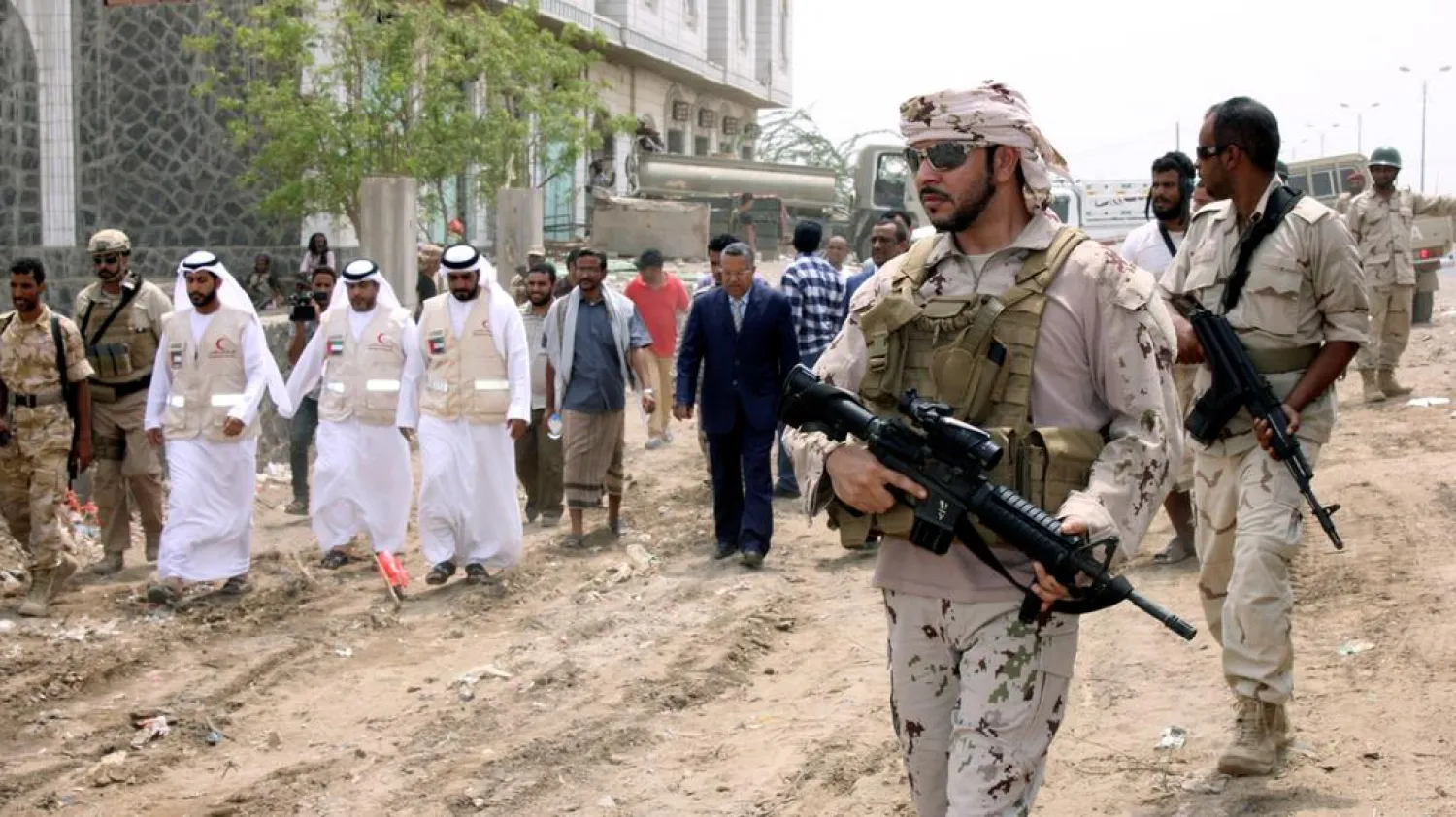
A UAE soldier escorts Yemeni Prime Minister Ahmed Obeid bin Daghr during a visit to the liberated Red Sea port city of Mokha on August 6, 2017. (Reuters)
TT

Life Returns to Normal in Yemen’s Mokha

A UAE soldier escorts Yemeni Prime Minister Ahmed Obeid bin Daghr during a visit to the liberated Red Sea port city of Mokha on August 6, 2017. (Reuters)

The people of Mokha described the reopening of fish restaurants and the end of electricity outages as predictors of happiness and the return to a normal life in the recently liberated historic port city on the Red Sea cost of Yemen.

In a visit to the city, where legitimacy forces regained control a few months ago, Asharq Al-Awsat documented some scenes in the areas visited on Sunday by Yemeni Prime Minister Ahmed Obeid bin Daghr for the first time since its liberation from Houthi militias.

During his trip to the port city, Daghr promised to return Mokha to a normal life and improve its services.

He also toured the headquarters of the Arab Coalition's administrative base in the southwest Yemeni city from where he called for more coordination between the leaders of the National Army, the Popular Resistance and the Coalition forces to advance on all areas still under Houthi’s control.

While Daghr toured the city on Sunday, the very high temperature did not prevent the young Yemeni Hamdi Ibrahim from arriving early to his work at a popular restaurant in downtown.

Ibrahim said the fish restaurant is once again packed with customers, a sign that life has returned to normal in the city, which was world famous for the production of a mocha variety of coffee beans.

“Since the liberation of Mokha, the port city witnessed the reestablishment of electricity supplies 24 hours a day, with the presence of a surplus,” said Haidara Mahyoub, another man in his thirties.

The popular markets of Mokha also saw renewed trade, despite a slight rise in the prices of fish, bread and vegetables. However, those high prices were still better than those of goods in Yemen’s temporary capital of Aden.


Saudi Foreign Minister, Pakistani Counterpart Review Relations, Discuss Latest Developments

Saudi Minister of Foreign Affairs Prince Faisal bin Farhan bin Abdullah (R) and Minister of Foreign Affairs of Pakistan Ishaq Dar (L). (Saudi Ministry of Foreign Affairs)
TT

Saudi Foreign Minister, Pakistani Counterpart Review Relations, Discuss Latest Developments

Saudi Minister of Foreign Affairs Prince Faisal bin Farhan bin Abdullah (R) and Minister of Foreign Affairs of Pakistan Ishaq Dar (L). (Saudi Ministry of Foreign Affairs)

Saudi Minister of Foreign Affairs Prince Faisal bin Farhan bin Abdullah held phone talks on Friday with Deputy Prime Minister and Minister of Foreign Affairs of Pakistan Ishaq Dar, the Saudi Press Agency reported.

During the call, the two sides reviewed the brotherly relations between the two countries, discussed the latest developments, and affirmed continued coordination and consultation in this regard.


Hamas Hopes Pressure Will Amend Gaza Disarmament Plan

Gunmen from Hamas’ Izz al-Din al-Qassam Brigades in Nuseirat refugee camp, central Gaza, February 2025 (EPA)
TT

Hamas Hopes Pressure Will Amend Gaza Disarmament Plan

Gunmen from Hamas’ Izz al-Din al-Qassam Brigades in Nuseirat refugee camp, central Gaza, February 2025 (EPA)

Hamas is pressing mediators to secure changes to a plan presented more than a week ago by Nikolay Mladenov, the High Representative of the “Board of Peace,” which calls for the full disarmament of Gaza without exception.

A Hamas delegation in Cairo is holding intensive talks with Palestinian factions and Egyptian officials, alongside meetings with representatives of the Board of Peace, including Mladenov, who has already met the group again, Asharq Al-Awsat has learned.

A senior Hamas official in Cairo said the movement has delivered a clear message to mediators: the proposal in its current form is unacceptable to Palestinians.

The official said amendments must bind Israel to complete the remaining terms of the first phase of the ceasefire agreement and commit to the second phase, particularly a full and immediate withdrawal, in line with the 20-point plan presented by US President Donald Trump during negotiations last September.

Hamas, they said, is still consulting internally and with other factions, with no final position yet on disarmament. Any response will depend on changes to the plan, especially guarantees of Israeli withdrawal and an end to what the official described as repeated ceasefire violations.

The official also accused Israel of restricting aid and goods, engineering shortages, tightening movement through the Rafah crossing, and using armed groups to search and humiliate travelers.

They said talks with mediators are focused on forcing revisions to the proposal.

A second Palestinian faction source said the plan is unjust and requires major changes, not only on weapons but also on withdrawal mechanisms, reconstruction, and governance, which he said must remain purely Palestinian without foreign oversight.

Linking disarmament to second-phase measures, including reconstruction limited to disarmed areas, amounts to blackmail, he said, adding that all Palestinian factions reject such conditions.

Reuters cited three sources, two Egyptian and one Palestinian, as saying Hamas has told mediators it will not discuss disarmament without guarantees of a full Israeli withdrawal from Gaza, as outlined in the Board of Peace proposal.

Hamas has also demanded an end to Israeli violations, full implementation of all provisions, and clarification over Israel’s expanding control in the enclave.

Two Hamas officials declined to comment, while the Israeli government and Board of Peace representatives did not respond to requests for comment, Reuters reported.

Israel insists on full disarmament of Gaza, including light and heavy weapons. The Board of Peace plan calls for dismantling tunnel networks and surrendering weapons in stages over eight months, with a full Israeli withdrawal only after Gaza is verified to be free of weapons.

Trump’s top Board of Peace envoy in the Middle East, Mladenov, said on X that all mediators had endorsed the plan and helped shape it before presenting it to Hamas.

"(The) international community has supported it, now is the time to agree to the framework for its implementation. For the sake of both Palestinians and Israelis, there is not time to lose," he said in the post.


Baghdad Says Faction Attacks are ‘Individual Attempts’

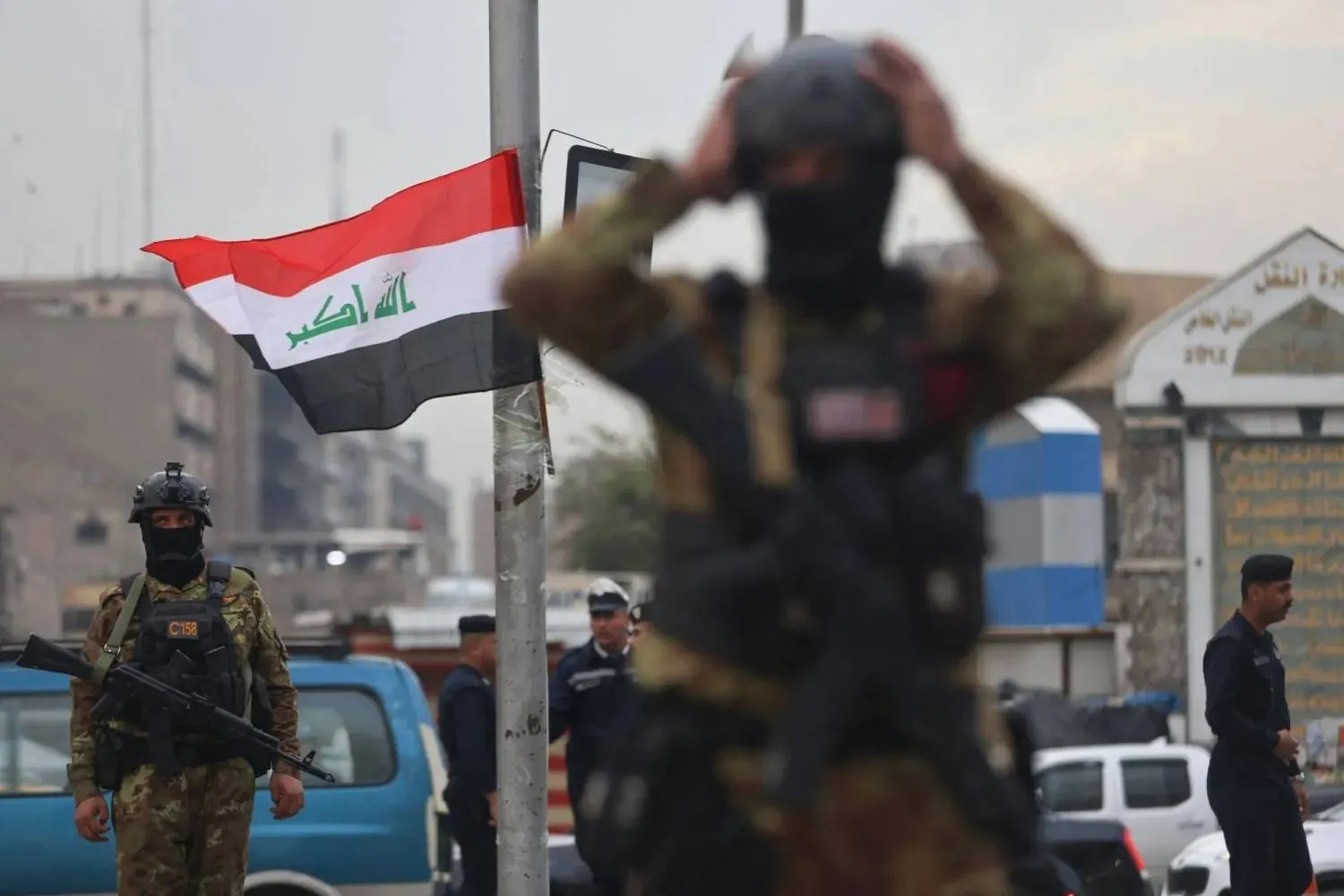
Members of the Popular Mobilization Forces stand guard during a pro-Iran rally in Tahrir Square on April 2, 2026 (AFP)
TT

Baghdad Says Faction Attacks are ‘Individual Attempts’

Members of the Popular Mobilization Forces stand guard during a pro-Iran rally in Tahrir Square on April 2, 2026 (AFP)

The Iraqi government moved on Friday to contain the fallout from an escalating regional war, after the US issued sharp warnings of possible attacks on its interests inside Iraq.

Prime Minister Mohammed Shia al-Sudani vowed to pursue those behind attacks and the kidnapping of foreigners, saying the law would be enforced “without red lines.”

The move comes as the confrontation between the US and Israel on one side, and Iran on the other, spills further into Iraq, through rocket and drone attacks and mounting humanitarian and economic strains, including an extended closure of Iraqi airspace.

Iraq’s foreign ministry, responding to a US Embassy statement urging American citizens to leave immediately, said Iraq “is not a party to the conflict and does not wish to be part of it,” reaffirming a policy of distancing itself from the crisis.

The embassy warned that “Iran-aligned militias” could carry out attacks in the near term, underscoring fears that the conflict could spread into Iraq.

The foreign ministry said such incidents were “individual attempts” that do not reflect state policy, adding that some actors may take unilateral steps “contrary to the state’s direction.”

It described the actions as “illegal” and said holding the state responsible amounted to “unjustified generalization,” as Iraq faces growing pressure given its geography and ties with both Washington and Tehran.

Security push

Sudani chaired a security meeting at the Interior Ministry’s intelligence headquarters with senior officials to address threats to diplomatic missions, vital facilities, and the kidnapping of foreigners.

He called for “maximum measures” to pursue those responsible and stressed that enforcing the law would face “no red lines,” regardless of the party involved. He also ordered stronger intelligence efforts and higher readiness as regional tensions intensified.

This comes as uncertainty persists over the fate of American journalist Shelly Kittleson kidnapped in Baghdad, with no group claiming responsibility, highlighting ongoing challenges in securing foreign interests.

Observers say Baghdad’s description of the attacks as “individual” aims to avoid direct responsibility and preserve a delicate balance in relations with Washington and Tehran.

Unclear strike

A security source said an airstrike hit a gravel plant in al-Rutba district in western Anbar province. “Unknown” warplanes carried out the strike early Friday, with no casualties or significant damage reported. Authorities have opened an investigation.

Local data showed the Kurdistan region has been hit by 614 rockets and drones since Feb. 28 through midday Friday.

The attacks killed 14 people and wounded 93, with Erbil accounting for 484 projectiles, Sulaymaniyah 103, Duhok 25, and Halabja two.

The figures underscore mounting pressure on the region as it remains within the wider theater of confrontation.

Displacement rises

A report by the International Organization for Migration said regional tensions have begun to drive internal displacement.

It recorded 90 families displaced in Sulaymaniyah province by March 24 due to fears of drone strikes.

Baghdad and Erbil also saw limited displacement, with residents leaving affected areas to stay with relatives or in rented homes in rural areas.

Iraq’s civil aviation authority extended the suspension of air traffic for seven more days, from 12 p.m. Friday to the same time on April 10, describing the move as a temporary precaution based on ongoing security assessments.

The extension reflects fears of a wider escalation or the use of Iraqi airspace in further military action, leaving Baghdad to navigate a difficult balance: preventing the country from becoming an open conflict arena while maintaining ties with regional and international powers.