Saudi Arabia, Iraq Stress Commitment to Cut Oil Production

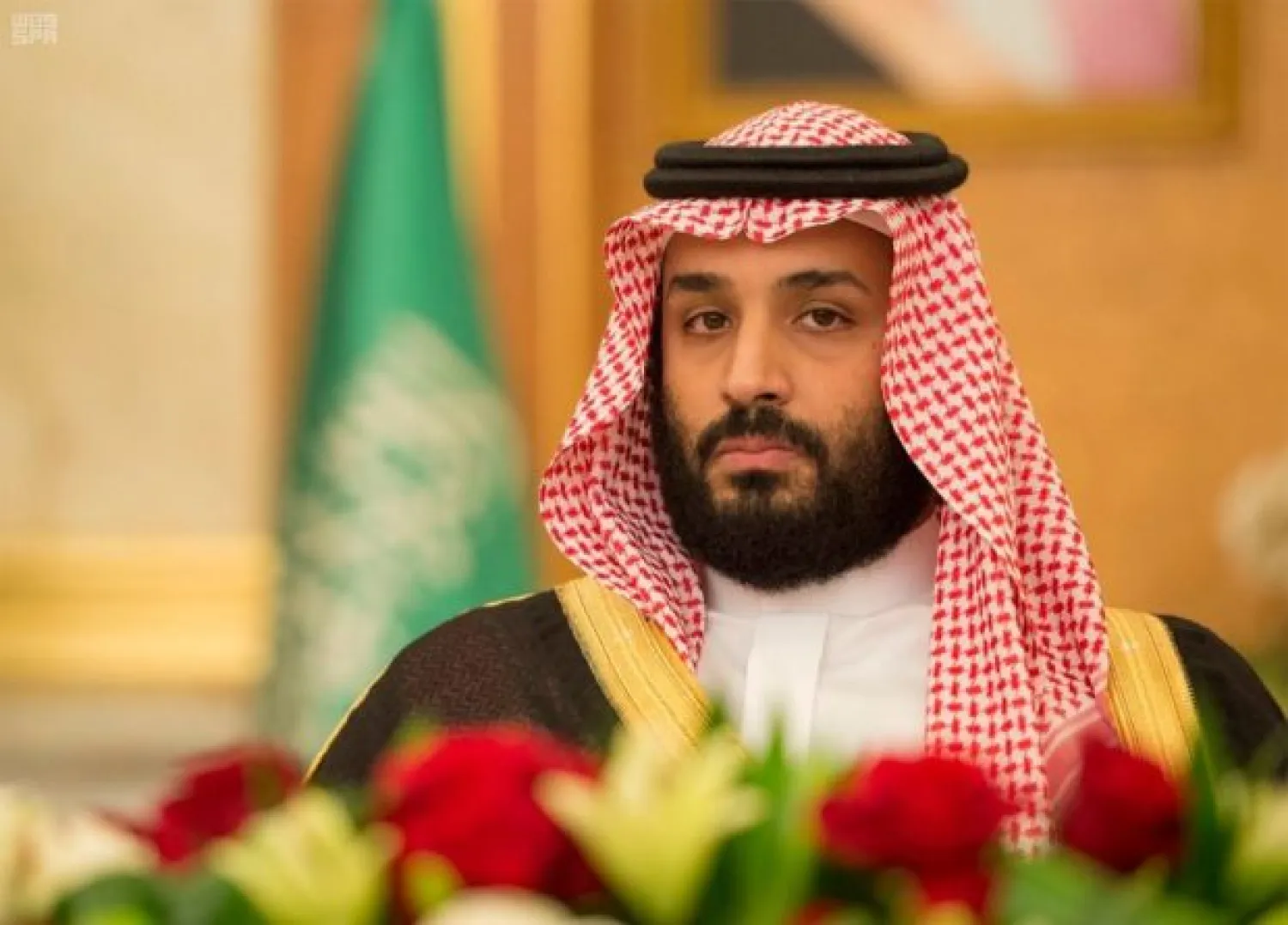
Vice Custodian of the Two Holy Mosques Prince Mohammed bin Salman chairs a cabinet session in Jeddah on August 8. (SPA)
TT

Saudi Arabia, Iraq Stress Commitment to Cut Oil Production

Vice Custodian of the Two Holy Mosques Prince Mohammed bin Salman chairs a cabinet session in Jeddah on August 8. (SPA)

Saudi Arabia and Iraq on Thursday reaffirmed their commitment to reduce their oil production under OPEC’s agreement to curb the global supply gap.

Iraq has stressed that there was no disagreement with Saudi Arabia’s proposals to reduce oil production.

In a statement, Saudi Energy Minister Khaled al-Falih said that talks with his Iraqi counterpart, Minister Jabar Ali Luaibi, have underlined the need to strengthen the level of commitment to the agreement led by OPEC to reduce the supply of crude.

He added that officials have reached an agreement to work towards ensuring the stability of world oil markets and consolidating the gains made in the recent period.

Al-Falih said that the Iraqi oil minister has reassured him about the strictness of the government and the oil ministry in Iraq towards the implementation of the agreement and that the level of Iraqi exports in recent months has remarkably decreased.

On the meeting between the two energy ministers and the Deputy Custodian of the Two Holy Mosques Prince Mohammed bin Salman, Al-Falih said: “We met with Prince Mohammed bin Salman, who stressed the Kingdom’s keenness to implement the initiatives launched during the meetings between the leaderships of the two countries.”

The Saudi crown prince met with Al-Falih and Luaibi on Thursday in Jeddah to discuss efforts to stabilize global oil prices. Talks also touched on joint projects in the economy and energy in particular, opening ports, launching direct flights as well as stimulating Saudi trade and investments.

In remarks to Asharq Al-Awsat newspaper, Al-Falih said: “The possibility of continued production cuts is on the table, and the door to extension of reduction has not been closed. If further actions are needed by the market, whether to extend or change production levels, they will be examined on time and agreed through 24 countries.”

The Saudi minister noted that the Kingdom would not take unilateral measures, but would seek the consensus of all the concerned countries to take the appropriate action at the right time.

“It is too early to predict what will happen following the first quarter of next year,” he stated.

In 2016, the Organization of the Petroleum Exporting Countries (OPEC) reached an agreement in Vienna to reduce daily oil production during the first half of 2017 in an effort to stabilize global oil prices.

The agreement was also supported by 11 non-OPEC states, which promised to jointly reduce oil output by 558,000 barrels per day. In May, the deal was extended by nine months.

Asked about the reduction of the Kingdom’s exports to 6.6 million barrels per day and its impact on the country, he said: “The process of investment in the oil sector in Saudi Arabia will not be affected at all by this temporary agreement; the Kingdom’s production capacity is maintained at 12 million barrels and we are investing to preserve this capacity.”

Al-Falih stressed that Saudi Arabia was committed to its leading role and welcomed the Iraqi endeavor to rebalance the markets and reduce stocks. He pointed out that data issued by the US has highlighted the success of the joint work between producing countries to reduce the stock to normal levels and to establish stability in the markets.


Hormuz LNG Traffic Hits Highest in October since Iran War Began

 Vessels at the Strait of Hormuz, as seen from Musandam, Oman, November 9, 2026. REUTERS/Stringer
Vessels at the Strait of Hormuz, as seen from Musandam, Oman, November 9, 2026. REUTERS/Stringer
TT

Hormuz LNG Traffic Hits Highest in October since Iran War Began

 Vessels at the Strait of Hormuz, as seen from Musandam, Oman, November 9, 2026. REUTERS/Stringer
Vessels at the Strait of Hormuz, as seen from Musandam, Oman, November 9, 2026. REUTERS/Stringer

The monthly ‌tally of laden liquefied natural gas (LNG) tankers exiting the Strait of Hormuz reached its highest in October since the US-Iran conflict disrupted shipping this year, vessel tracking data showed.

-Last month, 31 LNG tankers went through the key waterway, according to data from S&P Global Energy, of which 23 were loaded at Ras Laffan in Qatar and eight at Das Island in ‌the United Arab Emirates.

-October exports were the highest ‌since ⁠February when the war ⁠started and were up from September's corresponding tally of 23 vessels exiting the strait, the data showed.

-"We are looking at UAE back to pre-war transit levels and Qatar at over 30% of pre-war Hormuz transits," said Eric ⁠Yep, a senior principal analyst at S&P ‌Global Energy.

-Kpler's ‌shiptracking data showed 42 LNG cargoes were loaded in ‌October, up from 27 in September.

-The ‌changes come as Ras Laffan's October loadings reached 35 cargoes, surpassing 2.7 million tons, the highest since the war started, according to Kpler data. Qatar exported ‌nearly 6.2 million tons in February.

-Two of the vessels carrying LNG ⁠from ⁠Ras Laffan that exited the strait subsequently conducted ship-to-ship (STS) transfers off the coast of Oman's Sohar anchorage, Kpler data showed. The SC Prestige transferred LNG to the BW ENN Crystal Sky, which is now bound for South Korea.

-The Al Mafyar moved its LNG to Shandong Redwood and Ejnan, both of which delivered the cargoes to Pakistan.

-Das Island exports held steady at seven loadings in October, flat with September, Kpler data showed.


Gold Prices Ease as Focus Shifts to US Inflation Data

The People's Bank of China's gold holdings increased by 830,000 ounces in October (Reuters)
TT

Gold Prices Ease as Focus Shifts to US Inflation Data

The People's Bank of China's gold holdings increased by 830,000 ounces in October (Reuters)

Gold prices eased on Tuesday as investors locked in profits after bullion's more than 1% rally in the previous session and awaited US inflation data for clues on the Federal Reserve's policy path.

Spot gold was down 0.4% at $4,124.42 per ounce, as of 0618 GMT. US gold futures for December delivery rose 0.5% to $4,133.00.

"It's just ‌a bit of ‌churn in the market. Prices are ‌easing back ⁠from the highs ⁠reached during the US session, which could be attributed to profit-taking," said Kyle Rodda, senior financial market analyst at Capital.com.

"If we continue to see a situation where the US does not want to escalate the conflict in the Middle East and oil prices are reversing as a result, that'd be very ⁠beneficial for gold because of its impact on ‌the dollar, inflation and interest ‌rate expectations," Rodda said.

US President Donald Trump said on Monday he plans ‌to hold off on new military strikes against Iran for ‌the time being after appeals from countries in the region, including from Qatar's prime minister in White House talks. Oil prices fell on Tuesday, extending losses from the previous day, Reuters said.

Meanwhile, the US central bank ‌should move its monetary policy "with care" as it maps a response to inflation that remains its ⁠greatest risk, ⁠Richmond Federal Reserve President Tom Barkin said on Monday, adding he had no base case for what should be done at the December meeting.

Traders currently see an 84% chance that the US Fed will raise rates in December, according to CME's FedWatch tool.

Higher interest rates increase the opportunity cost of holding non-yielding bullion, reducing its appeal.

Investors now await the consumer price index report, due later in the day, followed by the producer price index data on Friday.

Among other metals, spot silver slid 0.3% to $53.22 per ounce, platinum steadied at $1,577.57 and palladium dropped 0.2% to $1,039.16.


Oil Falls as Trump Downplays Prospect of Escalation with Iran

Oil prices are set for a sharp weekly decline amid expectations of a de-escalation in the Iran war following election losses suffered by Trump's party (Reuters).
TT

Oil Falls as Trump Downplays Prospect of Escalation with Iran

Oil prices are set for a sharp weekly decline amid expectations of a de-escalation in the Iran war following election losses suffered by Trump's party (Reuters).

Oil prices fell on Tuesday, adding to the previous day's losses after US President Donald Trump downplayed the need for military action against Iran "at this point", easing fears of sustained supply disruptions in the Middle East.

Brent crude futures declined 70 cents, or 0.75%, to $91.88 a barrel by 0246 GMT, while US West Texas Intermediate (WTI) futures fell 78 cents, or 0.90%, to $86.07 a barrel. Both benchmarks had fallen 1% earlier in the session.

Brent settled down 5.85% in the previous session after sliding to its lowest since ‌August 31.

Trump said ‌on Monday he plans to hold off ‌on ⁠new military strikes against ⁠Iran for the time being after appeals from countries in the region, including from Qatar's prime minister in White House talks.

Trump, in a Reuters interview and a later appearance in the White House press briefing room, said he plans to keep up a naval blockade in the Strait of Hormuz for now.

"The market continues to prioritize President Trump's ⁠more conciliatory tone toward Iran since the midterms," ‌said Tim Waterer, chief market analyst at ‌KCM Trade.

"While attacks on shipping around the Strait of Hormuz are still occurring, ‌they have not escalated in a way that has forced a ‌fresh risk premium into the market," he said.

On the supply side, OPEC oil output rose in October, a Reuters survey found, led by gains in Saudi Arabia, Kuwait and Iraq despite continued constraints on exports.

Brent has retreated ‌about 22% from the six-month high of $118 it touched on October 30 as fears that ⁠Trump might step ⁠up attacks on Iran following the US midterms have eased, however there is still concern shipping could be disrupted.

"Despite the recent selloff, prices are unlikely to fall below $90 per barrel for Brent without more durable signs of de-escalation and a US-Iran deal," Gregory Brew, a senior analyst with Eurasia Group said in a note.

"At the same time, risks to shipping remain high, as Iran continues to attack vessels transiting the Strait of Hormuz," Brew said.

Elsewhere, Russian and Ukrainian officials planned to meet on Tuesday for two days of US-brokered talks — their first since February — after Trump suggested last week that a broad peace deal was possible in their 4-1/2-year-old war and could incorporate Europe's security.