
El-Mahboub Abdul Salam to Asharq Al-Awsat: Al-Turabi Was Shocked by Deputy’s Role in Mubarak Assassination Plot

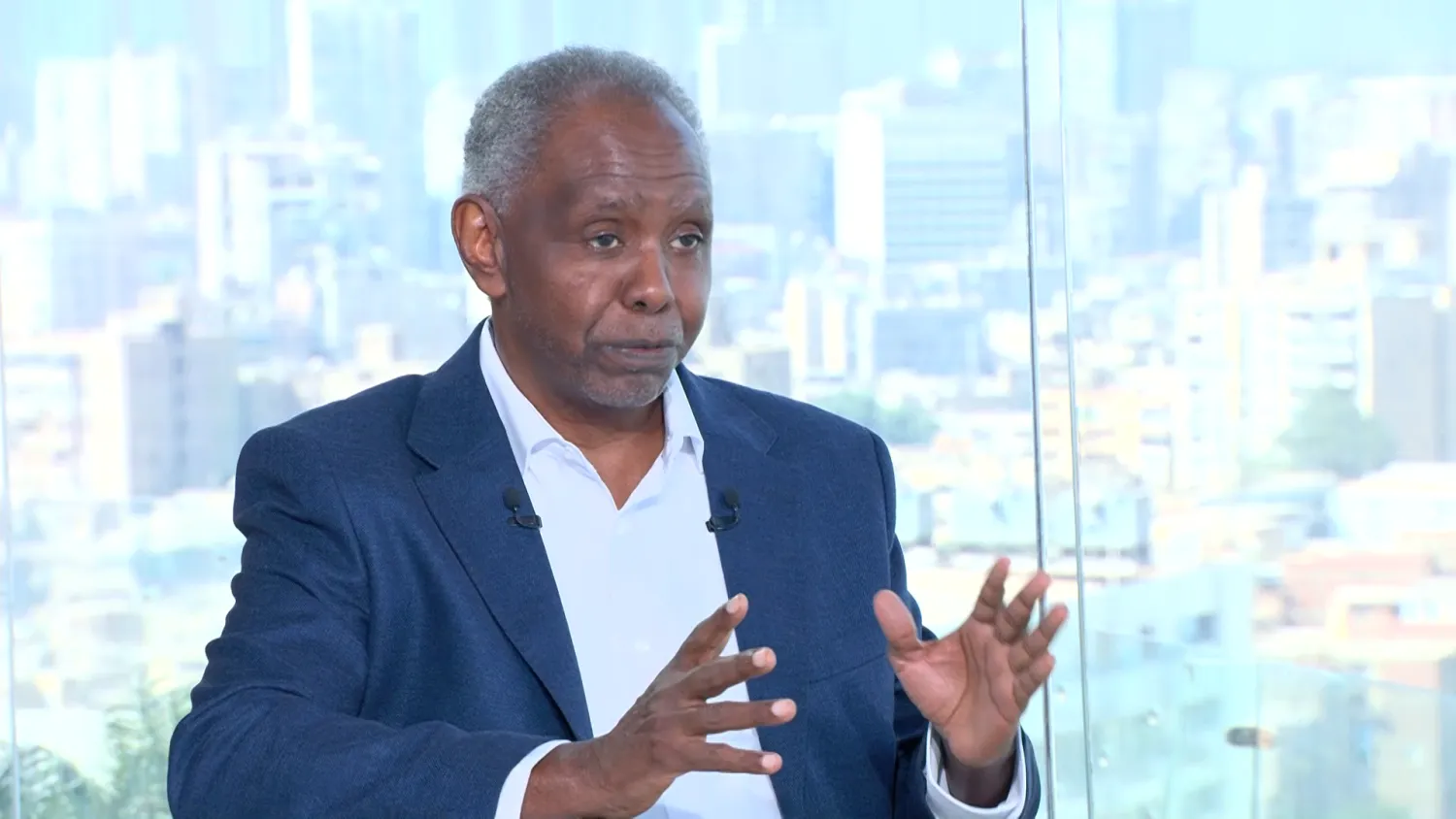
Dr. El-Mahboub Abdul Salam speaks to Asharq Al-Awsat. (Asharq Al-Awsat)
TT

El-Mahboub Abdul Salam to Asharq Al-Awsat: Al-Turabi Was Shocked by Deputy’s Role in Mubarak Assassination Plot

Dr. El-Mahboub Abdul Salam speaks to Asharq Al-Awsat. (Asharq Al-Awsat)

This happens only in thrillers. A religious leader summons an obscure army officer and meets him for the first time two days before a planned coup. He appoints him president with an unprecedented line, “You will go to the palace as president, and I will go to prison as a detainee.”

That is what happened on June 30, 1989. The officer, Omar al-Bashir, went to the presidential palace while security forces took Dr. Hassan Al-Turabi to the notorious Kober Prison along with other political leaders.

Al-Turabi’s “ruse” aimed to conceal the Islamic nature of the coup so that near and distant governments would not rush to isolate it. Intelligence agencies in neighboring states, including Egypt, fell for the deception and assumed that Bashir had seized power at the head of a group of nationalist officers. Cairo recognized the new regime and encouraged others to follow.

This happens only in stories. A young man landed at Khartoum airport carrying a passport that said his name was Abdullah Barakat. He arrived from Amman. One day he would knock on Al-Turabi’s office door, though Al-Turabi refused to see him.

Soon after, Sudanese security discovered that the visitor was a “poisoned gift,” in Al-Turabi’s words. He was the Venezuelan militant known as Carlos the Jackal, a “revolutionary” to some and a “notorious terrorist” to others.

He led the 1975 kidnapping of OPEC ministers in Vienna under instructions from Palestinian militant Dr. Wadie Haddad, an architect of aircraft hijackings. One night, and with the approval of Al-Turabi and Bashir, French intelligence agents arrived in Khartoum. Carlos awoke from sedatives aboard the plane taking him to France, where he remains imprisoned for life.

Bashir’s government was playing with explosives. In the early 1990s, it also hosted a prickly young man named Osama bin Laden, who after Afghanistan was seeking a base for training and preparation. He arrived under the banner of investment and relief work. Mounting pressure left bin Laden with no option but to leave.

This happens only in thrillers. The leadership of the National Islamic Front gathered with its top figures, Bashir, and security chiefs. The occasion was the assassination attempt against Egyptian President Hosni Mubarak in Addis Ababa.

Ali Osman Taha, Al-Turabi’s deputy, stunned attendees by admitting that Sudanese security services were linked to the attempt. Those present understood that he had been one of its sponsors. Neither the sheikh nor the president had prior knowledge.

After the attempt, some proposed killing the operatives who had returned from the Ethiopian capital to eliminate any trail that could incriminate the Sudanese regime. Al-Turabi opposed the assassinations. The impression spread that Bashir supported the killings and signs of a rift between him and Al-Turabi began to appear.

The split later became formal in what came to be known as the “separation” among Islamists. Power is a feast that cannot accommodate two guests. Bashir did not hesitate to send to prison the man who had placed him in the palace. Al-Turabi did not hesitate to back Bashir’s handover to the International Criminal Court. Al-Turabi tasted the betrayal of his own disciples. Disciples, after all, are known to betray.

This happens only in thrillers. Through Al-Turabi’s mediation, Osama bin Laden agreed to meet an intelligence officer from Saddam Hussein’s regime named Farouk Hijazi. The meeting produced no cooperation, but it became one of the early arguments George W. Bush used in 2003 to justify the invasion of Iraq.

Hijazi also met senior Sudanese security officials who later visited Baghdad and were warmly received, and it became clear that Ali Osman Taha was among Saddam’s most enthusiastic admirers.

Sudanese blood now flows like the waters of the Nile. Bodies scattered on the streets of el-Fasher are almost making the world forget the bodies buried under the rubble of Gaza. Hard men are pouring fire onto the oil of ethnic and regional hatreds. Making corpses is far easier than making a settlement, a state, or institutions.

Since independence, Sudan has been a sprawling tragedy. Because the present is the child of the recent past, searching for a witness who knows the game and the players, and journalism leads to meeting and interviewing the experienced politician and researcher Dr. El-Mahboub Abdul Salam.

For a decade he served as Al-Turabi’s office director. For another decade, he wrote some of Bashir’s speeches.

In recent years, his bold conclusions stood out, including that Sudan’s Islamic movement has exhausted its purposes, that it shares responsibility with other elites for the country’s condition, and that it erred in dealing with others just as it erred when it chose the path of coups, violence, ghost houses, and contributed to pushing the South outside Sudan’s map.

Abdul Salam does not hesitate to scrutinize Al-Turabi’s own mistakes and his passion for wielding power. I sat down for an interview with him, and this is the first installment.

Abdul Salam was a first-year university student when Al-Turabi’s ideas caught his attention. Al-Turabi then appeared different, moving outside Sudan’s traditional social divides. He also knew the West, having studied in Paris and London. In 1990, Abdul Salam became Al-Turabi’s office director until the end of that decade.

Abdul Salam recalled: “I am often asked this question, are you a disciple of Al-Turabi? I have told them more than once, yes, I am a disciple of Al-Turabi, a devoted one. But I graduated from this school and became an independent person with my own ideas and experiences, perhaps broader than those of the Islamic movement’s earlier leaders.”

Asked about when he discovered Al-Turabi’s mistakes and developed a critical sense toward his experience Abdul Salam said that it was “perhaps in 2011, with the ‘Arab Spring’, and the Egyptian revolution in particular and the change that took place in Egypt.”

A tense beginning

Abdul Salam said Al-Turabi’s relationship with Egyptian President Hosni Mubarak began on polite terms when they met in 1986 during an Al-Azhar conference on the Prophet’s biography. At the time, he recalled, Cairo was hostile or deeply wary of the Sudanese government under Sadiq al-Mahdi. The meeting, in his words, “was more courtesy than substance.”

According to Abdul Salam, relations later deteriorated sharply because of the deception surrounding the 1989 coup, then worsened further after the 1995 assassination attempt against Mubarak in Addis Ababa.

The Addis Ababa shock

Abdul Salam recounted that a major political meeting was convened after the failed attempt, held at the home of Ali Osman Mohammed Taha and attended by Al-Turabi, Bashir and all senior leaders. He said that during this gathering, both Bashir and Al-Turabi learned “for the first time” that Sudanese security services and Al-Turabi’s own deputy had been involved in the operation without informing them, describing the moment as a “huge shock” to the leadership.

He said Taha admitted at the meeting that the security services were involved and that it later became clear he himself was implicated. When a proposal emerged to kill the operatives returning from Ethiopia to erase evidence, Abdul Salam said Al-Turabi “rose in fierce opposition,” calling the idea outside both politics and Sharia. He cited Dr. Ali al-Haj as saying this moment “marked the beginning of the split.”

Egyptian intelligence reassesses Sudan

Abdul Salam describes how the Sudanese and Egyptian intelligence services eventually moved toward reconciliation. He said Omar Suleiman, Egypt’s intelligence chief, sent a message through French intelligence stating that the attack had been carried out by Egyptian Islamist groups.

According to Abdul Salam, Suleiman maintained that Sudan had only provided what he described as logistical support including money, shelter and weapons, rather than planning or executing the attack. This understanding, he says, prevented Egypt from responding harshly.

The communication opened a door for “major repair” of relations, Abdul Salam added, as Sudan began presenting itself as a pragmatic government after distancing itself from Al-Turabi.

After 1999: Rapprochement with Cairo

The reconciliation with Egypt and the region, Abdul Salam noted, took shape after 1999. He recalled that Taha’s visit to Cairo came after that date, followed by a visit from intelligence chief Salah Gosh. Foreign Minister Mustafa Osman regularly traveled to Egypt and maintained a friendship with his Egyptian counterpart, further improving ties.

The memorandum that shifted power

Abdul Salam described the turning point in relations between Bashir and Al-Turabi as the “Memorandum of Ten” in October 1998. During a major Shura gathering attended by hundreds of party, state and tribal leaders, ten members presented a document calling for the removal of Al-Turabi and the installation of Bashir as both head of state and leader of the movement.

He said the memorandum included reform language, but its essence was ending dual leadership. Bashir, according to Abdul Salam, “conspired with the ten” and accepted the proposal, calling the conspiracy “clear and very public.”

Abdul Salam recounted that Bashir wanted to confine Al-Turabi to a symbolic role and that some officers close to Bashir even asked Al-Turabi to remain as a spiritual figure who would bless decisions made elsewhere. “Al-Turabi would not accept this,” he stressed.

Al-Turabi’s influence and gradual reemergence

Reflecting on the early years of the Salvation regime, Abdul Salam said Al-Turabi authored all strategic decisions while the government handled daily business independently. He avoided public appearances during the first five years, he recalls.

Abdul Salam added that Al-Turabi gradually reemerged and became speaker of the National Assembly in 1996. He said Al-Turabi’s influence “never truly faded” because of his charisma, knowledge and strong presence, and diminished only when he was imprisoned after the split.

The 2001 Memorandum and South Sudan

Abdul Salam said Al-Turabi was arrested after the signing of a memorandum of understanding with the Sudan People’s Liberation Movement in February 2001. He confirmed he personally signed the document.

Asked whether he felt responsible for South Sudan’s independence, Abdul Salam rejected the suggestion. He said his position was clear and aligned with Sheikh Rached Ghannouchi, who argued that unity required suspending the hudud laws introduced under President Jaafar Nimeiri. Abdul Salam told southern leaders that unity should take precedence over maintaining those laws, adding that Islamic legislation, like all legal systems, is shaped by its psychological and historical context.

Complicated relationship

Abdul Salam described the relationship between Al-Turabi and his deputy Ali Osman Taha as complex and shaped by long-standing philosophical differences. He recalled a sharp split within the Islamist movement in 1968 when Taha aligned with figures who believed Al-Turabi had grown too dominant.

He cited Taha’s personal doctrine as follows: if an individual disagrees with the organization he sides with the organization, if the organization disagrees with the state he sides with the state, and if the state disagrees with Islam he sides with Islam. Al-Turabi, Abdul Salam said, did not operate that way and pursued his own ideas regardless of circumstance.

Abdul Salam recalled that during the Salvation regime, Ahmed Osman Maki had originally been prepared to succeed Al-Turabi but later moved to the United States. He stated that Maki’s strong charisma may have made him unsuitable as number two, while Taha excelled at concealing his emotions and functioning as deputy. He said the two leaders worked in outward harmony during the early years of the regime before deep differences surfaced later.

Abdul Salam added that Taha admired Saddam Hussein’s model of governance and believed Sudanese society was not ready for liberalism or pluralism.

The Arab Spring and the Islamic movement’s decline

According to Abdul Salam, the Arab Spring was “harsh on the Islamic movement.” Although the regional wave ended around 2012, Sudan’s version of it erupted in 2019. He said the uprising struck Islamists hard and reflected the real sentiment of the Sudanese street.

He argued that during its years in power, the Islamic movement held a barely concealed hostility toward civil society, youth, women and the arts. Sudanese intellectual and cultural life, he said, naturally opposed the regime’s long authoritarian rule. The revolution’s slogans of peace, freedom and justice were not part of the movement’s vocabulary, and over time the movement evolved into a posture “contrary to Sudanese society.”

The Communist Party’s influence

Abdul Salam said the Sudanese Communist Party helped shape opposition to the Salvation regime. After the execution of its leaders in 1971, the party underwent major transformation, and after the collapse of the Soviet Union it fully embraced liberalism. He remarked that many young Sudanese seeking freedom, justice and an expanded role for women found the Communist Party closer to their aspirations than the conservative Islamist movement.

Responsibility for Sudan’s political impasse

Abdul Salam rejected the narrative that Sudan’s decades of military rule make the military solely responsible for the country’s crises. He stressed that responsibility also lies with the civilian elite. Officers were part of this elite, and civilians who supported them in government shared responsibility. Sudan’s civilian parties, he argued, lacked clear programs to address longstanding distortions inherited from the colonial era.

One of Abdul Salam’s most sensitive moments with Al-Turabi occurred on the eve of the Islamist split. He said he personally succeeded in arranging a meeting between Al-Turabi and Bashir after months of estrangement, trying to avoid complete rupture. Bashir proposed turning the party conference into a political showcase while setting aside differences. Al-Turabi agreed, but according to Abdul Salam, disagreements reappeared by the end of the day.

Writing Bashir's speeches and choosing a side

Abdul Salam described his relationship with Bashir as very good and said he wrote the president’s speeches from early 1990 until the late 1990s. The speeches reflected the movement’s overall positions.

When the split occurred, Abdul Salam aligned with Al-Turabi not on personal grounds, but because he shared his positions on democracy, public freedoms, federal governance and adherence to agreements with the South.

Abdul Salam said the relationship between Al-Turabi and Bashir resembles other regional cases involving a sheikh and a president only to a limited extent. Bashir was originally a member of the Islamist movement led by Al-Turabi and obeyed him even after becoming president.

The split emerged naturally once the visible authority of the presidency clashed with the hidden authority of the movement, “which was the one truly governing,” he said.

Obeidat to Asharq Al-Awsat: I Left Saddam Meeting Sensing he Misread Threat

There were exceptional communication channels between Saddam Hussein and King Hussein (AFP)
TT

Obeidat to Asharq Al-Awsat: I Left Saddam Meeting Sensing he Misread Threat

There were exceptional communication channels between Saddam Hussein and King Hussein (AFP)

In the final part of his interview with Asharq Al-Awsat, former Jordanian prime minister Ahmad Obeidat, who died earlier this month, recounted in detail his meetings with Iraqi President Saddam Hussein and Syrian President Hafez al-Assad, and disclosed an alleged attempt by Rifaat al-Assad to assassinate former Jordanian prime minister Mudar Badran.

Obeidat began with his impression of Saddam following a 2001 meeting in Baghdad. He said he left convinced that the Iraqi leader “did not accurately understand the reality of the international situation, the trap that had been set for Iraq, nor the magnitude of the danger surrounding the country and what was coming.”

He also described how strong ties between the late King Hussein of Jordan and Assad deteriorated as the Iran-Iraq war intensified. “Exceptional channels of communication” opened between King Hussein and Saddam Hussein, he said, and those channels “thwarted Assad’s efforts to build an axis against Iraq.”

Obeidat further revealed that Rifaat al-Assad “sent a group to assassinate Mudar Badran” on the pretext that Jordan was harboring the Muslim Brotherhood and hosting training camps. “All of that was false,” he said, adding that the attempt was foiled and those involved were arrested.

Turning to the file of the Palestinian militant Abu Nidal, who split from Fatah, Obeidat recalled how Abu Iyad once “protected him from arrest,” before “the tables were turned,” in a reference to Abu Iyad later becoming one of Abu Nidal’s victims.

Asked about his history with Abu Nidal, Obeidat described him as “not an easy adversary.” Abu Nidal attacked Jordanian embassies and diplomats, he said, and was responsible for killing two or three ambassadors. He was also behind the assassination of the son of former prime minister Saeed al-Mufti, a diplomat at the Jordanian embassy in Bucharest, and wounded two ambassadors in separate operations.

When Obeidat served as prime minister in 1983-1984, Abu Nidal assassinated Fahd al-Qawasmi, the mayor of Hebron, during a visit to Amman.

Abu Nidal, Obeidat said, worked at different times for Syrian, Iraqi and Libyan intelligence services. “He was ready to work for the benefit of any intelligence service in any country and allowed them to control him,” he said. Syrian, Iraqi and Libyan intelligence used him more than once, and the Iraqis deployed him against Fatah in an effort to create splits and internal problems.

Abu Iyad had shielded Abu Nidal from detention when Fatah sought to arrest him, Obeidat said. “But in the end the tables were turned,” and Abu Iyad became one of his victims. It was said, he added, that Abu Iyad came to believe that Abu Nidal had begun working for “Zionist intelligence.”

As for Jordan’s response when its diplomats were targeted, Obeidat said that at the time he was prime minister and did not follow the security file closely due to the pressures of government. He was aware, however, that contacts were made to reach a deal to halt Abu Nidal’s operations in Jordan. “Their operations did indeed stop,” he said.

On coordination with major powers, Obeidat said Jordan cooperated with “any party that possessed information of interest to us,” except the Zionists. Relations with Syrian intelligence fluctuated between competition and brief periods of cooperation, after earlier periods of no contact.

He then recounted his 1979 meeting with Hafez al-Assad over accusations that Jordan was training members of the Syrian Muslim Brotherhood. Acting on instructions from King Hussein, Obeidat, then intelligence chief, and Prime Minister Mudar Badran met Assad to address the issue.

“We made clear to Hafez al-Assad that it was impossible for us to have camps training the Syrian Muslim Brotherhood,” he said. Jordan informed Assad that such camps were in Iraq and that Syrians were traveling via Jordan to Iraq using forged passports. Without lists of those names from Damascus, Jordan could not act.

“This is a Syrian problem, not a Jordanian one,” Obeidat said he told Assad. Jordan would not allow armed activity on its soil but needed Syrian intelligence cooperation and names to intervene effectively.

He acknowledged that tensions were aggravated when Jordan’s Muslim Brotherhood leader, Mohammed Abdul Rahman Khalifeh, brought Syrian cleric Saeed Hawwa to meet King Hussein without informing the royal court or intelligence services. The move surprised the palace and embarrassed the intelligence service.

After investigating, Jordan discovered that a group of Syrians had entered the country, most intending to travel onward to Iraq. To prevent escalation with Damascus, Jordan asked them to leave, allowing limited humanitarian cases time to arrange residence elsewhere.

Obeidat described Assad as “a good listener” who did not comment during their meeting but later instructed Syrian intelligence to cooperate with Jordan. His dealings with Syrian intelligence chief Ali Duba were limited but manageable.

He dismissed suggestions that Ahmed Jibril was behind operations against Jordan, saying the more serious problem involved Rifaat al-Assad. Rifaat’s alleged plot to assassinate Badran was uncovered, with suspects arrested at the border and in an apartment in Amman’s Sweileh district. They possessed weapons and explosives and were tried before Jordan’s State Security Court.

In an earlier incident, Obeidat said, members of Rifaat’s force assassinated a Syrian political refugee in Amman.

Asked about challenges upon assuming the premiership, Obeidat cited financial strain. Arab and Gulf aid declined to near zero, while Jordanian workers returned from the Gulf after losing their jobs, placing heavy pressure on living conditions.

Security challenges included Abu Nidal’s activities. At the same time, relations with the Palestine Liberation Organization improved. King Hussein allowed the Palestinian National Council to convene in Amman in 1984, triggering a political crisis with Syria.

Several attempted attacks targeting Jordan and council members were foiled, Obeidat said. Syria exerted pressure to prevent attendance, but Jordan ensured the session’s success. Supporting the PLO after its recognition as the legitimate representative of the Palestinians became, in his words, a Jordanian necessity to prevent a political vacuum.

Obeidat described a later meeting with Yasser Arafat as cordial after earlier strained ties, and said he also met Abu Iyad at the royal court during the council’s session. He met George Habash later in Beirut, outside office.

He then revisited the 1968 Battle of Karameh. Fighters from Fatah “stood firm and fought bravely,” he said, though many were killed. Some trainees were left without weapons or guidance despite warnings that battle was imminent, leading to heavy casualties.

King Hussein, he said, “was very resolute” during the battle.

On his relationship with the monarch, Obeidat said King Hussein “respected those who respected themselves.” Their relationship cooled after the 1994 Wadi Araba peace treaty, which Obeidat opposed.

Jordanian intelligence, he stressed, did not conduct operations in Beirut in response to the assassination of Prime Minister Wasfi al-Tal, though he noted military intelligence operated separately.

Obeidat listed foreign leaders he met as prime minister, including Assad, Egyptian President Hosni Mubarak and Saddam Hussein. Meetings with Britain’s queen, Austria’s president and Spain’s king were protocol visits.

He described relations between King Hussein and Assad as once “good, frank and continuous,” with almost weekly contact, before shifting during the Iran-Iraq war as close ties formed between King Hussein and Saddam.

Recalling his 2001 Baghdad visit, Obeidat said Saddam spoke at length about sanctions and support for Palestinians. He reproached Jordan over its peace treaty and alluded to Hussein Kamel’s defection. Obeidat insisted Jordan had no role in that defection or in his return.

When Iraqi officials called for cutting oil supplies to Jordan, Obeidat told Saddam that such a move would effectively besiege the Jordanian people. Saddam responded, “I will never abandon the Jordanian people under any circumstances.”

In Obeidat’s final reflection, the meeting left a lasting impression. From Saddam’s remarks that day, he said, he concluded that the Iraqi leader did not fully comprehend the scale of the international threat facing his country, a judgment he carried with him long after the encounter.


Obeidat to Asharq Al-Awsat: Gaddafi Tried to Assassinate King Hussein with Missile Given to Wadie Haddad

King Hussein and Moammar Gaddafi holding talks on the sidelines of an Arab summit in Cairo in 1970 (AFP).
TT

Obeidat to Asharq Al-Awsat: Gaddafi Tried to Assassinate King Hussein with Missile Given to Wadie Haddad

King Hussein and Moammar Gaddafi holding talks on the sidelines of an Arab summit in Cairo in 1970 (AFP).

In the second installment of his interview with Asharq Al-Awsat, former Jordanian prime minister and intelligence chief Ahmad Obeidat recounts details of a missile plot to assassinate King Hussein, which he says was backed by Muammar Gaddafi and carried out through operatives linked to Wadie Haddad, head of the external operations arm of the Popular Front for the Liberation of Palestine.

Obeidat, who also served as head of intelligence and as minister of interior and defense, revisits the confrontation between Israeli forces, the Jordanian army, and Palestinian guerrillas (fedayeen) in the border town of Karameh in March 1968, asserting that the Jordanian army “decided the battle,” but suffered a “moral defeat amid the fedayeen’s claims of victory.”

Obeidat died earlier this month. The interview was recorded before the “Al-Aqsa Flood,” whose aftermath delayed its publication. Below is the text of the second installment.
 

King Hussein inspects an Israeli tank left behind by occupying forces during the Battle of Karameh (Getty)

“Battle of Karameh”

Obeidat calls Karameh “a pivotal point of utmost importance,” especially for an army still reeling from the 1967 defeat and its withdrawal from the West Bank.

“The army lived the bitterness of that defeat,” he says. “It felt a moral, national, and pan-Arab responsibility.”

Karameh, he argues, offered a chance to restore the army’s fighting morale and reclaim some of its lost dignity.

“It was the army that settled the battle,” Obeidat says.

He credits Jordanian forces with thwarting Israeli attempts to build crossing bridges, destroying their vehicles on Jordanian soil and forcing, for the first time in Israel’s history, a request for a ceasefire. “The late King Hussein refused,” he adds.

Israel, he says, did not acknowledge a fifth of its casualties. Helicopters were evacuating the wounded who were “dripping with blood.”

He singles out artillery observation officers who advanced to the closest possible positions, relaying precise coordinates even as they effectively marked their own locations for shelling.

“The Jordanian soldier would identify his position near the Israeli army to be shelled,” he says, describing a willingness to die in order to restore dignity after the 1967 setback.

He says the declaration of “armed struggle” effectively erased the army’s role, presenting Palestinian fedayeen as the victors over Israel. “They monopolized the victory and ignored the army’s role entirely,” Obeidat says. “We emerged with a moral defeat in the face of their claims.”

He alleges that hundreds of millions of dollars in donations collected afterward, much of it going to Fatah, did not reach the Palestinian people but went to organizations and their leaders.

When the army entered Amman in September 1970, Obeidat says, it aimed to end what he describes as chaos: armed displays, roadblocks, arrests of soldiers on leave and interference in courts.

"When the army entered and began expelling the fedayeen from Amman, it swept through everything in its path. Even my own home, which I had recently rented after my abduction incident and which was close to the army’s command headquarters, was entered by the Jordanian army to search for fedayeen, while my family was inside the house at the time of the raid. My wife told them that her husband was an intelligence officer, but the Jordanian soldier replied, “Don’t lie.”

Obeidat says they did not leave the house until she contacted him, at which point he assigned one of his officers, the commander of an intelligence company, to speak with the army.

"Only then did they leave the house. The point is that the army swept areas without distinguishing between Jordanian and Palestinian; it wanted only to restore control over security. All of this forced me to send my family to my parents’ home in Irbid, in the north of the Kingdom."

He later describes what he calls a “state within a state,” extending from the Jordan Valley to Amman, after armed groups asserted authority over courts, roads, and civilian life.

On Syria’s intervention, Obeidat says Syrian forces entered northern Jordan flying Palestine Liberation Organization flags.

He later learned the decision was political, taken by the Baath Party, and that then-Defense Minister Hafez al-Assad complied reluctantly before Syrian tanks withdrew.

Iraq, he says, did not intervene. Obeidat affirms that he was told by Iraqi officials that neither the Iraqi state nor its forces intended to participate in any operation aimed at ending the Hashemite monarchy in Jordan.

According to one account, Iraqi leaders did not want to shoulder the political and diplomatic burden of the Palestinian issue or risk an uncalculated adventure.

He recounts another account, which he says he cannot adopt, according to which the operations command in the army was handled by a Pakistani figure. Under this account, Zia ul-Haq was receiving operational communications and sending messages that caused confusion among Iraqi and other forces, leading them to believe they would confront powerful strike units, prompting them to remain in a state of alert rather than engage.

He also recalls a meeting in which Palestinian figures, including Abu Iyad, reproached Iraqi President Ahmed Hassan al-Bakr. Al-Bakr replied: “We are a state with one life. If we make a fundamental mistake, we end. You are like cats with seven lives.”

As director of intelligence, Obeidat says he dealt directly with operations attributed to Haddad.

Between 1975 and 1977, he says, a missile was sent to Jordan with a group led by a Jordanian, Brik al-Hadid, affiliated with the PFLP. The target was King Hussein’s aircraft.

“The intention was to strike the plane, with Gaddafi’s knowledge and approval,” Obeidat says.

Jordanian intelligence monitored the group from the outset and later arrested its members. The king’s aircraft departed Marka military airport as scheduled but flew in the opposite direction to its planned route as a precaution, using jamming devices against any incoming missiles.

When confronted by Mudar Badran, then head of the Royal Court, Gaddafi denied knowledge. “I have no information,” Obeidat quotes him as saying.

Obeidat describes the aircraft hijackings orchestrated by Haddad as “the straw that broke the camel’s back,” contributing to the army’s intervention.

He says Jordanian intelligence had infiltrated Fatah and monitored its leaders, including Abu Iyad and Abu Yusuf al-Najjar.

In mid-1972, intelligence learned that Abu Dawood and a group were planning to enter Jordan from Baghdad to seize the Jordanian cabinet during a session and hold ministers hostage in exchange for the release of detained Fatah members.

The group crossed in three Mercedes cars, dressed in traditional Arab attire, with weapons concealed inside the seats and forged passports in hand. They were arrested at the border after a thorough search.

Obeidat rejects claims by Abu Iyad that Abu Dawood was tortured, insisting that “not a single hair on his head was touched,” and says Abu Dawood confessed only after realizing the operation had been fully uncovered.

Later, King Hussein met Abu Dawood’s parents, who pleaded for clemency. The king read the full confession and then met Abu Dawood himself. He ultimately ordered his release, honoring a promise he had made to Abu Dawood’s parents.

In Obeidat’s view, Abu Dawood was affected by the king’s treatment of his parents and “did not pose any future threat to Jordan.”

Obeidat describes a direct relationship between King Hussein and the General Intelligence Department.

The king met with officers regularly, not only to hear briefings but also to hear their personal views. 

Obeidat says he would submit reports to the prime minister and also meet with the king. When addressing the king, however, it was sometimes necessary to elaborate verbally on certain issues so that such information would not circulate among staff. 

When he was asked to present a security briefing before the king, the late King Hussein would summon Crown Prince Hassan. The king’s advisers would also attend, along with senior army commanders, the public security leadership, the head of the Royal Court, and the prime minister. The briefing of the security report would include an explanation of the security situation and any external or internal challenges.


Obeidat to Asharq Al-Awsat: Mystery Sniper Killed Wasfi Tal

Ahmad Obeidat during the interview with Asharq Al-Awsat's Editor-in-Chief Ghassan Charbel in Amman. (Asharq Al-Awsat)
TT

Obeidat to Asharq Al-Awsat: Mystery Sniper Killed Wasfi Tal

Ahmad Obeidat during the interview with Asharq Al-Awsat's Editor-in-Chief Ghassan Charbel in Amman. (Asharq Al-Awsat)

Former Jordanian Prime Minister Ahmad Obeidat, who died earlier this month, was both a key player and a witness to sensitive chapters in his country’s history.

Obeidat began his career in the 1970s as an assistant director of intelligence, later serving as head of the General Intelligence Department until 1982. At the height of the Palestinian-Jordanian confrontation, he was abducted by the Popular Front for the Liberation of Palestine before the events of September 1970.

He also served for two years as interior minister before King Hussein appointed him prime minister in early 1984, a post he held until April 1985, concurrently serving as defense minister.

For more than 15 years, Obeidat remained at the center of decision-making. He later took on roles drawing on his legal background, from chairing the Royal Commission that drafted the National Charter in the early 1990s to serving in human rights and judicial positions, most recently as head of the board of trustees of the National Center for Human Rights until 2008.

Weeks before Oct. 7, 2023, the day of the Al-Aqsa Flood Operation, Asharq Al-Awsat met Obeidat in Amman. The interview had been scheduled for publication in October 2023, but the major developments that followed led to its postponement, particularly as Obeidat addressed contentious issues, notably Jordanian-Palestinian relations.

In the first part of the interview, Obeidat revisits his formative years, when his political and professional journey began as a law student in Baghdad on the eve of the July 14, 1958 revolution, before returning to Iraq after the fall of the monarchy amid sweeping regional transformations.

The account moves to his early professional life in Jordan, from a brief stint in legal practice to joining the Public Security Directorate, then serving in the Political Investigations Office, which formed the nucleus of organized intelligence work. It concludes with a detailed narrative of the establishment of the General Intelligence Department in 1964, its early structure and founding members, at a time when the Jordanian state was rebuilding its institutions in an intensely turbulent region.

Asked where he was when the 1958 revolution broke out in Iraq, Obeidat said he had completed his first year in law studies and returned to Jordan for the summer break.

“While I was in Irbid, news arrived of the July 14 revolution in Iraq that overthrew the monarchy. After the summer break ended, I went back to Baghdad, where a republican government under Abdul Karim Qassem had taken power,” he recalled.

The return was not easy. “We faced difficulties on the road. The border between Jordan and Iraq was nearly closed, so we had to return via Damascus and then through desert routes to Baghdad. It was an exhausting journey,” he added.

Obeidat left Baghdad in 1961 after completing his final exams. “On the last day of exams in the fourth year, I went home, packed and returned to Jordan the same day. The border between Baghdad and Amman had reopened.”

Among his contemporaries at law school was Saddam Hussein, who studied in the evening section. Obeidat said he saw him only once by chance. “He was with others, one of whom later became a governor,” he revealed.

He returned to Baghdad again in 1983 as Jordan’s interior minister to attend a conference of Arab interior ministers, more than two decades after graduating. There, he met his Iraqi counterpart, Saadoun Shaker. “It was an ordinary relationship,” Obeidat said, describing the ties as largely ceremonial.

From customs to intelligence

After returning to Jordan in 1961, Obeidat initially considered practicing law. But limited opportunities in Irbid and his family’s financial constraints led him to seek public employment.

He was appointed to the Customs Department in Amman, where he worked for several months before joining the Public Security Directorate in April 1962 as a first lieutenant following three months of training at the police academy.

At the time, there was no separate intelligence agency. Public Security included a branch handling general investigations. Soon after, the Political Investigations Office was formed, staffed by legal officers from the army and Public Security, including Mudar Badran and Adeeb Tahaoub from military justice, alongside Obeidat and Tariq Alaaeddin from Public Security.

The office handled cases referred by security and official bodies, including military intelligence and the Royal Court. After reviewing its work, the late King Hussein ordered the establishment of a legally grounded intelligence body. The General Intelligence Law was issued in 1964, formally creating the department, explained Obeidat.

Mohammad Rasoul Al-Kilani became its first director, followed by Mudar Badran, then Nadhir Rashid. Al-Kilani briefly returned before Obeidat assumed the post, succeeded later by Tariq Alaaeddin.

The shock of 1967

Recalling the 1967 war, Obeidat described it as “a defeat, not a setback. A military, political, psychological, and social defeat in every sense.”

He said there was no institutional intelligence view on Jordan’s participation. “The political opinion of a figure of Wasfi Tal’s stature was that entering the 1967 war was a mistake. He was not in office, but he remained close to the king and influential,” said Obeidat.

According to Obeidat, King Hussein believed Israel would occupy the West Bank whether Jordan participated or not.

“Participation was a gamble that might succeed or fail. The catastrophe was discovering that the Egyptian air force had been destroyed within half an hour,” he added.

Despite the bitterness, he said: “We did not fear for the regime, but we sought to contain public anger and absorb the shock.”

September and the assassination of Wasfi Tal

Obeidat first met Yasser Arafat after the events of September 1970. He confirmed that Arafat left Amman with an official Arab delegation to attend the Cairo summit and returned immediately afterward.

He recalled being informed mid-flight of the death of Egyptian President Gamal Abdel Nasser. “King Hussein was deeply affected.”

On the assassination of Prime Minister Wasfi Tal in Cairo, Obeidat said the gunmen who confronted Tal at the hotel entrance were not responsible for the fatal shot. “The fatal bullet came from behind, from a sniper in another unseen location. To this day, the sniper has not been identified,” he added.

He rejected the notion that Tal had been reckless. “Wasfi was not a gambler. He had a distinct political project,” he stressed.

Obeidat said the Black September Organization accused Tal of ordering the expulsion of fedayeen from forested areas in Jerash and Ajloun. He denied that Tal was directly responsible, saying the clashes began after fedayeen attacked a police station and killed officers, prompting a spontaneous army response.

Abduction without interrogation

Before September 1970, Obeidat was abducted by the Popular Front for the Liberation of Palestine while serving as assistant intelligence director.

Armed vehicles stopped his car as he was leaving his home in Jabal Al-Taj with his family. He and his brother-in-law were taken to the Wehdat camp. “We were treated politely. We drank tea. No one asked me a single question,” he recalled.

After several hours, he was driven to another house in Amman and later returned home. The next morning, members of Fatah took him briefly to one of their offices, only to release him on foot without explanation.

“Not a single question was asked,” Obeidat said. “It was bewildering.”

He resumed his duties after ensuring his family’s safety. “At the time, intelligence, like any official institution, was threatened and targeted,” he said, reflecting on one of the most volatile periods in Jordan’s modern history.