
Saudi-Spanish relations have entered a new phase of institutional cooperation following the signing of the Strategic Partnership Agreement in Madrid last May. The agreement established a permanent framework to expand economic, investment and technological cooperation while creating a high-level mechanism to oversee joint projects.
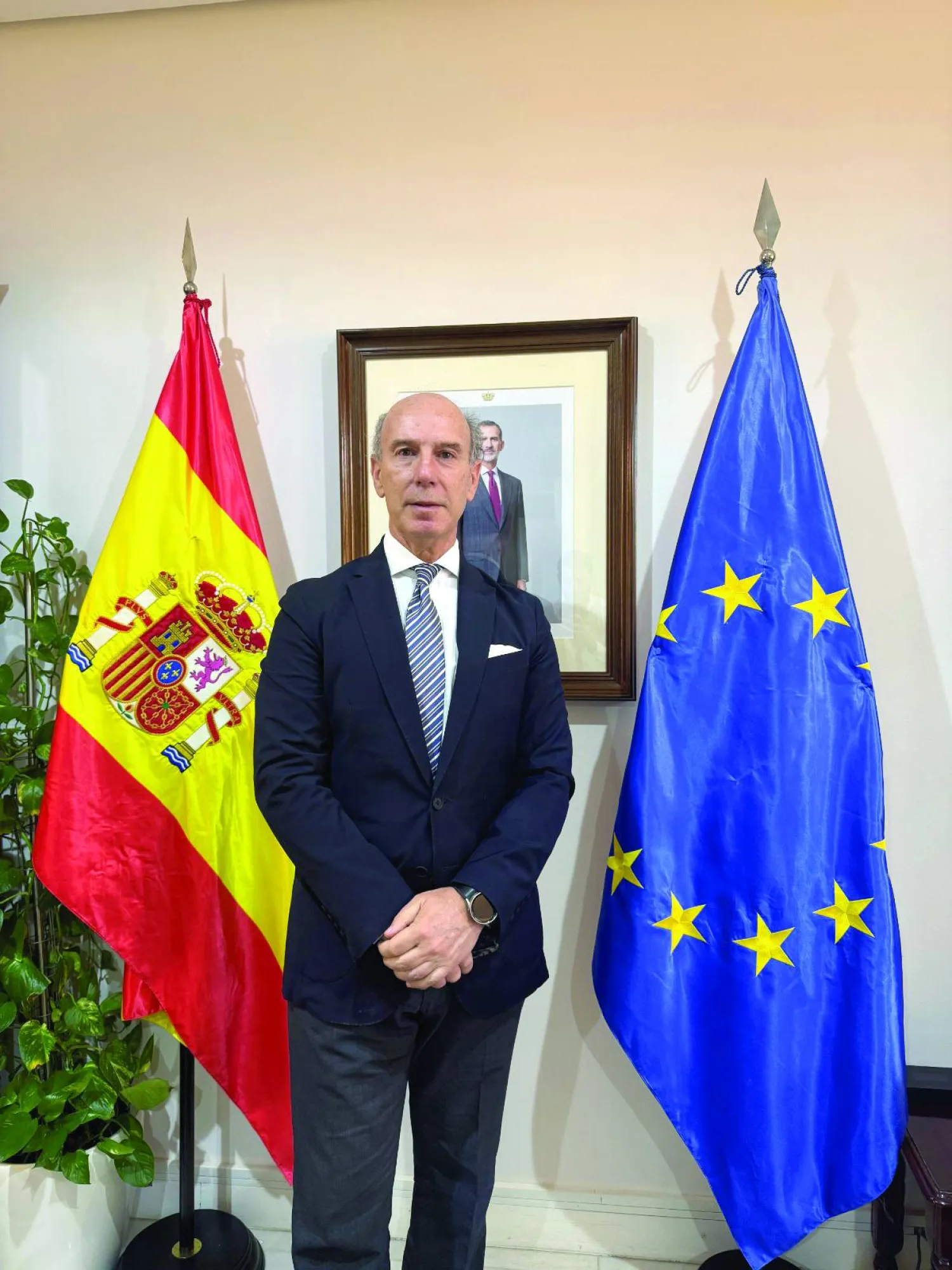
In an interview with Asharq Al-Awsat, Spain's Ambassador to Saudi Arabia, Javier Carbajosa, revealed that two new Memorandums of Understanding in the fields of economy and transport have been finalized, alongside additional cooperation frameworks that remain under negotiation. He stressed that bilateral relations are moving toward a comprehensive strategic partnership aligned with the objectives of Saudi Vision 2030.
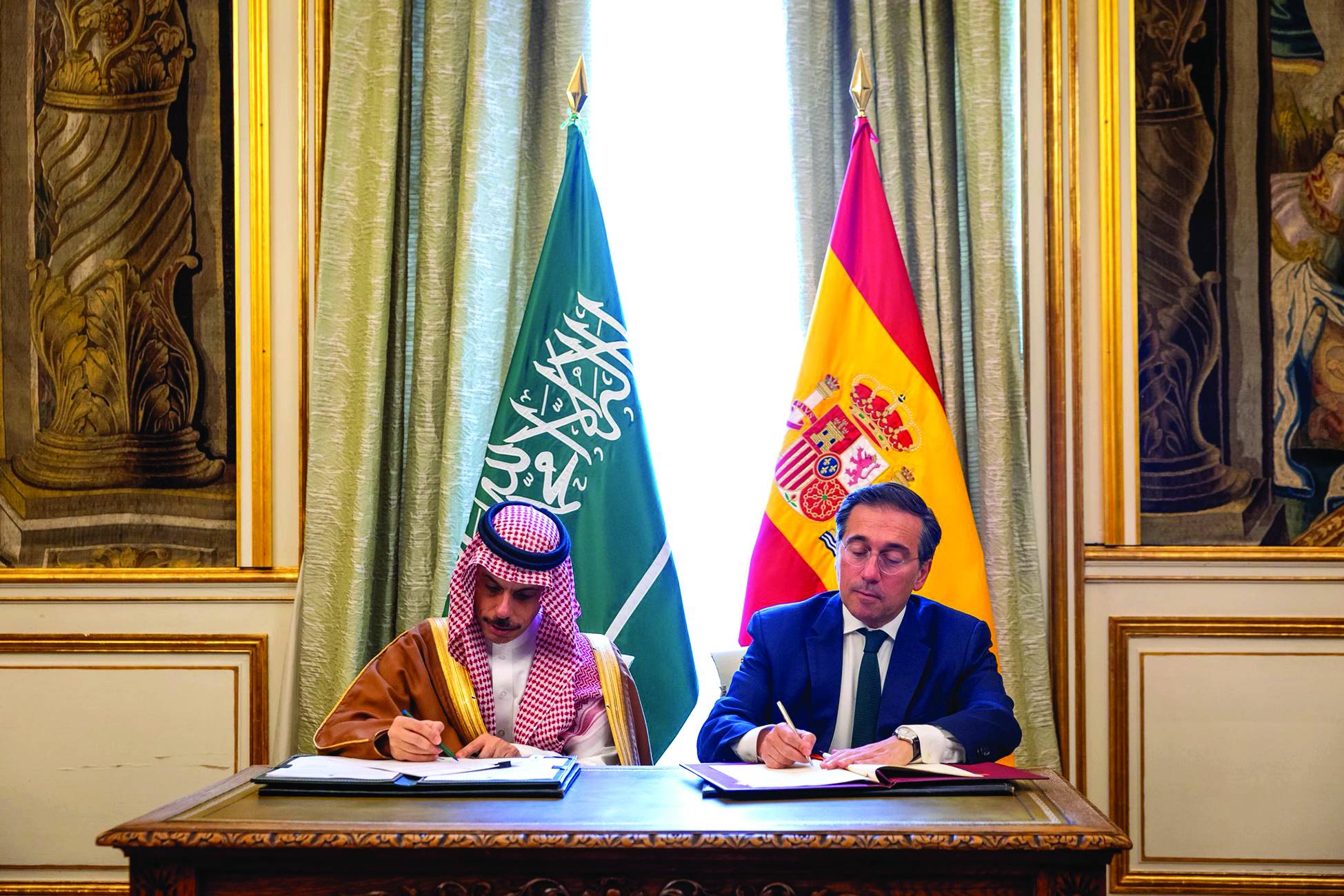
Saudi Arabia and Spain signed the Strategic Partnership Agreement on May 13 in Madrid and agreed to establish a Strategic Partnership Council to elevate bilateral relations and expand cooperation, particularly in promising economic and investment sectors. They also signed an agreement on mutual visa exemption for holders of diplomatic and special passports.
On Tuesday, the Saudi Cabinet approved a Memorandum of Understanding on cooperation in the future of modern transport methods between the Kingdom's Ministry of Transport and Logistics Services and Spain's Ministry of Transport and Sustainable Mobility.
A New Framework for Bilateral Relations
Carbajosa said the agreement signed in Madrid marks a turning point in bilateral relations, establishing a new institutional framework for managing cooperation between the two countries.
"I am very pleased to share with you what I consider a milestone in our bilateral relations, and that is the signature last May in Madrid of the Strategic Partnership Agreement between our two countries, raising our diplomatic relations to its highest level.
From now onwards, both Prime Ministers will personally lead our bilateral relations."
He explained that under the new framework, Saudi Crown Prince Mohammed bin Salman and Spanish Prime Minister Pedro Sánchez will personally lead bilateral relations, helping accelerate the implementation of joint projects and strengthen political and economic coordination.
"Traditionally, cooperation between Saudi Arabia and Spain was driven by a Joint Commission, co-led by the Ministries of Economy from both countries and supported by various government sectors. This framework aimed to deepen bilateral ties through regular technical consultations and biennial high-level summits. Now, the new framework supersedes everything else and the Strategic Partnership will encompass all our activities in different sectors."
He added that Memorandums of Understanding in the fields of economy and transport have already been finalized, while negotiations continue on additional cooperation frameworks that will all fall under the umbrella of the new Strategic Partnership.
Growing Trade, Services Driving the Partnership
Carbajosa said bilateral trade between the two countries stands at approximately $6 billion annually, while Spanish exports to Saudi Arabia range between $2.4 billion and $2.6 billion, making Spain the fifth-largest European Union exporter to the Kingdom.
Spanish exports include industrial machinery, mechanical valves, ceramics, pharmaceuticals and agri-food products. Meanwhile, Spain imports roughly $3.5 billion annually from Saudi Arabia, mainly crude petroleum, refined oil and ethylene polymers.
He said Spanish imports from Saudi Arabia rose by 18 percent during the first quarter of this year, driven by higher crude oil prices linked to regional geopolitical tensions, while Spanish exports contracted during the same period.
"While long-term indicators point toward growth, the overall trade trajectory in 2026 remains dependent on the normalization of energy supply routes in the Gulf region."
Carbajosa noted that cooperation extends beyond trade in goods.
"While the trade in goods favors Riyadh, the exchange of services tells a different story. Driven by Saudi Arabia's Vision 2030 economic diversification, Spanish engineering, infrastructure, and transport firms have secured multi-billion-dollar contracts in the Kingdom.
From the flagship Haramein High-Speed Railway to massive urban transit and renewable energy grids, Spain heavily exports 'know-how' and technical services that do not always register in traditional customs ledger balances."
From Water and Energy to Smart Transport
The ambassador said cooperation also covers desalination and water resource management, drawing on Spain's world-class expertise in the design, construction and operation of large-scale reverse osmosis desalination plants, wastewater treatment facilities and circular water networks. Spanish companies have historically led major water and desalination projects across the Kingdom.
He added that cooperation also extends to urban development, infrastructure project management and the preparation of master plans for smart and sustainable cities, alongside upgrading power grids, substations and industrial complexes to strengthen energy security and support the integration of utility-scale renewable energy.
In the transport sector, Carbajosa said Spanish companies possess globally recognized expertise in designing, managing and operating complex transport networks. He cited the landmark Haramein High-Speed Railway, led by Spanish public-private consortia, alongside major infrastructure contributions to the Riyadh Metro project.
He also highlighted Spain's role in smart mobility, noting that Spanish companies will manage the intercity transportation network for the Qiddiya City giga-project through intelligent transport systems and traffic management solutions.
The Region's First Virtual Air Traffic Control Tower
Carbajosa said Saudi Arabia and Spain signed two Memorandums of Understanding in February 2026 covering civil aviation and future transportation modes, in the presence of Saudi Minister of Transport and Logistics Services Saleh Al-Jasser and his Spanish counterpart, Óscar Puente.
"The agreements align with the Kingdom's Aviation Program goals: expanding connectivity to 250 international destinations, positioning Saudi Arabia as a global logistics hub, and reaching 330 million annual passengers by 2030. Cooperation spans seven areas, including safety standards, route expansion, regulatory alignment, sustainable aviation, and joint R&D into autonomous aircraft and smart airport design."
He added that cooperation also extends to modernizing air navigation systems and airport infrastructure. A Spanish engineering firm has been selected to update the master plans for five Saudi airports, while another Spanish company has partnered with Saudi Air Navigation Services to deploy the region's first virtual air traffic control tower.
From Arms Procurement to Technology Transfer
Carbajosa said defense cooperation between the two countries has evolved beyond traditional arms procurement toward industrial partnerships built on technology transfer and the localization of defense industries.
He explained that the joint venture between Saudi Arabian Military Industries (SAMI) and Spain's Navantia to outfit five Avante 2200 corvettes has helped transfer technological know-how to the Kingdom and resulted in the development of the HAZEM naval combat management system through technology transfer from Navantia. He added that a follow-on agreement includes the transfer of intellectual property rights to the General Authority for Military Industries (GAMI), paving the way for future naval vessels to be built in Saudi Arabia.
He added that other Spanish companies, including Indra and Grupo Oesía, offer advanced capabilities in radar systems, electronic warfare and counter-drone technologies. Spain currently accounts for approximately 10 percent of Saudi arms imports, ranking second only to the United States.
According to Carbajosa, Spain's expertise in cybersecurity, command-and-control systems and dual-use technologies aligns with the objectives of Saudi Vision 2030, which seeks to localize more than 50 percent of military spending by 2030 through technology transfer, research and development, and workforce training.
Space Opens New Horizons for Partnership
Carbajosa said Saudi Arabia's space economy reached $8.7 billion in 2024 and is projected to grow to $31.6 billion by 2035.
He noted that Spain has an advanced industrial base in the space sector through companies such as Airbus Defence and Space Spain, Indra, GMV, Hisdesat and Sener, which provide solutions in secure satellite communications, Earth observation and geospatial analytics.
He said these companies are natural partners for the Kingdom's sovereign space infrastructure priorities, including secure satellite communications, Earth observation and geospatial analytics.
He concluded by emphasizing that Saudi-Spanish relations have evolved from implementing projects to building long-term strategic partnerships based on co-production and technology transfer, opening new horizons for cooperation in defense, aviation and space.