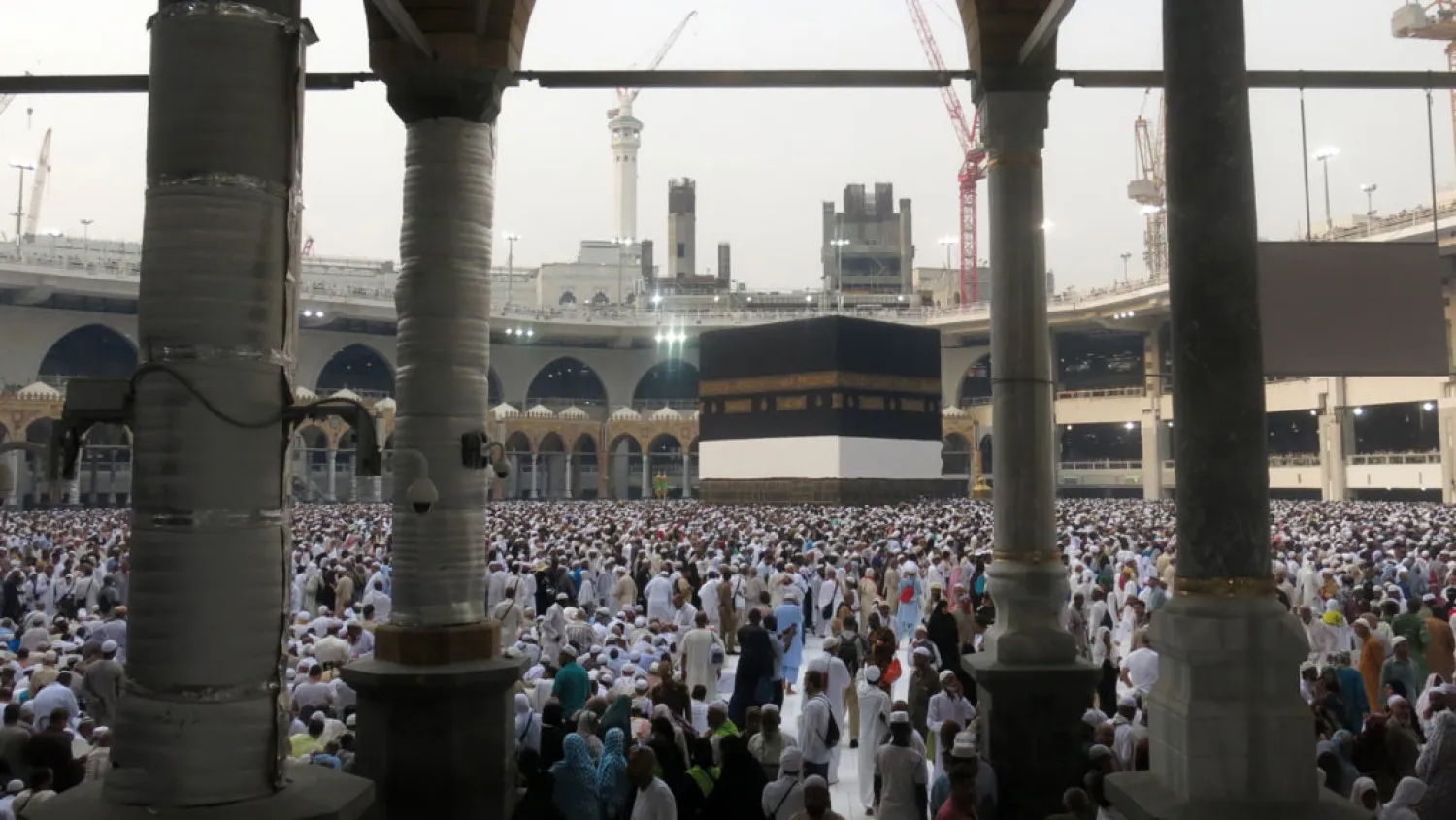
700 Qatari Pilgrims Crossed the Saudi Borders

 Muslim worshipers perform the holy Hajj in Makkah (AFP PHOTO AHMAD GHARABLI)
Muslim worshipers perform the holy Hajj in Makkah (AFP PHOTO AHMAD GHARABLI)
TT

700 Qatari Pilgrims Crossed the Saudi Borders

 Muslim worshipers perform the holy Hajj in Makkah (AFP PHOTO AHMAD GHARABLI)
Muslim worshipers perform the holy Hajj in Makkah (AFP PHOTO AHMAD GHARABLI)

The supervisor of the General Secretariat of the Custodian of the Two Holy Mosques’ Program for Hajj and Umrah, Abdullah Al-Madlej, said that the “Communications” Center has received a flood of telephone calls from Qatari citizens to inquire about many issues related to the performance of the Holy Hajj.

In remarks to Asharq Al-Awsat newspaper, the Saudi official noted that a number of committees working in the Programs’ main locations that are dedicated to receiving guests in Makkah , have been contacted by Qatari citizens, who arrived in Saudi Arabia wishing to perform Hajj.

Madlej said that the number of Qatari pilgrims has not been completed for many reasons, including that the majority of GCC worshipers start coming to Saudi Arabia as of the fifth and sixth day of the month of Dhu al-Hijjah, pointing out the difficulty of determining the exact number of Qatari pilgrims at the moment.

He noted, however, that 600 Qatari citizens have so far entered the Kingdom to perform the Hajj and to meet the invitation launched by the Custodian of the Two Holy Mosques King Salman bin Abdulaziz.

The Saudi authorities have announced that the number of pilgrims, who crossed the Salwa border with Qatar, until Thursday, have reached 700.

All the sites were provided with the necessary equipment to receive the Qatari pilgrims, including 50 buses and small transport vehicles, Madlej said, adding that hotels in Makkah have also been specified to accommodate the worshipers.

He also stressed that immediately after the issuance of the order to host Qatari pilgrims at the expense of the Custodian of the Two Holy Mosques, the Ministry of Islamic Affairs – the authority overseeing the program – has quickly completed all procedures in coordination and cooperation with the relevant authorities in the Kingdom.

The Saudi official said that the ministry had representatives in the port of Salwa, and others in Dammam, and Al-Ahsa, in order to provide the necessary services upon the arrival of Qataris to Saudi Arabia.

On a different note, Madlej said that King Salman has hosted 1000 families of martyrs from the Egyptian army and police during the current Hajj season, upon the request of the Saudi Embassy in Egypt.

The Custodian of the Two Holy Mosques also hosted about 350 families of martyrs in the Sudanese army, who had participated in the “Decisive Storm” Operation.


Saudi Arabia Condemns Iran Attacks on Bahrain, Kuwait, UAE Tanker

Vehicles move on a highway in Kuwait. (AFP)
TT

Saudi Arabia Condemns Iran Attacks on Bahrain, Kuwait, UAE Tanker

Vehicles move on a highway in Kuwait. (AFP)

Saudi Arabia strongly condemned on Wednesday Iran’s attacks on Bahrain, Kuwait and an oil tanker belonging to the United Arab Emirates.

A Foreign Ministry statement underlined Saudi Arabia’s “complete rejection of Iran’s continued aggression against brotherly countries and its threats to freedom of maritime navigation and trade routes.”

It reiterated its call “for an end to such acts of aggression, respect for international law and the principles of good neighborliness, and support for diplomatic efforts aimed at achieving peace and resolving the crisis through negotiations, to safeguard the security and stability of the region and its peoples.”

Secretary-General of the Gulf Cooperation Council (GCC) Jasem Albudaiwi also strongly condemned the attack on Kuwait.

He said Iran’s continuation of its attacks “reflects its persistence in undermining de-escalation efforts, as well as a flagrant disregard for the principles of good neighborliness, the rules of international law, and the United Nations Charter.”

He called on the international community “to assume its responsibilities toward these grave and repeated Iranian assaults and to take effective measures to halt them, ensuring respect for state sovereignty and preserving peace and security in the region.”

Albudaiwi reiterated the GCC states’ “full and steadfast solidarity with Kuwait, standing united by its side and backing all measures it takes to protect its security and stability, safeguard its sovereignty and assets, and ensure the safety of its citizens and residents on its territory.”


UAE State Oil Firm Says One Missing After Ship Hit in Hormuz

Vessels at the Strait of Hormuz, as seen from Musandam, Oman, November 17, 2026. (Reuters)
TT

UAE State Oil Firm Says One Missing After Ship Hit in Hormuz

Vessels at the Strait of Hormuz, as seen from Musandam, Oman, November 17, 2026. (Reuters)

UAE state oil firm ADNOC said Wednesday that a crew member was missing after a ship belonging to the company was struck in the Strait of Hormuz.

"All other crew members have been safely evacuated from the vessel. Eleven sustained injuries and where required are receiving medical care," ADNOC said, adding that search and rescue operations were continuing.

British maritime security agency, UKMTO, said on Wednesday that the tanker had been struck a day earlier by "an unknown projectile" in the Strait of Hormuz, about 13 nautical miles north of Khasab, an Omani town overlooking the strategic waterway.

The agency did not identify the vessel, but confirmed one crew member was missing.

"A fire occurred onboard, which has since been extinguished," UKMTO said, adding that the extent of the damage and any environmental impact remained unknown.

Before the Middle East war triggered by US-Israeli strikes on Iran on February 28, around one-fifth of the world's oil and liquefied natural gas supplies passed through the Strait of Hormuz.

Since the conflict began, Iran has tightened its grip on the Strait of Hormuz, with vessels transiting the strategic chokepoint coming under near-daily attack as Tehran insists they follow routes approved by its authorities.

The US has responded by imposing a blockade on Iranian ports, and its navy escorts tankers through the narrow passage.


Bahrain, Kuwait Intercept Iranian Aerial Attacks

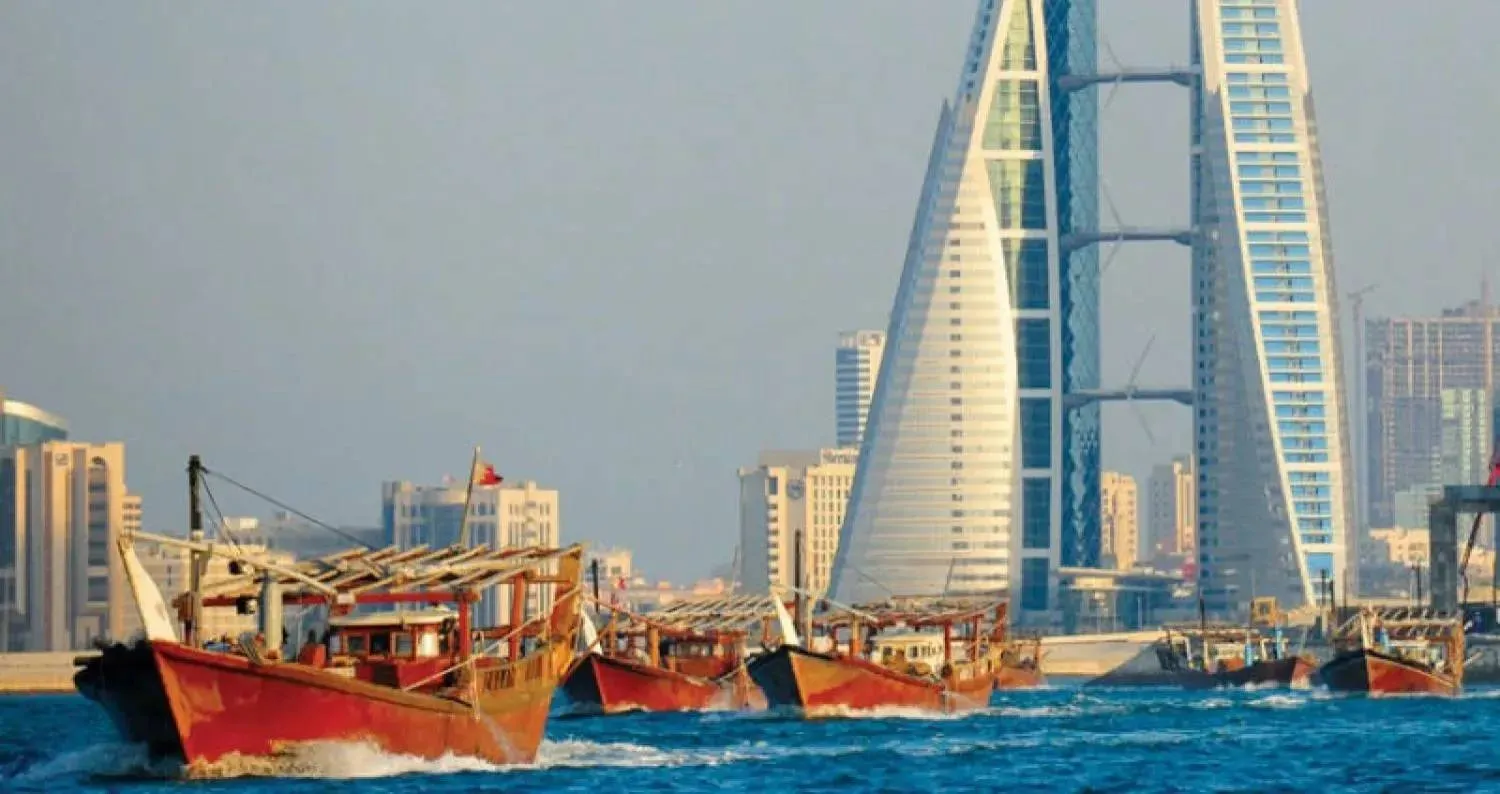
A view of Manama, Bahrain. (Asharq Al-Awsat)
TT

Bahrain, Kuwait Intercept Iranian Aerial Attacks

A view of Manama, Bahrain. (Asharq Al-Awsat)

Bahrain's air defenses intercepted Iranian aerial attacks on Wednesday, the kingdom's defense force said, accusing Tehran of maintaining a "systematic hostile approach" of targeting the country, which hosts the US Navy's Fifth Fleet.

On Tuesday, Iran's Revolutionary Guards said they had launched drones at a US military radar system in ‌Bahrain ⁠in response to what ⁠they described as continued violations of Iranian airspace by US military drones. Bahrain and the United States said the Iranian attack was intercepted.

The United States later on Tuesday struck an Iranian missile ⁠launch site.

The strikes came despite ‌talks between Iran ‌and mediators Oman and Qatar.

Bahrain's Interior Ministry issued ‌two threat alerts on Wednesday, urging residents ‌to move to the nearest safe location, before announcing an all-clear after each warning.

Separately, Kuwait's air defenses were also countering hostile drone ‌attacks early on Wednesday, the Kuwaiti army said in a statement.

Iran's army later said it targeted US drone and missile installations at Kuwait's Ali Al Salem base, Iranian state media reported on Wednesday.

Kuwait's Foreign Ministry said in a statement posted on X that "the continuation of these attacks constitutes a dangerous escalation that threatens the region's security and stability and undermines diplomatic efforts aimed at de-escalation". 

The conflict erupted on February 28 after US and Israeli attacks on Iran and has since widened to include Iranian strikes on Israel and Gulf countries.