


Renault-Nissan to Collaborate with Dongfeng to Build e-Cars in China

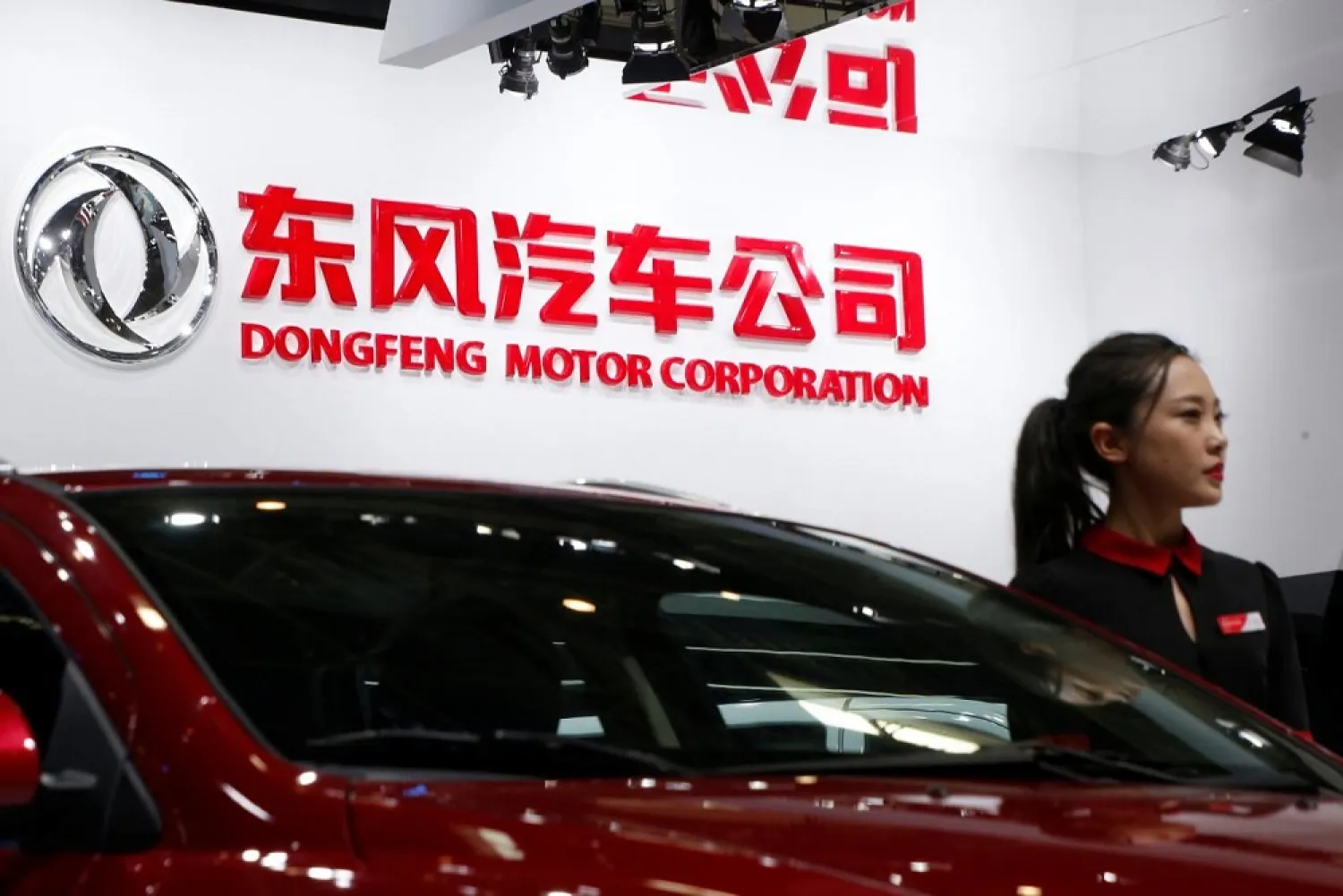
A hostess poses next to Dongfeng Motor Corp A9 sedan at the Auto China 2016 auto show in Beijing, China, April 26, 2016. (Reuters)
TT

Renault-Nissan to Collaborate with Dongfeng to Build e-Cars in China

A hostess poses next to Dongfeng Motor Corp A9 sedan at the Auto China 2016 auto show in Beijing, China, April 26, 2016. (Reuters)

Renault-Nissan announced on Tuesday that it will collaborate with China’s Dongfeng Motor to build electric cars in the world’s biggest auto market.

The new joint venture, called eGT New Energy Automotive Co, will be owned 25 percent each by Nissan and Renault with Dongfeng owning 50 percent, Nissan and Renault said in a statement on Tuesday.

The venture with Dongfeng Motor Corp. aims to develop a vehicle based on an SUV platform shared by Renault and Nissan, the companies announced Tuesday. Production is due to begin in 2019.

“The establishment of the new joint venture with Dongfeng confirms our common commitment to develop competitive electric vehicles for the Chinese market,” Carlos Ghosn, chairman and chief executive officer of the Renault-Nissan alliance, said in the statement.

The statement did not give details of financial commitments of the joint venture partners or say by when the vehicles will be launched. Dongfeng already partners Nissan in China.

Both Nissan and Renault already market electric cars. Nissan’s Leaf compact hatchback has become the world’s top-selling electric car since its launch in 2010, while Renault began selling its Zoe model in 2012.

China wants all-electric battery cars and plug-in hybrid vehicles to make up at least a fifth of the country’s auto sales by 2025, as part of its solution to tackle alarming pollution levels in major cities.

Renault SA and Nissan Motor Corp. have a wide-ranging alliance to share technology and production that also includes Mitsubishi Motors Corp. and has more limited ties with other auto brands.

Dongfeng assembles vehicles for Nissan, Kia and other foreign brands and owns a share of France's PSA Peugeot Citroen.

The game changer for global automakers, many of whom until recently have resisted an industry shift to heavily electrified vehicles, is China - an auto market with strong potential for growth where stringent policies favoring cleaner energy cars are being aggressively pursued.

Under China's latest proposals, electric vehicle sales quotas, which are expected to take effect as early as 2018, are due to require 8 percent of automakers’ sales to be battery electric or plug-in hybrid vehicles by next year, rising to 10 percent in 2019 and 12 percent in 2020.

China will present its final plans for electric and hybrid car quotas in the coming days, German newspaper Frankfurter Allgemeine Zeitung (FAZ) reported, adding that penalties for non-compliance are due to be softened.

Ford Motor Co announced earlier this month it was exploring setting up a joint venture with car maker Anhui Zotye Automobile Co to build electric vehicles in China under a new brand.

Tesla, Daimler AG, General Motors Co. and other brands also have announced plans to manufacture electric vehicles in China.

Automakers Renault and Nissan say they will develop electric cars with a Chinese state-owned partner, adding to a series of tie-ups between global auto brands and local partners in the biggest electric vehicle market.

Global automakers are investing heavily to develop electric vehicles for China, responding to rising demand and government pressure on the industry to speed up technology development.

Chinese planners see electrics as a promising industry and a way to clean up smog-choked cities. They have supported sales with subsidies to buyers, while a proposed quota system will require automakers to meet targets for electric vehicle production or buy credits from competitors that do.

Sales of pure-electric and gasoline-electric hybrids in China rose 50 percent last year over 2015 to 336,000 vehicles, accounting for 40 percent of global demand. US sales totaled 159,620.


Mawani Signs Agreement to Construct Offshore Structures at Ras Al-Khair Port

Mawani Signs Agreement to Construct Offshore Structures at Ras Al-Khair Port
TT

Mawani Signs Agreement to Construct Offshore Structures at Ras Al-Khair Port

Mawani Signs Agreement to Construct Offshore Structures at Ras Al-Khair Port

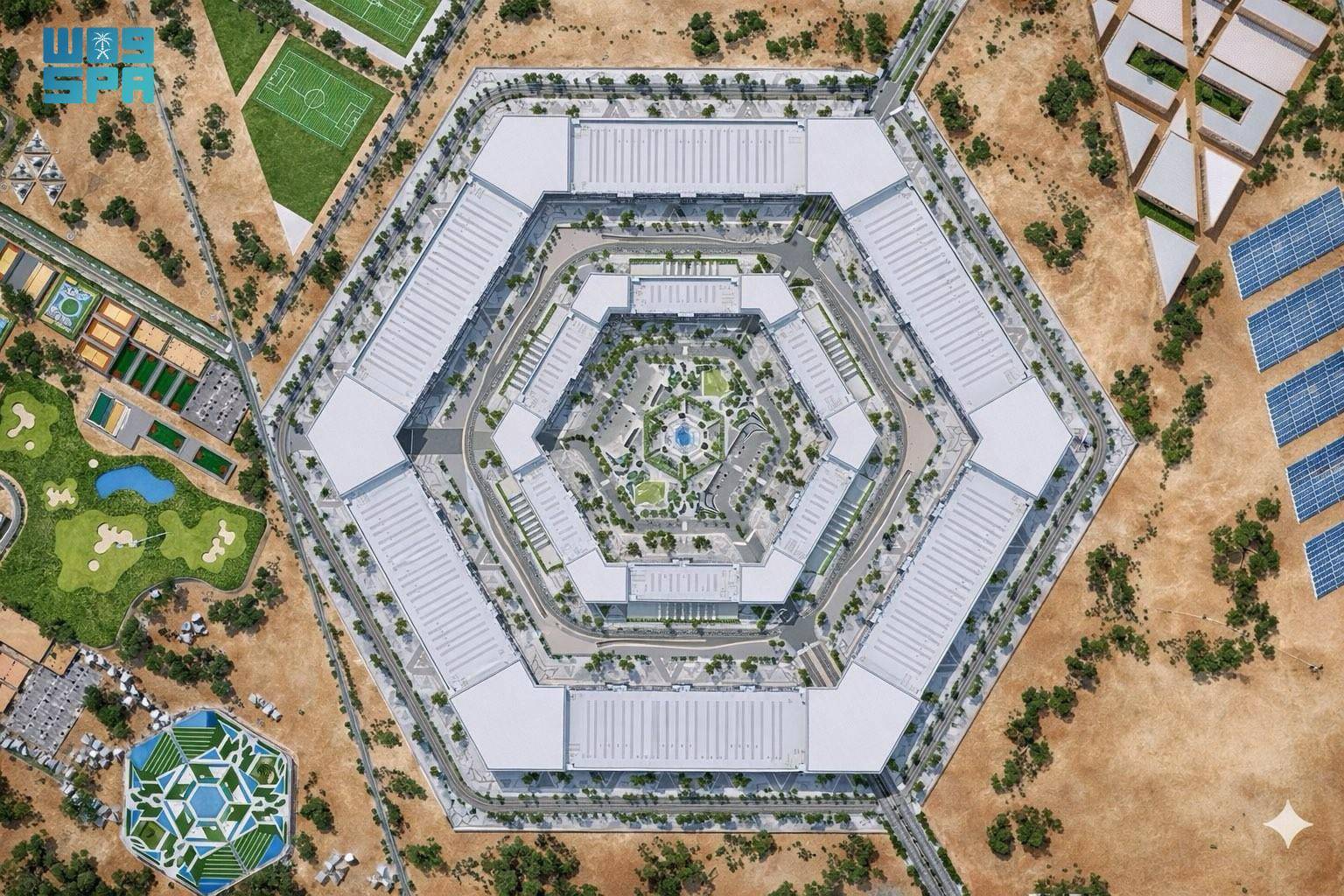
The Saudi Ports Authority (Mawani) has signed a contract with Singatac Arabia to establish a fabrication center for offshore structures and platforms at Ras Al-Khair Port.

The contract supports the oil and gas industry and includes warehouses for prefabricated parts, specialized welding equipment, systems, and cranes to serve offshore platform and marine structure projects with an investment of SAR139 million across 100,000 square meters, according to SPA.

The project aims to create over 500 direct and indirect jobs, strengthen Ras Al-Khair Port’s operational capabilities and value-added services, expand port capacity, and increase the contribution of exports to the national economy.

Ras Al-Khair Port is distinguished by its strategic location and its ability to efficiently handle a wide range of goods. It features 14 berths with a total capacity of 35 million tons and spans an area of 23 kilometers.


Asian Shares Rise, Tracking Wall Street Gains as Trump Backs Down on Greenland

Traders work in front of screens at Hana Bank in Seoul (EPA)
TT

Asian Shares Rise, Tracking Wall Street Gains as Trump Backs Down on Greenland

Traders work in front of screens at Hana Bank in Seoul (EPA)

Asian shares mostly advanced on Thursday, tracking Wall Street, after US President Donald Trump walked back from imposing tariffs on eight European countries over Greenland and ruled out using military force to take control of the territory.

The future for the S&P 500 gained less than 0.1% and that for the Dow Jones Industrial Average was virtually flat on Thursday, The Associated Press reported.

Tokyo’s Nikkei 225 climbed 1.7% to 53,688.89, with technology stocks leading gains. SoftBank Group jumped 11.6% and equipment maker Disco Corp. soared 17.1%. Advantest, which makes testing equipment for computer chips, surged 5%.

South Korea’s Kospi closed 0.9% higher at 4,952.44 after crossing the 5,000 mark for the first time, as traders cheered. Technology-related stocks drove the rally. Shares of chipmaker SK Hynix picked up 2%, while Samsung Electronics rose 1.9%.

Hong Kong’s Hang Seng edged less than 0.1% higher to 26,600.68. The Shanghai Composite index edged 0.1% higher to 4,122.58.

In Australia, the S&P/ASX 200 gained nearly 0.8% to 8,848.70.

Taiwan’s Taiex rose 1.6%, while India’s Sensex added 0.2%.

US markets logged their biggest losses since October on Tuesday as investors reacted to Trump’s threat over the weekend to slap tariffs of 10% on Denmark, Norway, Sweden, Germany, France, the United Kingdom, the Netherlands and Finland for opposing US control of Greenland, sparking concerns over worsening relationships between the US and its European allies.

But Trump, attending the World Economic Forum in Davos, Switzerland, backed down on Wednesday and said he would not use force to acquire Greenland. The US president also said in a post on his social media site that he had agreed with the head of NATO on a “framework of a future deal” on Greenland and on Arctic security.

The easing tensions drove Wall Street optimism. On Wednesday, the S&P 500 climbed 1.2% to 6,875. The Dow Jones Industrial Average gained 1.2% to 49,077.23, while the Nasdaq composite also rose 1.2%, to 23,224.82.

Halliburton, the oil field services company, jumped 4.1% following stronger-than-expected profits for the latest quarter. United Airlines rose 2.2% also after better-than-expected quarterly profits. Netflix fell 2.2% even as it reported a stronger profit than expected, as investors focused on factors including a slowing growth of subscribers.

The price of gold fell 0.2% to $4,828.70 per ounce, reflecting investors’ reduced worries, after passing the $4,800 mark ahead of Trump’s reversal of stance on Greenland as many flocked to safe-haven assets.

In the bond market, US Treasury yields also eased following lessened fear among investors as well as a calming of Japan’s bond market turmoil. The yield on the 10-year Treasury eased to 4.25% from 4.30% late Tuesday.

Japan’s long-term bond yields surged to records earlier this week after Prime Minister Sanae Takaichi’s decision to call a snap election in February. That sparked concerns over her pledges to cut taxes and increase spending, which could hinder efforts to rein in government debt.

The US dollar rose to 158.75 Japanese yen from 158.27 yen, prompting analysts to speculate that authorities might intervene if the yen falls any further.

The euro rose to $1.1692 from $1.1687.

US benchmark crude oil shed 16 cents to $60.46 per barrel. Brent crude, the international standard, fell 24 cents to $65.00 per barrel.


Goldman Sachs Raises 2026-end Gold Price Forecast to $5,400/oz

A customer waits his turn to trade gold behind a glass window displaying gold prices at a gold shop in Bangkok (EPA)
TT

Goldman Sachs Raises 2026-end Gold Price Forecast to $5,400/oz

A customer waits his turn to trade gold behind a glass window displaying gold prices at a gold shop in Bangkok (EPA)

Goldman Sachs has raised its end-2026 gold price forecast to $5,400 per ounce from $4,900/oz earlier, noting private-sector and emerging market central banks' diversification ​into gold.

Spot gold climbed to a peak of $4,887.82 per ounce on Wednesday. The safe-haven metal has climbed more than 11% so far in 2026, extending a blistering rally that saw it jump 64% last year.

"We assume private sector diversification buyers, whose purchases hedge ‌global policy ‌risks and have driven the ‌upside ⁠surprise ​to our ‌price forecast, don't liquidate their gold holdings in 2026, effectively lifting the starting point of our price forecast," the brokerage said in a note dated Wednesday.

The brokerage also expects central bank buying to average 60 tons in 2026 as ⁠emerging market central banks are likely to continue diversification of ‌their reserves into gold.

Commerzbank, last ‍week, raised its ‍gold price forecast to $4,900 by the end ‍of this year, citing increased safe-haven demand.
