


Apple Tests Consumer Loyalty and Pockets with $1,000 iPhone 8

People wait in front of the Apple store in Munich, before the 2015 worldwide launch of the iPhone 6s. (AP)
TT

Apple Tests Consumer Loyalty and Pockets with $1,000 iPhone 8

People wait in front of the Apple store in Munich, before the 2015 worldwide launch of the iPhone 6s. (AP)

Apple is expected to unveil on Tuesday the iPhone 8 ten years after co-founder Steve Jobs released the first version. A decade later, the new phone is likely to sell for $1,000, making it the company’s most expensive yet.

Crossing into a new financial frontier, this will test how much consumers are willing to pay for a device that's become an indispensable part of modern life.

The unveiling of a dramatically redesigned iPhone will likely be the marquee moment Tuesday when Apple hosts its first product event at its new spaceship-like headquarters in Cupertino, California. True to its secretive ways, Apple won't confirm that it will be introducing a new iPhone, though a financial forecast issued last month telegraphed something significant is in the pipeline.

In addition to several new features, a souped-up "anniversary" iPhone could also debut at an attention-getting $999 price tag, twice what the original iPhone cost. It would set a new price threshold for any smartphone intended to appeal to a mass market.

What a thousand bucks will buy

Various leaks have indicated the new phone will feature a sharper display, a so-called OLED screen that will extend from edge to edge of the device, thus eliminating the exterior gap, or "bezel," that currently surrounds most phone screens.

It may also boast facial recognition technology for unlocking the phone and wireless charging. A better camera is a safe bet, too.

All those features have been available on other smartphones that sold for less than $1,000, but Apple's sense of design and marketing flair has a way of making them seem irresistible — and worth the extra expense.

"Apple always seems to take what others have done and do it even better," said Carolina Milanesi, an analyst with Creative Strategies.

Why phones cost more, not less

Apple isn't the only company driving up smartphone prices. Market leader Samsung Electronics just rolled out its Galaxy Note 8 with a starting price of $930.

The trend reflects the increasing sophistication of smartphones, which have been evolving into status symbols akin to automobiles. In both cases, many consumers appear willing to pay a premium price for luxury models that take them where they want to go in style.

"Calling it a smartphone doesn't come close to how people use it, view it and embrace it in their lives," said Debby Ruth, senior vice president of the consumer research firm Magid. "It's an extension of themselves, it's their entry into the world, it's their connection to their friends."

From that perspective, it's easy to understand why some smartphones now cost more than many kinds of laptop computers, said technology analyst Patrick Moorhead.

"People now value their phones more than any other device and, in some cases, even more than food and sex," Moorhead said.

The luxury-good challenge

Longtime Apple expert Gene Munster, now managing partner at research and venture capital firm Loup Ventures, predicts 20 percent of the iPhones sold during the next year will be the new $1,000 model.
Wireless carriers eager to connect with Apple's generally affluent clientele are likely to either sell the iPhone at a discount or offer appealing subsidies that spread the cost of the device over two to three years to minimize the sticker shock, said analyst Jan Dawson of Jackdaw Research.

Even Munster's sales forecast holds true, it still shows most people either can't afford or aren't interested in paying that much for a smartphone.

That's one reason Apple also is expected to announce minor upgrades to the iPhone 7 and iPhone 7. That will make it easier for Apple to create several different pricing tiers, with the oldest model possibly becoming available for free with a wireless contract.

But the deluxe model virtually assures that the average price of the iPhone — now at $606 versus $561 three years ago — will keep climbing. That runs counter to the usual tech trajectory in which the price of electronics, whether televisions or computers, falls over time.

"The iPhone has always had a way of defying the law of physics," Munster said, "and I think it will do it in spades with this higher priced one."

Eyes on China

Apple Inc also hopes the number’s auspicious connotations in China will help turn around fortunes in the world’s biggest smartphone market after six quarters of falling sales.

Chinese shoppers, however, are already counting the cost, with the latest model’s $1,000 price tag sitting at roughly double the average Chinese monthly salary.

The success of Apple’s next iPhone in China is crucial for the Cupertino-based firm, which has seen its once-coveted phone slip into fifth position in China behind offerings from local rivals Huawei Technologies Co Ltd, Oppo, Vivo and Xiaomi Inc.

Greater China, which for Apple includes Taiwan and Hong Kong, accounted for roughly 18 percent of iPhone sales in the quarter ended in July, making it the company’s top market after the United States and Europe. Yet those sales have been declining steadily and are down 10 percent from a year earlier, in contrast with growth in all other regions.

While the iPhone 6 took China by storm in 2014, models since have received a more muted response.

“I’ll wait for a drop in price, it’s too expensive,” said Angie Chen, 23, a project manager in Nanjing and iPhone 6 owner.

Chen said she might even wait for the new phone’s successor, when prices will fall. “It’s a nice number to hear, but there’s no rush.”

Eight is the luckiest number in China because it sounds similar to the phrase meaning “to get rich”.

Mentions of “iPhone 8” on popular Chinese social media platform Weibo - an indicator of consumer interest - were running slightly ahead of the similar period before the iPhone 7 launch, but were far more muted than with the iPhone 6.


Riyadh Air Launches ‘Employment First’ Overseas Aviation Training Scholarship Program

Riyadh Air Launches ‘Employment First’ Overseas Aviation Training Scholarship Program
TT

Riyadh Air Launches ‘Employment First’ Overseas Aviation Training Scholarship Program

Riyadh Air Launches ‘Employment First’ Overseas Aviation Training Scholarship Program

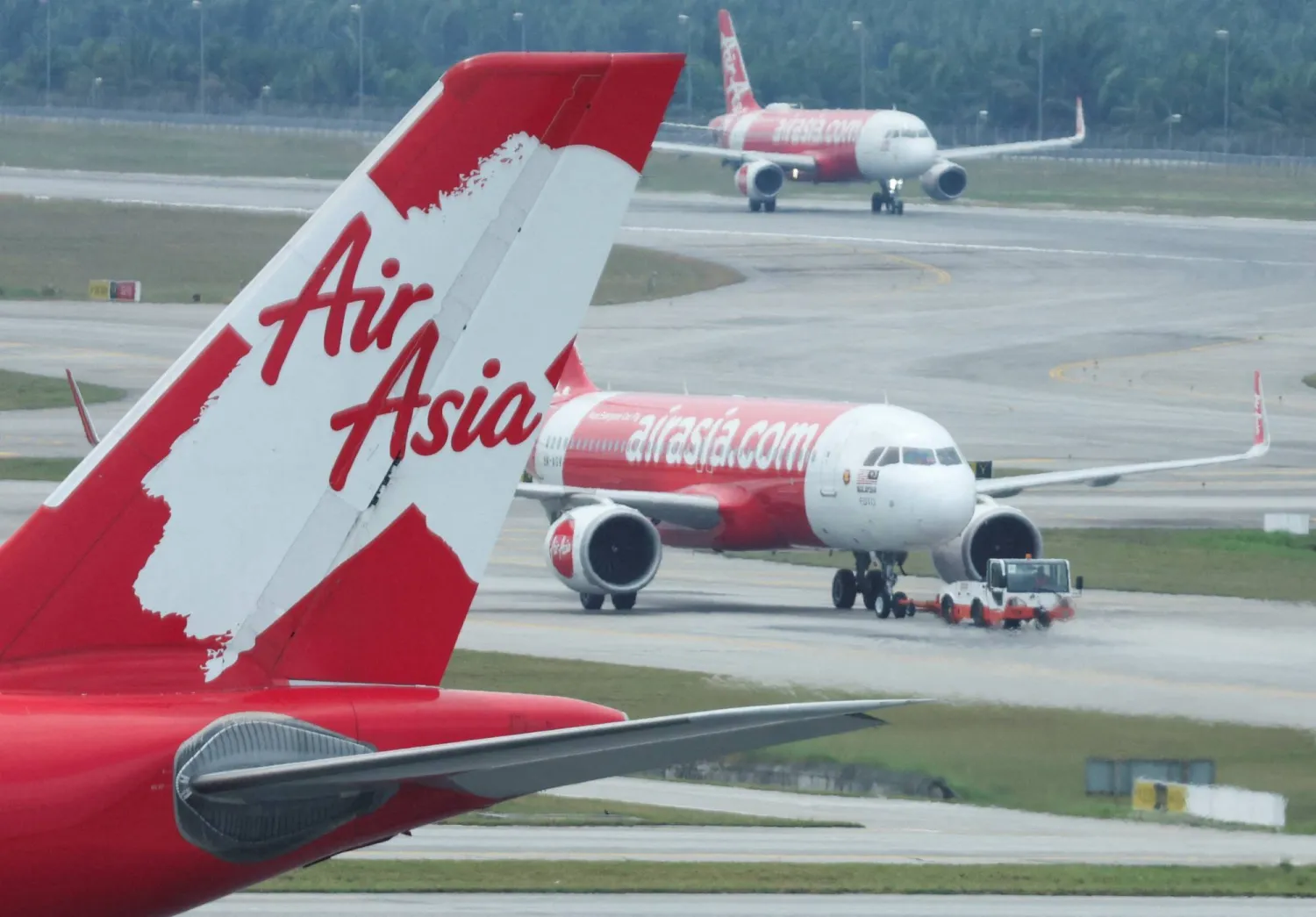
Riyadh Air has announced its ‘Employment-First’ Overseas Scholarship Program, which aims to launch several scholarship tracks, starting with two specialized paths for engineers in Australia, followed by a pilot training program in the United States.

The initiative falls under ‘Promising Path’, one of the tracks within the Custodian of the Two Holy Mosques Scholarship Program, in collaboration with the Ministry of Education, the Ministry of Transport and Logistic Services, and the General Authority of Civil Aviation (GACA).

This strategic step aims to build national competencies and train a new generation of specialists in the aviation sector, SPA reported.

According to a recent press release from Riyadh Air, the program will introduce several global training pathways, with the initial phase focusing on sending scholarship students to Australia to study towards Bachelor’s degrees in Aircraft Maintenance Engineering, covering both Mechanical Engineering and Avionics (Electronics). Next month, Riyadh Air will launch a Commercial Aviation training program in the United States.

In line with Riyadh Air’s commitment to supporting students' career progression, participants will be employed before commencing their scholarships. This ensures that their years of experience are registered with the General Organization for Social Insurance, enhancing their professional readiness from day one.

The program's launch is part of Riyadh Air’s continuous efforts to empower national talent and provide the Kingdom’s young and vibrant workforce with essential skills and knowledge, representing an even greater long-term investment in the future of the Kingdom's aviation industry.

Vice President of Talent Acquisition and Business Partners at Riyadh Air Nahar Aljahani stated: "The 'Employment-First' Scholarship Program is a part of our commitment to developing national human capital and enabling Saudi youth - both men and women - to access world-class education.

Its impact will reflect positively on the development of the aviation sector in the Kingdom, contributing to the company's goal of creating over 200,000 direct and indirect jobs."

With these programs, Riyadh Air continues to play a part in building a promising future for Saudi citizens and enhancing the competitiveness of our graduates in the global aviation industry.


Japan PM Reassures Markets with Fiscal Discipline in Next Year’s Budget

Japan's Prime Minister Sanae Takaichi delivers a speech at the 14th Council Meeting of the Japan Business Federation, or Keidanren, in Tokyo on December 25, 2025. (AFP)
TT

Japan PM Reassures Markets with Fiscal Discipline in Next Year’s Budget

Japan's Prime Minister Sanae Takaichi delivers a speech at the 14th Council Meeting of the Japan Business Federation, or Keidanren, in Tokyo on December 25, 2025. (AFP)

Japanese Prime Minister Sanae Takaichi sought on Thursday to ease market concerns over her expansionary fiscal policy, saying the government's draft budget maintains discipline by limiting reliance on debt.

There has been growing investor unease about fiscal expansion under Takaichi's administration, which has driven super-long government bond yields to record highs and weighed on the yen.

The budget for the year starting in April, to be finalized on Friday and submitted to parliament early in 2026, ‌will total 122.3 trillion ‌yen ($785.4 billion), Takaichi told ruling coalition executives.

The huge ‌spending ⁠will come ‌on top of a 21.3 trillion-yen stimulus package, compiled in November and funded by a supplementary budget for the current fiscal year, that focused on cushioning the blow to households from rising living costs.

Despite the record size, new government bond issuance for the next fiscal year will be capped at 29.6 trillion yen, staying below 30 trillion yen for a second straight year, ⁠she said.

The reliance on debt will fall to 24.2% from 24.9% in the initial fiscal 2025 ‌budget, which dipped below 30% for the ‍first time in 27 years, she said. ‍The 24.2% debt dependence ratio would be the lowest since 1998.

"We ‍believe this draft budget strikes a balance between fiscal discipline and achieving a strong economy while ensuring fiscal sustainability," Takaichi said.

In a separate speech at Japanese business lobby Keidanren, Takaichi said that her "responsible, proactive" fiscal policy means strategic spending with a long-term perspective.

"It does not mean expanding expenditures indiscriminately based solely on scale," she said.

In a report to clients, Yusuke Matsuo, ⁠Mizuho Securities' senior market economist, said Takaichi would still need to promote proactive fiscal spending to avoid alienating her political base. He added that financial markets could be reassured if the government sticks to a less aggressive stance on spending.

Signaling a shift in the government's reflationary policy push, private-sector members of a government panel on Thursday called on the government to clearly show the public how the debt-to-gross domestic product ratio can be steadily reduced under Takaichi's government.

The four private-sector members include former Bank of Japan Deputy Governor Masazumi Wakatabe and economist Toshihiro Nagahama - known as reflationist aides of Takaichi.

Their proposals were discussed at ‌the Council on Economic and Fiscal Policy (CEFP), which oversees Japan's fiscal blueprint and long-term economic policies.


Asian Shares are Mixed after US Stocks Drift to More Records

Currency dealers monitor exchange rates as a screen (R) shows South Korea's benchmark stock index in a foreign exchange dealing room at the Hana Bank headquarters in Seoul on November 5, 2025. (Photo by Jung Yeon-je / AFP)
TT

Asian Shares are Mixed after US Stocks Drift to More Records

Currency dealers monitor exchange rates as a screen (R) shows South Korea's benchmark stock index in a foreign exchange dealing room at the Hana Bank headquarters in Seoul on November 5, 2025. (Photo by Jung Yeon-je / AFP)

Asian shares were mixed Thursday in thin holiday trading, with most markets in the region and elsewhere closed for Christmas.

In Tokyo, the Nikkei 225 edged 0.1% higher to 50,407.79. It has gained nearly 30% this year.

The dollar slipped to 155.85 Japanese yen from 155.94 yen. The euro climbed to $1.1786 from $1.1780.

Markets in mainland China advanced, with the Shanghai Composite index up 0.5% at 3,959.62. Hong Kong's exchange was closed, The Associated Press said.

Investors were encouraged by a statement by the People’s Bank of China, China’s central bank, promising to ensure adequate money supply to support financing, economic growth and inflation targets. Earlier in the week, the PBOC had opted to keep its key short-term lending rates unchanged.

Shares fell in Thailand and Indonesia.

On Wednesday, the S&P 500 index rose 0.3% to 6,932.05 and the Dow Jones Industrial Average added 0.6% to close at 48,731.16. The Nasdaq composite added 0.2% to 23,613.31

Trading was extremely light as markets closed early for Christmas Eve and will be closed for Christmas on Thursday. US markets will reopen for a full day of trading on Friday, though volumes will likely remain light this week with most investors having closed out their positions for the year.

The S&P 500 is up more than 17% this year, as investors have embraced the deregulatory policies of the Trump administration and been optimistic about the future of artificial intelligence in helping boost profits for not only technology companies but also for Corporate America.

Much of the focus for investors for the next few weeks will be on where the US economy is heading and where the Federal Reserve will move interest rates. Investors are betting the Fed will hold steady on interest rates at its January meeting.

The US economy grew at a surprisingly strong 4.3% annual rate in the third quarter, the most rapid expansion in two years, driven by consumers who continue to spend despite strong inflation. There have also been recent reports showing shaky confidence among consumers worried about high prices. The labor market has been slowing and retail sales have weakened.

The number of Americans applying for unemployment benefits fell last week and remain at historically healthy levels despite some signs that the labor market is weakening.

US applications for jobless claims for the week ending Dec. 20 fell by 10,000 to 214,000 from the previous week’s 224,000, the Labor Department reported Wednesday. That’s below the 232,000 new applications forecast of analysts surveyed by the data firm FactSet.

Dynavax Technologies soared 38.2% after Sanofi said it was acquiring the California-based vaccine maker in a deal worth $2.2 billion. The French drugmaker will add Dynavax’s hepatitis B vaccines to its portfolio, as well as a shingles vaccine that is still in development.

Novo Nordisk's shares rose 1.8% after the weight-loss drug company got approval from US regulators for a pill version of its blockbuster drug Wegovy. However, Novo Nordisk shares are still down almost 40% this year as the company has faced increased competition for weight-loss medications, particularly from Eli Lilly. Shares of Eli Lilly are up 40% this year.

US crude oil closed at $58.35 a barrel and Brent crude finished at $61.80 a barrel.