
Amnesty International Exposes Illicit $46m South Sudan Arms Deal

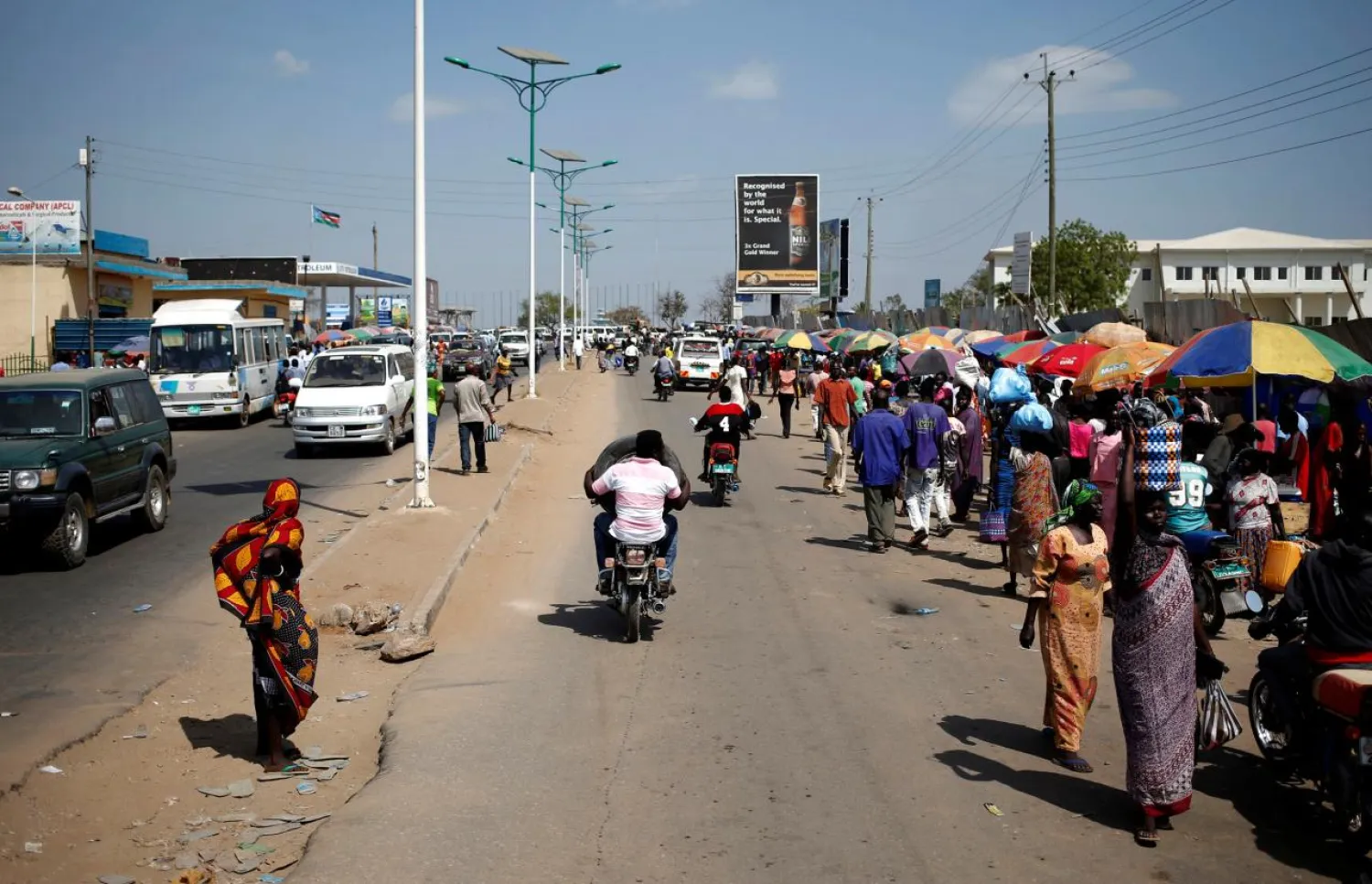
People walk along a street in Juba, South Sudan December 21, 2013. REUTERS/Goran Tomasevic/File Photo
TT

Amnesty International Exposes Illicit $46m South Sudan Arms Deal

People walk along a street in Juba, South Sudan December 21, 2013. REUTERS/Goran Tomasevic/File Photo

Amnesty International exposed in a recent research how a shell company in the heart of London’s West End acted as an intermediary in huge prospective arms deals to war-torn South Sudan and other countries, thanks to regulatory gaps which are making the UK a hotspot for companies involved in illicit arms transfers.

Commercial documents name S-Profit Ltd, a tiny UK-registered company, as the ‘supplier’ in a 2014 deal to provide at least US$46m worth of small arms, light weapons, and ammunition to the South Sudanese government. The report, From London to Juba: a UK-registered company’s role in one of the largest arms deals to South Sudan, also reveals that the UK government has been aware of similar practices taking place on British soil for more than eight years, without taking effective regulatory action.

“South Sudan is awash with weapons that have been used to kill and maim thousands of civilians, causing Africa’s biggest refugee crisis. The UK government has been a vocal proponent of a UN arms embargo on South Sudan, yet is turning a blind eye to illegal deals taking place right under its nose,” said James Lynch, Amnesty International’s Head of Arms Control and Human Rights.

“Glaring gaps in UK company regulation mean a dealer of illicit arms can go online and set up a UK company to front its activities with fewer checks than joining a gym or hiring a car. The UK must urgently review its company registration procedures – right now it provides the perfect conditions to become a hotspot for the kind of irresponsible arms transfers that have devastated South Sudan.”

The weapons in question form part of a previously undisclosed 2014 contract between a Ukrainian state arms company and a UAE-based company to procure US$169m of weapons on behalf of South Sudan. These include thousands of machine guns, mortars, RPGs and millions of rounds of ammunition.

If fulfilled, the total deal would constitute one of the largest publicly disclosed arms transfers to South Sudan since the outbreak of fighting in December 2013.

Amnesty International has not been able to determine whether some or all of the weapons listed in these documents have yet been delivered to South Sudan. However, a UK company may violate UK export control laws even by being involved in the negotiation of an arms deal to South Sudan. The involvement of the Ukrainian state-owned arms company and a UAE private company in weapons supplies to South Sudan also potentially contravenes the Ukraine and UAE’s obligations as signatories to the Arms Trade Treaty.

S-Profit’s director –a Ukrainian national based outside the UK – denied to Amnesty International that the firm had supplied military products to South Sudan, but has not responded to further questions, including whether it played an intermediary role.

Amnesty International affirmed that it has provided UK authorities with the documents and information it has obtained. The report also reveals that the UK government has, for more than eight years, been aware of UK shell companies being used unlawfully as contract vehicles for weapons dealers to supply arms to human rights violators and embargoed destinations including Syria, Eritrea and South Sudan. Yet, the UK has made no regulatory changes to address these gaps.

Meanwhile, South Sudanese President Salva Kiir Mayardit said he was not happy about the ongoing civil war and suffering of citizens in the country.

"I am not really happy. I can be seen to be happy but hurting inside. How can I be happy when I see my people suffering? People are starving and dying in criminal actions and battles.” Kiir said in an interview with SSBC on Friday.

“Being the leader I must put a brave face where I can be seen to be happy but I am not happy,” he added.

Kiir pointed out that the national dialogue is a hope that will reunite the people of South Sudan address grievances which were not tackled by the 2015 peace accord.

The world’s youngest nation has been embroiled in a violent conflict since 2013, when a split between President Salva Kiir and his former vice president, Riek Machar, escalated into outright civil war.

The devastating conflict has killed tens of thousands of people and displaced millions that have sought refuge in neighboring countries.

Trump Says US Hit Dock for Venezuela Drug Boats

US President Donald Trump, with pharmaceutical executives, delivers remarks on lowering the prices of drugs and pharmaceuticals during an announcement in the Roosevelt Room of the White House in Washington, DC, USA, 19 December 2025.  EPA/WILL OLIVER / POOL
US President Donald Trump, with pharmaceutical executives, delivers remarks on lowering the prices of drugs and pharmaceuticals during an announcement in the Roosevelt Room of the White House in Washington, DC, USA, 19 December 2025. EPA/WILL OLIVER / POOL
TT

Trump Says US Hit Dock for Venezuela Drug Boats

US President Donald Trump, with pharmaceutical executives, delivers remarks on lowering the prices of drugs and pharmaceuticals during an announcement in the Roosevelt Room of the White House in Washington, DC, USA, 19 December 2025.  EPA/WILL OLIVER / POOL
US President Donald Trump, with pharmaceutical executives, delivers remarks on lowering the prices of drugs and pharmaceuticals during an announcement in the Roosevelt Room of the White House in Washington, DC, USA, 19 December 2025. EPA/WILL OLIVER / POOL

The United States hit and destroyed a docking area for alleged Venezuela drug boats, President Donald Trump said Monday, in what could amount to the first land strike of the military campaign against trafficking from Latin America.

The US leader's confirmation of the incident comes as he ramps up a pressure campaign against Venezuela's leftist President Nicolas Maduro, who has accused Trump of seeking regime change, said AFP.

"There was a major explosion in the dock area where they load the boats up with drugs," he told reporters at his Mar-a-Lago resort in Florida as he hosted Israeli Prime Minister Benjamin Netanyahu.

"So we hit all the boats and now we hit the area, it's the implementation area, that's where they implement. And that is no longer around."

Trump would not say if it was a military or CIA operation or where the strike occurred, noting only that it was "along the shore."

Sources familiar with the operation told CNN and the New York Times that the CIA had carried out a drone strike on a port facility.

The strike was believed to be targeting the Venezuelan gang Tren de Aragua, though no one was present at the time of the operation and there were no casualties, the US media outlets reported.

There has been no official comment from the Venezuelan government.

The Pentagon earlier referred questions to the White House. The White House did not respond to requests for comment from AFP.

Asked on Monday if he had spoken to Maduro recently, Trump said they had talked "pretty recently" but that "nothing much comes out of it."

Trump revealed details of the operation after being asked to elaborate on comments he made in a radio interview broadcast Friday that seemed to mention a land strike for the first time.

"They have a big plant or a big facility where they send, you know, where the ships come from," Trump told billionaire supporter John Catsimatidis on the WABC radio station in New York.

"Two nights ago, we knocked that out. So we hit them very hard."

Trump did not say in the interview where the facility was located or give any other details.

Trump has been threatening for weeks that ground strikes on drug cartels in the region would start "soon," but this is the first apparent example.

US forces have also carried out numerous strikes in both the Caribbean Sea and eastern Pacific Ocean since September, targeting what Washington says are drug-smuggling boats.

The administration has provided no evidence that the targeted boats were involved in drug trafficking, however, prompting debate about the legality of these operations.

International law experts and rights groups say the strikes likely amount to extrajudicial killings, a charge that Washington denies.

After Trump spoke Monday, the US military announced on social media that it had carried out another strike on a boat in the Eastern Pacific, killing two and bringing the total killed in the maritime campaign to at least 107.

It did not specify where exactly the strike took place.

The Trump administration has been ramping up pressure on Maduro, accusing the Venezuelan leader of running a drug cartel himself and imposing an oil tanker blockade.


What to Know about China's Drills around Taiwan

A rocket launches from Pingtan island in eastern China's Fujian province, the closest point to Taiwan. ADEK BERRY / AFP
TT

What to Know about China's Drills around Taiwan

A rocket launches from Pingtan island in eastern China's Fujian province, the closest point to Taiwan. ADEK BERRY / AFP

China's military drills around Taiwan entered their second day on Tuesday, the sixth major maneuvers Beijing has held near the self-ruled island in recent years.

AFP breaks down what we know about the drills:

What are the drills about?

The ultimate cause is China's claim that Taiwan is part of its territory, an assertion Taipei rejects.

The two have been governed separately since the end of a civil war in 1949 saw Communist fighters take over most of China and their Nationalist enemies flee to Taiwan.

Beijing has refused to rule out using force to achieve its goal of "reunification" with the island of 23 million people.

It opposes countries having official ties with Taiwan and denounces any calls for independence.

China vowed "forceful measures" after Taipei said this month that its main security backer, the United States, had approved an $11 billion arms sale to the island.

After the drills began on Monday, Beijing warned "external forces" against arming the island, but did not name Washington.

China also recently rebuked Japanese Prime Minister Sanae Takaichi after she said the use of force against Taiwan could warrant a military response from Tokyo.

What do the drills look like?

Chinese authorities have published a map showing several large zones encircling Taiwan where the operations are taking place.

Code-named "Justice Mission 2025", they use live ammunition and involve army, navy, air and rocket forces.

They simulate a blockade of key Taiwanese ports including Keelung in the north and Kaohsiung in the south, according to a Chinese military spokesperson and state media.

They also focus on combat readiness patrols on sea and in the air, seizing "comprehensive" control over adversaries, and deterring aggression beyond the Taiwanese island chain.

China says it has deployed destroyers, frigates, fighters and bombers to simulate strikes and assaults on maritime targets.

Taipei detected 130 Chinese military aircraft near the island in the 24 hours to 6:00 am on Tuesday (2200 GMT on Monday), close to the record 153 it logged in October 2024.

It also detected 14 Chinese navy ships and eight unspecified government vessels over the same period.

AFP journalists stationed at China's closest point to Taiwan saw at least 10 rockets blast into the air on Tuesday morning.

How has Taiwan responded?

Taipei has condemned China's "disregard for international norms and the use of military intimidation".

Its military said it has deployed "appropriate forces" and "carried out a rapid response exercise".

President Lai Ching-te said China's drills were "absolutely not the actions a responsible major power should take".

But he said Taipei would "act responsibly, without escalating the conflict or provoking disputes".

US President Donald Trump has said he is not concerned about the drills.

How common are the drills?

This is China's sixth major round of maneuvers since 2022 when a visit to Taiwan by then-US House Speaker Nancy Pelosi enraged Beijing.

Such activities were rare before that but China and Taiwan have come close to war over the years, notably in 1958.

China last held large-scale live-fire drills in April, surprise maneuvers that Taipei condemned.

This time, Beijing is emphasizing "keeping foreign forces that might intervene at a distance from Taiwan", said Chieh Chung, a military expert at the island's Tamkang University.

What are analysts saying?

"China's main message is a warning to the United States and Japan not to attempt to intervene if the CCP (Chinese Communist Party) uses force against Taiwan," Chieh told AFP.

But the time frame signaled by Beijing "suggests a limited range of activities", said Ja Ian Chong, an associate professor at the National University of Singapore.

Falling support for China-friendly parties in Taiwan and Beijing's own army purges and slowing economy may also have motivated the drills, he said.

But the goal was still "to cow Taiwan and any others who might support them by demonstrating that Beijing's efforts to control Taiwan are unstoppable".


Yemen's PLC Imposes No Fly-Zone, Sea and Ground Blockade on All Ports and Crossings

Chairman of Yemen's Presidential Leadership Council Dr. Rashad al-Alimi. (Saba)
TT

Yemen's PLC Imposes No Fly-Zone, Sea and Ground Blockade on All Ports and Crossings

Chairman of Yemen's Presidential Leadership Council Dr. Rashad al-Alimi. (Saba)

Chairman of Yemen's Presidential Leadership Council Dr. Rashad al-Alimi declared on Tuesday a state of emergency throughout the country in wake of the "internal strife caused by the military rebellion in eastern provinces aimed at dividing the republic."

He called for all military formations and forces in the Hadhramaut and Al-Mahra governorates to coordinate completely with the Coalition to Restore Legitimacy in Yemen, represented by Saudi Arabia, and to immediately return to their original positions without a fight. They should cede their positions in the two governorates to the National Shield forces.

Al-Alimi said the state of emergency will last 90 days, which can be extended. He also imposed a no fly-zone, sea and ground blockade on all ports and crossings for 72 hours.

The move also stems from "the commitment to the unity of Yemen, its sovereignty, independence, and territorial integrity and the need to confront the Houthi coup that has been ongoing since 2014," he stressed.

Moreover, al-Alimi called on "all United Arab Emirates forces to leave the country within 24 hours."

"We will firmly deal with any rebellion against state institutions," he warned.

He called on the Southern Transitional Council to "return to reason and quickly and unconditionally withdraw its forces from Hadhramaut and Al-Mahra."

Al-Alimi announced the state of emergency shortly after the Saudi-led Arab coalition carried out a "limited" airstrike targeting a military shipment that had arrived in Yemen's Al-Mukalla port.

In a statement, coalition spokesman Major General Turki al-Malki said the forces detected on Saturday and Sunday the arrival of two vessels from the Port of Fujairah to Mukalla without obtaining any permits from the Joint Forces Command.

Saudi Arabia expressed on Tuesday its disappointment in the United Arab Emirates for pressuring the STC to carry out military operations on the Kingdom's southern borders in Hadhramaut and Al-Mahra.

A Saudi Foreign Ministry statement said: "The steps taken by the UAE are considered highly dangerous, inconsistent with the principles upon which the Coalition to Restore Legitimacy in Yemen was established, and do not serve the coalition's purpose of achieving security and stability for Yemen."

"The Kingdom stresses that any threat to its national security is a red line, and the Kingdom will not hesitate to take all necessary steps and measures to confront and neutralize any such threat," it declared.