


US, Russia Come Together on NASA-Led Lunar Space Station Project

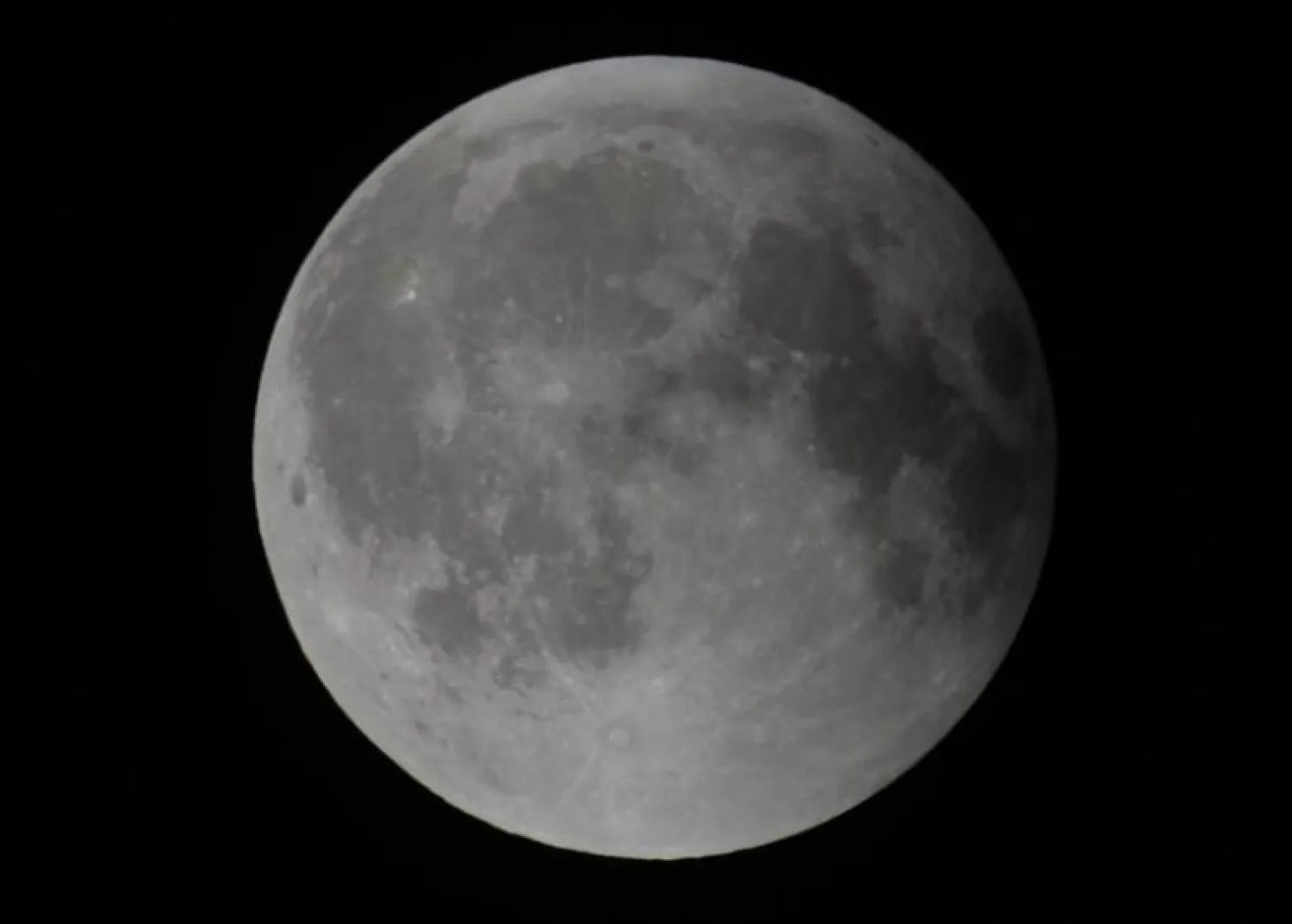
The moon is seen during its final eclipse over Los Angeles, California, early April 15, 2014.  REUTERS/Gene Blevins
The moon is seen during its final eclipse over Los Angeles, California, early April 15, 2014. REUTERS/Gene Blevins
TT

US, Russia Come Together on NASA-Led Lunar Space Station Project

The moon is seen during its final eclipse over Los Angeles, California, early April 15, 2014.  REUTERS/Gene Blevins
The moon is seen during its final eclipse over Los Angeles, California, early April 15, 2014. REUTERS/Gene Blevins

In a move hoping to land humans one day on Mars, both Russia and the United States agreed to cooperate on a NASA-led project to build the first lunar space station.

On Wednesday, the Russian space agency Roscosmos and NASA said they had signed a cooperation agreement at an astronautical congress in Adelaide.

According to AFP, NASA had said earlier this year that it was exploring a program called the Deep Space Gateway, a multi-stage project to push further into the solar system.

An international base for lunar exploration for humans and robots and a stopover for spacecraft is a leading contender to succeed the $100 billion International Space Station (ISS), the world's largest space project to date.

NASA said the agreement reflected the two agencies' common vision for human exploration.

"While the deep space gateway is still in concept formulation, NASA is pleased to see growing international interest in moving into cislunar space as the next step for advancing human space exploration," said Robert Lightfoot, acting administrator at NASA headquarters in Washington, was quoted as saying.

The Russians and Americans would cooperate to build the systems needed to organize scientific missions in lunar orbit and to the surface of the Moon, Roscosmos said.

The Russian space agency added the partners intended "to develop international technical standards which will be used later, in particular to create a space station in lunar orbit."

Russia, the United States and other participants agreed it was important to work using unified standards to avoid future problems in space, Igor Komarov, Roscosmos's general director, said in televised remarks.

"Roscosmos and NASA have already agreed on standards for a docking unit of the future station," the Russian space agency said.

"Taking into account the country's extensive experience in developing docking units, the station's future elements -- as well as standards for life-support systems -- will be created using Russian designs."

NASA said it planned to expand human presence into the solar system using its new deep space exploration transportation systems, the Space Launch System rocket and Orion spacecraft.

Russia and the United States also discussed using Moscow's Proton-M and Angara rockets as well as other spacecraft to help create the infrastructure of the lunar spaceport, the Russian statement said, adding that the main works were slated to begin in the mid-2020s.

Russia and the US work side by side on the ISS, which has been orbiting Earth since 1998.

"We understand that we are key players and we have to work on these missions together," Komarov said.

"The station will be a serious platform for future research," he said.

Experts hailed the announcement as a symbolic beginning of US-Russian joint work on deep space exploration.

"It's better to fly together to the Moon than think who will strike first," Igor Lisov, an editor at Space News, an industry journal, told AFP.

He said Russia had a lot to contribute, given the country's expertise and experience.

"We are offering carriers for flights to a lunar orbiting station, we are offering our docking units or their components," he said, adding Russia had vast experience in creating life-support systems.




Top Trump Iran Negotiator Says Visits US Aircraft Carrier in Middle East

US Special Envoy Steve Witkoff delivers a press conference upon the signing of the declaration on deploying post-ceasefire force in Ukraine, during the so-called "Coalition of the Willing" summit, at the Elysee Palace in Paris, France, January 6, 2026. (Reuters)
TT

Top Trump Iran Negotiator Says Visits US Aircraft Carrier in Middle East

US Special Envoy Steve Witkoff delivers a press conference upon the signing of the declaration on deploying post-ceasefire force in Ukraine, during the so-called "Coalition of the Willing" summit, at the Elysee Palace in Paris, France, January 6, 2026. (Reuters)

US President Donald Trump's lead Iran negotiator Steve Witkoff on Saturday said he visited the USS Abraham Lincoln aircraft carrier currently in the Arabian Sea, with Washington and Tehran due to hold further talks soon.

"Today, Adm. Brad Cooper, Commander of US Naval Forces Central Command, Jared Kushner, and I met with the brave sailors and Marines aboard the USS Abraham Lincoln, her strike group, and Carrier Air Wing 9 who are keeping us safe and upholding President Trump's message of peace through strength," said Witkoff in a social media post.

Iranian Foreign Minister Abbas Araghchi said on Saturday he hoped talks with the United States would resume soon, while reiterating Tehran's red lines and warning against any American attack.


Israel’s Netanyahu Expected to Meet Trump in US on Wednesday and Discuss Iran

Israeli Prime Minister Benjamin Netanyahu delivers a speech during a special session to mark the 77th anniversary of the Knesset's establishment and the 60th anniversary of the dedication of the current building at the Knesset, the Israeli parliament, in Jerusalem, 02 February 2026. (EPA)
TT

Israel’s Netanyahu Expected to Meet Trump in US on Wednesday and Discuss Iran

Israeli Prime Minister Benjamin Netanyahu delivers a speech during a special session to mark the 77th anniversary of the Knesset's establishment and the 60th anniversary of the dedication of the current building at the Knesset, the Israeli parliament, in Jerusalem, 02 February 2026. (EPA)

Israeli Prime Minister Benjamin Netanyahu is expected to meet US President Donald Trump on Wednesday in Washington, where they will discuss negotiations with Iran, Netanyahu's office said on Saturday.

Iranian and US officials held indirect nuclear ‌talks in the ‌Omani capital ‌Muscat ⁠on Friday. ‌Both sides said more talks were expected to be held again soon.

A regional diplomat briefed by Tehran on the talks told Reuters Iran insisted ⁠on its "right to enrich uranium" ‌during the negotiations with ‍the US, ‍and that Tehran's missile capabilities ‍were not raised in the discussions.

Iranian officials have ruled out putting Iran's missiles - one of the largest such arsenals in the region - up ⁠for discussion, and have said Tehran wants recognition of its right to enrich uranium.

"The Prime Minister believes that any negotiations must include limiting ballistic missiles and halting support for the Iranian axis," Netanyahu's office said in a ‌statement.


Italy FM Rules Out Joining Trump’s ‘Board of Peace’

Italy's Minister for Foreign Affairs Antonio Tajani speaks to the press during the EPP Leaders’ meeting, in Zagreb, Croatia, 30 January 2026. (EPA)
TT

Italy FM Rules Out Joining Trump’s ‘Board of Peace’

Italy's Minister for Foreign Affairs Antonio Tajani speaks to the press during the EPP Leaders’ meeting, in Zagreb, Croatia, 30 January 2026. (EPA)

Italy will not take part in US President Donald Trump's "Board of Peace", Italian Foreign Minister Antonio Tajani said Saturday, citing "insurmountable" constitutional issues.

Trump launched his "Board of Peace" at the World Economic Forum in Davos in January and some 19 countries have signed its founding charter.

But Italy's constitution bars the country from joining an organization led by a single foreign leader.

Prime Minister Giorgia Meloni, a Trump ally, last month noted "constitutional problems" with joining, but suggested Trump could perhaps reopen the framework "to meet the needs not only of Italy, but also of other European countries".

Tajani appeared Saturday to rule that out.

"We cannot participate in the Board of Peace because there is a constitutional limit," he told the ANSA news agency.

"This is insurmountable from a legal standpoint," he said, the day after meeting US Secretary of State Marco Rubio and US Vice President JD Vance at the Olympics in Milan.

Although originally meant to oversee Gaza's rebuilding, the board's charter does not limit its role to the Palestinian territory and appears to want to rival the United Nations.