Kurds: Baghdad Gives Ultimatum on Kirkuk Pullback

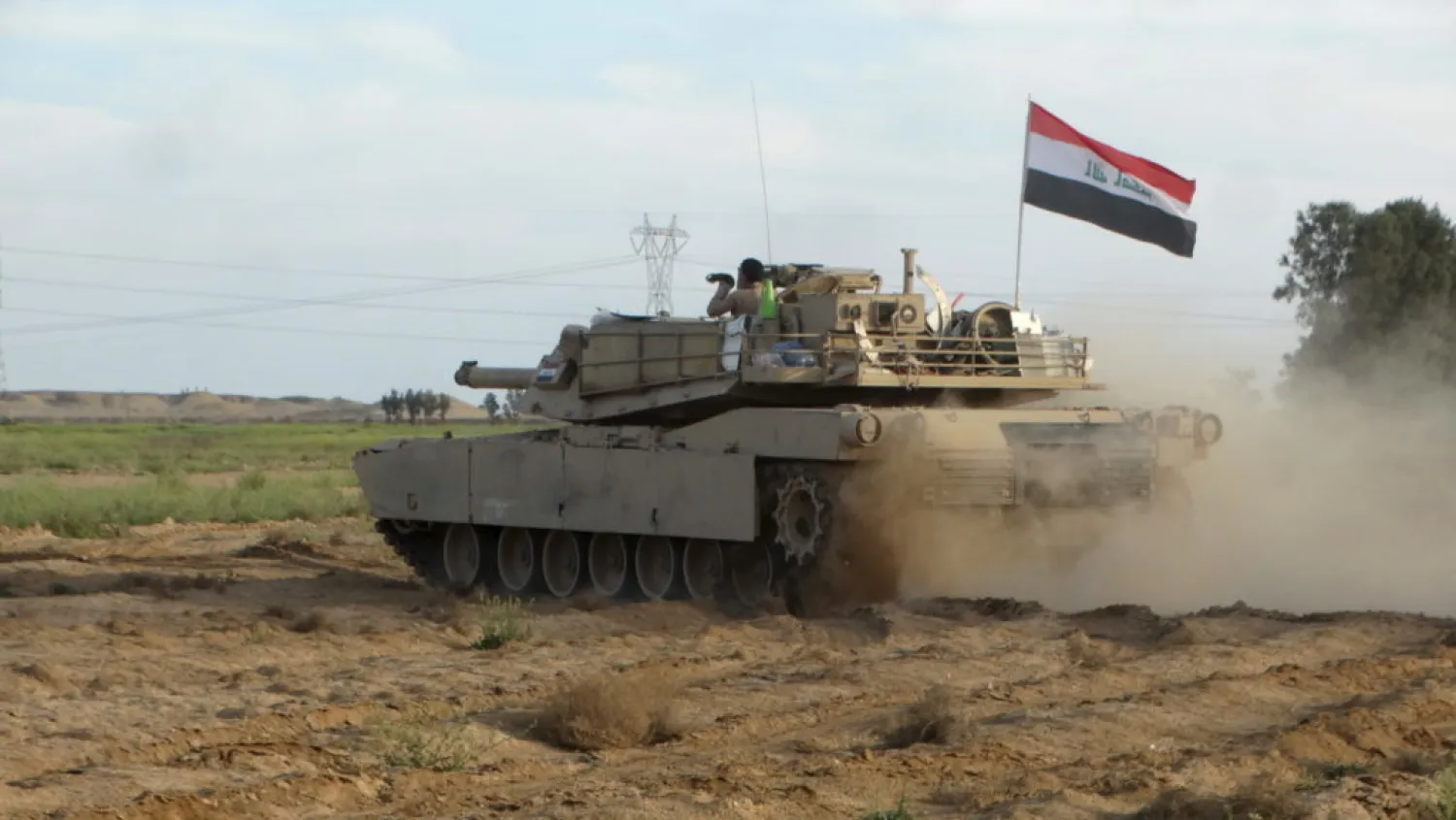
An Iraqi army tank is pictured during a military operation toward the town of Hit, in west of Ramadi, March 8, 2016. Picture taken March 8, 2016. REUTERS/Stringer
TT

Kurds: Baghdad Gives Ultimatum on Kirkuk Pullback

An Iraqi army tank is pictured during a military operation toward the town of Hit, in west of Ramadi, March 8, 2016. Picture taken March 8, 2016. REUTERS/Stringer

Baghdad has set a pre-dawn Sunday deadline for Kurdish forces to abandon positions in the disputed oil province of Kirkuk they took during the fightback against ISIS more than three years ago, a senior Kurdish official said.

"The deadline set for the peshmerga to return to their pre-June 6, 2014 positions will expire during the night," the Kurdish official told AFP.

Asked at what time, he said 2 am on Sunday (2300 GMT Saturday).

The alleged ultimatum comes as thousands of Iraqi troops and the Popular Mobilization Forces are locked in an armed standoff with Kurdish peshmerga fighters near ethnically divided but historically Kurdish-majority Kirkuk.

Tensions have soared between the erstwhile allies in the war against ISIS since a Kurdish vote for independence last month.

Tens of thousands of peshmerga soldiers have been stationed in and around Kirkuk for some time and another 6,000 have arrived since Thursday, Kosrat Rasul, vice president in the Kurdistan Regional Government (KRG), has said.

The KRG's Security Council expressed alarm late on Thursday at what it called a significant Iraqi military buildup south of Kirkuk, "including tanks, artillery, Humvees and mortars."

Kurdish security sources later said that the Peshmerga had shifted their defense lines by 3 km to 10 km south of Kirkuk to reduce the risk of clashes with Iraqi forces, which then moved into some of the vacated positions, including in Taza Khurmatu, without incident.

Also Saturday, Iraqi President Fuad Masum, who is himself a Kurd, held urgent talks with Kurdish leaders in the city of Sulaimaniyah in the south of the autonomous Kurdish region.

In June 2014, ISIS militants swept through vast areas north and west of Baghdad, prompting many Iraqi army units to disintegrate and Kurdish forces to step in.

They did so primarily in historically Kurdish-majority areas they had long sought to incorporate in their three-province autonomous region in the north against the strong opposition of Baghdad.

The Kurds currently control the city of Kirkuk and three major oil fields in the province which account for a significant share of the regional government's oil revenues.

In Washington, Defense Secretary Jim Mattis said on Friday that the US was working to reduce tensions between Iraqi federal and Kurdish forces, urging them to remain focused on the war against terrorists.

"We are trying to tone everything down and to figure out how we go forward without losing sight of the enemy, and at the same time recognizing that we have got to find a way to move forward," he told reporters.

"Everybody stay focused on defeating ISIS. We can't turn on each other right now. We don't want to go to a shooting situation," he added.


UN Humanitarian Mission Enters Sudan's Stricken El Fasher for First Time in 18 Months

Sudanese displaced people who left El Fasher after its fall, sit in the shade in Tawila at the Rwanda camp reception point on December 17, 2025. (Photo by AFP)
TT

UN Humanitarian Mission Enters Sudan's Stricken El Fasher for First Time in 18 Months

Sudanese displaced people who left El Fasher after its fall, sit in the shade in Tawila at the Rwanda camp reception point on December 17, 2025. (Photo by AFP)

The United Nations said a humanitarian mission has entered the Sudanese city of El Fasher, capital of North Darfur state, for the first time since the Rapid Support Forces (RSF) took control following a siege that stretched for more than a year and pushed the city into a deep humanitarian crisis.

At the same time, Chad’s army command on Saturday condemned an attack by the RSF on a border town inside Chadian territory that killed two Chadian soldiers and wounded a third, calling it an “unjustified aggression” against Chad’s sovereignty.

In late October, the RSF tightened its grip on El Fasher, the last stronghold of the Sudanese army in the Darfur region, following a siege that lasted more than 18 months and was marked by intense fighting, amid reports and evidence of mass killings, abductions and rape of civilians.

In this context, the United Nations Office for the Coordination of Humanitarian Affairs stated that a UN assessment mission had arrived in El Fasher after prolonged humanitarian negotiations, describing the move as “a sign of a limited breakthrough” in efforts to deliver aid to the city, which had been under a suffocating blockade.

The office said the mission included a delegation from the World Food Program to assess urgent food needs, a team from the World Health Organization to evaluate damage to health facilities and their emergency requirements, as well as a team from UNICEF focused on assessing the situation of children and pressing humanitarian needs.

US welcome

The senior adviser to the US president for Arab and African affairs, Massad Boulos, welcomed the arrival of the assessment mission in El Fasher, stating that it demonstrated the contribution of US diplomacy to “saving lives.”

In a post on X, Boulos stated that the critical access was achieved after months of negotiations through a track facilitated by the United States, with joint efforts alongside OCHA and humanitarian partners on the ground.

He called, as part of mediation efforts to end the war in Sudan, for the declaration of a comprehensive humanitarian truce, urging both sides to accept and implement it immediately without conditions, and to ensure unhindered access for humanitarian aid to all parts of Sudan.

He also urged the international community to increase funding to support OCHA’s response.

The arrival of the UN assessment mission in El Fasher marked the first humanitarian entry into the city since May 2024.

On the other hand, forces of the so-called “Founding Government,” allied with the RSF and controlling the Darfur region, stated in a press release on Saturday that they were fully prepared to secure and facilitate humanitarian work in the Darfur and Kordofan regions.

They said the visit by a delegation from OCHA and the UN Department of Safety and Security included displacement centers, UN premises and a number of vital facilities inside El Fasher.

According to the statement, the UN mission completed its visit to El Fasher and arrived safely in the town of Tawila, with no official comment from the Sudanese army on the mission’s entry.

The army had for long periods refused to allow humanitarian organizations and aid to enter through the Adre border crossing with Chad, worsening the humanitarian crisis inside the city, where residents have faced acute shortages of food, medicine and health services.

Asharq Al-Awsat had previously quoted the director of the World Food Program as saying the United Nations was forced to restrict relief operations through Chad toward Darfur.

Chadian warning

In a separate development, an RSF drone carried out an attack targeting the town of Tina on the Chadian border.

A senior Chadian army officer told Agence France Presse, speaking on condition of anonymity, that the incident marked the first time the Chadian army had suffered direct human losses since the outbreak of the war in Sudan.

Chad’s general staff described the attack as “deliberate and intentional,” saying it constituted a clear violation of international law, and warned all parties to the Sudanese conflict against any infringement on Chadian territory.

In a statement, the Chadian army said it reserves the “right to respond by all lawful means” and to exercise the right of self-defense if any attack is repeated, in accordance with Article 51 of the United Nations Charter.

The RSF controls most areas of northern and western Darfur, except for limited pockets held by neutral tribal groups. The forces said last Wednesday they had taken control of the towns of Abu Qumra and Umm Baro in North Darfur, areas located on the road leading to the Chadian border town of Tina.


Hamas to Elect Political Bureau Chief Soon

File photo dated 2017 shows Hamas leader in Gaza Yahya Sinwar alongside Ismail Haniyeh (Reuters)
TT

Hamas to Elect Political Bureau Chief Soon

File photo dated 2017 shows Hamas leader in Gaza Yahya Sinwar alongside Ismail Haniyeh (Reuters)

Hamas is moving in the coming days to elect a new head of its political bureau, in an effort to fill a leadership vacuum left by the killing of its former chief, Yahya Sinwar, who died in October 2024 during clashes he fought alongside his fighters in the southern Gaza city of Rafah.

Sinwar had been chosen as successor to Ismail Haniyeh, who was assassinated at the end of July that year in the Iranian capital, Tehran.

Sources in Hamas told Asharq Al-Awsat that the election for the movement’s political bureau chief would take place next week or within the first 10 days of January.

They said a deputy could be elected during the same period or at a later stage, following internal arrangements that could also allow for an appointment rather than an election, unlike the process for the Hamas leader.

The sources stated that there is more than one candidate to lead Hamas, including Khaled Meshaal and Khalil al-Hayya, as well as other figures. They stated that the vote would be held in accordance with the movement’s long-standing internal regulations and that a fraternal atmosphere prevailed ahead of the elections.

According to the sources, electing a new head of the political bureau aims to bolster internal stability and reassurance, and to send a clear message to the outside world that the movement remains cohesive and retains a leadership cadre capable of managing all affairs and taking decisions by full consensus within the political bureau, as was the case before the assassinations carried out during the war.

They said the election would not end the role of the current leadership council that was formed to run the movement after the killings of Haniyeh and Sinwar.

The council would instead be regarded as an advisory body overseeing Hamas’s internal and external issues, with consultations continuing on key matters until the end of its term in 2026.

The sources added that no full elections for the political bureau would be held at this stage, with such elections expected to take place after a year.

They said the upcoming vote would be limited solely to the post of overall political bureau chief and would not include any other organizational bodies.

On the leadership of Hamas’s political bureau in Gaza, following Sinwar’s killing and the failure to appoint a successor, the sources said Khalil al-Hayya is currently heading the bureau in the enclave. If he is elected overall political bureau chief, another figure would be assigned under specific mechanisms to replace him, possibly from within Gaza itself.

They noted that several members of the political bureau in Gaza have already been tasked with managing various portfolios.

The sources said members of the political bureau killed by Israel inside Gaza have been temporarily replaced by others to carry out their duties, including freed prisoners who had been very close to Sinwar.

Hamas has been hit by a series of assassinations targeting its leaders during the two-year war, both inside and outside the Gaza Strip.

Among the most prominent figures killed abroad were Haniyeh and his former deputy, Saleh al-Arouri, who was assassinated in Lebanon in January 2024.

The Gaza Strip is also witnessing a series of administrative and organizational arrangements at first- and second-tier leadership levels, aimed at filling the vacancies left by Israeli assassination operations.


Al-Alimi Says Will Not Allow Forceful Fait Accompli in Yemen’s Hadhramaut, al-Mahra

Yemen’s Presidential Leadership Council Chairman Rashad al-Alimi meets with members of the advisory body (SABA)
TT

Al-Alimi Says Will Not Allow Forceful Fait Accompli in Yemen’s Hadhramaut, al-Mahra

Yemen’s Presidential Leadership Council Chairman Rashad al-Alimi meets with members of the advisory body (SABA)

Yemen’s Presidential Leadership Council Chairman Rashad al-Alimi on Saturday set out firm red lines against any attempts to impose a new military reality in the eastern provinces of Hadhramaut and al-Mahra, warning that developments there are not a political disagreement but a calculated course of unilateral steps that challenge the foundations of the transitional phase.

Speaking at an expanded meeting with the council’s advisory body, al-Alimi said protecting civilians is a core responsibility of the state, adding that the political leadership formally requested the intervention of the Saudi-led coalition supporting legitimacy, which he said responded immediately to contain the escalation, prevent bloodshed, and restore the situation to its natural course.

According to official media, al-Alimi reviewed developments in the eastern provinces, saying the state had acted with “a high degree of responsibility” in dealing with what he described as a dangerous escalation driven by military moves by the Southern Transitional Council, aimed at imposing a fait accompli by force and undermining the foundations of the transitional phase, foremost among them the transfer of power declaration and the Riyadh Agreement.

He stated that the escalation in Hadhramaut had expanded from administrative decisions into military movements, which included the districts of Ghayl Bin Yamin, Al Shihr, and Al Dis Al Sharqiya. He added that claims of fighting terrorism had been used as a pretext to alter the balance of power on the ground.

Al-Alimi stressed that counterterrorism is an exclusive responsibility of state institutions, warning that any actions outside this framework do not contain extremism but instead create dangerous security vacuums that threaten social cohesion and civil peace.

He also pointed to accompanying humanitarian violations, citing field and rights reports documenting civilian casualties and attacks on public and private property, as well as the erosion of the Yemeni state’s legal standing.

Coalition move and mediation support

Al-Alimi briefed the advisers on the outcomes of a meeting of the National Defense Council, which concluded that the escalation constituted a clear breach of the transitional references and an act of rebellion against legitimate state institutions, underscoring the state’s duty to protect civilians, impose de-escalation, and prevent bloodshed.

He stated that the political leadership, acting on the council’s recommendations, submitted a formal request to the coalition, seeking legitimacy to take immediate measures to protect civilians in Hadhramaut. The joint forces command responded promptly, he added, in a bid to prevent bloodshed and restore stability.

Al-Alimi warned that any military movements that undermine de-escalation efforts or endanger civilians would be dealt with directly, in a manner that safeguards lives and supports mediation efforts led by Saudi Arabia and the United Arab Emirates.

He stated that this included the withdrawal of Southern Transitional Council forces from camps in Hadhramaut and al-Mahra, their handover to the National Shield forces, and the enabling of local authorities to exercise their constitutional powers.

He reiterated his full support for mediation led by Riyadh and Abu Dhabi, praising the two countries’ role in supporting Yemen’s unity and stability, and welcoming the remarks by Saudi Defense Minister Prince Khalid bin Salman, which he said reflected sincere fraternal concern for restoring Yemen's state institutions.

Al-Alimi also reaffirmed that resolving the southern issue remains a firm commitment through consensus and confidence-building measures, warning against unilateral actions that serve only Yemen’s enemies. He stressed the need to keep dialogue channels open and to mobilize efforts to confront the Houthi militias backed by Iran.