


Qatar Freezes Sheikh Abdullah bin Ali al-Thani’s Bank Accounts

Sheikh Abdullah bin Ali Al Thani (Asharq Al-Awsat)
TT

Qatar Freezes Sheikh Abdullah bin Ali al-Thani’s Bank Accounts

Sheikh Abdullah bin Ali Al Thani (Asharq Al-Awsat)

Qatar has reportedly frozen all assets belonging to Sheikh Abdullah bin Ali Al Thani, one of the most Qatari prominent figures to speak out against the government in the ongoing crisis involving Doha.

Sheikh Al Thani revealed on Saturday on his Twitter account that all his accounts were frozen in Qatari banks.

“It is an honor the the Qatari regime froze my bank accounts in Qatar, and I would like to thank them for this reward. I dedicate this to my country,” Al Thani tweeted.

He hoped that Qatar can expell those exploiting the country for money and other benefits, and to return to the embrace of sister countries that we cherish, because only they can help Doha.

"May God save Qatar and its people," he concluded.

Earlier last month, Sheikh Abdullah called for a meeting for all royal members to contain the problem.

“I call on the wise sons of the family, and the prestigious Qatari people to sit in a brotherly, familial and national meeting to discuss the crisis, and what we would be able to do in order to get everything back on track, and enforce the Gulf cooperation” he said.

A political science professor at University of Qatar Mohammed al-Misfer made threatening statements during an interview with the official Qatari Television on Monday.

“The war of Dahis and Ghabra is over, and the Basus war is over (too), and the tribal gathering will not do anything,” Misfer said, adding that neither swords, nor horses, nor personal heroism is counted as it was in the Basus war.

He concluded that other weapons like “tanks, long-range missiles, aircraft and chemical weapons have now taken over and I think, in this case, all massive weapons, God forbid, will be used if something of that sort happened.”



Saudi Arabia, Pakistan Affirm Continued Joint Efforts to Confront Attacks

Saudi Minister of Defense Prince Khalid bin Salman bin Abdulaziz met with Pakistan's Chief of Army Staff and Chief of Defense Forces Field Marshal Asim Munir in Riyadh. SPA
TT

Saudi Arabia, Pakistan Affirm Continued Joint Efforts to Confront Attacks

Saudi Minister of Defense Prince Khalid bin Salman bin Abdulaziz met with Pakistan's Chief of Army Staff and Chief of Defense Forces Field Marshal Asim Munir in Riyadh. SPA

Saudi Defense Minister Prince Khalid bin Salman bin Abdulaziz said early on Saturday that he had affirmed with Pakistan's army chief, Field Marshal Asim Munir, in Riyadh continued joint efforts to confront attacks against the Kingdom in accordance with the Makkah Joint Defense Agreement.

The pact was signed by Saudi Arabia, Pakistan and Türkiye last month.

Prince Khalid met with Munir to discuss the attacks on Makkah and on civilian and economic facilities in Saudi Arabia, the Saudi Press Agency reported.

They commended the outcomes of the meeting of the chiefs of staff of the Makkah Joint Defense Agreement states and stressed the continuation of joint efforts to confront the attacks under the agreement, SPA said.

The meeting was attended by Minister of State, Cabinet Member, and National Security Adviser Dr. Musaed bin Mohammed Al-Aiban; Chief of the General Staff Gen. Fayyad bin Hamed Al-Ruwaili; and Adviser to the Minister of Defense for Intelligence Affairs Hisham bin Abdulaziz bin Saif, along with several Pakistani officials.

Hours earlier, the military chiefs of Saudi Arabia, Pakistan and Türkiye reviewed threats facing Saudi Arabia at ⁠a ⁠meeting in the Saudi capital.


Saudi Coalition Says it Intercepts Missiles, Drones

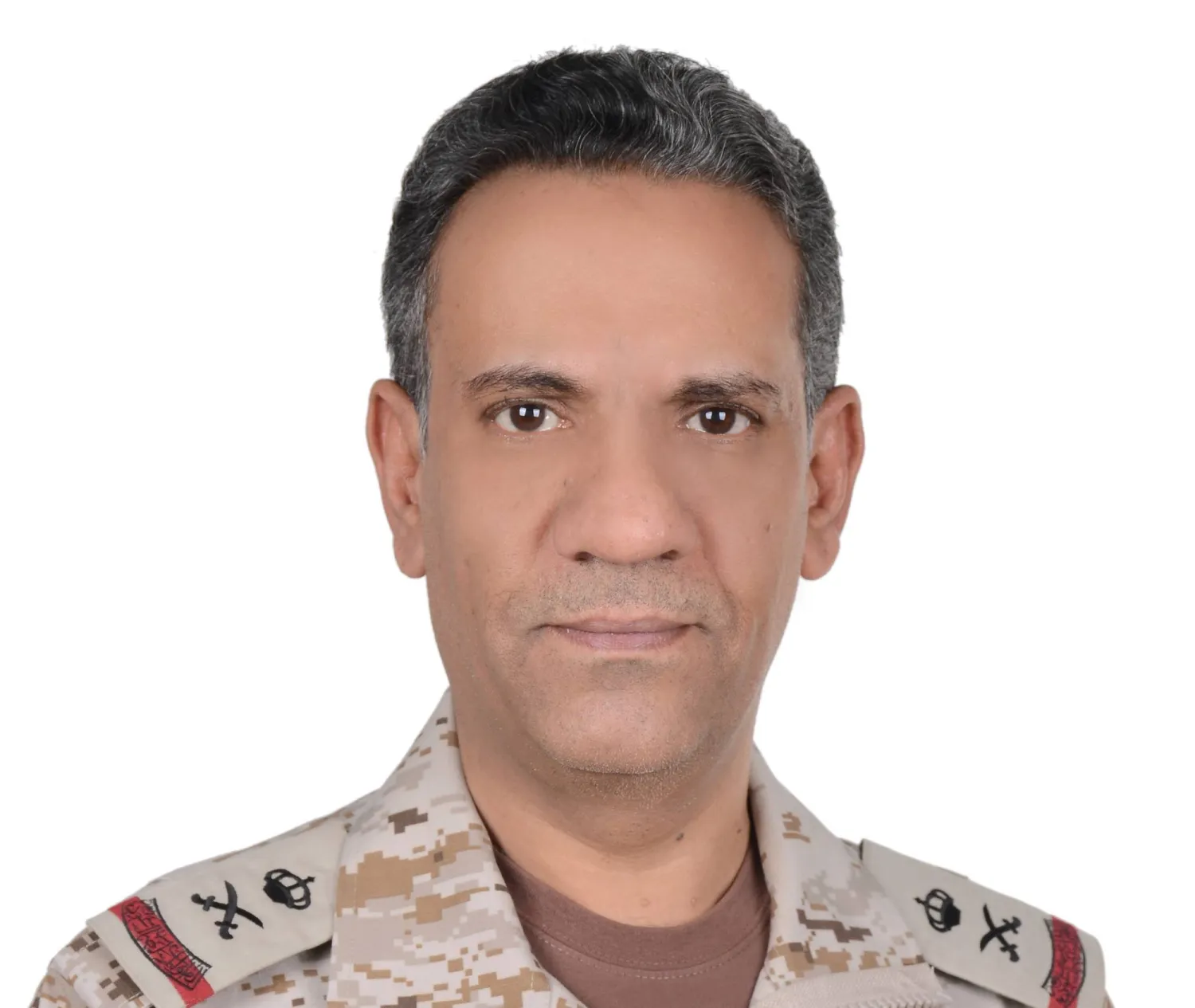
Official Spokesperson for the Coalition to Restore Legitimacy in Yemen Major General Turki Al-Malki
TT

Saudi Coalition Says it Intercepts Missiles, Drones

Official Spokesperson for the Coalition to Restore Legitimacy in Yemen Major General Turki Al-Malki

Official Spokesperson for the Coalition to Restore Legitimacy in Yemen Major General Turki Al-Malki said early on Saturday that the Coalition had intercepted two ballistic missiles and two drones launched by the Houthis towards the Kingdom.

Al-Malki said in separate statements that the missiles were headed towards Khamis Mushait and the drones towards the capital, Riyadh, adding that the Coalition was monitoring the missile threat and drones launched at the Kingdom.

The Saudi civil defense had ⁠sent alerts overnight ⁠for Khamis Mushait and Abha.


Albudaiwi: Water Security is Strategic Priority for Gulf Stability, Energy Security

Part of the "Water as a Strategic Imperative: From Global Challenges to Collective Action" session held on the sidelines of the 81st session of the UN General Assembly in New York (GCC)
TT

Albudaiwi: Water Security is Strategic Priority for Gulf Stability, Energy Security

Part of the "Water as a Strategic Imperative: From Global Challenges to Collective Action" session held on the sidelines of the 81st session of the UN General Assembly in New York (GCC)

Gulf Cooperation Council (GCC) Secretary-General Jasem Albudaiwi stressed that water security constitutes a strategic priority for GCC member states, directly intersecting with human security, economic prosperity, food security, and energy security as a fundamental pillar of stability.

Albudaiwi made the remarks during a panel titled "Water as a Strategic Imperative: From Global Challenges to Collective Action," organized by the Permanent Mission of the United Arab Emirates to the United Nations on the sidelines of the 81st session of the UN General Assembly in New York, SPA reported.

He noted that enduring regional water scarcity has driven GCC countries to innovate, invest, and build extensive expertise in desalination, wastewater recycling, demand management, and advanced technologies, while strengthening the water-energy-food-climate nexus.

Emphasizing that technology alone cannot guarantee water security, Albudaiwi highlighted ongoing GCC joint initiatives to establish a regional water grid interconnection. The project aims to bolster supply security, regional readiness, and emergency response capabilities during crises.

He also called for leveraging artificial intelligence, smart water management systems, and renewable energy, alongside collaborative financing models linking governments, development institutions, and the private sector to develop scalable infrastructure projects.

Albudaiwi concluded by pointing to the upcoming UN Water Conference, co-hosted by the UAE and Senegal in Abu Dhabi in December 2026, as a pivotal platform to advance multilateral water partnerships and tangible investments.