


Saudi Crown Prince Appoints Dr. Kleinfeld As NEOM CEO

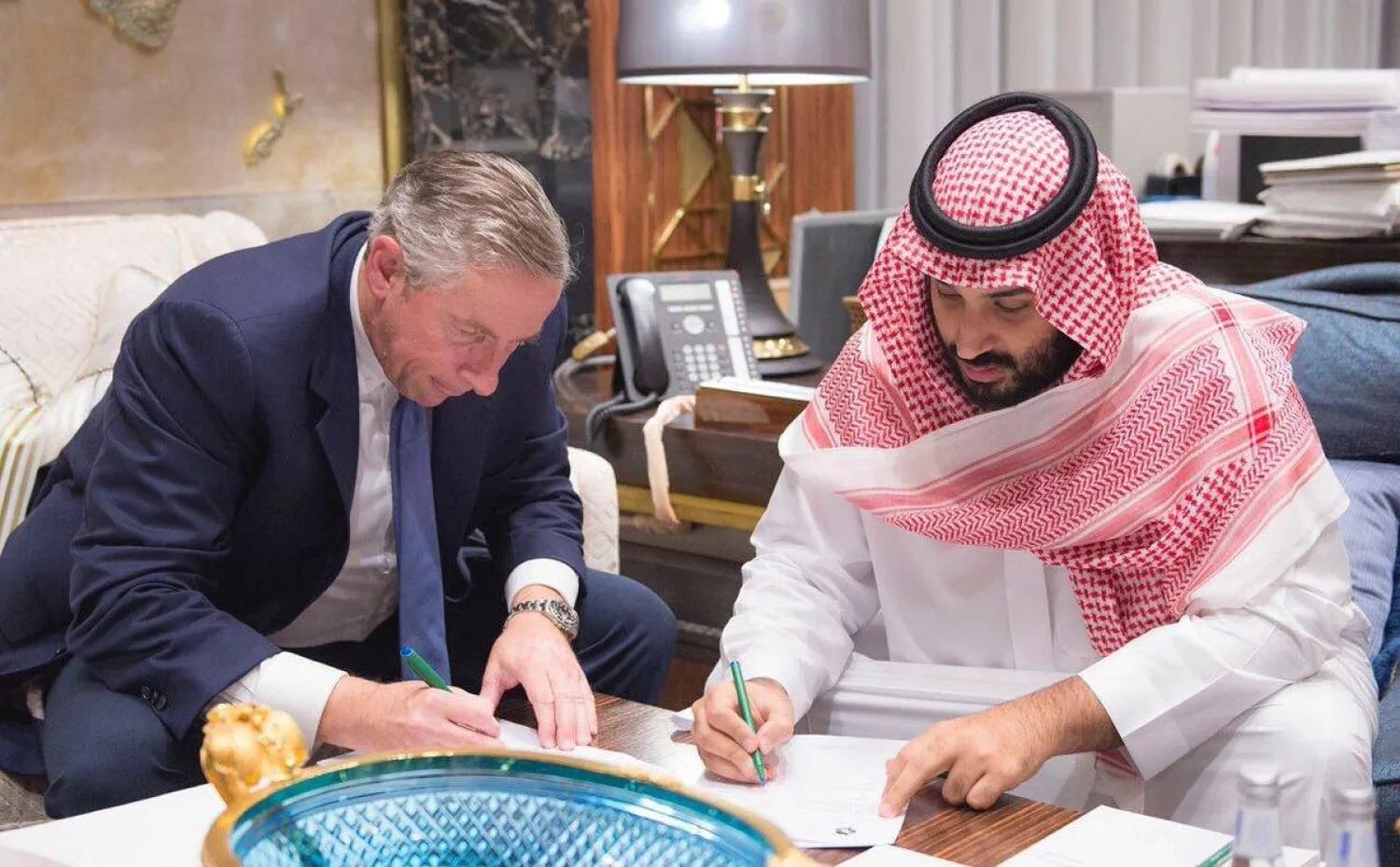
Crown Prince Mohammed bin Salman pictured with Dr. Klaus Kleinfeld, Chief Executive of NEOM, former CEO of Arconic.
TT

Saudi Crown Prince Appoints Dr. Kleinfeld As NEOM CEO

Crown Prince Mohammed bin Salman pictured with Dr. Klaus Kleinfeld, Chief Executive of NEOM, former CEO of Arconic.

The Public Investment Fund of Saudi Arabia announced on Tuesday the appointment of Dr. Klaus Kleinfeld, the former Chairman and CEO of Alcoa and Arconic Inc. as CEO of NEOM, an entirely new city on Saudi Arabia’s Red Sea coast.

NEOM, was announced Tuesday by HRH Mohammed bin Salman bin Abdulaziz Al Saud, Crown Prince, Deputy Prime Minister, Chairman of the PIF and Chairman of the Founding Board for NEOM. It will be backed by more than $500 billion over the coming years by the Kingdom of Saudi Arabia, the Public Investment Fund, local as well as international investors.

The appointment of Dr. Kleinfeld underlines the Kingdom’s ambitions. NEOM was born from Saudi Arabia's Vision 2030 plan, which aims to see the country develop into a pioneering and thriving model of excellence in various and important areas of life. NEOM stretches over 26,500 km2 of land and extends across the Egyptian and Jordanian borders, rendering NEOM the first special economic zone to span three countries.

Dr. Kleinfeld is a globally respected business leader who, most recently, was the former Chairman and CEO of Alcoa and Arconic, the global leaders in the aluminum industry as well as multi-material precision engineered products and solutions. Before Alcoa, Dr. Kleinfeld enjoyed a 20-year career with Siemens, the global electronics and industrial conglomerate, where he also served as chief executive officer.

"NEOM will be constructed from the ground-up, on greenfield sites. Future technologies form the cornerstone of NEOM's development. All this will allow for a new way of life to emerge. Dr. Kleinfeld has a track record in leading some of the world's most dynamic, advanced and best-performing businesses and we believe these skills and his leadership will ensure NEOM's success", said His HRH Prince Mohammed bin Salman.

"NEOM is a unique opportunity to combine highest levels of livability with excellent economic prospects. I am honored and excited to take on this leadership role", commented Dr. Kleinfeld.

Dr. Kleinfeld is also an Honorary Trustee of the Brookings Institute and a life member of the Council on Foreign Relations. He is an Honorary Senator of the Lindau Nobel Laureates Meeting and on the Board of Trustees of the World Economic Forum. For many years, Dr. Kleinfeld was a member of the Chinese Premier Li's Global CEO Advisory Council, a member of the Mayor of Shanghai's International Business Leaders Advisory Council and a member of the Foreign Investment Advisory Council to the Prime Minister of Russia. Dr. Kleinfeld also served for many years on the board of Bayer, Morgan Stanley and Hewlett Packard.



Mawani Reports 2.01% Increase in Container Throughput for January 2026

Mawani Reports 2.01% Increase in Container Throughput for January 2026
TT

Mawani Reports 2.01% Increase in Container Throughput for January 2026

Mawani Reports 2.01% Increase in Container Throughput for January 2026

Ports overseen by the Saudi Ports Authority (Mawani) reported a 2.01% increase in container handling for January 2026, totaling 738,111 TEUs, up from 723,571 TEUs in January 2025. Transshipment containers rose significantly by 22.44%, reaching 184,019 TEUs compared to 150,295 TEUs the previous year.

However, the number of imported containers decreased by 3.23% to 284,375 TEUs, and exported containers dropped by 3.47% to 269,717 TEUs year-over-year, SPA reported.

Passenger numbers surged by 42.27%, totaling 143,566 passengers compared to 100,909 last year. Vehicle volumes increased by 3.31% to 109,097, and the ports received 886,908 heads of livestock, a 49.86% increase from the same period in 2025.

In terms of cargo tonnage, liquid bulk cargo rose by 0.28% to 14,102,495 tons, general cargo totaled 839,987 tons, and solid bulk cargo reached 4,263,168 tons. The total tonnage handled was 19,205,650 tons, reflecting a 3.04% decrease from the previous year. Vessel traffic recorded 1,121 ships, a slight decrease of 1.75%.

This increase in container throughput supports trade, stimulates the maritime transport industry, and enhances supply chains and food security. These achievements align with the National Transport and Logistics Strategy, reinforcing Saudi Arabia's position as a global logistics hub.

In 2025, Mawani ports achieved a 10.58% increase in total handled containers, reaching 8,317,235 TEUs, while transshipment containers for the year rose by 11.78% to 1,927,348 TEUs.


Oil Prices Edge Lower as IEA Reduces Demand Forecast

Oil platforms and pumpjacks at Lake Maracaibo, in Cabimas, Venezuela, January 26, 2026. REUTERS/Leonardo Fernandez Viloria/File Photo
TT

Oil Prices Edge Lower as IEA Reduces Demand Forecast

Oil platforms and pumpjacks at Lake Maracaibo, in Cabimas, Venezuela, January 26, 2026. REUTERS/Leonardo Fernandez Viloria/File Photo

Oil prices slipped on Thursday as investors weighed the International Energy Agency's lowering of its global oil demand forecast for 2026 against potential escalation of US-Iran tensions.

Brent crude oil futures were down 19 cents, or 0.27%, at $69.21 a barrel by 1232 GMT. US West Texas Intermediate crude fell 8 cents, or 0.12%, to $64.55.

Global oil demand will rise more slowly than previously expected this year, the IEA said on Thursday while projecting a sizeable surplus despite outages that cut supply in January.

The Brent and WTI benchmarks reversed gains to turn negative after the IEA's monthly report, having derived support earlier from concerns over the US-Iran backdrop.

US President Donald Trump said after talks with Israeli Prime Minister Benjamin Netanyahu on Wednesday that they had yet to reach a definitive agreement on how to move forward with Iran but that negotiations with Tehran would continue.

Trump had said on Tuesday that he was considering sending a second aircraft carrier to the Middle East if a deal is not reached with Iran. The date and venue of the next round of talks have yet to be announced.

A hefty build in US crude inventories had capped the early price gains. US crude inventories rose by 8.5 million barrels to 428.8 million barrels last week, the Energy Information Administration said, far exceeding the 793,000 increase expected by analysts in a Reuters poll.

US refinery utilization rates dropped by 1.1 percentage points in the week to 89.4%, EIA data showed.

On the supply side, Russia's seaborne oil products exports in January rose by 0.7% from December to 9.12 million metric tons on high fuel output and a seasonal drop in domestic demand, data from industry sources and Reuters calculations showed.


Saudi Aramco Reportedly Sells Oil from Jafurah Field as Huge Project Starts

Saudi Aramco's Jafurah project. Photo: Aramco
TT

Saudi Aramco Reportedly Sells Oil from Jafurah Field as Huge Project Starts

Saudi Aramco's Jafurah project. Photo: Aramco

Saudi Aramco sold oil from its $100 billion Jafurah project in the first reported export from the massive natural gas development, Bloomberg reported.

Jafurah is Aramco’s first unconventional field, developed using the type of hydraulic fracturing, or fracking, techniques pioneered in the US shale patch.

The deposit, which Chief Executive Officer Amin Nasser calls the company’s crown jewel, will produce massive amounts of natural gas once at capacity, expected in 2030. It also has plentiful volume of liquid fuels that will boost the company’s returns, Nasser has said.

The oil that Aramco sold is condensate, a light oil liquid that’s often found in gas deposits, according to traders with knowledge of the purchases. It will go to buyers in Asia for loading later this month or in early March, Bloomberg quoted the traders as saying.