


Saudi Arabia Permits Foreigners to Directly Invest in Parallel Market

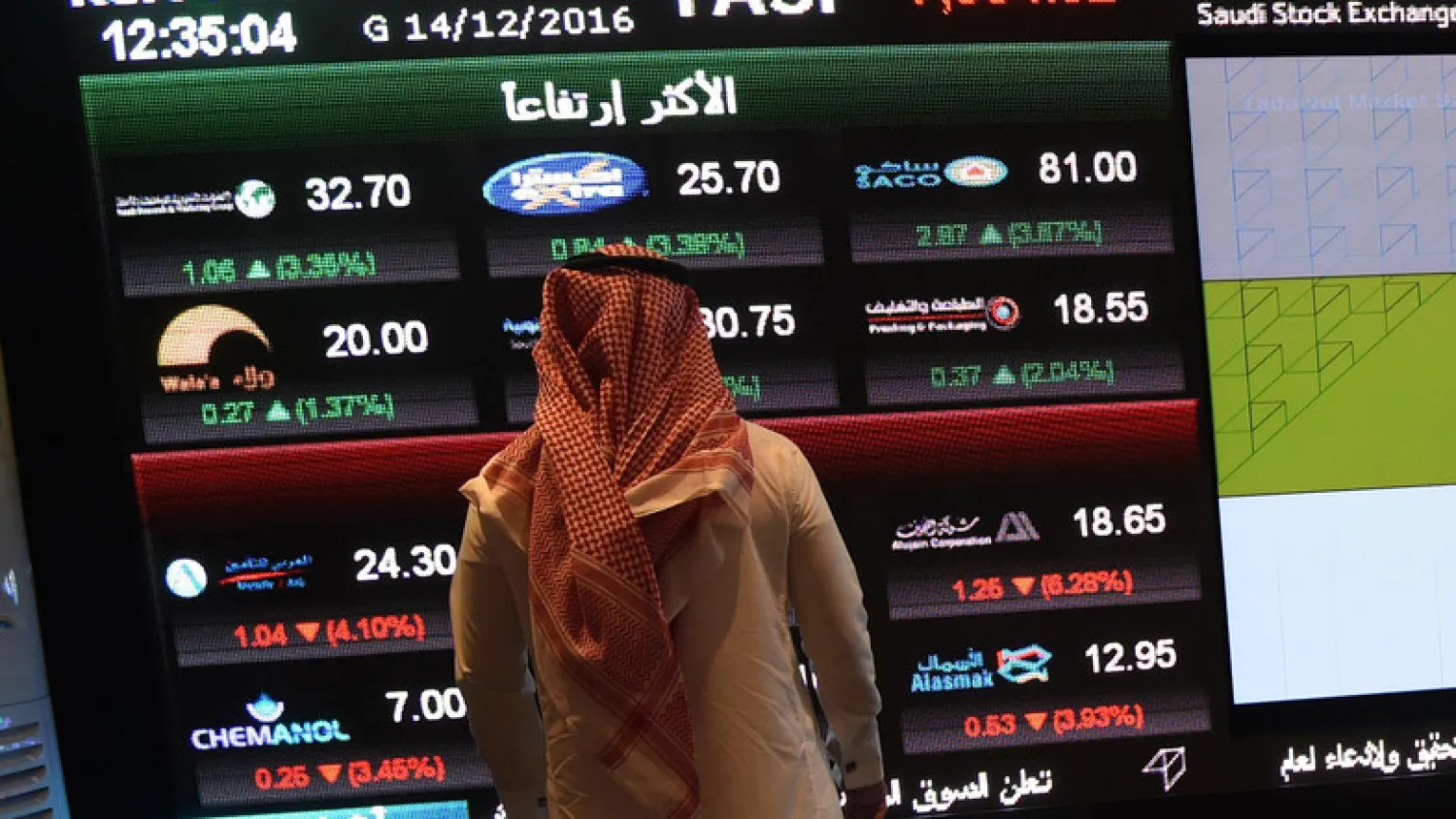
A Saudi investor monitors the stock exchange at the Saudi Stock Exchange, or Tadawul, on December 14, 2016 in the capital Riyadh. (AFP)
TT

Saudi Arabia Permits Foreigners to Directly Invest in Parallel Market

A Saudi investor monitors the stock exchange at the Saudi Stock Exchange, or Tadawul, on December 14, 2016 in the capital Riyadh. (AFP)

Saudi Arabia plans to make its capital market more accessible to foreign investors by giving them full access to NOMU, a parallel market recently launched for small and medium-sized enterprises, Mohammed El Kuwaiz, chairman of the Capital Market Authority (CMA) said on Thursday.

Non-resident foreign investors will be able to invest directly in the parallel market starting from January 1 next year.

This step comes within CMA’s strategic plans that aim at achieving Saudi Vision 2030. It also falls under the framework of organizing the financial market and developing its role in supporting the national economy. 

Kuwaiz affirmed that this step goes in tandem with the methodology followed by CMA which seeks to open the financial market for foreign investment.

The methodology stands on the concept of treating the foreign investor as the Saudi investor by empowering him to invest directly in the parallel market NOMU without having to be a QFI (Qualified Foreign Investor).

This step seeks to permit additional categories of investors to invest, at a time when qualification conditions required from foreign investors are the same as those requested from Saudis, Kuwaiz stressed.

CMA issued earlier a Guidance Note of the Investment of Non-Resident Foreigners in the Parallel Market that aims at clarifying the investment mechanism and restrictions related to it. Remarkably, categories allowed to participate in NOMU included qualified foreign investors and final beneficiaries in barter agreements. However, the guidance note included non-resident foreign natural people and legal entities complying with the stipulated standards in the definition of the qualified investor.

The first reaction to the CMA decision was that NOMU index rose 6 percent during Thursday’s trading, closing at 3,192 points.



Indian Refiners Avoid Russian Oil in Push for US Trade Deal

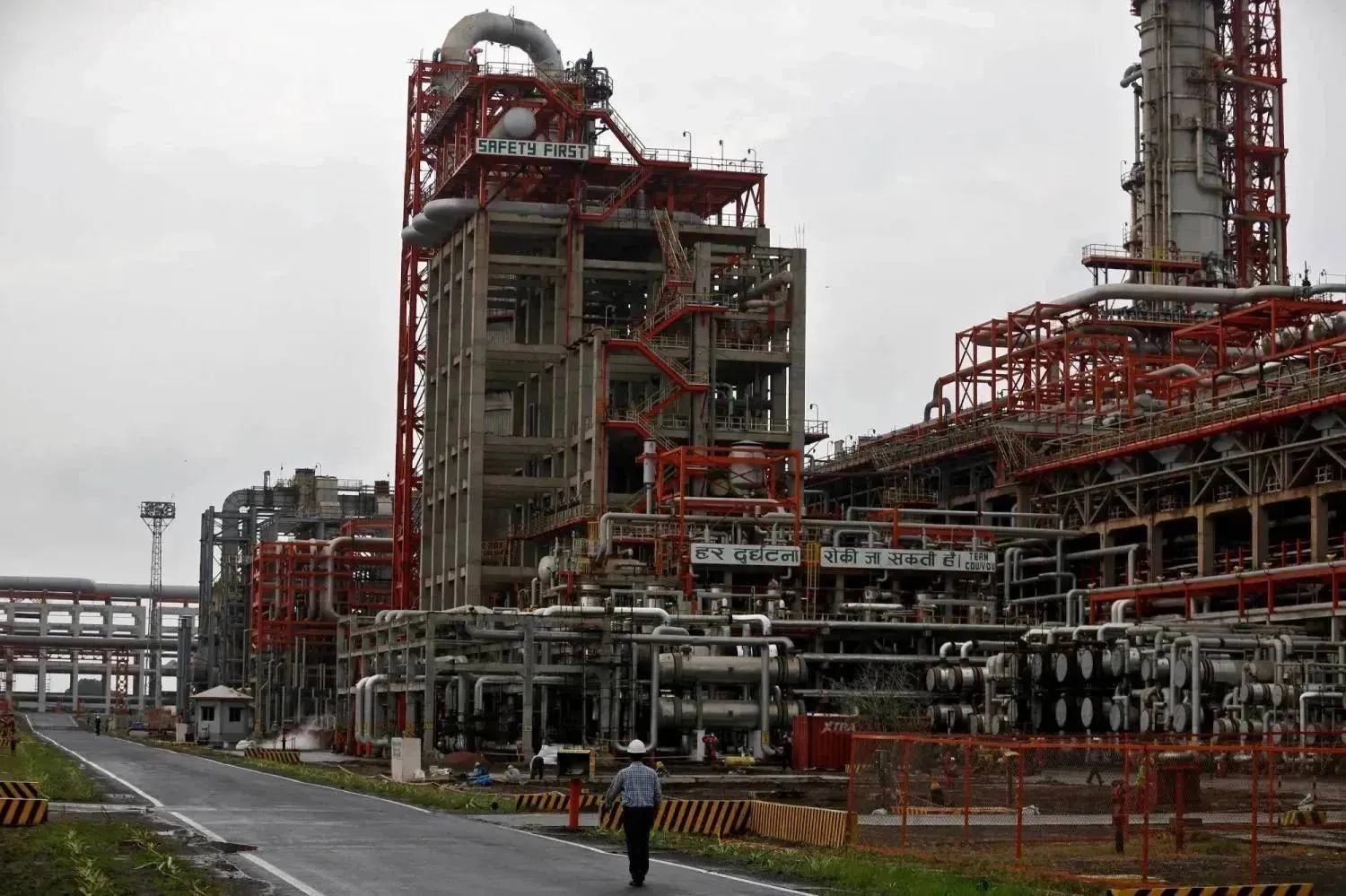
An employee walks inside the premises of an oil refinery of Essar Oil in Vadinar in the western state of Gujarat, India, October 4, 2016. REUTERS/Amit Dave/File Photo
TT

Indian Refiners Avoid Russian Oil in Push for US Trade Deal

An employee walks inside the premises of an oil refinery of Essar Oil in Vadinar in the western state of Gujarat, India, October 4, 2016. REUTERS/Amit Dave/File Photo

Indian refiners are avoiding Russian oil purchases for delivery in April and are expected to stay away from such trades for longer, refining and trade sources said, a move that could help New Delhi seal a trade pact with Washington, according to Reuters.

The US and India moved closer to a trade pact on Friday, announcing a framework for a deal they hope to conclude by March that would lower tariffs and deepen economic cooperation.

Indian Oil, Bharat Petroleum and Reliance Industries are not accepting offers from traders for Russian oil loading in March and April, said a trader who approached the refiners.

These refiners, however, had already scheduled some deliveries of Russian oil in March, refining sources said. Most other refiners have stopped buying Russian crude.

A foreign ministry spokesperson said: “Diversifying our energy sourcing in keeping with objective market conditions and evolving international dynamics is at the core of our strategy” to ensure energy security for the world's most-populous nation.

Although a US-India statement on the trade framework did not mention Russian oil, President Donald Trump rescinded his 25% tariffs on Indian goods, imposed over Russian oil purchases, because, he said, New Delhi had “committed to stop directly or indirectly” importing Russian oil.

New Delhi has not announced plans to halt Russian oil imports.

India became the top buyer of discounted Russian seaborne crude after Russia invaded Ukraine in 2022, spurring a backlash from Western nations that had targeted Russia's energy sector with sanctions aimed at curtailing Moscow's revenue and making it harder to fund the war.

One regular Indian buyer is Russia-backed private refiner Nayara, which relies solely on Russian oil for its 400,000-barrel-per-day refinery. Sources said Nayara may be allowed to keep buying Russian oil because other crude sellers pulled back after the European Union sanctioned the refiner in July.

Nayara also does not plan to import Russian crude in April due to a month-long refinery maintenance shutdown, a source familiar with its operations said.

Nayara did not respond to an email seeking comment.

Indian refiners may change their plan and place orders for Russian oil only if advised by the government, sources said.

Trump's order said US officials would monitor and recommend reinstating the tariffs if India resumed oil procurement from Russia.

Sources said last month that India was preparing to cut Russian oil imports below 1 million bpd by March, with volumes eventually falling to 500,000–600,000 bpd, compared with an average 1.7 million bpd last year. India's Russian oil imports topped 2 million bpd in mid-2025.

The intake of Russian oil by India, the world's third-biggest oil consumer and importer, declined to its lowest level in two years in December, data from trade and industry sources show.


IMF and Arab Monetary Fund Sign MoU to Enhance Cooperation

The MoU was signed by IMF Managing Director Dr. Kristalina Georgieva and AMF Director General Dr. Fahad Alturki - SPA
TT

IMF and Arab Monetary Fund Sign MoU to Enhance Cooperation

The MoU was signed by IMF Managing Director Dr. Kristalina Georgieva and AMF Director General Dr. Fahad Alturki - SPA

The International Monetary Fund (IMF) and the Arab Monetary Fund (AMF) signed a memorandum of understanding (MoU) on the sidelines of the AlUla Conference on Emerging Market Economies (EME) to enhance cooperation between the two institutions.

The MoU was signed by IMF Managing Director Dr. Kristalina Georgieva and AMF Director General Dr. Fahad Alturki, SPA reported.

The agreement aims to strengthen coordination in economic and financial policy areas, including surveillance and lending activities, data and analytical exchange, capacity building, and the provision of technical assistance, in support of regional financial and economic stability.

Both sides affirmed that the MoU represents an important step toward deepening their strategic partnership and strengthening the regional financial safety net, serving member countries and enhancing their ability to address economic challenges.


Saudi Chambers Federation Announces First Saudi-Kuwaiti Business Council

File photo of the Saudi flag/AAWSAT
TT

Saudi Chambers Federation Announces First Saudi-Kuwaiti Business Council

File photo of the Saudi flag/AAWSAT

The Federation of Saudi Chambers announced the formation of the first joint Saudi-Kuwaiti Business Council for its inaugural term (1447–1451 AH) and the election of Salman bin Hassan Al-Oqayel as its chairman.

Al-Oqayel said the council’s formation marks a pivotal milestone in economic relations between Saudi Arabia and Kuwait, reflecting a practical approach to enabling the business sectors in both countries to capitalize on promising investment opportunities and strengthen bilateral trade and investment partnerships, SPA reported.

He noted that trade between Saudi Arabia and Kuwait reached approximately SAR9.5 billion by the end of November 2025, including SAR8 billion in Saudi exports and SAR1.5 billion in Kuwaiti imports.