


US Treasury Starts Implementing CAATSA

IRGC Commander Major General Mohammad Ali Jafari speaks with journalists after he addressed a conference in Tehran, Iran, Tuesday, Oct. 31, 2017. AP
TT

US Treasury Starts Implementing CAATSA

IRGC Commander Major General Mohammad Ali Jafari speaks with journalists after he addressed a conference in Tehran, Iran, Tuesday, Oct. 31, 2017. AP

The US Treasury Department announced Tuesday the expansion of sanctions on individuals and entities linked to Iran’s Islamic Revolution Guards Corps (IRGC), under the pretext of the implementation of the US Countering America’s Adversaries Through Sanctions Act (CAATSA).

CAATSA is a United States federal law that imposed sanctions on Iran, North Korea and Russia. The bill was passed in the Senate on August 2, 2017, and was signed by President Trump.

The law requires the US government to implement sanctions on Iran within 90 days after the bill is passed. In the list released by the US Department of Treasury, 41 individuals and companies were included.

The new sanctions apply to the IRGC Air Force, the Al-Ghadir Missile Command, the Aerospace Force Self Sufficiency Jihad Organization and the Research and Self-Sufficiency Jihad Organization, as well as IRGC commander Mohammad Ali Jafari, Head of Revolutionary Guards Intelligence Hussein Taib, top military adviser to Ali Khamenei Yahya Rahim Safavi and former chief of staff Mohammad Reza Naqdi.

Properties of these individuals and companies in the USA are blocked, US citizens are not allowed to have any kind of deal with them and they don’t have the permission to enter the USA, according to CAASTA law.
IRGC Commander Major General Mohammad Ali Jafari hinted again that his country would target US forces in the region and increase the range of its ballistic missiles to more than 2,000 Kilometers if Washington starts implementing CAATSA.

Meanwhile, following a closed meeting with Parliament Speaker Ali Larijani and Judiciary Chief Sadeq Larijani, President Hassan Rouhani announced Iranian scenarios to face these sanctions.

Addressing a conference entitled “A World Free of Terror” in Tehran on Tuesday, Major General Jafari said, “The Americans are trying to implement the plan against the IRGC under the pretext of Iran’s missile power.”
However, this plan is targeting the Iranian economy in nature, he said, adding that the IRGC and missile capabilities of the Islamic republic are only pretexts for the US sanctions.

Iran has no need to extend the current 2,000 km range of its ballistic missiles as they can already strike enemy targets in case of aggression, the head of the Revolutionary Guard has said.

Jafari told reporters that the missile range can cover "most of American interest and forces" within the region, even as he underlined the program's defensive purpose.

Jafari said the ballistic missile range is based on the limits set by the country's Supreme Leader Ali Khamenei, but he warned Iran's enemies of the "high costs" of provoking his country.



German Court Rejects Palestinian's Claim over Weapons Exports

A view shows the front of the Reichstag building, the seat of the German parliament, the Bundestag, in Berlin, Germany March 5, 2025. REUTERS/Annegret Hilse/File Photo
TT

German Court Rejects Palestinian's Claim over Weapons Exports

A view shows the front of the Reichstag building, the seat of the German parliament, the Bundestag, in Berlin, Germany March 5, 2025. REUTERS/Annegret Hilse/File Photo

Germany's highest court on Thursday threw out a case brought by a Palestinian civilian from Gaza seeking to sue the German government over its weapons exports to Israel.

The complainant, supported by the European Center for Constitutional and Human Rights (ECCHR), had been seeking to challenge export licences for German parts used in Israeli tanks deployed in Gaza.

After his case was rejected by lower courts in 2024 and 2025, he had appealed to the Federal Constitutional Court.

But the court in Karlsruhe dismissed the case, stating that "the complainant has not sufficiently substantiated that the specialized courts misjudged or arbitrarily denied a possible duty to protect him", AFP reported.

While Germany is obliged to protect human rights and respect international humanitarian law, this does not mean the state is necessarily obliged to take specific action on behalf of individuals, the court said.

"It is fundamentally the responsibility of the state authorities themselves to decide how they fulfil their general duty of protection," it added.

The ECCHR called the decision "a setback for civilian access to justice".

"The court acknowledges the duty to protect but only in the abstract and refuses to ensure its practical enforcement," said Alexander Schwarz, co-director of the NGO's International Crimes and Legal Accountability program.

"For people whose lives are endangered by the consequences of German arms exports, access to justice remains effectively closed," he said.

The ECCHR had been hoping for a successful appeal after the Constitutional Court ruled last year that Germany had "a general duty to protect fundamental human rights and the core norms of international humanitarian law, even in cases involving foreign countries".

In that case, two Yemenis had been seeking to sue Berlin over the role of the US Ramstein airbase in a 2012 drone attack.

The complainant was one of five Palestinians who initially brought their case against the German government in 2024.


German Parliament Speaker Visits Gaza

Displaced Palestinians fleeing Israeli military operations in Beit Lahia in the northern Gaza strip walk along the Salah al-Din main road in eastern Gaza City making their way to the city center, on October 22, 2024, amid the ongoing war in the Palestinian territory between Israel and Hamas. (AFP)
TT

German Parliament Speaker Visits Gaza

Displaced Palestinians fleeing Israeli military operations in Beit Lahia in the northern Gaza strip walk along the Salah al-Din main road in eastern Gaza City making their way to the city center, on October 22, 2024, amid the ongoing war in the Palestinian territory between Israel and Hamas. (AFP)

The speaker of Germany's lower house of parliament briefly visited the Israeli-controlled part of the Gaza Strip on Thursday, the body told AFP.

Julia Kloeckner spent "about an hour in the part of Gaza controlled by Israeli army forces", parliament said, becoming the first German official to visit the territory since Hamas's attack on Israel in October 2023 that sparked the devastating war.

Since the start of the conflict, Israel has drastically restricted access to the densely populated coastal strip.

In a statement shared by her office, Kloeckner said it was essential for politicians to have access to "reliable assessments of the situation" in Gaza.

"I expressly welcome the fact that Israel has now, for the first time, granted me, a parliamentary observer, access to the Gaza Strip," she said.

However, she was only able to gain a "limited insight" into the situation on the ground during her trip, she said.

Kloeckner appealed to Israel to "continue on this path of openness" and emphasised that the so-called yellow line, which designates Israeli military zones inside the Gaza Strip, must "not become a permanent barrier".

Contacted by AFP, the German foreign ministry said it would "not comment on travel plans or trips by other constitutional bodies that wish to assess the situation on the ground".

Germany has been one of Israel's staunchest supporters as the European power seeks to atone for the legacy of the Holocaust.

But in recent months, Chancellor Friedrich Merz has occasionally delivered sharp critiques of Israeli policy as German public opinion turns against Israel's actions in Gaza.

In August, Germany imposed a partial arms embargo on Israel, which was lifted in November after the announcement of what has proved to be a fragile ceasefire for Gaza.

Merz visited Israel in December and reaffirmed Germany's support.

But in a sign of lingering tension, Germany's foreign ministry on Wednesday criticized Israeli plans to tighten control over the occupied West Bank as a step toward "de facto annexation".


Saudi Arabia Issues Royal Orders Appointing New Ministers, Governors

File photo of Saudi Arabia’s King Salman bin Abdulaziz - SPA
TT

Saudi Arabia Issues Royal Orders Appointing New Ministers, Governors

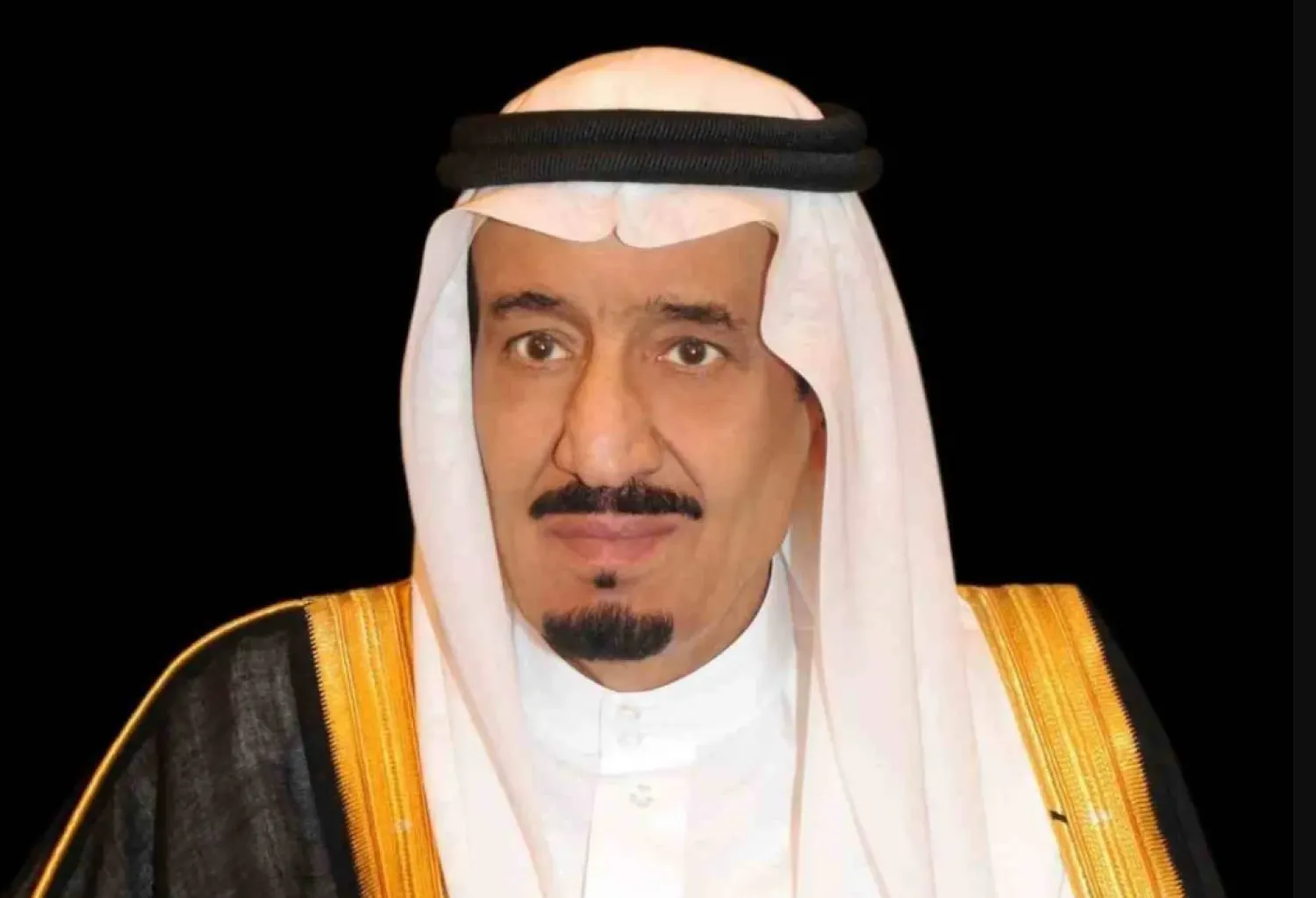
File photo of Saudi Arabia’s King Salman bin Abdulaziz - SPA

Saudi Arabia’s King Salman bin Abdulaziz issued a series of Royal Decrees on Thursday including a decree appointing Fahd Al Saif as the new investment minister, replacing Khalid Al-Falih.

Al Saif was previously head of the PIF's investment strategy and economic insights division. Al-Falih has instead been appointed as a Minister of State and a member of the cabinet.

Other Royal Decrees were also issued as follows:

Abdullah Al-Maghlouth shall be appointed Vice Minister of Media.
Abdulmohsen Al-Mazyad shall be appointed Vice Minister of Tourism.
Khalid Al-Yousef shall be appointed Attorney General.
Sheikh Ali Al-Ahaideb shall be appointed President of the Board of Grievances.
Faihan Al-Sahli shall be appointed Director General of the General Directorate of Investigation.
Abdulaziz Al-Arifi shall be appointed Governor of the National Development Fund.
Haytham Al-Ohali shall be appointed Governor of the Communications, Space and Technology Commission.
Fawaz Al-Sahli shall be appointed President of the Transport General Authority.