

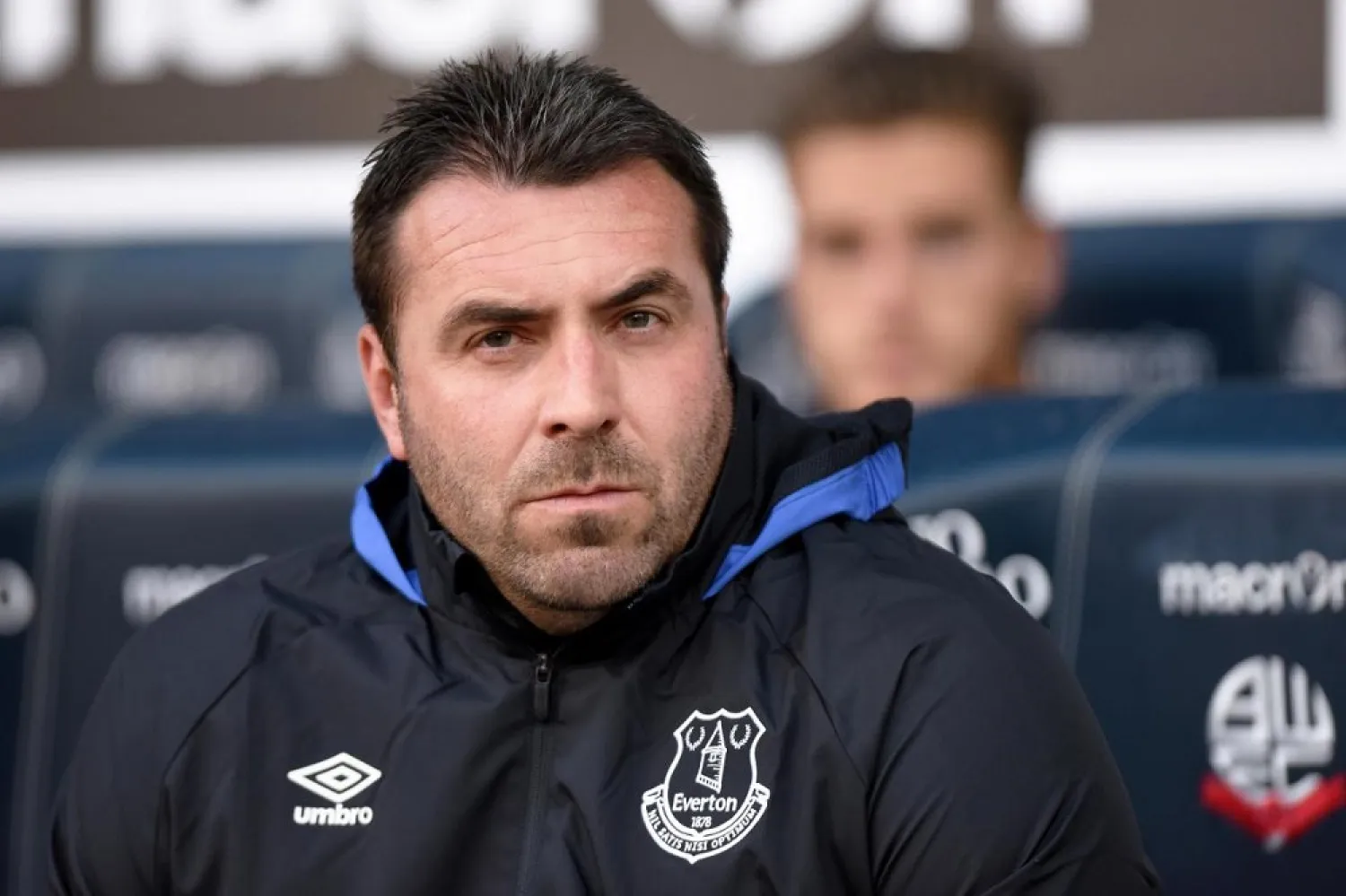

Football Clubs Splash out for Players, so why not for Managers?

Everton caretaker manager David Unsworth. (Getty Images)
TT

Football Clubs Splash out for Players, so why not for Managers?

Everton caretaker manager David Unsworth. (Getty Images)

No sooner had Ronald Koeman been sacked by Everton than a predictable troupe of has-beens, hopefuls and cast-offs were plonked among the favorites to replace him. Inevitably David Moyes was high on the bookies’ list, despite a triad of failures at Manchester United, Real Sociedad and Sunderland. So was Sam Allardyce, a roast-beef-and-potatoes option for a club striving for cordon bleu. Before Sunday’s defeat at Leicester, the academy and under-23 coach, David Unsworth, even became the frontrunner, despite a handful of games on his managerial CV. Moyes was appointed on Tuesday as West Ham manager.

Whatever happens at Goodison Park it is a cast-iron bet that some of these men will be in the frame the next time a Premier League job comes up – and the one after. That is how the system goes. Rinse. Recycle. Repeat. These days managers, like Buddhists, accept that death and rebirth is a fundamental part of existence.

Yet while clubs increasingly spend crazy money on decent but not exceptional players – Everton, after all, threw £45m at Swansea for Gylfi Sigurdsson – there is a curious reluctance to adopt a similar approach to prise away a proven manager. We are not talking a million here or there, as is occasionally seen, but proper money, crazy money even.

According to Omar Chaudhuri – the head of football intelligence at 21st Club, a consultancy that works with many leading sides in Europe – the data suggests such an approach makes sense.

His starting point is that even a star player is worth only about five points a season to his team over an average one in the same position. That might sound absurdly low. But, he explains, imagine replacing every player in a Premier League team at the bottom of the table, who get around 30 points a season, with one from near the top, who will earn closer to 85 points – that averages out at five points a player.

For managers this is trickier, Chaudhuri concedes. “But when we’ve looked at the immediate impact of new coaches on performance – at the change in results accounting for difficulty of fixtures and luck that the old manager might not have enjoyed – the maximum increase is usually up to 10-12 points per season.”

It is often less than that, of course. But the trade-offs are worth considering: if one can spend £10m to bring in someone such as Marco Silva or Marcelino, the coach who has worked miracles at Villarreal and now Valencia, or twice that on an average player, why would one go for the latter?

Incidentally Chaudhuri finds that the majority of improvement occurs in defence, which is to be expected given a manager is often sacked when the team are losing, usually after conceding too many goals.

Meanwhile Ted Knutson, who worked as an analyst at Brentford and FC Midtjylland before setting up Statsbomb Services, which works with clubs across the globe, describes the range of managerial talent as being like a U-curve, with the best and worst coaches having a bigger impact on results than is widely thought – and those in the middle tier relying on the quality of their players, their club’s recruitment strategy and luck to succeed or fail.

Most, of course, fall by the wayside. It seems almost quaint to recall that in the early 90s the average spell of a manager in English football was more than three years. Last season 60 managers left their jobs between September and June – with only a third in situ more than a year.

If insanity really is doing the same thing over and over again while expecting a different outcome.

So how does one identify a decent manager given that Avram Grant took Chelsea to the Champions League final and Roberto Di Matteo went one better? As Chaudhuri and Knutson concede, it is not necessarily straightforward to distinguish managerial skill from the talent of the players a club has. Yet both believe that by looking at a team’s underlying metrics, budget and results, it is not difficult to identify managers who have outperformed their resources consistently over a number of seasons.

There is more to it than that, of course. When organizations such as 21st Club work with clubs they ask what attributes of a potential manager are most important to them. Is it performing on a tight budget? A certain playing style? Improving young players? They will then scour their database, weighting the various metrics and produce a shortlist.

Knutson, who provides a similar service, explains: “We are not making the choice for clubs; we are just presenting better options. And compared to what they pay if they get rid of a bad manager too quickly, it is the tiniest drop in the bucket. But time and again clubs don’t spend enough money to find the best candidate – and then end up paying a spectacular amount to get rid of them.”

This cycle of perpetual failure continues. Yet, as the transfer market for players approaches Weimar Republic levels of hyperinflation, more clubs should ask whether it makes sense to settle for what they have always done in terms of recruiting managers – or flash the cash for proven quality.

The Guardian Sport


Tottenham Hotspur Sack Head Coach Thomas Frank

(FILES) Tottenham Hotspur's Danish head coach Thomas Frank gestures on the touchline during the English Premier League football match between Burnley and Tottenham Hotspur at Turf Moor in Burnley, north-west England on January 24, 2026. (Photo by Oli SCARFF / AFP)/
TT

Tottenham Hotspur Sack Head Coach Thomas Frank

(FILES) Tottenham Hotspur's Danish head coach Thomas Frank gestures on the touchline during the English Premier League football match between Burnley and Tottenham Hotspur at Turf Moor in Burnley, north-west England on January 24, 2026. (Photo by Oli SCARFF / AFP)/

Thomas Frank was fired by Tottenham on Wednesday after only eight months in charge and with his team just five points above the relegation zone in the Premier League.

Despite leading Spurs to the round of 16 in the Champions League, Frank has overseen a desperate domestic campaign. A 2-1 loss to Newcastle on Tuesday means Spurs are still to win in the league in 2026.

“The Club has taken the decision to make a change in the Men’s Head Coach position and Thomas Frank will leave today,” Tottenham said in a statement. “Thomas was appointed in June 2025, and we have been determined to give him the time and support needed to build for the future together.

“However, results and performances have led the Board to conclude that a change at this point in the season is necessary.”

Frank’s exit means Spurs are on the lookout for a sixth head coach in less than seven years since Mauricio Pochettino departed in 2019.


Marseille Coach De Zerbi Leaves After Humiliating 5-0 Loss to PSG 

Marseille's Italian coach Roberto De Zerbi looks on from the technical area during the French Cup round of 32 football match between FC Bayeux and Olympique de Marseille (OM) at the Michel-d'Ornano Stadium in Caen on January 13, 2026. (AFP) 
TT

Marseille Coach De Zerbi Leaves After Humiliating 5-0 Loss to PSG 

Marseille's Italian coach Roberto De Zerbi looks on from the technical area during the French Cup round of 32 football match between FC Bayeux and Olympique de Marseille (OM) at the Michel-d'Ornano Stadium in Caen on January 13, 2026. (AFP) 

Marseille coach Roberto De Zerbi is leaving the French league club in the wake of a 5-0 thrashing at the hands of PSG in French soccer biggest game.

The nine-time French champions said on Wednesday that they have ended “their collaboration by mutual agreement.”

The heavy loss Sunday at the Parc des Princes restored defending champion PSG’s two-point lead over Lens after 21 rounds, with Marseille in fourth place after the humiliating defeat.

De Zerbi's exit followed another embarrassing 3-0 loss at Club Brugge two weeks ago that resulted in Marseille exiting the Champions League.

De Zerbi, who had apologized to Marseille fans after the loss against bitter rival PSG, joined Marseille in 2024 after two seasons in charge at Brighton. After tightening things up tactically in Marseille during his first season, his recent choices had left many observers puzzled.

“Following consultations involving all stakeholders in the club’s leadership — the owner, president, director of football and head coach — it was decided to opt for a change at the head of the first team,” Marseille said. “This was a collective and difficult decision, taken after thorough consideration, in the best interests of the club and in order to address the sporting challenges of the end of the season.”

De Zerbi led Marseille to a second-place finish last season. Marseille did not immediately announce a replacement for De Zerbi ahead of Saturday's league match against Strasbourg.

Since American owner Frank McCourt bought Marseille in 2016, the former powerhouse of French soccer has failed to find any form of stability, with a succession of coaches and crises that sometimes turned violent.

Marseille dominated domestic soccer in the late 1980s and early 1990s. It was the only French team to win the Champions League before PSG claimed the trophy last year. It hasn’t won its own league title since 2010.


Olympic Fans Hunt for Plushies of Mascots Milo and Tina as They Fly off Shelves 

Fans take selfies with the Olympic mascot Tina at the finish area of an alpine ski, slalom portion of a women's team combined race, at the 2026 Winter Olympics, in Cortina d'Ampezzo, Italy, Tuesday, Feb. 10, 2026. (AP)
TT

Olympic Fans Hunt for Plushies of Mascots Milo and Tina as They Fly off Shelves 

Fans take selfies with the Olympic mascot Tina at the finish area of an alpine ski, slalom portion of a women's team combined race, at the 2026 Winter Olympics, in Cortina d'Ampezzo, Italy, Tuesday, Feb. 10, 2026. (AP)

For fans of the Milan Cortina Olympic mascots, the eponymous Milo and Tina, it's been nearly impossible to find a plush toy of the stoat siblings in Milan and Cortina d’Ampezzo.

Many of the official Olympics stores in the host cities are already sold out, less than a week into the Winter Games.

“I think the only way to get them is to actually win a medal,” Julia Peeler joked Tuesday in central Milan, where Tina and Milo characters posed for photos with fans.

The 38-year-old from South Carolina is on the hunt for the plushies for her niece. She's already bought some mascot pins, but she won't wear them on her lanyard. Peeler wants to avoid anyone trying to swap for them in a pin trade, a popular Olympic pastime.

Tina, short for Cortina, is the lighter-colored stoat and represents the Olympic Winter Games. Her younger brother Milo, short for Milano, is the face of the Paralympic Winter Games.

Milo was born without one paw but learned to use his tail and turn his difference into a strength, according to the Olympics website. A stoat is a small mustelid, like a weasel or an otter.

The animals adorn merchandise ranging from coffee mugs to T-shirts, but the plush toys are the most popular.

They're priced from 18 to 58 euros (about $21 to $69) and many of the major official stores in Milan, including the largest one at the iconic Duomo Cathedral, and Cortina have been cleaned out. They appeared to be sold out online Tuesday night.

Winning athletes are gifted the plush toys when they receive their gold, silver and bronze medals atop the podium.

Broadcast system engineer Jennifer Suarez got lucky Tuesday at the media center in Milan. She's been collecting mascot toys since the 2010 Vancouver Games and has been asking shops when they would restock.

“We were lucky we were just in time,” she said, clutching a tiny Tina. “They are gone right now.”

Friends Michelle Chen and Brenda Zhang were among the dozens of fans Tuesday who took photos with the characters at the fan zone in central Milan.

“They’re just so lovable and they’re always super excited at the Games, they are cheering on the crowd,” Chen, 29, said after they snapped their shots. “We just are so excited to meet them.”

The San Franciscan women are in Milan for the Olympics and their friend who is “obsessed” with the stoats asked for a plush Tina as a gift.

“They’re just so cute, and stoats are such a unique animal to be the Olympic mascot,” Zhang, 28, said.

Annie-Laurie Atkins, Peeler's friend, loves that Milo is the mascot for Paralympians.

“The Paralympics are really special to me,” she said Tuesday. “I have a lot of friends that are disabled and so having a character that also represents that is just incredible.”
