

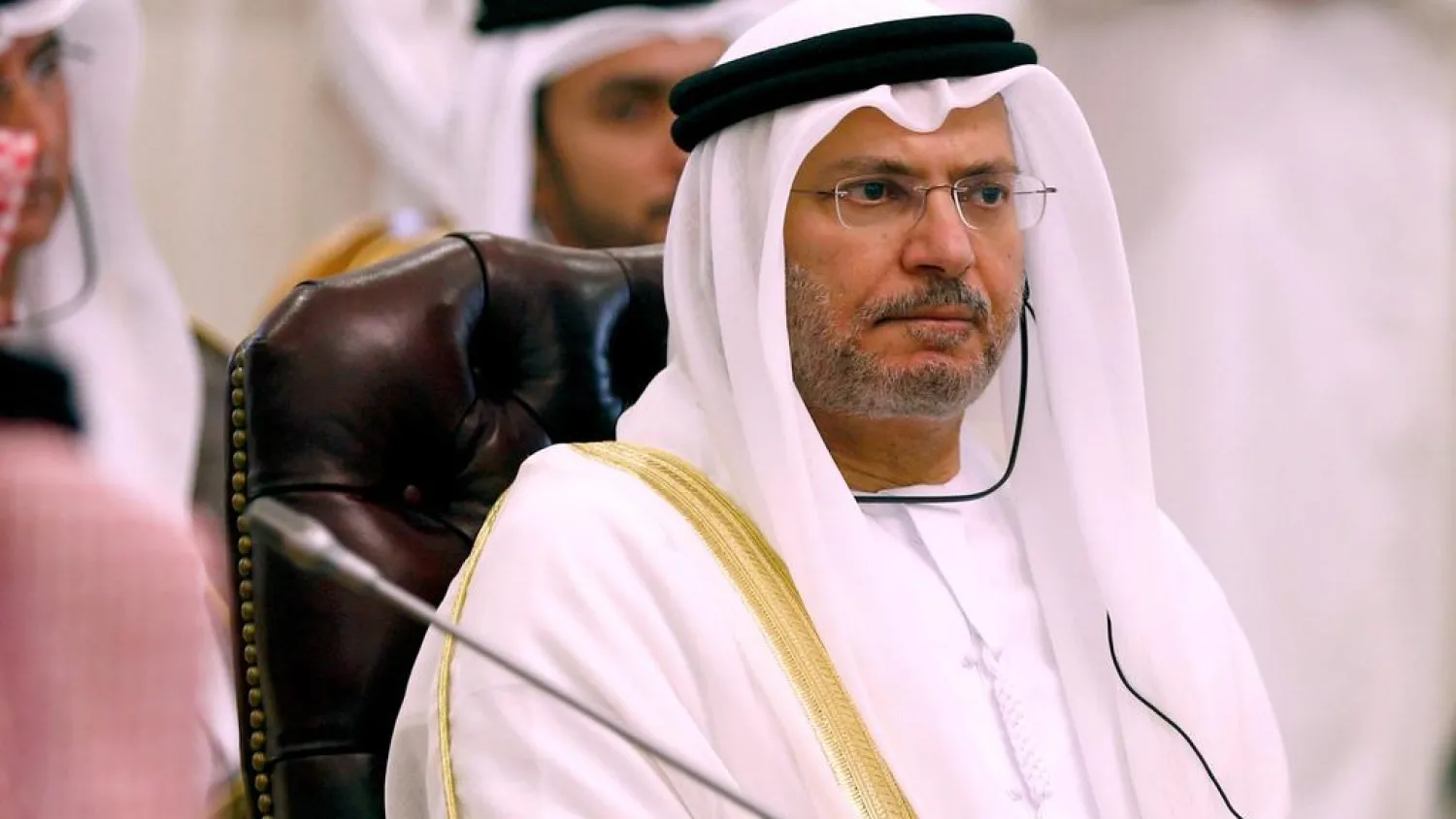

Abu Dhabi: We Won’t Remain Idle in Face of Iranian Threats

UAE Minister of State for Foreign Affairs Anwar Gargash. REUTERS/Faisal Al Nasser
TT

Abu Dhabi: We Won’t Remain Idle in Face of Iranian Threats

UAE Minister of State for Foreign Affairs Anwar Gargash. REUTERS/Faisal Al Nasser

UAE will not remain idle under the shadow of Iran's threat, Dr. Anwar Mohammad Gargash, State Minister for Foreign Affairs, told the 4th Abu Dhabi Strategic Debate.

Gargash declared that there are three factors that have the potential to provide opportunities for political progress in Yemen, Libya and Syria. There factors are: international awareness of Iranian intervention in the Arab region, huge relapse of extremist groups and flagging Qatari support to terrorism.

“It is only by adopting a strategy focused primarily on achieving stability, that we will be able to alter the current trajectory. In the UAE’s view, the success of this strategy depends on there being a strong and developing Saudi Arabia, and a stable, robust Egypt,” he stated.

Some participants saw that Iran’s attitude in the region mixes the offensive and defensive strategies, without having a clear vision. Other attendees, however, thought that the Iranian attitude is pretty clear but there is an absence of an Arab strategy to confront it.

Noura al-Kaabi, Minister of Culture and Knowledge Development, believed that the achievements gained through soft power should be protected by hard power, using the example of the UAE’s participation in the international coalition against ISIS, which is one form of protecting the elements of soft power: moderate Islam.

Dr. Ebtesam al-Ketbi, President of the Emirates Policy Center, spoke of the most prominent elements of soft power in the UAE, demonstrated by its being the only successful model of a federation in the region, in addition to its economic success, good governance, and openness to globalization and support for moderate Islam.

Kaabi also shed light on the main elements of soft power in the UAE, represented by education and knowledge, media management in the 21st century, in addition to the third element of continuous training to spread skills and develop them.



UAE to Pull Forces Out of Yemen

The UAE flag. (WAM)
The UAE flag. (WAM)
TT

UAE to Pull Forces Out of Yemen

The UAE flag. (WAM)
The UAE flag. (WAM)

The United Arab Emirates’ Defense Ministry announced on Tuesday that it was pulling its remaining forces out of Yemen.

In a statement, it said: “In light of recent developments and their potential implications for the safety and effectiveness of counterterrorism missions, the Ministry of Defense announces the termination of the remaining counterterrorism personnel in Yemen of its own volition, in a manner that ensures the safety of its personnel and in coordination with the concerned partners.”

It added that the UAE “has participated as part of the Arab Coalition since 2015 in support of legitimacy in Yemen, in backing international efforts to combat terrorist organizations, and in pursuit of security and stability for the brotherly Yemeni people. The UAE has made great sacrifices in achieving these objectives.”

“The UAE Armed Forces concluded their military presence in Yemen in 2019 after completing the assigned missions within the agreed official frameworks,” it noted. “The remaining presence was limited to specialized personnel as part of counterterrorism efforts, in coordination with relevant international partners.”

It stressed that “this measure comes within the context of a comprehensive assessment of the requirements of the current phase, and in line with the commitments of the UAE and its role in supporting security and stability in the region.”


Muslim World League Affirms Support for Saudi Measures to Preserve Yemen's Sovereignty

Muslim World League Affirms Support for Saudi Measures to Preserve Yemen's Sovereignty
TT

Muslim World League Affirms Support for Saudi Measures to Preserve Yemen's Sovereignty

Muslim World League Affirms Support for Saudi Measures to Preserve Yemen's Sovereignty

The Muslim World League (MWL) has affirmed its full support for the supplementary statement issued by the Kingdom of Saudi Arabia regarding recent escalatory actions by the Southern Transitional Council in Yemen's Hadramout and Al-Mahara governorates.

The league expressed its support for the statement from the Coalition to Restore Legitimacy in Yemen concerning the unauthorized movement of ships carrying weapons and heavy vehicles from the Port of Fujairah to the Port of Mukalla, SPA reported.


These shipments were reportedly transported without the necessary official permits from the coalition’s Joint Forces Command. The MWL emphasized its unwavering solidarity with the Kingdom and its support for all measures taken to safeguard its national security.

In an official statement by General Secretariat, MWL Secretary-General and Organization of Muslim Scholars Chairman Sheikh Dr. Mohammed bin Abdulkarim Al-Issa commended the decisive and wise content of the Saudi statement.


Speaking on behalf of the league’s global assemblies and councils, Al-Issa noted that these measures are vital to ensuring peace, security, and the unity of the Yemeni people under their internationally recognized leadership.

Al-Issa highlighted that the priority remains preserving stability in Yemen and the broader region. He noted that outstanding issues, including the Southern cause, must be resolved through dialogue within established legal and legitimate frameworks.

Furthermore, he warned that supporting illegitimate practices only deepens internal divisions and serves those who do not have Yemen’s best interests at heart. He cautioned that any further steps deviating from the legitimate path would only ignite sedition, the heavy cost of which would be borne by the Yemeni people.

Concluding the statement, Al-Issa called upon all Yemeni parties to prioritize wisdom and the national interest. He urged them to unite under their legitimate leadership to preserve the country's sovereignty, independence, and territorial integrity, paving the way for a secure and prosperous future for Yemen.


President of Yemeni Presidential Leadership Council Nullifies Joint Defense Agreement with UAE

Dr. Rashad Al-Alimi during his interview with Asharq Al-Awsat (Yemeni Presidency)
TT

President of Yemeni Presidential Leadership Council Nullifies Joint Defense Agreement with UAE

Dr. Rashad Al-Alimi during his interview with Asharq Al-Awsat (Yemeni Presidency)

President of the Presidential Leadership Council of the Republic of Yemen Dr. Rashad Mohammed Al-Alimi issued a presidential decree on Tuesday nullifying the joint defense agreement with the United Arab Emirates, based on the Constitution of the Republic of Yemen, the Gulf Cooperation Council Initiative and its implementation mechanism, the decision on the transfer of power, the formation of the Presidential Leadership Council, and the powers granted to it under the constitution, according to the Yemen News Agency (Saba).

Article Two of the decree mandates that all UAE forces and personnel withdraw from Yemeni territory within 24 hours, according to SPA.

Article Three instructs the Homeland Shield forces to assume control of all military camps in Hadramout and Al-Mahara governorates.