Sven Mislintat, the Scout Arsenal Hope will Revive their Talent-Spotting Fortunes

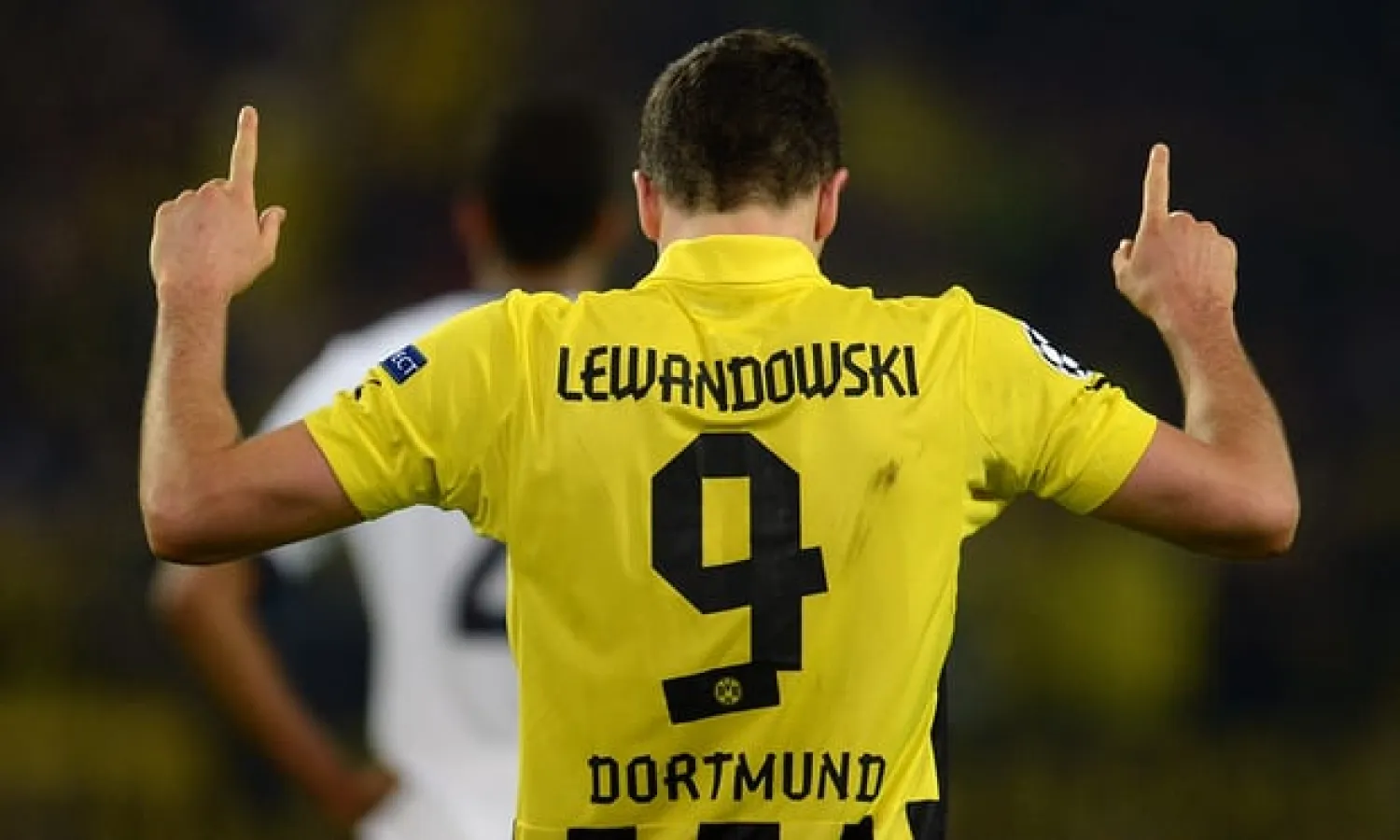
 In his years at Borussia Dortmund Sven Mislintat used a combination of modern and traditional methods to build a recruitment reputation respected throughout the country. Photograph: Patrik Stollarz/AFP/Getty Images
In his years at Borussia Dortmund Sven Mislintat used a combination of modern and traditional methods to build a recruitment reputation respected throughout the country. Photograph: Patrik Stollarz/AFP/Getty Images
TT

Sven Mislintat, the Scout Arsenal Hope will Revive their Talent-Spotting Fortunes

 In his years at Borussia Dortmund Sven Mislintat used a combination of modern and traditional methods to build a recruitment reputation respected throughout the country. Photograph: Patrik Stollarz/AFP/Getty Images
In his years at Borussia Dortmund Sven Mislintat used a combination of modern and traditional methods to build a recruitment reputation respected throughout the country. Photograph: Patrik Stollarz/AFP/Getty Images

The decision to leave Borussia Dortmund to join Arsenal was not one Sven Mislintat made in a hurry. This sounds typical of a thoughtful, down-to-earth man who has made his reputation by looking, listening and trying to get a full picture rather than acting on rash instinct.

Structural change has been needed behind the scenes at Arsenal for some time – even since Ivan Gazidis’s call for a “catalyst for change” it has been a slow burn – but the latest person chosen to refresh the setup brings qualities the club hope will make a real difference. Mislintat, described in Arsenal’s official announcement as “one of Europe’s most respected player recruitment experts” and ostensibly coming in to cast a fresh pair of eyes over the scouting philosophy, has a track record in the Bundesliga that was admired across Germany.

Christoph Biermann, a writer with 11 Freunde, who got to know Mislintat during conversations for a book he is writing about the use of data in football, values the way Mislintat brings together current and traditional modes of assessing football. “He is very interested in modern ideas generated with stats and data but he is also strong when it comes to scouting with the human eye,” Biermann says. “At Borussia Dortmund he worked with a wide range of scouts with different backgrounds. He would listen to the modern guys, and the older guys with more traditional values, to get the complete picture.”

Mislintat’s background, as an amateur player who studied sports science in Bochum, led to his interest in analysing matches and he started off at Dortmund in that department. He happened to be at the right place in the right time, when the club were facing bankruptcy in 2005 and so much was up in the air, to be asked to organise the scouting. So he began by learning. He asked the scouts what they looked for, how and why, educating himself about the role.

“It was a strange way into this but Borussia Dortmund at that time was a perfect place to learn,” Biermann says. “They had limited resources. They had to be very clever and careful in their choices.

“If you look at the incredible turnaround, from when the club was almost bankrupt to reaching the Champions League final against Bayern Munich in 2013, four pillars were vital to this. Hans-Joachim Watzke was the organisational force who led the financial reconstruction; Jürgen Klopp transformed the way they played; Michael Zorc as technical director; and the fourth factor was Sven Mislintat, who was so strong in scouting. He possessed a quality for evaluating how well a player would develop in future.”

The best examples include Shinji Kagawa (Mislintat saw his potential when others found it hard to assess in the Japanese second tier), Robert Lewandowski, Pierre-Emerick Aubameyang and Ousmane Dembélé. As Biermann points out, it is not as if the latter group were unknown but predicting those who can evolve into elite players is something Mislintat has a nose for. “We are not talking about unveiling someone nobody has ever heard of,” Biermann says. “But to identify someone as becoming world-class, to forecast a career, is a difficult task. He is really good at that.”

In Mislintat Arsenal have found someone whose qualities echo those Arsène Wenger had when he arrived in England. Wenger’s reputation in 1996 was enhanced by what was a golden era in recruitment. He sent Patrick Vieira as a taster – the midfielder arrived a few weeks before the manager sorted his exit strategy from Grampus Eight in Japan and everybody in the ground for Vieira’s Highbury debut was stunned by the instant impact of a special and very different calibre of midfield player. During the three title-winning sides between 1998 and 2004 there was an extraordinary conveyor belt of talent: Nicolas Anelka, Emmanuel Petit, Marc Overmars, Freddie Ljungberg, Kanu, Thierry Henry, Robert Pires, Gilberto Silva, Kolo Touré, Cesc Fàbregas. Contacts in the French market gave Wenger a fantastic advantage but he added from Sweden, Brazil, Ivory Coast and more, slotting seemingly perfect players into the squad.

Wenger had what David Dein, Arsenal’s vice-chairman at the time and the manager’s close ally, described as “encyclopaedic knowledge” of the markets in the late 1990s and early 2000s. But two major things happened to make it more difficult for Wenger to continue striking gold as he did in that period. First, international scouting and injections of multimillions allowed other clubs to not just catch up but overtake. Second, Dein left Arsenal in abrupt circumstances just over a decade ago, when boardroom manoeuvrings over the potential sale of the old board’s shares to overseas investors led to a fracture. Signing players had been a relatively simple operation – Wenger told Dein he liked a player and Dein made it his business to cut the deal.

Arsenal were left with a vacuum in a critical position at the club. It was not resolved easily. Player recruitment was helped along by Ken Friar, the veteran administrator. A couple of years later Dick Law, an American known to the club from when he assisted negotiations in the transfer of Gilberto Silva, joined the club full time to oversee transfers until he stepped down in September. Meanwhile the scouting department grew in numbers, and Arsenal invested in a data analytics business to try out a sort of Moneyball approach, but making headway in a complicated marketplace brought mixed results. Signings such as André Santos, Yaya Sanogo, Gabriel Paulista and Lucas Pérez never really worked out.

There have been coups – the purchases of Mesut Özil and Alexis Sánchez, no matter what happens in the next few months as their contracts run down, will go down as influential in this era of the club. Wenger’s eye for a class act like Santi Cazorla, an unpolished gem like Laurent Koscielny, or a youngster with potential like Héctor Bellerín, has produced some fine goods.

But there have also been duds, dithering and disappointing transfer windows. Some of the finger-pointing for that goes to the manager himself, for indecision on certain targets or not prioritising some physicality in the heart of defence or midfield. Some goes to the scouting department, and the data analytics gurus, whose recommendations do not always fit the bill. Some is directed at the negotiators, with winding down contracts a related problem. Recruitment has been one of the departments that felt in need of an upgrade for a while.

Persuading Mislintat to join took time. He thought long and hard about it, given his family’s needs and his emotional ties to Borussia Dortmund, the club he supported as a boy from the region he grew up in. Despite conflict with Thomas Tuchel during the latter’s spell as Dortmund manager he remained wedded to the club until now.

Mislintat, along together with the contracts expert recruited from Team Sky, Huss Fahmy, is tasked with reviving Arsenal’s dormant gift for spotting talent.

The Guardian Sport



South Africa Chooses Durban as Its Preferred City to Host 2036 or 2040 Olympics

TT

South Africa Chooses Durban as Its Preferred City to Host 2036 or 2040 Olympics

Durban is South Africa 's preferred candidate to host the first Olympics in Africa.

South Africa is bidding to host the 2036 or 2040 Summer Olympics and Paralympics. The International Olympic Committee will choose the host city for 2036 in mid-2029.

The country's choice to put forward Durban, South Africa's third biggest city, was announced by South African Olympic committee acting president Lwandile Simelane on Thursday. She said Durban would be the main candidate city for South Africa's bid, but it would likely be a “multi-city bid” that would propose some events are held in other cities.

South Africa's economic hub of Johannesburg and Cape Town were also considered as the candidate city, The Associated Press said.

Durban, a city of around 4 million on the subtropical Indian Ocean coast, was touted as a possible Olympic host city more than a decade ago following South Africa's staging of the 2010 soccer World Cup, the first in Africa. But an official bid didn't materialize then, largely due to concerns over costs.

The city was stripped of hosting the 2022 Commonwealth Games because it couldn't make financial or other guarantees required for that event.

Officials said on Thursday they were not yet able to provide any estimates regarding how much it might cost South Africa to stage the Olympics if its bid was successful. They said Durban's bid would be centered on the 56,000-seat Moses Mabhida Stadium, which was built for the 2010 World Cup.

South Africa is among seven countries bidding for the 2036 Games. The others are India, Qatar, South Korea, Germany, Hungary and Türkiye.

The IOC gave Oct. 31 as the deadline for national Olympic committees to formally declare their interest in bidding for the 2036 Games.

Candidates have an opportunity to make virtual presentations to the IOC next month to start the official bidding process. A key date is in March, the IOC has said, when its board will approve a shortlist of candidates.

South Africa would be a first African host of the Summer Games since the modern Olympics was created in 1896 if it wins. Africa's biggest economy previously failed with a bid to stage the 2004 Games in Cape Town.

The Youth Olympics open this weekend in Dakar, Senegal, marking the first Olympic sports event to be held in Africa.


MLS Announces Key 2027 'Sprint Season' Matches Ahead of Calendar Shift

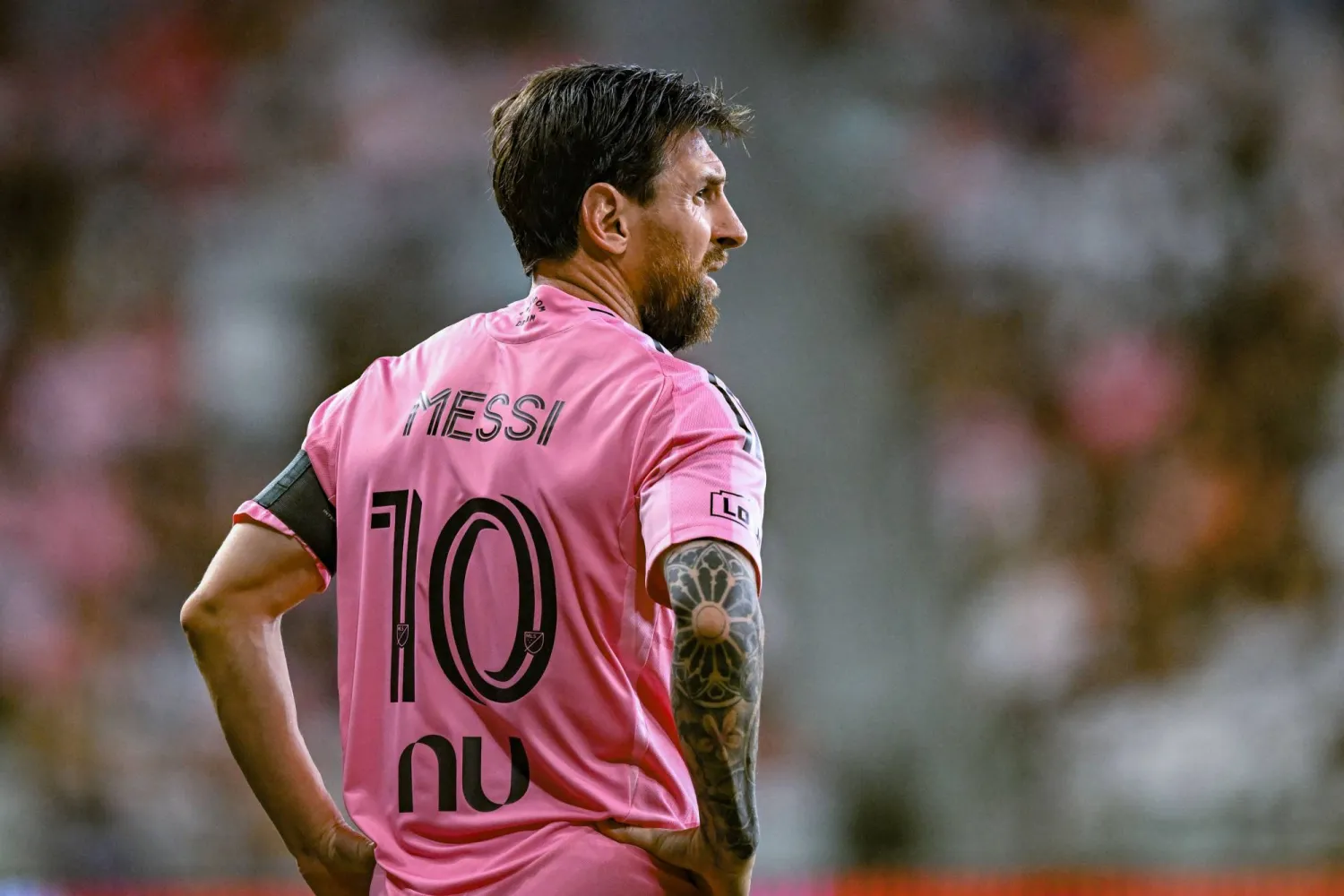
Inter Miami's Argentine forward #10 Lionel Messi looks on during a Major League Soccer (MLS) regular season football match between Inter Miami CF and FC Cincinnati at Nu Stadium in Miami, Florida, on October 28, 2026. (Photo by Giorgio VIERA / AFP)
TT

MLS Announces Key 2027 'Sprint Season' Matches Ahead of Calendar Shift

Inter Miami's Argentine forward #10 Lionel Messi looks on during a Major League Soccer (MLS) regular season football match between Inter Miami CF and FC Cincinnati at Nu Stadium in Miami, Florida, on October 28, 2026. (Photo by Giorgio VIERA / AFP)

Lionel Messi's Inter Miami will kick off Major League Soccer's 2027 "Sprint Season" when they face Cincinnati on February 19, launching the league's transition to a traditional autumn-to-spring calendar.

The standalone match at Nu Stadium in Miami will begin a truncated 14-game regular season and playoff tournament designed to bridge the gap as MLS shifts away from its traditional summer schedule to align with Europe's top leagues.

The schedule, previewed on Apple TV's "MLS Countdown," emphasizes weekly rivalry ⁠matchups. Among the ⁠headline games announced, LA Galaxy will host Los Angeles FC on April 10 in the "El Trafico" derby.

The sprint season will conclude its regular-season slate on May 8 with "Decision Day," anchored by the Hudson River Derby between New York ⁠City FC and the New York Red Bulls, setting the stage for the May playoffs.

The four-month sprint serves as the prelude to the league's full operational shift. The first standard season under the new timetable will run from mid-to-late July 2027 through May 2028, featuring a midwinter break and no matches in January.

MLS Commissioner Don Garber previously called the calendar change "one of the ⁠most ⁠important decisions in our history,” Reuters reported.

The strategic overhaul was approved following a two-year review to synchronize the league's transfer activity with the global summer window, minimize scheduling conflicts with FIFA's international fixtures, and hold the MLS Cup playoffs in May when the North American sports calendar is less crowded.

US men's national team coach Mauricio Pochettino is among those who have endorsed the change, noting that calendar alignment with the global soccer landscape will benefit clubs, coaches, and player development.


Rybakina Clinches Year-end Top Ranking with Tokyo Second-round Win

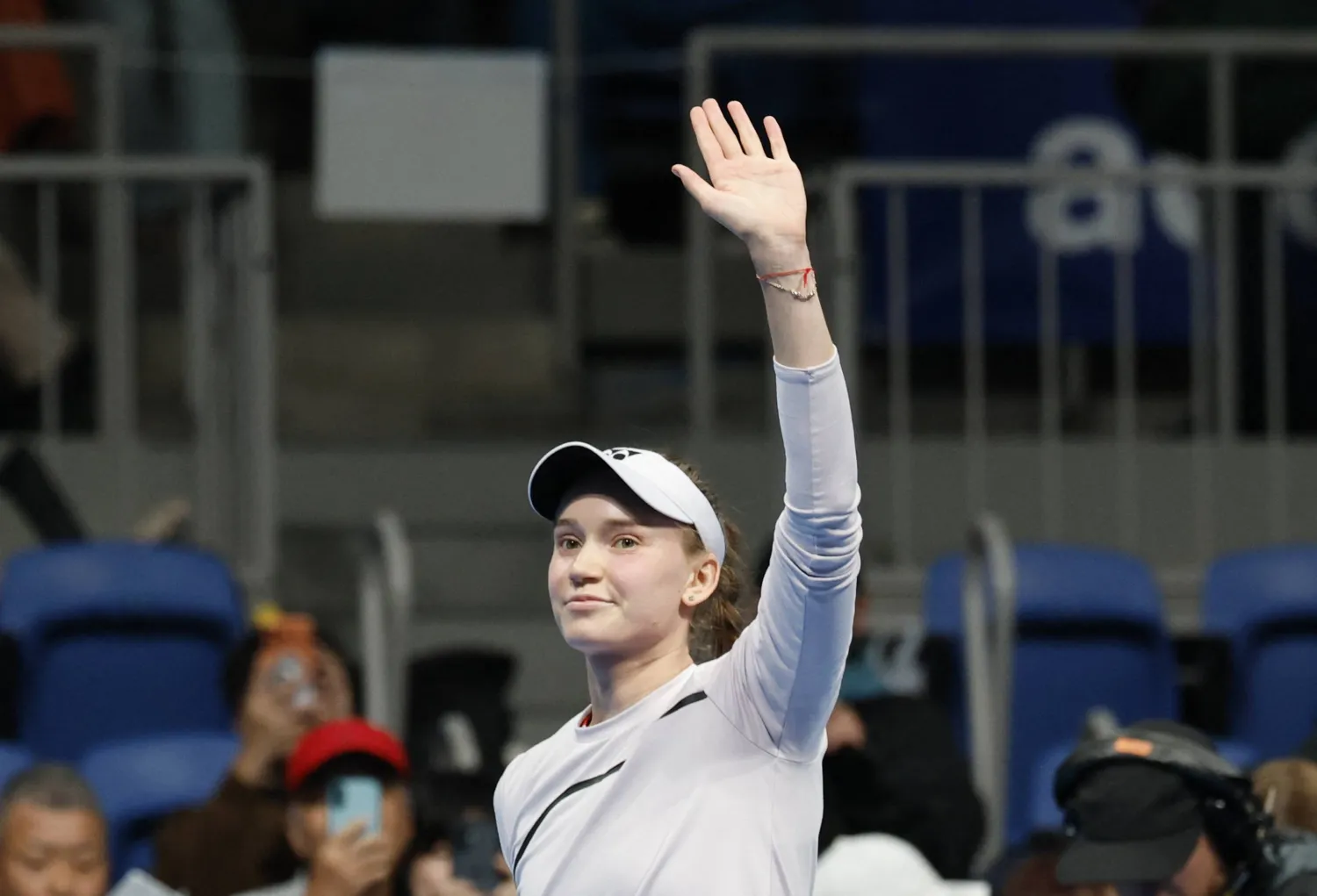
Tennis - WTA 500 - Pan Pacific Open - Ariake Coliseum, Tokyo, Japan - October 29, 2026 Kazakhstan's Elena Rybakina celebrates after winning her round of 16 match against Kazakhstan's Yulia Putintseva REUTERS/Kim Kyung-Hoon
TT

Rybakina Clinches Year-end Top Ranking with Tokyo Second-round Win

Tennis - WTA 500 - Pan Pacific Open - Ariake Coliseum, Tokyo, Japan - October 29, 2026 Kazakhstan's Elena Rybakina celebrates after winning her round of 16 match against Kazakhstan's Yulia Putintseva REUTERS/Kim Kyung-Hoon

Elena Rybakina beat fellow Kazakh Yulia Putintseva 6-2 6-3 in the second round of the Pan Pacific Open in Tokyo on Thursday to secure the year-end world number one ranking for the first time, more than a week before the season-ending WTA Finals.

Rybakina received a bye into the last 16 of the WTA 500 event in Tokyo and arrived at the Ariake Coliseum after capturing her fourth ⁠title of the ⁠season and first as the top-ranked player at last week's Ningbo Open in China.

The 27-year-old, who rose to world number one for the first time en route to winning the US Open last month, ⁠needed only one more victory this year to ensure that world number two Aryna Sabalenka could not overtake her.

Rybakina is enjoying a marquee year with wins at the Australian Open and US Open to take her Grand Slam tally to three, after winning Wimbledon four years ago.

Rybakina next faces Leylah Fernandez in a rematch of their Ningbo final, ⁠after ⁠the Canadian beat Elise Mertens 6-2 7-6(8), Reuters reported.

Rybakina endured a brief dip after her US Open triumph, losing her opening match in Beijing and missing the Wuhan Open due to a leg injury, before defending her title in Ningbo.

She is targeting a 16th career title before heading to Indian Wells, California, for the WTA Finals, where the season's top eight players will compete from November 8-15.