


Jordanian King: Jerusalem Dispute Should be Resolved within Framework of a Final Settlement

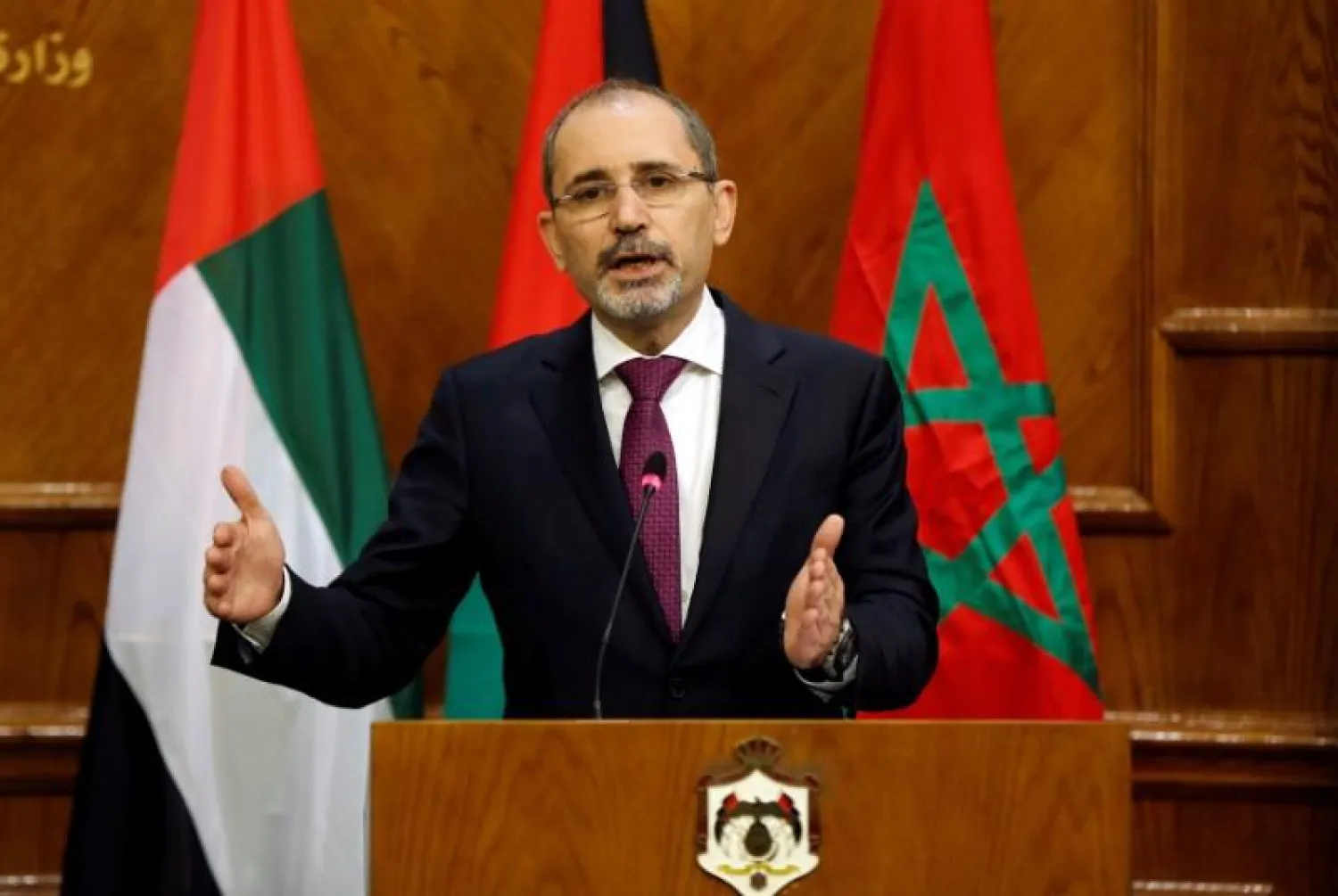
Jordanian Foreign Minister Ayman Safadi speaks during a joint news conference with Arab League chief Ahmed Abul Gheit in Amman, Jordan January 6, 2018. (Reuters)
TT

Jordanian King: Jerusalem Dispute Should be Resolved within Framework of a Final Settlement

Jordanian Foreign Minister Ayman Safadi speaks during a joint news conference with Arab League chief Ahmed Abul Gheit in Amman, Jordan January 6, 2018. (Reuters)

Arab foreign ministers held a meeting in Jordan to follow up on the repercussions of US President Donald Trump’s decision to recognize Jerusalem as Israel's capital and move US embassy to the city.

Jordanian authorities confirmed after the talks the centrality of Jerusalem as a fundamental issue for Arabs and both Muslims and Christians, and that it is the key to peace in the region.

On Saturday, King of Jordan Abdullah II received at al-Husseiniyeh Palace foreign ministers of Egypt Sameh Shoukri, Palestine Riyad al-Malki, Saudi Arabia Adel al-Jubeir and Morocco Nasser Bourita, as well as UAE Minister of State for Foreign Affairs, Dr. Anwar Gargash, and Arab League Secretary General Ahmed Abul Gheit, according to the Petra News Agency.

King Abdullah underlined the need to increase efforts and coordinate Arab positions to support the Palestinians in safeguarding their solid historic and legal rights in the city of Jerusalem and their quest to set up their independent state with East Jerusalem as its capital.

The King added that the issue of Jerusalem should be settled within the framework of a final settlement and a permanent peace agreement between Palestinians and Israelis based on the two-state solution and according to international legitimacy resolutions and the 2002 Arab Peace initiative.

He emphasized the importance of supporting the steadfastness of Jerusalemites and safeguarding the Arab identity of Jerusalem and Islamic and Christian holy sites in the city, and the need to build on the international consensus regarding the legal status of Jerusalem, reported Petra.

The King reiterated that Jordan will exert the greatest efforts to uphold its religious and historic responsibility to protect the holy places.

Later, Jordanian Foreign Minister Ayman al-Safadi held a joint press conference with Abul Gheit during which he said that the ministers are working on forming a delegation to work with the international community to limit the negative consequences of the US Jerusalem move, and highlight its dangers given the national, historical and religious importance of Jerusalem to Muslims and Christians.

Safadi indicated: "Our position as an Arab League and Arab countries regarding this resolution is clear, that it constitutes a violation of international law and legitimacy and has no legal effect. Arab countries will work in this regard. This is a clear and unanimous stance for Arab states that Jerusalem is an Arab, Islamic and Christian priority, and this is the aim of the meeting today and we came to study how to implement the mandate."

King Abdullah emphasized on the centrality of Jerusalem as a fundamental issue for Arabs, Muslims and Christians, and that it is the key to peace in the region, he continued.

There will be no stability and security in the region without a solution that guarantees the establishment of an independent Palestinian state on pre-June 4, 1967 borders with East Jerusalem as its capital, added the minister.

“We will confront the decision by seeking a (UN) resolution, an international one, to recognize a Palestinian state on 1967 borders with Jerusalem as its capital,” said Safadi according to Agence France Presse.

For his part, Abul Gheit said that the purpose of Saturday’s meeting was very helpful and another one will be held at the end of this month.

He stressed that the ministerial meeting would also discuss Washington’s role in future Arab-Israeli peacemaking that members states said was now jeopardized by what they see as US bias towards Israel.



EU Condemns Israel's West Bank Control Measures

The Israeli settlement of Har Homa, seen from the West Bank city of Bethlehem, Tuesday, Dec. 17, 2024. (AP)
TT

EU Condemns Israel's West Bank Control Measures

The Israeli settlement of Har Homa, seen from the West Bank city of Bethlehem, Tuesday, Dec. 17, 2024. (AP)

The European Union on Monday condemned new Israeli measures to tighten control of the West Bank and pave the way for more settlements in the occupied Palestinian territory, AFP reported.

"The European Union condemns recent decisions by Israel's security cabinet to expand Israeli control in the West Bank. This move is another step in the wrong direction," EU spokesman Anouar El Anouni told journalists.


Atrocities in Sudan's El-Fasher Were 'Preventable Human Rights Catastrophe'

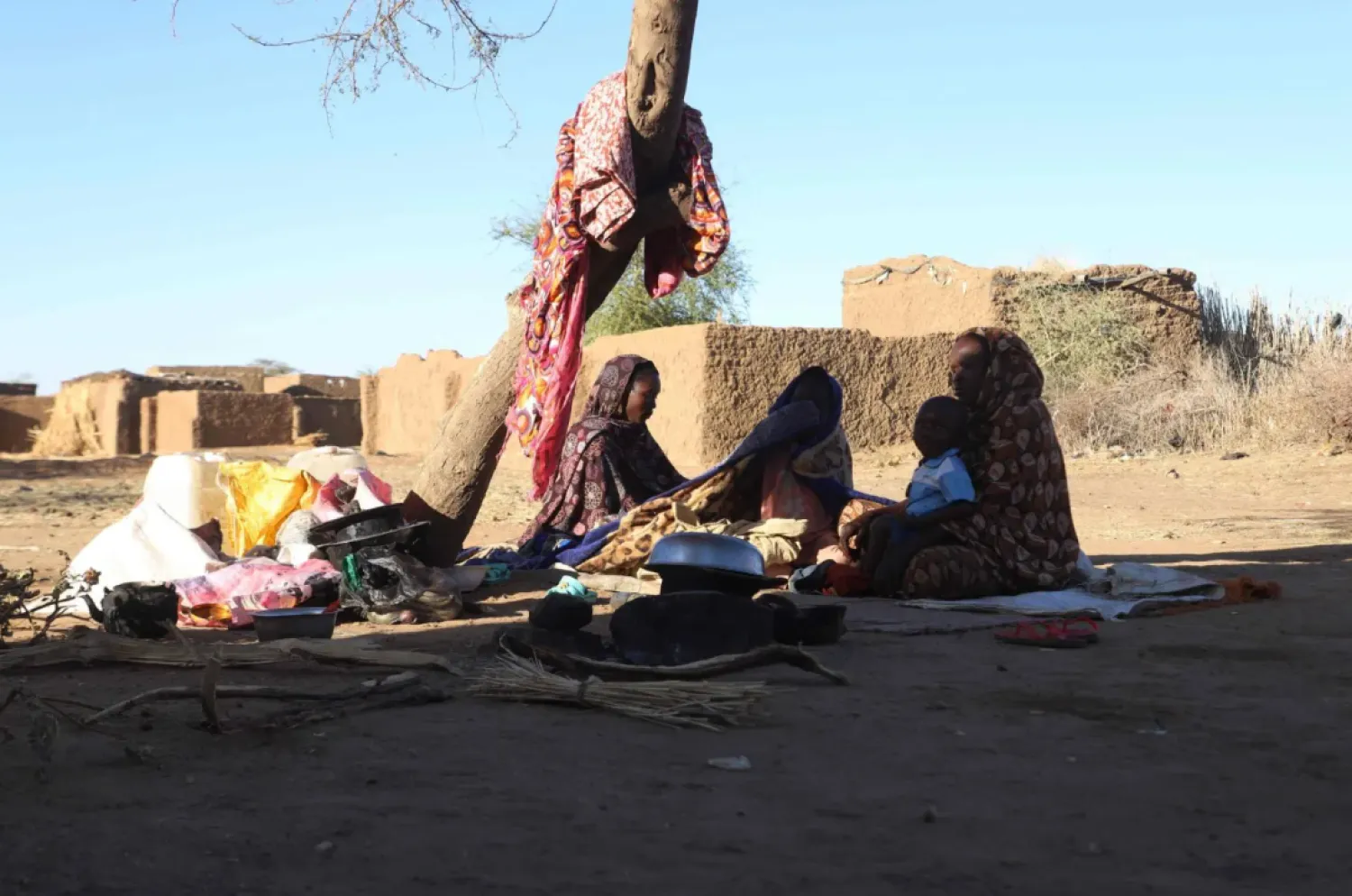
Sudanese displaced people who left El Fasher after its fall, sit in the shade in Tawila at the Rwanda camp reception point on December 17, 2025. (Photo by AFP)
TT

Atrocities in Sudan's El-Fasher Were 'Preventable Human Rights Catastrophe'

Sudanese displaced people who left El Fasher after its fall, sit in the shade in Tawila at the Rwanda camp reception point on December 17, 2025. (Photo by AFP)

The atrocities unleashed on El-Fasher in Sudan's Darfur region last October were a "preventable human rights catastrophe", the United Nations said Monday, warning they now risked being repeated in the neighbouring Kordofan region.


"My office sounded the alarm about the risk of mass atrocities in the besieged city of El-Fasher for more than a year ... but our warnings were ignored," UN rights chief Volker Turk told the Human Rights Council in Geneva.


He added that he was now "extremely concerned that these violations and abuses may be repeated in the Kordofan region".


Arab League Condemns Israel's Decisions to Alter Legal, Administrative Status of West Bank

A general view shows the opening session of the meeting of Arab foreign ministers at the Arab League Headquarters (Reuters)
TT

Arab League Condemns Israel's Decisions to Alter Legal, Administrative Status of West Bank

A general view shows the opening session of the meeting of Arab foreign ministers at the Arab League Headquarters (Reuters)

The General Secretariat of the Arab League strongly condemned decisions by Israeli occupation authorities to impose fundamental changes on the legal and administrative status of the occupied Palestinian territories, particularly in the West Bank, describing them as a dangerous escalation and a flagrant violation of international law, international legitimacy resolutions, and signed agreements, SPA reported.

In a statement, the Arab League said the measures include facilitating the confiscation of private Palestinian property and transferring planning and licensing authorities in the city of Hebron and the area surrounding the Ibrahimi Mosque to occupation authorities.

It warned of the serious repercussions of these actions on the rights of the Palestinian people and on Islamic and Christian holy sites.

The statement reaffirmed the Arab League’s firm support for the legitimate rights of the Palestinian people, foremost among them the establishment of their independent state on the June 4, 1967 borders, with East Jerusalem as its capital.