
Misunderstood Ross Barkley Must Seize his Chance at Chelsea

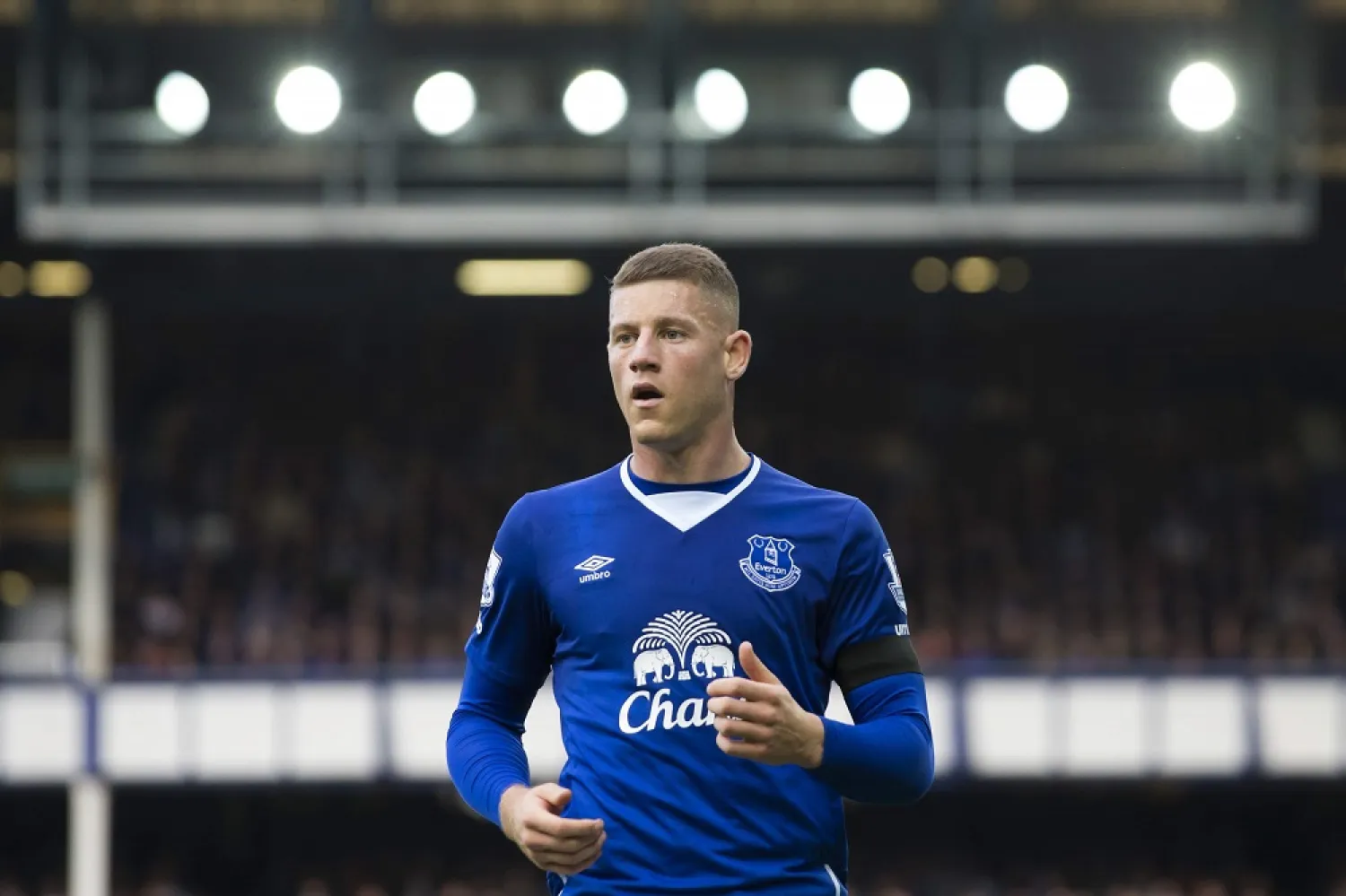
Chelsea midfielder Ross Barkley. (AP)
TT

Misunderstood Ross Barkley Must Seize his Chance at Chelsea

Chelsea midfielder Ross Barkley. (AP)

There was a time, going back a few years, when Everton envisaged Ross Barkley being a different kind of player to the one we see now. Ask David Moyes and he will tell you that at 15 Barkley was the closest he had ever seen to a young Norman Whiteside. Barkley could get up and down the pitch, he had the same kind of rare quality that saw Whiteside bend the ball past Neville Southall in the 1985 FA Cup final and, more than anything, he was utterly fearless in the tackle. Moyes and the youth-team coaches would flinch when they saw him hurtling into a 50-50 challenge.

That changed, at 16, when Barkley broke his leg in two places after going into a tackle during an England Under‑19s game against Belgium. When Barkley came back from that double fracture his coaches noticed how he no longer launched himself at the ball quite so vigorously. Barkley started to play with more restraint, relying on the skills that brought other comparisons, not least to Paul Gascoigne.

He took his time but when he announced himself as a first-team pick, amid gushing eulogies from Roberto Martínez and the sense the entire team could be shaped around him, it was perfectly reasonable for Evertonians to think that maybe this time, just for once, one of their emerging heroes might actually stick around.

Instead, the next time we will see him in blue will be for Chelsea and it is difficult not to think that Everton have come off distinctly second-best in a deal that gives Barkley the chance, in a World Cup year, to restate his England ambitions and leaves the distinct impression that the Merseyside club, however it is dressed up, have been played like a fiddle.

Chelsea have certainly worked the system, bearing in mind the transfer fee was set at £35m in August until Barkley ruptured his hamstring and the Premier League champions obligingly stepped to one side. Everton have continued to pay the player £60,000 a week, as well as forking out for his medical bills and overseeing his rehabilitation program, until now he is fit again, the transfer window has reopened and Roman Abramovich’s staff have swooped back in to resurrect the deal, just for £20m less, with Barkley moving within six months of his contract expiring.

In the meantime, Davy Klaassen and Gylfi Sigurdsson have arrived at Everton for a combined £79m and Wayne Rooney has signed on record wages, all with the mandate of filling the void left by Barkley’s impending departure. None, however, has consistently played with the wit or creativity that Barkley, at his best, could offer and it feels a bit of a stretch to imagine that Kieran Dowell, on loan at Nottingham Forest, is going to save Farhad Moshiri from spending even more. Chelsea have got their man for £15m, the kind of fee a 15‑goal‑a‑season Championship striker goes for nowadays, while Everton would be kidding themselves if they think they have done well out of this deal.

That, however, is the way the business goes sometimes and it is tempting to think Liverpool’s mayor, Joe Anderson, should be busy enough without announcing via Twitter on Friday that he is going to ask the Premier League and the Football Association to investigate the way Everton have been “ripped off”.

Anderson, an Everton supporter, maybe needs to read up about the Bosman rule and the way players’ transfer values depreciate in the last year of their contracts. He won’t be alone in thinking Everton have been done up like a kipper but, if there was anything sinister enough to warrant a top‑level investigation, shouldn’t it be the club issuing the complaint? The fact Everton agreed the transfer and have absolutely zero plans to take it up with the authorities suggests Anderson didn’t get voted in because of his football knowledge.

This is an unsatisfactory story, though, from Everton’s perspective because there is always something profoundly sad when a local player breaks through with the club he has embraced all his life only for it to end badly, and in Barkley’s case, without him offering even a flicker of an explanation.

Perhaps he doesn’t feel it is necessary when Chelsea can offer better wages and all the fun of the Champions League. Yet a few honest words might have been appreciated when Everton’s supporters, on the whole, thought of him as one of their own.

Sure, there were a few grumbles during his periods of lost form. But the game against Burnley towards the end of last season was an accurate barometer. A few days earlier, CCTV pictures had leaked of Barkley being thumped in a Liverpool bar. Barkley’s name was belted out by the Goodison crowd. He played well, clutched his badge in front of the Gwladys Street end and there was a standing ovation when he was substituted late on. It is not true Everton fans had unequivocally turned against him.

Might he now re-establish himself as an England player? Barkley was part of Roy Hodgson’s squad in Euro 2016 but came home without playing a single minute. Sam Allardyce excluded him for his one match in charge of the national team and on the solitary occasion Gareth Southgate called him up, for the double-header against Germany and Lithuania last March, Barkley was one of only two players not to kick a ball.

Barkley has not played for his country since May 2016 and has made only three 90-minute appearances in 22 caps, 14 of which have come as a substitute, since making his debut at the age of 19. In his last seven call-ups he has been an unused substitute and if he is not careful that is threatening to be the story of his international career – a nearly man, a player who stayed too young too long, never quite fulfilling his potential or showing he can dominate, rather than decorate, matches.

Yet Southgate has shown already that he is willing to change his mind about a player and it is still possible Barkley can find a way back, before Russia, if he has not been held back too much by that hamstring tear (anyone doubting the seriousness of that injury, incidentally, should check out the nine-inch scar that runs down the back of his leg) and if Antonio Conte, his new manager at Chelsea, can make him start believing again that he is capable of holding his own at the highest level.

Barkley is a confidence player. The problem is that confidence started to ebb away when Ronald Koeman took over at Everton and misread the situation by assuming Barkley was the type of character who would respond better to public criticism than Martínez’s arm-round-the-shoulder indulgence. Barkley, in fact, was a Toffee with a soft center, sensitive enough to Koeman’s words that at one point he asked his manager why he talked about him so much in press conferences. It hurt him that his manager would go to the media and it hardened his resolve to cut himself free, even if what Koeman said was fundamentally correct.

Another insight into Barkley’s personality goes back to Everton’s FA Cup semi-final against Manchester United in April 2016, in the final few weeks of the Martínez era, when the players came in at half-time, losing 1-0. There were boos from the Everton end and Barkley had convinced himself, wrongly, they were directed towards him. It was up to the other players, led by Phil Jagielka, to let him know he was worrying unduly. For such a gifted player, Barkley has still to show, aged 24, that he has the maturity to make that next step from being a good, sometimes very good, player to being an outstanding one.

The bottom line, however, is that people talk about him, and write about him, because he belongs to the small band of players with the potential to do it. What Barkley has to avoid is for people to still be discussing all that rich potential when he is in his late 20s. But the facts, statistically, are that no other player at Everton has set up more goals, created more scoring chances or had more successful dribbles in the previous three seasons. Those kind of players do not come through the system very often and that, I suspect, is what really grates Liverpool’s mayor rather than the fact that Chelsea, for once, have paid below the odds.

The Guardian Sport


Madrid’s Mendy Suffers Another Injury Setback

Real Madrid's Ferland Mendy receives medical attention during the Spanish La Liga soccer match between RCD Espanyol and Real Madrid, in Barcelona, Catalonia, Spain, 03 May 2026. (EPA)
TT

Madrid’s Mendy Suffers Another Injury Setback

Real Madrid's Ferland Mendy receives medical attention during the Spanish La Liga soccer match between RCD Espanyol and Real Madrid, in Barcelona, Catalonia, Spain, 03 May 2026. (EPA)

Injury-plagued Real Madrid defender Ferland Mendy has suffered a thigh injury, with Spanish media reporting on Monday that he will be sidelined for several months.

Left-back Mendy was replaced after just 14 minutes of Sunday's 2-0 win over Espanyol, which delayed Barcelona winning the La Liga title.

The France international will undergo surgery in the coming hours after suffering his 16th injury since joining Madrid from Lyon in 2019.

"Following tests carried out today on our player Ferland Mendy... he has been diagnosed with a rectus femoris tendon injury in his right leg," Madrid said in a statement.

Mendy made his last France appearance in June 2024 and was unlikely to be in contention for a place in Didier Deschamps's World Cup squad.


Asharq Al-Awsat Reveals Saudi FA Financials With SAR 88 Million Surplus

Asharq Al-Awsat Reveals Saudi FA Financials With SAR 88 Million Surplus
TT

Asharq Al-Awsat Reveals Saudi FA Financials With SAR 88 Million Surplus

Asharq Al-Awsat Reveals Saudi FA Financials With SAR 88 Million Surplus

The Saudi Arabian Football Federation is set to approve its consolidated financial statements for the period from July 1, 2024 to December 31, 2025, at its general assembly meeting scheduled for May 18 in Riyadh. The move reflects the close of the financial cycle and entry into the formal approval phase.

Asharq Al-Awsat has obtained detailed figures from those statements through its sources. Total revenue reached SAR 2.599 billion (about $693.1 million), compared with expenditures of SAR 2.511 billion (around $669.6 million), generating a surplus of SAR 88.4 million (approximately $23.6 million). The outcome points to balanced finances despite elevated spending levels.

Competition-related spending topped the expenditure categories at SAR 717 million (about $191.2 million). This figure covers the organization of domestic competitions as well as hosting regional, continental, and international tournaments. It also includes club support and prize money totaling SAR 246 million (around $65.6 million), underscoring the scale of investment in domestic competitions.

For national teams, the federation reported spending of roughly SAR 467 million (about $124.5 million), while allocations for referees reached SAR 210 million (around $56 million), reflecting a clear push to strengthen technical and organizational standards and develop officiating and training camps.

On the human resources front, total salaries and incentives for federation staff and all Saudi national teams, men’s and women’s (19 teams), amounted to SAR 543 million (about $144.8 million).

In terms of operating revenue, sponsorship agreements, broadcasting rights, and matchday income generated SAR 256 million (around $68.3 million). Meanwhile, travel and transportation costs for federation personnel and national teams totaled SAR 229 million (about $61.1 million), a category tied to the domestic and international scope of activities.

As for the general assembly agenda, it includes announcing the session and confirming its formation in line with the statutes, approving the agenda, and delivering the president’s address. This will be followed by the appointment of three delegates to review the meeting minutes, the designation of independent auditors, and ratification of the previous meeting’s minutes.

The assembly will also review the president’s report on activities since the last meeting, before presenting the external auditor’s report and approving the consolidated financial statements, including the statement of financial position and activities report.

Members will then vote on proposed amendments to regulations and standing orders, culminating in the appointment of an independent external auditor based on a board recommendation, in a session with a distinctly regulatory and financial focus that will shape the next phase.


Top Tennis Players Slam Roland Garros Prize Money, Citing a Shrinking Share of Tournament Revenue

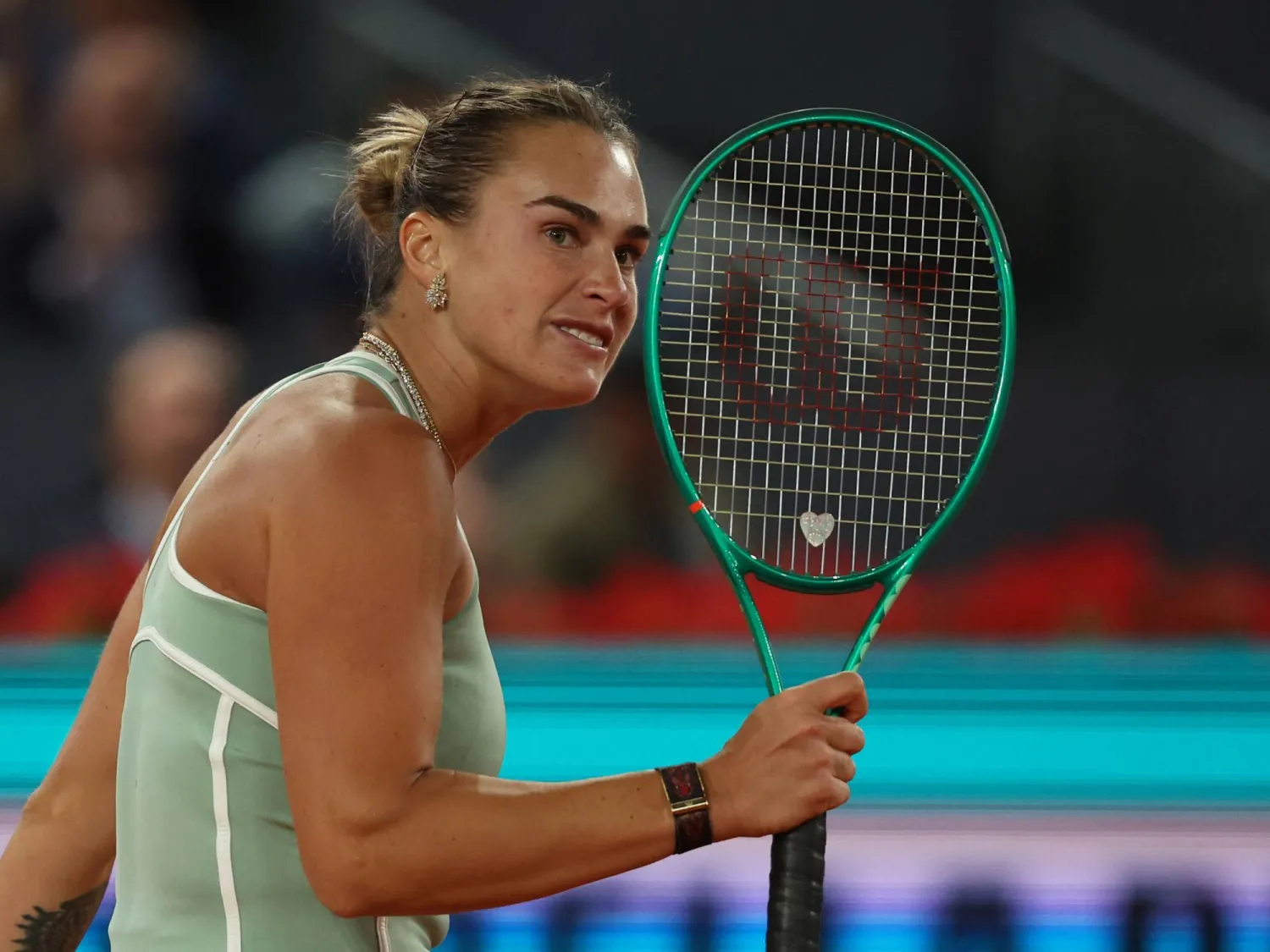
Tennis - Madrid Open - Park Manzanares, Madrid, Spain - April 28, 2026 Belarus' Aryna Sabalenka reacts during her quarterfinal match against Hailey Baptiste of the US. (Reuters)
TT

Top Tennis Players Slam Roland Garros Prize Money, Citing a Shrinking Share of Tournament Revenue

Tennis - Madrid Open - Park Manzanares, Madrid, Spain - April 28, 2026 Belarus' Aryna Sabalenka reacts during her quarterfinal match against Hailey Baptiste of the US. (Reuters)

A group of leading players including Novak Djokovic, Jannik Sinner, Aryna Sabalenka and Coco Gauff have expressed “their deep disappointment” at the level on prize money at Roland Garros amid a lingering dispute with Grand Slam tournament organizers.

The clay-court Grand Slam event starts later this month in western Paris. The players said they have other demands that have not been addressed by officials, including better representation, health and pensions.

The players' call came after French Open organizers announced last month the Roland Garros prize money has increased by about 10% for an overall pot of 61.7 million euros ($72.1 million), with the total amount up 5.3 million euros from last year.

“Players’ share of Roland Garros tournament revenue has declined from 15.5% in 2024 to 14.9% projected in 2026,” the group of players responded in a statement on Monday.

Play begins on May 24 at Roland Garros. Men’s and women’s singles champions each receive 2.8 million euros and the runners-up 1.4 million euros. Semifinalists earn 750,000 euros and first round losers get 87,000 euros. Men’s and women’s doubles winners pocket 600,000 euros and the mixed doubles champions get 122,000 euros.

But the statement said “the underlying figures tell a very different story,” claiming that players receive a declining share of the value they contribute to generate.

“According to tournament officials, Roland Garros generated 395 million euros in revenue in 2025, a 14% year-on-year increase, yet prize money rose by just 5.4%, reducing players’ share of revenue to 14.3%,” they said. “With estimated revenues of over 400 million euros for this year’s tournament, prize money as a percentage of revenue will likely still be less than 15%, far short of the 22% that players have requested to bring the Grand Slams into line with the ATP and WTA Combined 1000 events.”

French Open organizers did not immediately respond to a request for comments.

The same group of 20 players had already signed a letter sent to the heads of the four Grand Slam tournaments last year, seeking more prize money and a greater say in what they called “decisions that directly impact us.”

They said in their latest statement they remain “united in their desire to see meaningful progress, both in terms of fair financial distribution and in how the sport is governed.”

They insisted they have not received any response to their proposals on welfare, including pension and long-term health, adding that no progress has been made “on fair and transparent player representation within Grand Slam decision-making.”

“While other major international sports are modernizing governance, aligning stakeholders, and building long-term value, the Grand Slams remain resistant to change,” they said. “The absence of player consultation and the continued lack of investment in player welfare reflect a system that does not adequately represent the interests of those who are central to the sport’s success.”