


New US National Defense Strategy Prioritizes 'Preparedness for War'

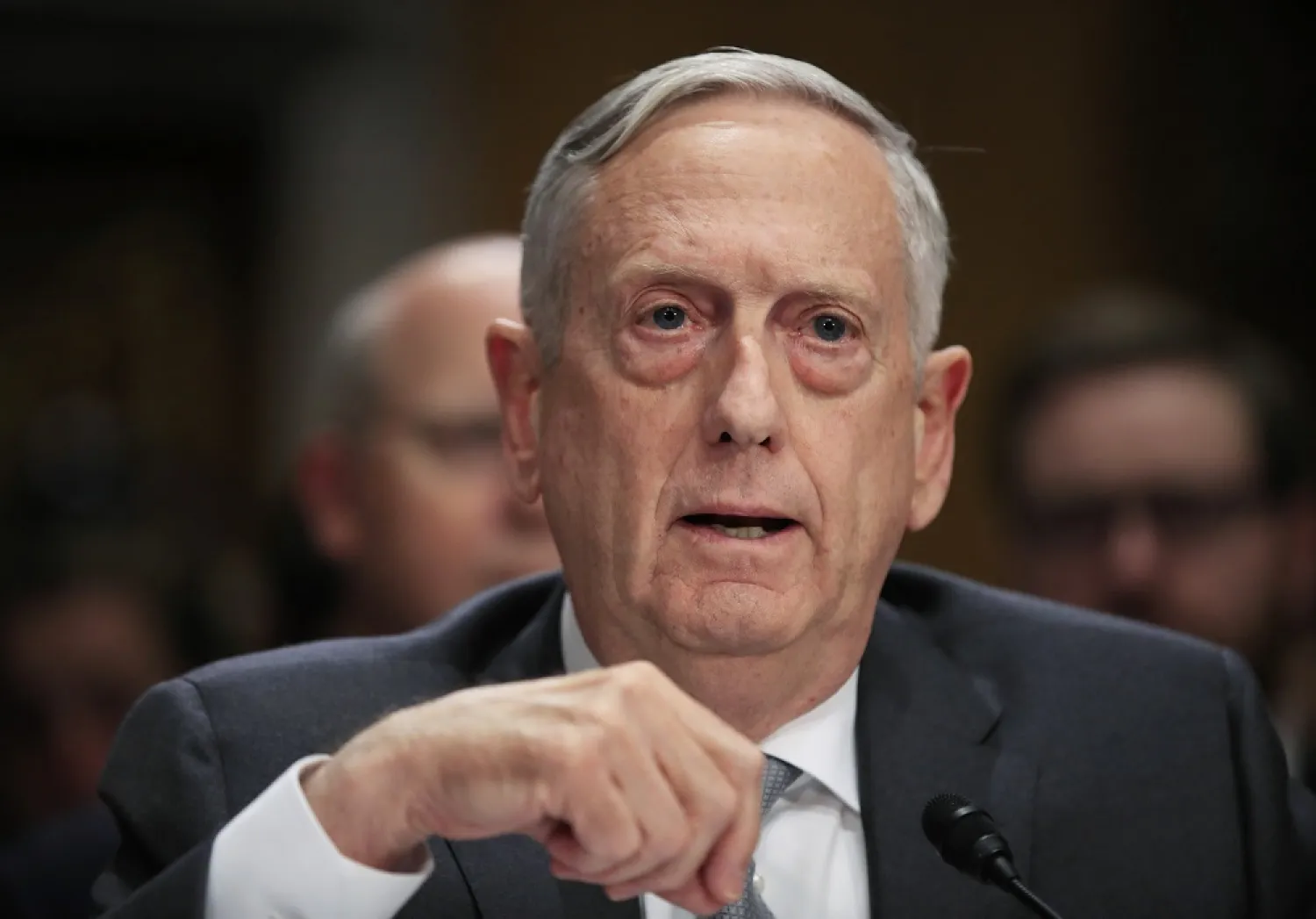
US Defense Secretary Jim Mattis. (AP)
TT

New US National Defense Strategy Prioritizes 'Preparedness for War'

US Defense Secretary Jim Mattis. (AP)

Countering China and Russia has become the focus of a new national defense strategy for the United States, which announced that "preparedness for war" has become one of its main priorities.

Unveiled on Friday, the strategy marks a shift in American priorities from terrorism to challenges posed by Moscow and Beijing.

"We will continue to prosecute the campaign against terrorists, but great power competition -- not terrorism -- is now the primary focus of US national security," Defense Secretary Jim Mattis said in prepared remarks at the Johns Hopkins School of Advanced International Studies in Washington.

He declared the defeat of the ISIS group in Iraq and Syria, but warned that ISIS, al-Qaida and other extremists continue as threats across the globe.

“We face growing threats from revisionist powers as different as China and Russia, nations that seek to create a world consistent with their authoritarian models,” he added in presenting the national defense document.

The document, the first of its kind since at least 2014, sets priorities for the US Defense Department that are expected to be reflected in future defense spending requests. The Pentagon released an unclassified, 11-page version of the document on Friday.

The so-called “National Defense Strategy” represents the latest sign of hardening resolve by President Donald Trump’s administration to address challenges from Russia and China, despite Trump’s calls for improved ties with Moscow and Beijing.

Elbridge Colby, deputy assistant secretary of defense for strategy and force development, said at a briefing with reporters that Russia was far more brazen than China in its use of military power.

Russia annexed Ukraine’s Crimean peninsula in 2014 and intervened militarily in Syria to support its ally, Syrian regime head Bashar Assad. Still, Moscow was limited by its economic resources, Colby said.

The document reflects persistent US worries about China's military build-up in the South China Sea, its moves to expand its political and economic influence around the globe, and what has long been described as Beijing's systematic campaign of cyberattacks and data theft from government agencies and private US corporations.

Previous defense chiefs have long warned about a rising China -- triggering the Obama administration's move to put a greater focus on the Asia Pacific region, including added ships and troops. And the new strategy's call for strengthening alliances sounds more like previous administrations, rather than the "America First" message of Trump's national security strategy that was released in December.

“This strategy really represents a fundamental shift to say, look, we have to get back, in a sense, to the basics of the potential for war and this strategy says the focus will be on prioritizing preparedness for war, in particular major power war,” Colby added.

The defense strategy explained that competition with China and Russia has threatened America's military advantage around the world. And it will require increased investment to make US forces more lethal, agile and ready for war.

The document also listed North Korea among the Pentagon’s top priorities, citing the need to focus US missile defenses against the threat from Pyongyang, which beyond its nuclear weapons has also amassed an arsenal of biological, chemical, and conventional arms.

On whether terrorism is no longer a top priority, Colby said it remains a "serious, pressing threat", and that Iran and North Korea are "urgent problems."

The document said that international alliances would be critical for the US military, by far the world’s best-resourced. But it also stressed a need for burden-sharing, an apparent nod to Trump’s public criticism of allies who he says unfairly take advantage of US security guarantees.

Mattis said that the US military’s competitive edge has eroded “in every domain of warfare” and blamed that partly on spending caps and congressional budget dysfunction.

“As hard as the last 16 years of war have been, no enemy in the field has done more to harm the readiness of the US military than the combined impact” of the caps and short-term funding.

In sheer spending terms, the United States’ military outlay per year is still far more than China and Russia, the rivals cited by Mattis. The United States is spending $587.8 billion per year on its military, China $161.7 billion and Russia $44.6 billion.



Top Trump Iran Negotiator Says Visits US Aircraft Carrier in Middle East

US Special Envoy Steve Witkoff delivers a press conference upon the signing of the declaration on deploying post-ceasefire force in Ukraine, during the so-called "Coalition of the Willing" summit, at the Elysee Palace in Paris, France, January 6, 2026. (Reuters)
TT

Top Trump Iran Negotiator Says Visits US Aircraft Carrier in Middle East

US Special Envoy Steve Witkoff delivers a press conference upon the signing of the declaration on deploying post-ceasefire force in Ukraine, during the so-called "Coalition of the Willing" summit, at the Elysee Palace in Paris, France, January 6, 2026. (Reuters)

US President Donald Trump's lead Iran negotiator Steve Witkoff on Saturday said he visited the USS Abraham Lincoln aircraft carrier currently in the Arabian Sea, with Washington and Tehran due to hold further talks soon.

"Today, Adm. Brad Cooper, Commander of US Naval Forces Central Command, Jared Kushner, and I met with the brave sailors and Marines aboard the USS Abraham Lincoln, her strike group, and Carrier Air Wing 9 who are keeping us safe and upholding President Trump's message of peace through strength," said Witkoff in a social media post.

Iranian Foreign Minister Abbas Araghchi said on Saturday he hoped talks with the United States would resume soon, while reiterating Tehran's red lines and warning against any American attack.


Israel’s Netanyahu Expected to Meet Trump in US on Wednesday and Discuss Iran

Israeli Prime Minister Benjamin Netanyahu delivers a speech during a special session to mark the 77th anniversary of the Knesset's establishment and the 60th anniversary of the dedication of the current building at the Knesset, the Israeli parliament, in Jerusalem, 02 February 2026. (EPA)
TT

Israel’s Netanyahu Expected to Meet Trump in US on Wednesday and Discuss Iran

Israeli Prime Minister Benjamin Netanyahu delivers a speech during a special session to mark the 77th anniversary of the Knesset's establishment and the 60th anniversary of the dedication of the current building at the Knesset, the Israeli parliament, in Jerusalem, 02 February 2026. (EPA)

Israeli Prime Minister Benjamin Netanyahu is expected to meet US President Donald Trump on Wednesday in Washington, where they will discuss negotiations with Iran, Netanyahu's office said on Saturday.

Iranian and US officials held indirect nuclear ‌talks in the ‌Omani capital ‌Muscat ⁠on Friday. ‌Both sides said more talks were expected to be held again soon.

A regional diplomat briefed by Tehran on the talks told Reuters Iran insisted ⁠on its "right to enrich uranium" ‌during the negotiations with ‍the US, ‍and that Tehran's missile capabilities ‍were not raised in the discussions.

Iranian officials have ruled out putting Iran's missiles - one of the largest such arsenals in the region - up ⁠for discussion, and have said Tehran wants recognition of its right to enrich uranium.

"The Prime Minister believes that any negotiations must include limiting ballistic missiles and halting support for the Iranian axis," Netanyahu's office said in a ‌statement.


Italy FM Rules Out Joining Trump’s ‘Board of Peace’

Italy's Minister for Foreign Affairs Antonio Tajani speaks to the press during the EPP Leaders’ meeting, in Zagreb, Croatia, 30 January 2026. (EPA)
TT

Italy FM Rules Out Joining Trump’s ‘Board of Peace’

Italy's Minister for Foreign Affairs Antonio Tajani speaks to the press during the EPP Leaders’ meeting, in Zagreb, Croatia, 30 January 2026. (EPA)

Italy will not take part in US President Donald Trump's "Board of Peace", Italian Foreign Minister Antonio Tajani said Saturday, citing "insurmountable" constitutional issues.

Trump launched his "Board of Peace" at the World Economic Forum in Davos in January and some 19 countries have signed its founding charter.

But Italy's constitution bars the country from joining an organization led by a single foreign leader.

Prime Minister Giorgia Meloni, a Trump ally, last month noted "constitutional problems" with joining, but suggested Trump could perhaps reopen the framework "to meet the needs not only of Italy, but also of other European countries".

Tajani appeared Saturday to rule that out.

"We cannot participate in the Board of Peace because there is a constitutional limit," he told the ANSA news agency.

"This is insurmountable from a legal standpoint," he said, the day after meeting US Secretary of State Marco Rubio and US Vice President JD Vance at the Olympics in Milan.

Although originally meant to oversee Gaza's rebuilding, the board's charter does not limit its role to the Palestinian territory and appears to want to rival the United Nations.