
Mourinho’s Charismatic Authority Brings Success and Instability

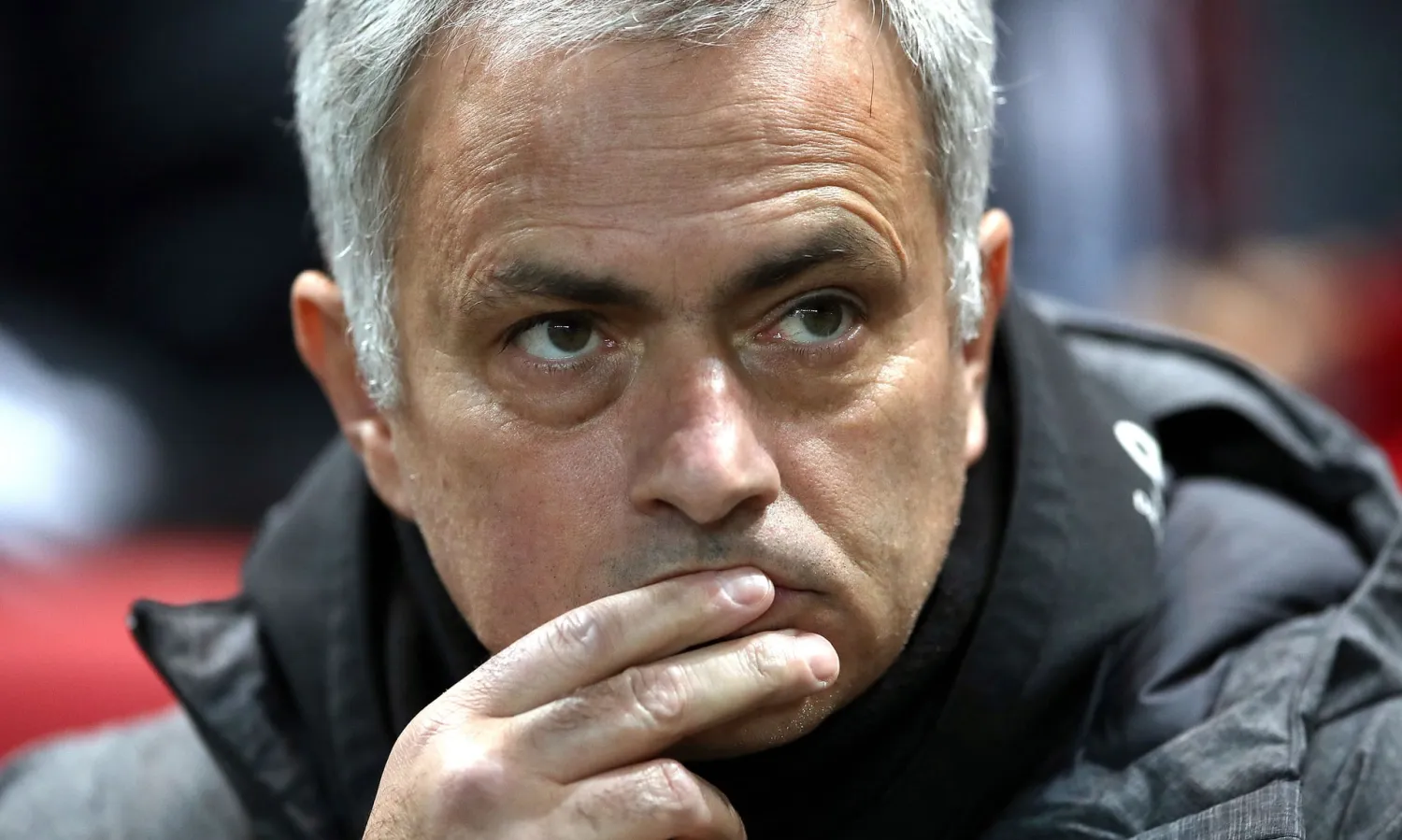
 José Mourinho has been heavily influenced by his early studies under Prof Manuel Sérgio in Lisbon. Photograph: Nick Potts/PA
José Mourinho has been heavily influenced by his early studies under Prof Manuel Sérgio in Lisbon. Photograph: Nick Potts/PA
TT

Mourinho’s Charismatic Authority Brings Success and Instability

 José Mourinho has been heavily influenced by his early studies under Prof Manuel Sérgio in Lisbon. Photograph: Nick Potts/PA
José Mourinho has been heavily influenced by his early studies under Prof Manuel Sérgio in Lisbon. Photograph: Nick Potts/PA

Last season Eden Hazard observed that the main difference between José Mourinho and Antonio Conte was that Mourinho does not practice “automizations”. He does not have players practise set moves they can perform almost unconsciously that can be deployed at great pace when the situation demands. He organizes his defense and leaves his forwards to improvise. That has been taken by some as evidence that Mourinho is no longer at the forefront of coaching – and perhaps it is – but it is also a detail that explains his entire methodology.

While studying at the Instituto Superior de Educação Física in Lisbon Mourinho came under the influence of Prof Manuel Sérgio, who believed that football knowledge was not enough for a coach, that he also had to be a psychologist, a public speaker and have a grasp of the sciences. Specifically he gave lectures on emotions and how they could be manipulated. Mourinho followed them with a rapacious curiosity. “He looked,” Manuel Sérgio said, “like a cat catching birds.”

His studies in psychology drew Mourinho to many of the conclusions reached by the Portuguese neurologist António Damásio, who has since written the introduction to a study about Mourinho’s methods by four Portuguese researchers. In his 1994 book, Descartes’s Error, Damásio argues that emotions are more rational than is commonly believed and that decisions are more influenced by emotional factors.

“For us to say that this or that player is in great physical shape is a mistake,” Mourinho said during his time at Porto. “The player is either fit or not. And what do we mean by being fit? It is to be physically well and to be part of a game plan which a player knows inside out. With regard to the psychological side, which is essential to play at the highest level, a fit player feels confident, cooperates with and believes in his team-mates, and shows solidarity towards them. All of this put together means a player is fit and it is reflected in playing well.”

This is the basis of the theory of periodization, as preached by Vítor Frade, the Portuguese academic who has been a huge influence over a generation of Portuguese coaches and worked as Mourinho’s director of methodology at Porto.

It means no drills to improve stamina or discrete skills; it means no gym work unless a player is recovering from injury; and it means no automizations.

“When he started as a head coach there were very few people coaching like he was coaching,” said the former Wolves midfielder Silas, who played under Mourinho at União de Leiria, “but now we see a lot of coaches doing the same. It’s a kind of training that’s completely focused on game situations, all game situations, all really specific.”

Mourinho’s approach is “guided discovery”. Players are not taught moves by rote which, for him, offers a false sense of virtuosity that unravels against a better organized or more aggressive opponent. They are essentially persuaded by example of the efficacy of the Mourinho model until they instinctively reach for a Mourinho solution.

“It is not easy to put this theory into practice, especially with top players who are not prepared to accept everything they are told just because it comes from you, the authority …” Mourinho said. “I will arrange the training sessions to lead along a certain path, they will begin feeling it … all together, we reach a conclusion.”

The players are made to feel they own the conclusions Mourinho wants them to reach. It is a form of brainwashing, which perhaps explains the air of cultishness that so often characterizes his relationship with his squad – and, indeed, with fans and certain journalists. It is an emotional as well as a technical process, one rooted in his “charismatic authority”, to use the term employed by the sociologist Max Weber in his 1919 lecture “Politics as a Vocation”, which addresses the issue of personality cults.

The identification of both an external enemy – the football authorities, referees, pundits, whoever – and “rats”, club figures who for offenses real or imagined find themselves outside the inner circle, helps strengthen those bonds.

Mourinho’s mastery of psychology allows him to secure a buy-in that, for instance, can persuade Samuel Eto’o to operate as an auxiliary full-back or Xabi Alonso to turn against some of his Spain team-mates – as he did when Madrid played Barcelona four times in 18 days in 2011. But there is a problem. Weber argued that instances of charismatic authority “cannot remain stable; they will become either traditionalized or rationalized, or a combination of both”. It is that, perhaps, that best explains why Mourinho has only ever been successful in short bursts; in time the impact of his charisma wears off and players kick against an authority that has become habitual.

In the past that is when third-season syndrome has set in, which is what makes reports of a new five-year contract so extraordinary. There have been signs this season at Old Trafford that the process has been accelerated. Mourinho’s problem may be less that his rejection of automization is old hat than that the methodology to which it is integral is undermined by a familiarity with his techniques that erodes the charismatic authority on which they are based.

(The Guardian)


Tottenham Hotspur Sack Head Coach Thomas Frank

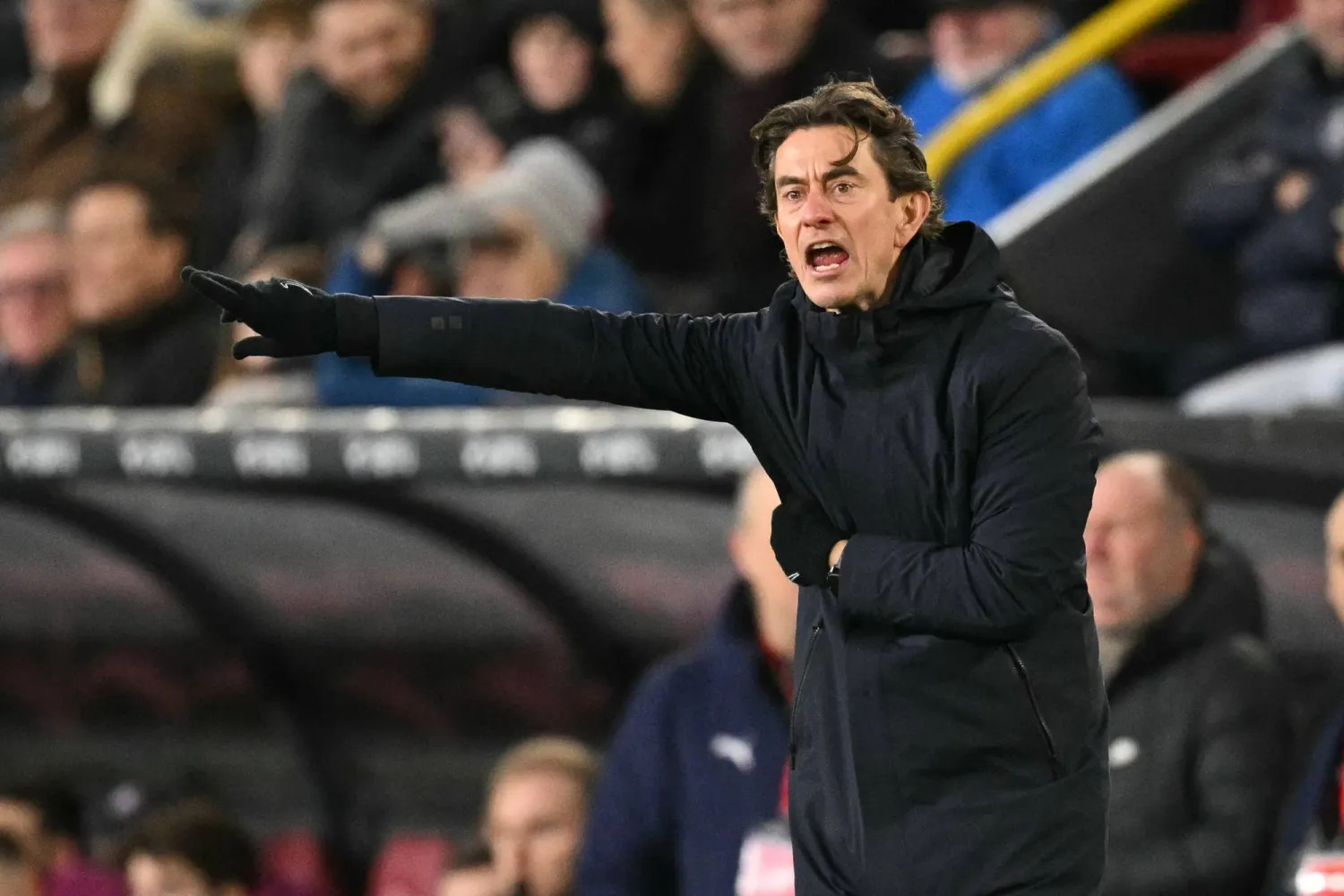
(FILES) Tottenham Hotspur's Danish head coach Thomas Frank gestures on the touchline during the English Premier League football match between Burnley and Tottenham Hotspur at Turf Moor in Burnley, north-west England on January 24, 2026. (Photo by Oli SCARFF / AFP)/
TT

Tottenham Hotspur Sack Head Coach Thomas Frank

(FILES) Tottenham Hotspur's Danish head coach Thomas Frank gestures on the touchline during the English Premier League football match between Burnley and Tottenham Hotspur at Turf Moor in Burnley, north-west England on January 24, 2026. (Photo by Oli SCARFF / AFP)/

Thomas Frank was fired by Tottenham on Wednesday after only eight months in charge and with his team just five points above the relegation zone in the Premier League.

Despite leading Spurs to the round of 16 in the Champions League, Frank has overseen a desperate domestic campaign. A 2-1 loss to Newcastle on Tuesday means Spurs are still to win in the league in 2026.

“The Club has taken the decision to make a change in the Men’s Head Coach position and Thomas Frank will leave today,” Tottenham said in a statement. “Thomas was appointed in June 2025, and we have been determined to give him the time and support needed to build for the future together.

“However, results and performances have led the Board to conclude that a change at this point in the season is necessary.”

Frank’s exit means Spurs are on the lookout for a sixth head coach in less than seven years since Mauricio Pochettino departed in 2019.


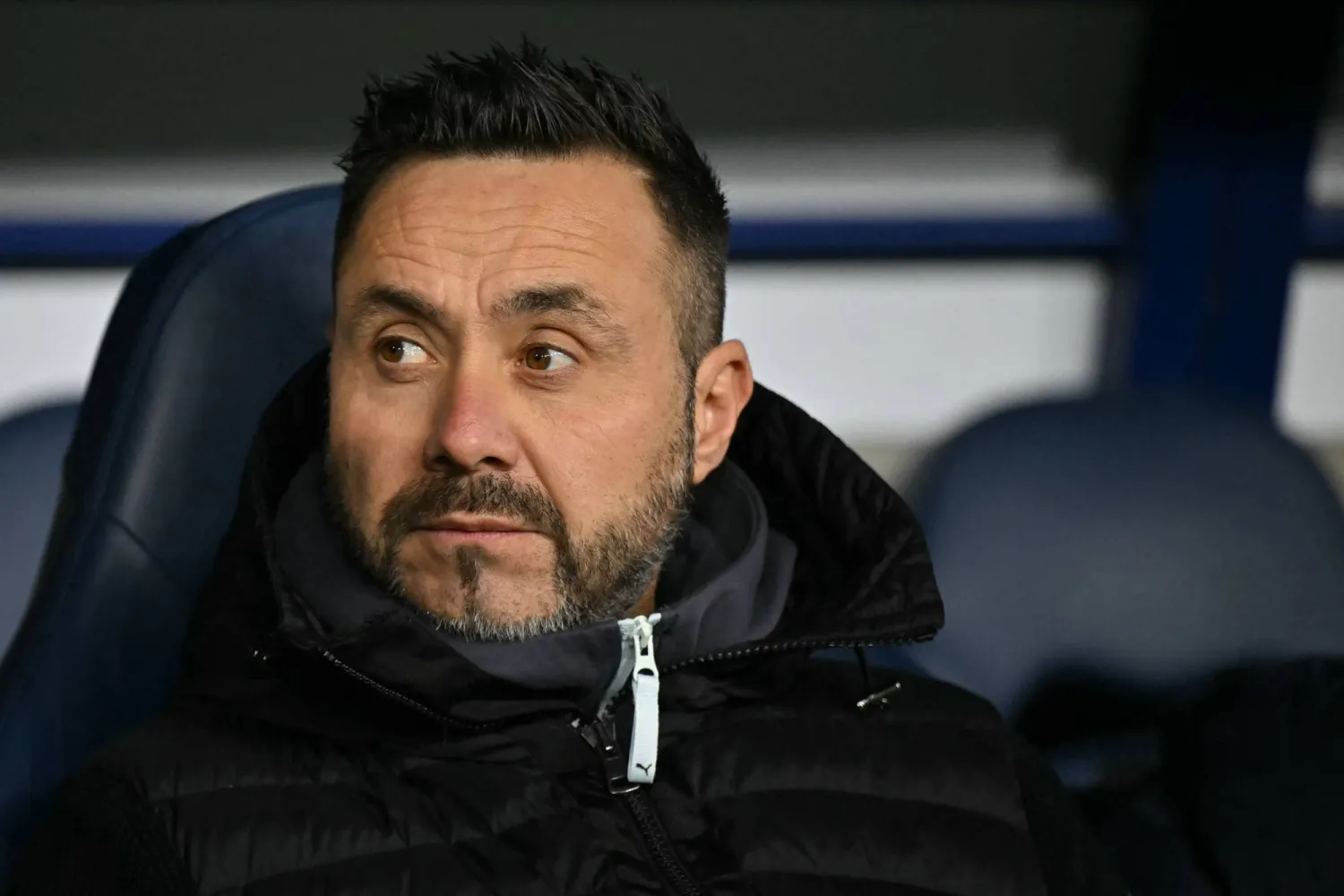
Marseille Coach De Zerbi Leaves After Humiliating 5-0 Loss to PSG 

Marseille's Italian coach Roberto De Zerbi looks on from the technical area during the French Cup round of 32 football match between FC Bayeux and Olympique de Marseille (OM) at the Michel-d'Ornano Stadium in Caen on January 13, 2026. (AFP) 
TT

Marseille Coach De Zerbi Leaves After Humiliating 5-0 Loss to PSG 

Marseille's Italian coach Roberto De Zerbi looks on from the technical area during the French Cup round of 32 football match between FC Bayeux and Olympique de Marseille (OM) at the Michel-d'Ornano Stadium in Caen on January 13, 2026. (AFP) 

Marseille coach Roberto De Zerbi is leaving the French league club in the wake of a 5-0 thrashing at the hands of PSG in French soccer biggest game.

The nine-time French champions said on Wednesday that they have ended “their collaboration by mutual agreement.”

The heavy loss Sunday at the Parc des Princes restored defending champion PSG’s two-point lead over Lens after 21 rounds, with Marseille in fourth place after the humiliating defeat.

De Zerbi's exit followed another embarrassing 3-0 loss at Club Brugge two weeks ago that resulted in Marseille exiting the Champions League.

De Zerbi, who had apologized to Marseille fans after the loss against bitter rival PSG, joined Marseille in 2024 after two seasons in charge at Brighton. After tightening things up tactically in Marseille during his first season, his recent choices had left many observers puzzled.

“Following consultations involving all stakeholders in the club’s leadership — the owner, president, director of football and head coach — it was decided to opt for a change at the head of the first team,” Marseille said. “This was a collective and difficult decision, taken after thorough consideration, in the best interests of the club and in order to address the sporting challenges of the end of the season.”

De Zerbi led Marseille to a second-place finish last season. Marseille did not immediately announce a replacement for De Zerbi ahead of Saturday's league match against Strasbourg.

Since American owner Frank McCourt bought Marseille in 2016, the former powerhouse of French soccer has failed to find any form of stability, with a succession of coaches and crises that sometimes turned violent.

Marseille dominated domestic soccer in the late 1980s and early 1990s. It was the only French team to win the Champions League before PSG claimed the trophy last year. It hasn’t won its own league title since 2010.


Olympic Fans Hunt for Plushies of Mascots Milo and Tina as They Fly off Shelves 

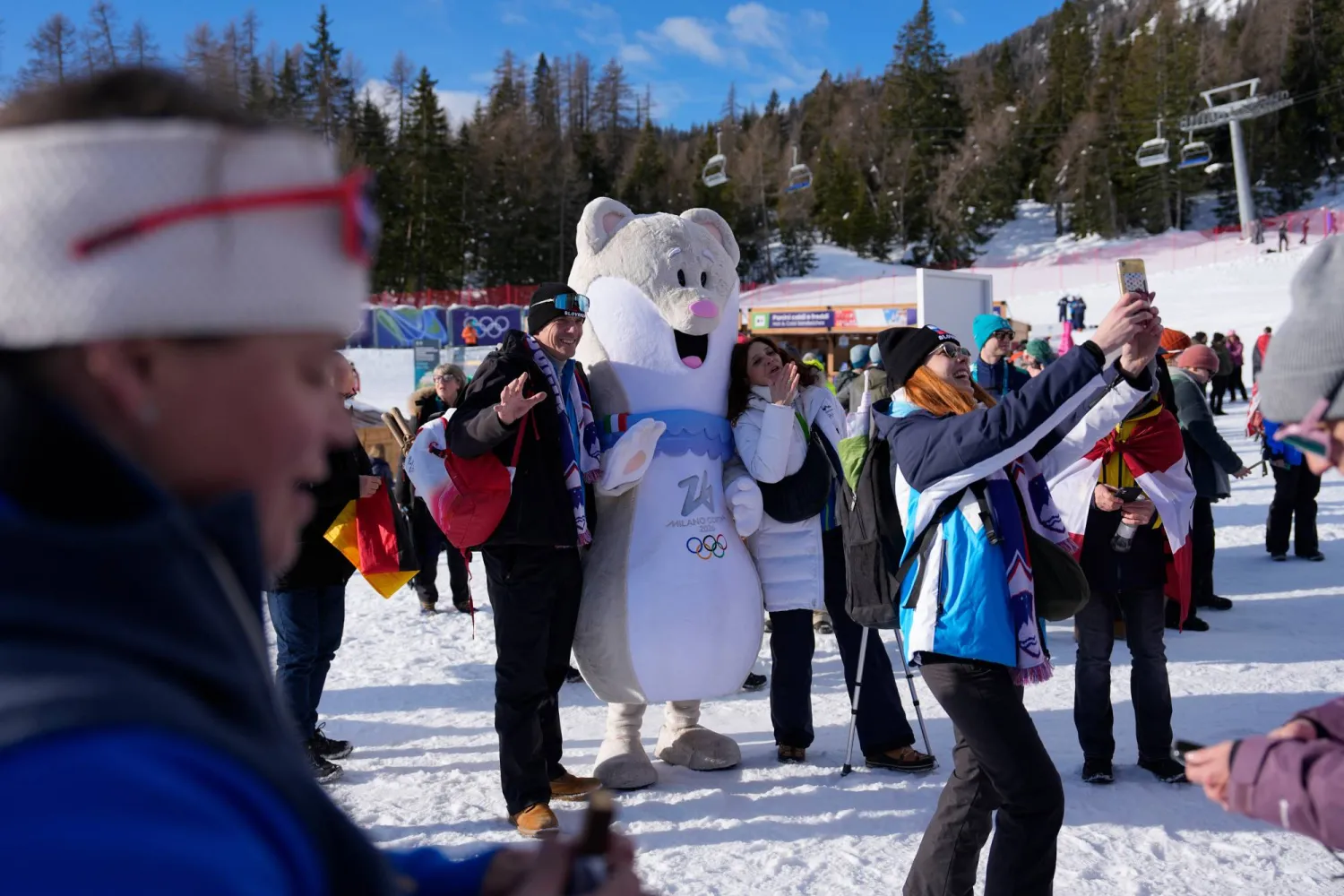
Fans take selfies with the Olympic mascot Tina at the finish area of an alpine ski, slalom portion of a women's team combined race, at the 2026 Winter Olympics, in Cortina d'Ampezzo, Italy, Tuesday, Feb. 10, 2026. (AP)
TT

Olympic Fans Hunt for Plushies of Mascots Milo and Tina as They Fly off Shelves 

Fans take selfies with the Olympic mascot Tina at the finish area of an alpine ski, slalom portion of a women's team combined race, at the 2026 Winter Olympics, in Cortina d'Ampezzo, Italy, Tuesday, Feb. 10, 2026. (AP)

For fans of the Milan Cortina Olympic mascots, the eponymous Milo and Tina, it's been nearly impossible to find a plush toy of the stoat siblings in Milan and Cortina d’Ampezzo.

Many of the official Olympics stores in the host cities are already sold out, less than a week into the Winter Games.

“I think the only way to get them is to actually win a medal,” Julia Peeler joked Tuesday in central Milan, where Tina and Milo characters posed for photos with fans.

The 38-year-old from South Carolina is on the hunt for the plushies for her niece. She's already bought some mascot pins, but she won't wear them on her lanyard. Peeler wants to avoid anyone trying to swap for them in a pin trade, a popular Olympic pastime.

Tina, short for Cortina, is the lighter-colored stoat and represents the Olympic Winter Games. Her younger brother Milo, short for Milano, is the face of the Paralympic Winter Games.

Milo was born without one paw but learned to use his tail and turn his difference into a strength, according to the Olympics website. A stoat is a small mustelid, like a weasel or an otter.

The animals adorn merchandise ranging from coffee mugs to T-shirts, but the plush toys are the most popular.

They're priced from 18 to 58 euros (about $21 to $69) and many of the major official stores in Milan, including the largest one at the iconic Duomo Cathedral, and Cortina have been cleaned out. They appeared to be sold out online Tuesday night.

Winning athletes are gifted the plush toys when they receive their gold, silver and bronze medals atop the podium.

Broadcast system engineer Jennifer Suarez got lucky Tuesday at the media center in Milan. She's been collecting mascot toys since the 2010 Vancouver Games and has been asking shops when they would restock.

“We were lucky we were just in time,” she said, clutching a tiny Tina. “They are gone right now.”

Friends Michelle Chen and Brenda Zhang were among the dozens of fans Tuesday who took photos with the characters at the fan zone in central Milan.

“They’re just so lovable and they’re always super excited at the Games, they are cheering on the crowd,” Chen, 29, said after they snapped their shots. “We just are so excited to meet them.”

The San Franciscan women are in Milan for the Olympics and their friend who is “obsessed” with the stoats asked for a plush Tina as a gift.

“They’re just so cute, and stoats are such a unique animal to be the Olympic mascot,” Zhang, 28, said.

Annie-Laurie Atkins, Peeler's friend, loves that Milo is the mascot for Paralympians.

“The Paralympics are really special to me,” she said Tuesday. “I have a lot of friends that are disabled and so having a character that also represents that is just incredible.”