


Saudi Energy Minister Calls for Extending Oil Cooperation Beyond 2018

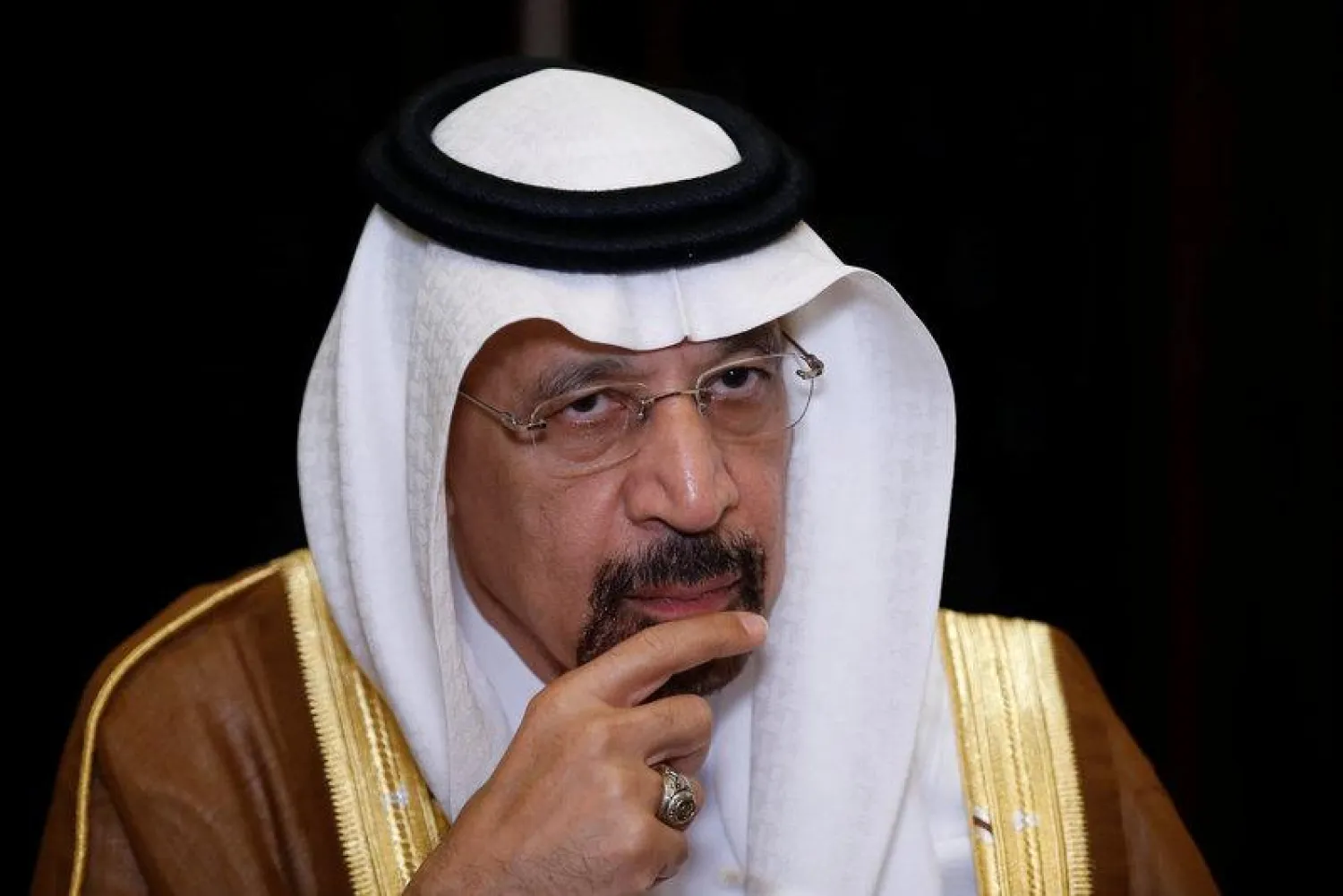
Saudi Arabia's Energy Minister Khalid al-Falih attends a joint briefing in Beijing, China May 15, 2017. REUTERS/Aly Song
TT

Saudi Energy Minister Calls for Extending Oil Cooperation Beyond 2018

Saudi Arabia's Energy Minister Khalid al-Falih attends a joint briefing in Beijing, China May 15, 2017. REUTERS/Aly Song

Saudi Arabia, top oil exporter, called Sunday for extending cooperation between OPEC and non-OPEC producers beyond 2018, after a deal to cut output succeeded in shoring up prices.

"We should not limit our efforts to 2018. We need to be talking about a longer framework for our cooperation," announced Saudi Energy Minister Khalid al-Falih.

The invitation for long-term cooperation between oil producers, came at a time as oil prices exceeded $70 a barrel, after they dropped below $30 a barrel in early 2016.

A long-term cooperation will confirm the idea that there is constant coordination between producers, Falih told reporters before a meeting between ministers of OPEC and non-OPEC countries in the Omani capital Muscat.

Falih said a deal on production levels after 2018 would be about "assuring stakeholders, investors, consumers and the global community that this is something that is here to stay. And we are going to work together."

"There is a readiness to continue cooperation beyond 2018... The mechanism hasn’t been determined yet, but there is a consensus to continue," Falih said after the meeting.

OPEC and non-OPEC oil producers signed a landmark agreement in November 2016 to cut output by 1.8 million barrels per day to fight oversupply and lift deteriorating prices.

Falih said oil producers had not yet achieved their target of reducing world stocks to normal levels and striking a balance between supply and demand.

“That objective has not been achieved. We are not close to achieving it,” he said, adding that a re-balance is unlikely in the first half of 2018.

Prior to the ministerial meeting, Kuwait’s oil minister Bakhit al-Rashidi said there is no plan or intention so far to exit from a production-cutting agreement between OPEC and non-OPEC oil producers.

“The production-reduction agreement will remain for a long time and there is no thinking right now to exit it,” Rashidi said.

Meanwhile, Oman’s oil minister Mohammed bin Hamad al-Rumhi said producers would discuss in November whether to renew their supply agreement or enter a new type of agreement. Oman is in favor of a new type of deal, he said without elaborating.

Russian Energy Minister Alexander Novak said oil producers should not ease off on their efforts despite the rebound.

"Despite the fact that progress is obvious, we must not relax. We are determined to carry through the re-balancing," Novak, whose country is the world's top crude producer, told reporters.

Following his meeting with Saudi Minister Falih, Russian minister praised the outcome of the cuts deal.

"The market got on the way towards balancing and we jointly managed to reduce the surplus in stocks by more than half," Novak said.

The Russian minister indicated that year showed that coordinating joint actions is a successful experiment.

He told "Russia 24" new channel that Russia and Saudi Arabia has a designed road-map for establishing about 30 joint projects.


Iran's Central Bank Chief Resigns

A man walks past a sign at a currency exchange bureau as the value of the Iranian rial drops, in Tehran, Iran, December 20, 2025. (Via Reuters)
TT

Iran's Central Bank Chief Resigns

A man walks past a sign at a currency exchange bureau as the value of the Iranian rial drops, in Tehran, Iran, December 20, 2025. (Via Reuters)

Iran's central bank chief, Mohammad Reza Farzin, has resigned, the semi-official ​Nournews agency reported on Monday, citing an official at the president's office, as the country battles a slump in its rial currency and high inflation.

The rial, which has been falling as the Iranian economy has suffered from the impact of Western sanctions, fell to a ‌new record low on ‌Monday at around 1,390,000 ‌to ⁠the ​dollar, according ‌to websites displaying open market rates.

Iranian media outlets reported there had been demonstrations in the capital Tehran, mainly by shop owners, against the economic situation.

Farzin has headed the central bank since December 2022. His resignation will be reviewed by President Masoud ⁠Pezeshkian, the official added, according to Nournews.

Iranian state media reported ‌later on Monday, citing the communications ‍and information deputy ‍at the Iranian president's office, that former Economy ‍Minister Abdolnaser Hemmati will be appointed as the new central bank chief.

Iranian media have said the government's recent economic liberalization policies have put pressure on the ​open-rate currency market.

The open-rate market is where ordinary Iranians buy foreign currency, whereas businesses typically ⁠use state-regulated rates.

The reimposition of US sanctions in 2018 during President Donald Trump's first term has harmed Iran's economy by limiting its oil exports and access to foreign currency.

The Iranian economy is at risk of recession, with the World Bank forecasting GDP will shrink by 1.7% in 2025 and 2.8% in 2026. The risk is compounded by rising inflation, which hit a 40-month high of ‌48.6% in October, according to Iran's Statistical Center.


Lebanon Signs Deal to Purchase Natural Gas from Egypt

A diesel storage tank is seen at the Middle East Oil Refinery Company (MIDOR) in Alexandria, Egypt, November 7, 2018. REUTERS/Amr Abdallah Dalsh
TT

Lebanon Signs Deal to Purchase Natural Gas from Egypt

A diesel storage tank is seen at the Middle East Oil Refinery Company (MIDOR) in Alexandria, Egypt, November 7, 2018. REUTERS/Amr Abdallah Dalsh

Lebanon said Monday it plans to purchase natural gas from Egypt, seeking to reduce its reliance on fuel oil for its ageing power plants in a country hamstrung by regular electricity cuts.

The electricity sector has cost Lebanon more than $40 billion since the end of its 1975-1990 civil war, and successive governments have failed to reduce losses, repair crumbling infrastructure or even guarantee regular power bill collections.

Residents rely on expensive private generators and solar panels to supplement the unreliable state supply.

Prime Minister Nawaf Salam's office said in a statement that the memorandum of understanding between Lebanon and Egypt sought "to meet Lebanon's needs for natural gas allocated for electricity generation".

It was signed by Lebanese Energy Minister Joe Saddi and Egyptian Petroleum Minister Karim Badawi, according to AFP.

"Lebanon's strategy is first to transition to the use of natural gas, and second, to diversify gas sources," Saddi said, adding that "the process will take time because pipelines need rehabilitation".

Lebanon will "contact donor agencies to see how they can help finance the rehabilitation" of the Lebanese section of the gas pipelines, he said, adding that repair work would take several months.

President Joseph Aoun said the memorandum of understanding was "a practical and essential step that will enable Lebanon to increase its electricity production".

A statement from Cairo's petroleum and mineral resources ministry said that "Egypt is fulfilling its role in supplying Lebanon with natural gas, with the aim of supporting energy security for Arab countries".

In 2022, Lebanon signed a deal to import natural gas from Egypt and Jordan via Syria to boost power supply, but the contracts were never implemented due to financing issues and US sanctions on Syria.

Washington recently lifted it Syria measures following the fall of longtime ruler Bashar al-Assad last year.

In April, Lebanon signed a $250 million agreement with the World Bank to modernise its electricity sector.


Chile to Restore Global Leadership in Lithium Production

Aerial view of brine ponds and processing areas of the lithium mine of the Chilean company SQM (Sociedad Quimica Minera) in the Atacama Desert, Calama, Chile, on September 12, 2022. (AFP)
TT

Chile to Restore Global Leadership in Lithium Production

Aerial view of brine ponds and processing areas of the lithium mine of the Chilean company SQM (Sociedad Quimica Minera) in the Atacama Desert, Calama, Chile, on September 12, 2022. (AFP)

Chile's state-owned copper producer, Codelco, together with Chinese-backed private miner, SQM, announced on Saturday the creation of a giant company to exploit lithium, often referred to as "white gold."

The South American country is the world’s second-largest producer of lithium, a key component of EVs and other clean technologies and has about 40% of the world’s lithium reserves.

The partnership between the firms will allow them to jointly ramp up the exploration of lithium in the Atacama region of northern Chile.

The public-private partnership will be named Nova Andino Litio SpA, said Codelco, which described the agreement as one of the most significant deals in Chilean business history.

The Chinese firm Tianqi holds 22% stake in SQM.

In a statement, Codelco said the new partnership will carry out lithium exploration, extraction, production, and commercialization activities in the Atacama salt flat until 2060.

The agreement was approved by more than 20 national and international regulatory authorities, including those in China, Brazil, Saudi Arabia, and the European Union.

Chile was the last of the countries to clear the deal. Last month, China gave the green light to the planned partnership between Codelco and SQM.

The new venture is intended to help Chile regain global leadership in lithium production, a position it lost to Australia nearly a decade ago.

The partnership aims to expand lithium output in the Atacama region, with plans to increase production by around 300,000 tons per year. In 2022, Chile produced 243,100 tons of lithium.

The partnership also aligns with Chile’s National Lithium Strategy, announced in 2023 by the leftist government of President Gabriel Boric, aimed at reclaiming Chile’s global leadership in lithium production.