The Toxic Practice Fueling the Fierce Competition Over Amazon’s Second Headquarters

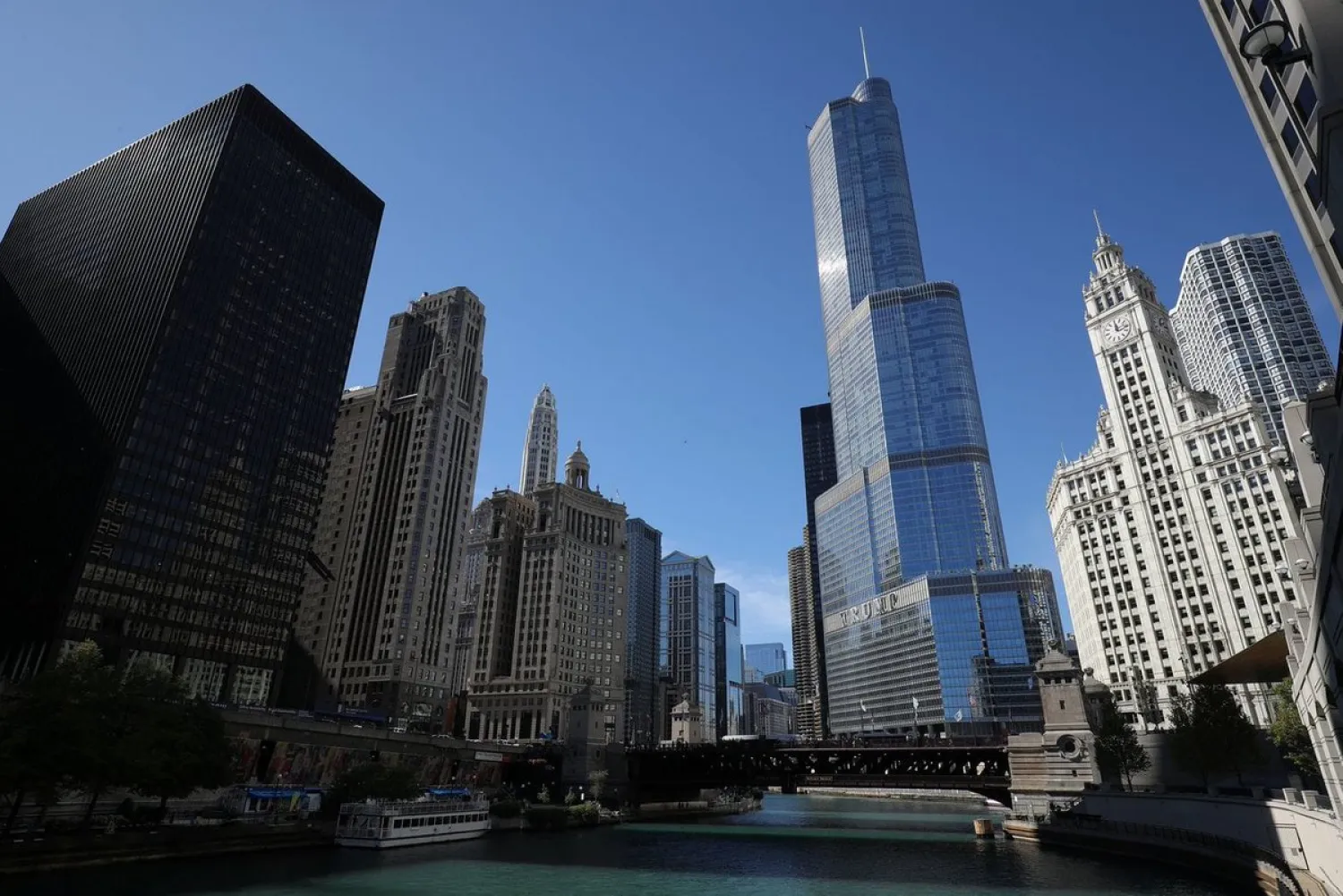
Chicago is one of the US cities competing to house Amazon.com’s second headquarters, “Amazon HQ2,” with giveaways that may hurt the city in the long run. (John Gress/Reuters)
TT

The Toxic Practice Fueling the Fierce Competition Over Amazon’s Second Headquarters

Chicago is one of the US cities competing to house Amazon.com’s second headquarters, “Amazon HQ2,” with giveaways that may hurt the city in the long run. (John Gress/Reuters)

Rename the town. Construct a largely untested high-speed hyper-loop train system. Maybe even build a whole new city.

Those proposals made headlines after Amazon received 238 bids from cities, some of which seemed ready to do anything to land its second headquarters. (Amazon chief executive Jeffrey P. Bezos owns The Washington Post.) But the 20 HQ2 finalists didn’t offer anything nearly as outlandish. Instead, Newark, Denver, Los Angeles, Columbus and Chicago prevailed offering tried-and true-giveaways like low taxes, land giveaways, infrastructure improvements and workforce guarantees — perks that many experts now fear continue to exacerbate economic inequality, instability and precarity. In many cases, these giveaways have done far more long-term harm than the often-temporary economic gains they created.

This destructive race-to-the-bottom has been going on for quite some time. For more than a century, public-private partnerships dedicated to securing investment have been carefully crafting the handouts that cities and states offer companies to lure them to the area.

Before the Great Depression, Southern and Western small-business owners and professionals, known as “boosters,” convinced governments to offer attractive packages to manufacturing companies. They considered such investments a welcome source of employment and income in these largely rural, generally poor states. Many Northeasterners and Midwesterners derided these efforts as “buying payroll,” since these ad hoc campaigns promised no unions, low taxes, few regulations and cheap land.

These desperate bids morphed into systematic efforts to recruit industry during the collapse of the farming, ranching and mining sectors in the 1930s. Mississippians went a step further than most when Governor Hugh White dedicated the state government to “Balance Agriculture with Industry” (BAWI). That revolutionary 1936 program created a whole new executive bureaucracy dedicated to harnessing state resources to entice Steel Belt investors with heavily-subsidized factories, tax advantages and union-free factory floors.

Many Mississippians, noted economists and federal officials, worried that BAWI might undercut New Deal efforts to raise wages, regulate businesses and stabilize the economy. They doubted businesses would come and feared Mississippians would not gain nearly as much as they gave away. Initially, the evidence seemed to confirm these fears: By 1940, eight deals had fallen through in final arrangements and only seven ventures, mostly low-paying textile factories, had opened.

Despite Mississippi’s struggles, the spirit of the BAWI prevailed regionally. By the end of World War II, many Americans feared another Depression. Southern and Western boosters promised their neighbors prosperity — if policymakers cut business taxes, reduced regulations and restricted unions.

Assuring jobs convinced voters to reduce business taxes, repeal workplace rules, pass right-to-work laws and even elect boosters, like former department store magnate and U.S. Sen. Barry Goldwater, who first developed his leadership skills in Phoenix’s tiny Chamber of Commerce, which undertook one of the most sophisticated efforts to recruit investment.

Goldwater and his compatriots had a lot of competition in what journalists called “The Second War Between the States.” Across the South and West, local business organizations fought for corporate investment with the same anti-union, anti-tax, anti-regulation promises.

Northeasterners and Midwesterners, who had once scoffed at these efforts, began to fear the steady disappearance of jobs, production lines and even whole factories. By the early 1950s, they added trimming business taxes and regulations to their industrial recruitment arsenal. But Steel Belt policymakers struggled to repeal the worker rights that Midwesterners and Northeasterners cherished for empowering blue-collar workers to bargain for the benefits that gave them middle-class livelihoods.

By the mid-1950s, the derisive moniker of “buying payroll” had died out, replaced by widespread praise for creating good “business climates.” As the nationwide competition to lure businesses escalated, executives demanded much more than the usual array of low taxes, few unions and less regulation. By the late 1950s, cities everywhere had to offer cheap utilities, good transportation options and excellent schools, which investors needed for research, development and workforce training.

The long-term effects of this prolonged warfare are still visible. Poaching corporations turned backwater Southern and Western states into the booming Sun Belt by the 1970s, but at a price for everyday Americans.

Citizens, of course, used the roads, utilities and schools promised to executives. But this infrastructure was built with outside investors, not locals, in mind. As a result, residents have been left with transportation options, waterlines and degree programs tailored to companies that have often closed or moved on to another desperate city.

And citizens footed a disproportionate amount of the bills to pay for these business climates. Across the country, individual property and sales taxes climbed throughout the 1940s, 1950s and 1960s to offset the corporate tax reductions foundational to the increasingly ubiquitous business climate.

Taxpayers never received a guaranteed return on this investment. Manufacturers had already begun shifting production overseas after World War II and long embraced automation as a way to cut labor costs.

Now many American cities and states, including in the South and West, struggle to hold on to investment and attract more through the same tried-and-true handouts, as well as the more outlandish promises recently made to Amazon.

Yet the HQ2 bidding frenzy included signs that Americans may finally be battle-weary.

Journalists openly mocked crazy proposals, economists emphasized that giveaways may not yield long-term gains and big-city mayors openly declined to compete or publicly refused to promise excessive tax benefits to put their constituents, not corporations, first.

There’s even evidence that companies may now come to cities who invest in their citizens, not outside investors. Mayor Bill de Blasio, for example, made headlines when he refused to simply buy the payroll from the potential 50,000 new Amazon jobs. “We win it based on the talent of our workers and the incredible diversity of industries in this town,” he predicted back in October. “Those are the strengths you can’t buy with tax breaks.”

He may very well be proved right: New York is one of the finalists.

(The Washington Post)


Saudi Real Estate Market Maintains Investment Momentum Despite War Fallout

Residential developments in Saudi Arabia (Ministry of Municipalities and Housing)
TT

Saudi Real Estate Market Maintains Investment Momentum Despite War Fallout

Residential developments in Saudi Arabia (Ministry of Municipalities and Housing)

Saudi Arabia's real estate market continues to attract investment despite geopolitical challenges weighing on economic activity worldwide, supported by new housing developments and efforts to expand residential supply.

The Ministry of Municipalities and Housing announced that more than 15,000 residential land plots had been made available through the Sakani platform across the Kingdom between the beginning of 2026 and the end of October, alongside additional projects launched by private-sector developers.

The developments underscore the sector's continued momentum and its importance to the Saudi economy.

Government initiatives and private-sector projects aim to expand housing supply and meet growing demand, reinforcing real estate's position as a key driver of economic growth and diversification.

Strong domestic demand and ongoing urban development projects continue to underpin the market's appeal, attracting investment from both Saudi and international investors.

Against a backdrop of geopolitical uncertainty and war-related disruptions to trade, supply chains, financing costs and construction expenses, the real estate sector has gained importance as an industry driven largely by domestic demand and capable of sustaining economic activity.

Private-Sector Investment

Despite mounting global economic volatility and geopolitical tensions, Saudi Arabia's real estate market continues to attract international investment, supported by clear economic policies, expanding development opportunities and strong housing demand.

Real estate developer Arada recently announced its entry into the Saudi market through a partnership with local company XTOPIA, backed by a SAR 50 billion ($13.3 billion) portfolio of land and development opportunities.

The partnership's first project is a SAR 14 billion residential development in Riyadh's Al Rimal district.

Riyadh Region Municipality, the Ministry of Municipalities and Housing, and the National Center for Privatization & PPP also recently announced the launch of the expression of interest, prequalification and proposal submission stages for a joint land investment project.

The initiative involves developing a municipal land plot in northern Riyadh through a 50-year partnership with the private sector, marking the municipality's first project under the joint investment model.

Real estate specialists described the initiative as an important step toward enabling private investors to develop property assets into sustainable projects with significant economic value.

They said the extended investment period would encourage developers to improve construction quality and services, strengthen project feasibility, diversify real estate offerings and increase supply in one of the capital's most expensive neighborhoods.

Balancing the Real Estate Market

The importance of releasing more residential land lies in achieving greater balance in the property market, a government objective outlined by Crown Prince and Prime Minister Mohammed bin Salman.

The strategy seeks to increase housing supply by making more land available, broadening the options accessible to Saudi citizens and enabling more households to move from searching for a home to building and owning one.

Increasing the availability of residential land, particularly in cities and governorates experiencing rising demand, could ease pressure on land prices over the medium term, provided that plot locations and sizes correspond to actual market needs.

The release of additional land also creates opportunities for real estate developers, contractors, engineering firms and building materials suppliers to benefit from anticipated demand for construction projects.

As a result, businesses across the real estate and construction supply chain could see stronger activity despite the impact of the geopolitical crisis on other economic sectors in the region.

The initiative also expands housing choices, supports efforts to increase homeownership rates and improve quality of life, and encourages urban development beyond major metropolitan centers.

Lowering Prices

Real estate developer Ahmed Omar Basoudan believes the main challenge facing Saudi Arabia's property market in the coming period will not simply be increasing the number of land plots and housing units available.

Rather, he said, the priority must be ensuring that homes reach buyers at prices they can afford, while providing adequate infrastructure and services and keeping development and construction costs under control.

Speaking to Asharq Al-Awsat, Basoudan explained that genuine balance in the real estate market depends on the availability of housing that meets buyers' needs in terms of price, location and quality, rather than simply increasing overall supply.

He said the release of more than 15,000 residential land plots during the first 10 months of the year, together with recently announced private-sector projects, reflected the government's continued commitment to expanding housing supply and providing more residential options.

Basoudan stressed that the latest real estate developments represent an important step toward addressing one of the market's most pressing challenges: achieving a sustainable balance between supply and demand, particularly amid the Kingdom's population growth and continued urban expansion.


Saudi Stocks Rebound 0.9%, Recouping Previous Session's Losses

An investor monitors stock market data on a screen at the Saudi Exchange (Tadawul) in Riyadh (Reuters)
TT

Saudi Stocks Rebound 0.9%, Recouping Previous Session's Losses

An investor monitors stock market data on a screen at the Saudi Exchange (Tadawul) in Riyadh (Reuters)

Saudi stocks closed higher on Monday, recovering some of the losses sustained in the previous session as heavyweight shares strengthened and the banking sector advanced.

The benchmark Tadawul All Share Index (TASI) rose 0.90% to close at 10,106 points, gaining 90 points. Total trading value reached approximately SAR 3.5 billion ($933 million).

The index had fallen 0.8% on Sunday amid selling pressure on heavyweight stocks.

Anaam International Holding Group, Fitaihi Holding Group and Raoom were among the session's top gainers, rising between 7% and 9% to close at SAR 11.93, SAR 2.11 and SAR 72.30, respectively.

On the losing side, Almunajem Foods led the declines, shedding 9.20% to SAR 49.94, followed by Saudi Paper Manufacturing Co., which fell 6.18% to SAR 48.88, and Alamar Foods, which dropped 4.63% to SAR 44.06.

At the sector level, banks led the gains, advancing 1.60%, supported by a 2.06% rise in Bank AlJazira shares, which closed at SAR 10.89.


Tesla to Refund Many Cybertruck Deposits as Demand Exceeds Production, Musk Says

Tesla Cybertruck electric vehicles sit parked in a storage lot in San Diego, California on April 11, 2025. (AFP)
TT

Tesla to Refund Many Cybertruck Deposits as Demand Exceeds Production, Musk Says

Tesla Cybertruck electric vehicles sit parked in a storage lot in San Diego, California on April 11, 2025. (AFP)

Tesla will have to refund Cybertruck deposits for many customers as orders far exceed production capacity, CEO Elon Musk said, following last week's announcement that the electric vehicle maker is winding down the pickup truck's production at its Texas factory.

"We will try ‌to make ‌as many as ‌possible ⁠before shutting down the ⁠line in about 8 months, but will have to return deposits for a lot of people," the billionaire said in a post on X on Monday.

The comments ⁠come after Musk said ‌Tesla would ‌add an extra production shift to fulfill outstanding ‌Cybertruck orders before dismantling the production ‌line next year to expand output of its Cybercab robotaxi.

The production winddown is slated for mid-2027, Musk announced on ‌Friday, with the resources being redirected to the Cybercab, a vehicle ⁠central ⁠to the automaker's autonomous-driving ambitions.

Tesla began delivering the Cybertruck in late 2023, but demand has fallen far short of Musk's expectations. US sales fell 48% to 20,237 units last year, according to Kelley Blue Book, well below Musk's earlier projection that annual Cybertruck sales could reach 250,000 vehicles.