

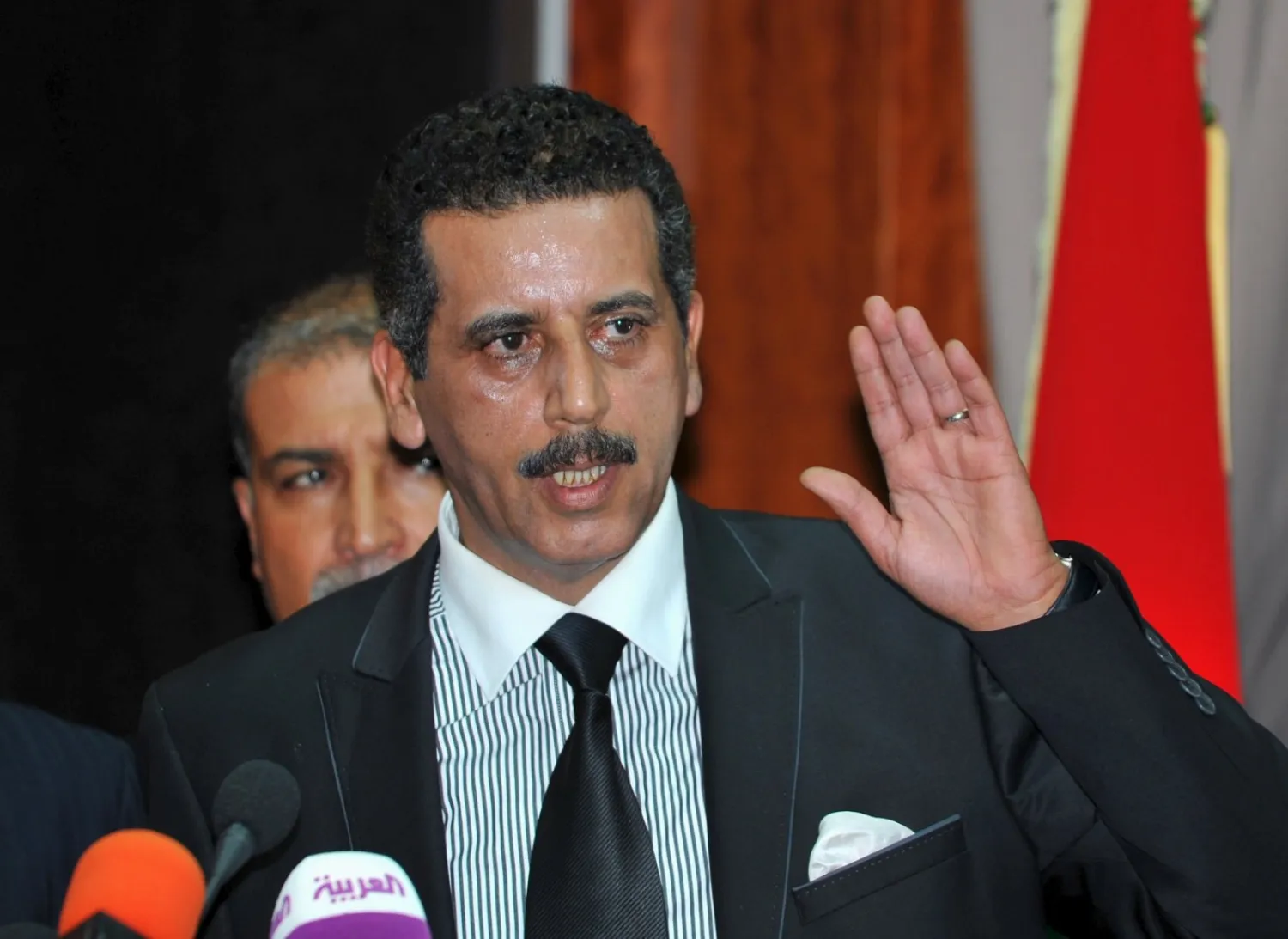

Moroccan FBI Dismantles 49 Terrorist Cells

Morocco's Central Bureau of Judicial Investigation (BCIJ) chief Abdelhak Khayyam speaks to the media during a news conference at the BCIJ office. Reuters
TT

Moroccan FBI Dismantles 49 Terrorist Cells

Morocco's Central Bureau of Judicial Investigation (BCIJ) chief Abdelhak Khayyam speaks to the media during a news conference at the BCIJ office. Reuters

Chief of Moroccan Central Bureau of Judicial Investigation (BCIJ), Nicknamed “Morocco's FBI”, Abdelhak El Khayyam said the Bureau has dismantled 49 terrorist cells, including 44 groups loyal to ISIS, and arrested 772 people on terrorism charges since its creation in 2015.

Khayyam told French paper Le Monde that 97 Moroccan foreign fighters who returned from conflict zones were also arrested, including 84 returnees from Iraq and Syria and 13 from Libya, and 53 others were expelled from other countries.

“As part of its pro-active approach busting cells before they move into action, the BCIJ has dismantled last week a terrorist cell and arrested its seven members in the cities of Tangier and Meknes,” he said.

At the legal level, Morocco adopted a new law in 2015, which stipulates arresting individuals who join terrorist groups abroad and sentencing them to 15 years in jail, Khayyam added.

He warned of the dangers and difficulty to monitor radicalization, which has found a welcoming environment on the internet.

Khayyam also brought up the issue of radicalization among Moroccan expatriates in Europe. He explained that Moroccan-born bi-nationals who have been involved in the terrorist attacks in Europe in recent years, notably Paris (2015) and Brussels (2016), were known by the police as they have fought alongside terrorists in conflict zones.

He noted that due to the lack of a judicial basis, they could not be interrogated by the police.

“Many of these young bi-nationals have become radicalized in prisons,” he said, adding that this shows that they were not integrated well into society.

In this context, Khayyam also voiced satisfaction with the level of intelligence cooperation with Western partners.

“We have liaison officers in the partner countries and Western liaison officers in Morocco,” he said.

Responding to a question on increased terrorist threats, Khayyam said that ISIS has not disappeared. “There has been a relocation: as they moved to the Sahel-Saharan region and Libya. When they find troubled areas, they settle down.”

While stressing the importance of a trans-border cooperation between security services, Khayyam deplored the lack of cooperation with Algeria while sounding the alarm bell as to the surge in Algeria’s south of terrorist groups such as the Polisario militias and al-Qaeda in the Islamic Maghreb.



EU Condemns Israel's West Bank Control Measures

The Israeli settlement of Har Homa, seen from the West Bank city of Bethlehem, Tuesday, Dec. 17, 2024. (AP)
TT

EU Condemns Israel's West Bank Control Measures

The Israeli settlement of Har Homa, seen from the West Bank city of Bethlehem, Tuesday, Dec. 17, 2024. (AP)

The European Union on Monday condemned new Israeli measures to tighten control of the West Bank and pave the way for more settlements in the occupied Palestinian territory, AFP reported.

"The European Union condemns recent decisions by Israel's security cabinet to expand Israeli control in the West Bank. This move is another step in the wrong direction," EU spokesman Anouar El Anouni told journalists.


Atrocities in Sudan's El-Fasher Were 'Preventable Human Rights Catastrophe'

Sudanese displaced people who left El Fasher after its fall, sit in the shade in Tawila at the Rwanda camp reception point on December 17, 2025. (Photo by AFP)
TT

Atrocities in Sudan's El-Fasher Were 'Preventable Human Rights Catastrophe'

Sudanese displaced people who left El Fasher after its fall, sit in the shade in Tawila at the Rwanda camp reception point on December 17, 2025. (Photo by AFP)

The atrocities unleashed on El-Fasher in Sudan's Darfur region last October were a "preventable human rights catastrophe", the United Nations said Monday, warning they now risked being repeated in the neighbouring Kordofan region.


"My office sounded the alarm about the risk of mass atrocities in the besieged city of El-Fasher for more than a year ... but our warnings were ignored," UN rights chief Volker Turk told the Human Rights Council in Geneva.


He added that he was now "extremely concerned that these violations and abuses may be repeated in the Kordofan region".


Arab League Condemns Israel's Decisions to Alter Legal, Administrative Status of West Bank

A general view shows the opening session of the meeting of Arab foreign ministers at the Arab League Headquarters (Reuters)
TT

Arab League Condemns Israel's Decisions to Alter Legal, Administrative Status of West Bank

A general view shows the opening session of the meeting of Arab foreign ministers at the Arab League Headquarters (Reuters)

The General Secretariat of the Arab League strongly condemned decisions by Israeli occupation authorities to impose fundamental changes on the legal and administrative status of the occupied Palestinian territories, particularly in the West Bank, describing them as a dangerous escalation and a flagrant violation of international law, international legitimacy resolutions, and signed agreements, SPA reported.

In a statement, the Arab League said the measures include facilitating the confiscation of private Palestinian property and transferring planning and licensing authorities in the city of Hebron and the area surrounding the Ibrahimi Mosque to occupation authorities.

It warned of the serious repercussions of these actions on the rights of the Palestinian people and on Islamic and Christian holy sites.

The statement reaffirmed the Arab League’s firm support for the legitimate rights of the Palestinian people, foremost among them the establishment of their independent state on the June 4, 1967 borders, with East Jerusalem as its capital.