


US Administrative Changes Aim to Counter Iranian Mideast Influence

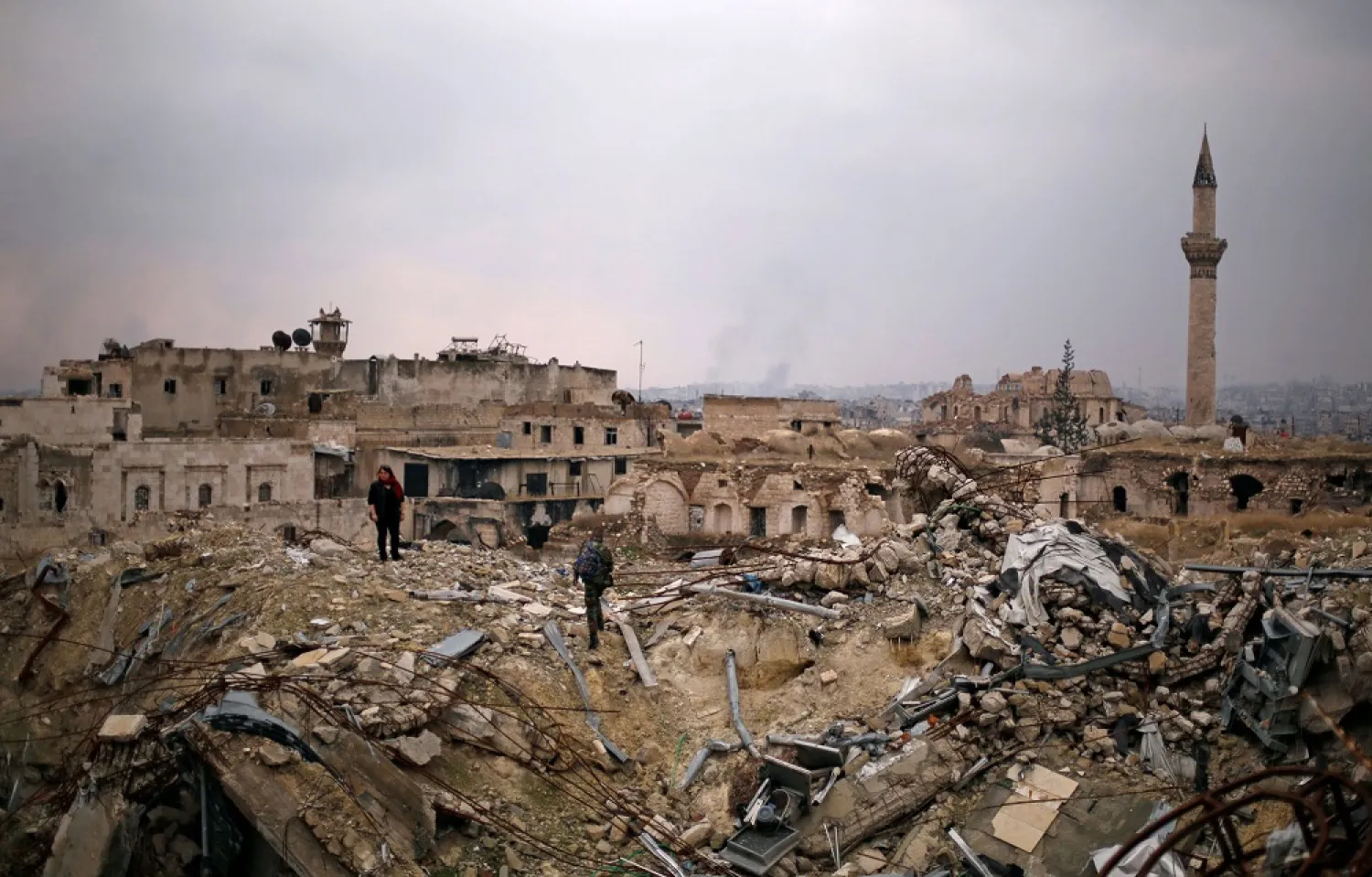
Destruction in Syria. (Reuters)
TT

US Administrative Changes Aim to Counter Iranian Mideast Influence

Destruction in Syria. (Reuters)

US President Donald Trump is studying a list of potential candidates to fill the new position of presidential envoy to Syria as part of a series of changes in his country’s administration that fall in line with the new strategy of retaining an “open military presence” east of the Euphrates River.

The changes are also aimed at countering Iran’s influence in the Middle East, negotiating with Moscow over a solution in Syria and achieving political transition to its conflict.

According to information obtained by Asharq Al-Awsat, several changes were introduced in positions related to Middle Eastern and Syrian affairs. Among them was the appointment of David Schenker, of the Washington Institute for Near East policy, as successor to David Satterfield as envoy to the Middle East.

The most prominent change however will be the appointment of a presidential envoy to Syria, who will be primarily responsible for this file. His duties will include negotiating with regional allies and Russia over the conflict after acquiring a major negotiations card related to controlling eastern Syria.

Russia and the US had agreed in May to consider the eastern Euphrates as a dividing line between their forces and allies on the ground. Consequently, areas east of the river are now under the control of the US and its allies and the areas west of the river are controlled by Moscow’s allies.

After lengthy discussions, the US administration agreed to retain its forces on the ground in Syria along with its allies in the international alliance fighting the ISIS terrorist group.

Western officials believe that Washington wants to achieve three goals with this move. The first is reducing Iran’s influence and hindering its land expansion in Iraq and Syria. The second is pressuring Moscow and Damascus to reach a political solution and implement United Nations Security Council 2254. The third is prevent the reemergence of ISIS.

US institutions, said diplomats, have started to translate the new American strategy on the ground in a number of measures:

- Bolstering the Syrian Democratic Forces (SDF) and forming a force with new duties, which including defending areas under their control and setting up a police force that can act as a border guard.

- Expanding and developing the five existing military airports and air bases, especially those in Kobane – Ain al-Arab.

- Speeding up the de-mining processes and ensuring the return of refugees to the regions that have been liberated from ISIS, such as Raqqa and other eastern cities.

- Militarily defending areas under SDF control and the areas bordering the de-escalation zones agreed on by Moscow, similar to what happened earlier this week when the US carried out air strikes against regime forces that had launched an attack east of the Euphrates.

- Supporting local councils to manage the liberated regions.

- Dispatching US diplomats and civilians to these regions. French and US diplomats have indeed arrived in Raqqa city.

- Bolstering economic means and finding ways to benefit from oil, gas, water and agriculture resources, especially since Washington’s allies control most of the oil and gas wells in eastern Syria.

- Opening the border with Iraq whereby Washington has persuaded the Baghdad government to open the al-Yaarbiya crossing to deliver aid to the eastern Euphrates.

- Introducing change to the political structure of these regions. This includes the formation of new political parties, such as the “Future Syria”, which includes local Arab and tribal forces.

- Launching a fundraising campaign to reconstruct destroyed cities in eastern Syria, especially former ISIS stronghold Raqqa, which can later symbolize the future of a new Syria.

- Allowing prominent Syrian opposition figures into eastern Syria to bolster the image of the “Syrian identity” of these regions and avoid debates about secession.

These points will be among a number of issues that will be discussed by US Secretary of State Rex Tillerson when he arrives in the region on Sunday on five-stop trip that he will kick off in Egypt. He will also visit Kuwait, Jordan and Lebanon before ending his tour in Turkey.



Top Trump Iran Negotiator Says Visits US Aircraft Carrier in Middle East

US Special Envoy Steve Witkoff delivers a press conference upon the signing of the declaration on deploying post-ceasefire force in Ukraine, during the so-called "Coalition of the Willing" summit, at the Elysee Palace in Paris, France, January 6, 2026. (Reuters)
TT

Top Trump Iran Negotiator Says Visits US Aircraft Carrier in Middle East

US Special Envoy Steve Witkoff delivers a press conference upon the signing of the declaration on deploying post-ceasefire force in Ukraine, during the so-called "Coalition of the Willing" summit, at the Elysee Palace in Paris, France, January 6, 2026. (Reuters)

US President Donald Trump's lead Iran negotiator Steve Witkoff on Saturday said he visited the USS Abraham Lincoln aircraft carrier currently in the Arabian Sea, with Washington and Tehran due to hold further talks soon.

"Today, Adm. Brad Cooper, Commander of US Naval Forces Central Command, Jared Kushner, and I met with the brave sailors and Marines aboard the USS Abraham Lincoln, her strike group, and Carrier Air Wing 9 who are keeping us safe and upholding President Trump's message of peace through strength," said Witkoff in a social media post.

Iranian Foreign Minister Abbas Araghchi said on Saturday he hoped talks with the United States would resume soon, while reiterating Tehran's red lines and warning against any American attack.


Israel’s Netanyahu Expected to Meet Trump in US on Wednesday and Discuss Iran

Israeli Prime Minister Benjamin Netanyahu delivers a speech during a special session to mark the 77th anniversary of the Knesset's establishment and the 60th anniversary of the dedication of the current building at the Knesset, the Israeli parliament, in Jerusalem, 02 February 2026. (EPA)
TT

Israel’s Netanyahu Expected to Meet Trump in US on Wednesday and Discuss Iran

Israeli Prime Minister Benjamin Netanyahu delivers a speech during a special session to mark the 77th anniversary of the Knesset's establishment and the 60th anniversary of the dedication of the current building at the Knesset, the Israeli parliament, in Jerusalem, 02 February 2026. (EPA)

Israeli Prime Minister Benjamin Netanyahu is expected to meet US President Donald Trump on Wednesday in Washington, where they will discuss negotiations with Iran, Netanyahu's office said on Saturday.

Iranian and US officials held indirect nuclear ‌talks in the ‌Omani capital ‌Muscat ⁠on Friday. ‌Both sides said more talks were expected to be held again soon.

A regional diplomat briefed by Tehran on the talks told Reuters Iran insisted ⁠on its "right to enrich uranium" ‌during the negotiations with ‍the US, ‍and that Tehran's missile capabilities ‍were not raised in the discussions.

Iranian officials have ruled out putting Iran's missiles - one of the largest such arsenals in the region - up ⁠for discussion, and have said Tehran wants recognition of its right to enrich uranium.

"The Prime Minister believes that any negotiations must include limiting ballistic missiles and halting support for the Iranian axis," Netanyahu's office said in a ‌statement.


Italy FM Rules Out Joining Trump’s ‘Board of Peace’

Italy's Minister for Foreign Affairs Antonio Tajani speaks to the press during the EPP Leaders’ meeting, in Zagreb, Croatia, 30 January 2026. (EPA)
TT

Italy FM Rules Out Joining Trump’s ‘Board of Peace’

Italy's Minister for Foreign Affairs Antonio Tajani speaks to the press during the EPP Leaders’ meeting, in Zagreb, Croatia, 30 January 2026. (EPA)

Italy will not take part in US President Donald Trump's "Board of Peace", Italian Foreign Minister Antonio Tajani said Saturday, citing "insurmountable" constitutional issues.

Trump launched his "Board of Peace" at the World Economic Forum in Davos in January and some 19 countries have signed its founding charter.

But Italy's constitution bars the country from joining an organization led by a single foreign leader.

Prime Minister Giorgia Meloni, a Trump ally, last month noted "constitutional problems" with joining, but suggested Trump could perhaps reopen the framework "to meet the needs not only of Italy, but also of other European countries".

Tajani appeared Saturday to rule that out.

"We cannot participate in the Board of Peace because there is a constitutional limit," he told the ANSA news agency.

"This is insurmountable from a legal standpoint," he said, the day after meeting US Secretary of State Marco Rubio and US Vice President JD Vance at the Olympics in Milan.

Although originally meant to oversee Gaza's rebuilding, the board's charter does not limit its role to the Palestinian territory and appears to want to rival the United Nations.